






Executive Overview
The landscape of cloud infrastructure management is undergoing a structural paradigm shift. For decades, the administration of distributed computing resources was characterized by obscurity, manual intervention, and reactive firefighting. Engineers logged into administrative dashboards, toggled abstract settings, executed undocumented shell scripts, and crossed their fingers. The operational reality of cloud environments was rarely transparent, leaving teams scrambling during critical outages to answer fundamental questions: Who changed this setting? Was it adequately tested? How did production drift so radically from our source code repositories?
As cloud-native environments have evolved to encompass hyper-scale Kubernetes clusters, distributed microservices, complex multi-region databases, and intricate networking and security policies, manual operations have proven fundamentally unsustainable. Complexity has outpaced human cognitive capacity.
Enter GitOps—an operational framework that takes the foundational best practices of software development—version control, collaboration, automated testing, and continuous integration—and applies them directly to infrastructure and operations. By treating Git repositories as the absolute, immutable source of truth for the entire cloud estate, organizations are replacing opaque administrative clicking with declarative intent.
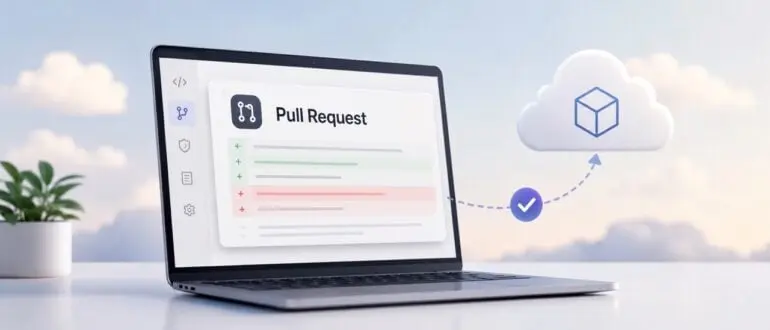
By 2026, this methodology has transcended its origins in basic Kubernetes deployments. Pull requests have evolved into the definitive control plane for all cloud operations. This article explores the deep technical, cultural, and architectural drivers behind the rise of GitOps, examining how it solves infrastructure drift, secures the software supply chain, integrates emerging artificial intelligence (AI) workflows, and reshapes the very nature of platform engineering.
Detailed Chronology: The Evolution from Ad-Hoc Ops to Declarative Infrastructure
To understand the necessity of GitOps, one must trace the chronological evolution of infrastructure management over the last twenty years.
Phase 1: The Dark Ages of Manual Configuration (Pre-2010s)
In the early days of virtualization and early cloud computing, infrastructure was treated like physical hardware. Systems administrators made direct changes via graphical user interfaces (GUIs) or SSH sessions. Documentation lived in aging wikis (or existed only in engineers’ heads). Configuration drift was an accepted hazard of the job, and disasters were often remediated by frantic, unrecorded manual rollbacks.
Phase 2: The Infrastructure as Code (IaC) Revolution (2010s–2020)
The introduction of Infrastructure as Code tools like Terraform, Ansible, and CloudFormation revolutionized the industry. Instead of clicking buttons, engineers wrote code to provision servers and networks. However, executing this code remained a manual or semi-automated imperative process. Engineers still ran terraform apply from their local laptops or isolated CI/CD pipelines, leaving an audit trail that was frequently fragmented across various team member machines and disparate CI logs. While code defined the infrastructure, there was no continuous loop ensuring that reality matched the code.
Phase 3: The Birth of Kubernetes and the Desired-State Model (2015–2020)
Kubernetes popularized the concept of a declarative, desired-state architecture. Instead of telling the system how to do something step-by-step, operators defined what the system should look like. Internal control loops continuously reconciled actual state with desired state. This laid the technological bedrock for what enterprise architect Alexis Richardson formally coined as "GitOps" in 2017.
Phase 4: GitOps as the Enterprise Standard (2020–Present)
As cloud architectures expanded to include complex microservices layers, GitOps matured rapidly. Tools like Argo CD and Flux became enterprise-grade standard components. By 2026, GitOps is no longer viewed merely as a niche deployment pattern for Kubernetes, but as a holistic operating model governing everything from Identity and Access Management (IAM) policies to global cloud networking, security compliance, and AI-driven infrastructure automation.
Supporting Context & Metrics: Why Manual Cloud Ops Fails
The quantitative and qualitative costs of maintaining traditional, manual, or push-based CI/CD infrastructure pipelines have become impossible for modern engineering organizations to ignore.
+--------------------------------------------------------------------------+
                    TRADITIONAL VS. GITOPS ARCHITECTURE
+--------------------------------------------------------------------------+

  [Traditional Push Pipeline]
  Engineer Laptop/CI Server ----( Push Changes )----> Live Cloud Environment
         ^                                                      |
         |------------ (Config Drift / No Audit Trail) ---------+

  [GitOps Pull Architecture]
  Engineer PR ----> Git Repo (Source of Truth) <---- Sync Controllers (Argo/Flux)
                         |                                    |
                         +---------> Live Cloud Environment <-+
The Menace of Configuration Drift
Configuration drift occurs when the live state of a production environment diverges silently from the documented state stored in version control. Industry telemetry indicates that over 65% of unexpected production outages in multi-cloud environments originate from out-of-band, unrecorded changes—such as an engineer logging into the AWS console at 2:00 AM to hotfix a security group or scale a database instance.
In a traditional push-based deployment model, the CI/CD pipeline pushes code out to the environment and then disconnects. It assumes the environment remains static until the next push. Modern cloud ecosystems are never static; autoscaling, runtime failures, and manual interventions constantly alter the landscape. GitOps turns this paradigm upside down via continuous reconciliation loops. Controllers residing within the cluster or cloud environment constantly compare live configurations against the Git repository, instantly alerting teams to unauthorized drift or automatically rolling it back.
Shifting Security Policies Left
Security and compliance have historically been applied at the end of the deployment lifecycle, leading to friction, compliance failures, and frantic remediation cycles. Under a mature GitOps model, policy-as-code validations (using tools like OPA/Gatekeeper or Kyverno) shift left directly into the pull request review phase.
+---------------------------------------------------------------------------------+
                      THE GITOPS PULL REQUEST PIPELINE
+---------------------------------------------------------------------------------+

  [Engineer/AI] ---> Open PR ---> Automated Security Scans & Policy Checks
                                      |
                                      v
                             [Peer Code Review]
                                      |
                                      v
                              [Merge to Main]
                                      |
                                      v
  Live Cloud Environment <--- GitOps Controller Syncs Desired State
+---------------------------------------------------------------------------------+
Before any infrastructure modification touches a staging or production environment, automated checks validate the pull request against organizational compliance standards, security baselines, and cost guardrails. If a configuration file attempts to open a storage bucket to the public internet or allocate excessive resource privileges, the pull request is automatically blocked before human intervention is even required.
Official Industry Perspectives and Expert Insights
As GitOps has transitioned from an open-source movement into an indispensable enterprise architecture, industry leaders have voiced clear perspectives on its systemic impact.
"The fundamental breakthrough of GitOps is not that we use Git—we’ve used Git for decades. The breakthrough is that we have shifted our collective operational philosophy from imperative action to declarative intent. When you make the environment’s desired state visible, immutable, and auditable in a version-controlled repository, you eliminate the mystery of production."
— Enterprise Cloud Architecture Principal
According to recent DevOps market research, organizations that successfully implement GitOps workflows report a 40% reduction in mean time to recovery (MTTR) during critical incidents. Because every change—whether code, network topology, or security policy—must pass through a version-controlled pull request, incident responders no longer waste precious minutes trying to determine what changed in production. They simply inspect the commit history.
Furthermore, engineering leadership emphasizes that GitOps is fundamentally a cultural evolution rather than a software installation project.
"Installing Argo CD or Flux is the easy part," notes a prominent platform engineering director. "The real transformation happens when you successfully convince your organization to abandon manual console access, treat documentation as executable code, and embrace pull requests as the universal workspace for both developers and operations engineers."
Future Outlook: The Intersection of GitOps, AI, and Platform Engineering
As we look toward the remainder of the decade, the trajectory of GitOps is converging with two massive technological movements: Platform Engineering and Generative Artificial Intelligence (AI).
Platform Engineering and Developer Experience
As cloud-native ecosystems grow increasingly complex, asking application developers to understand the intricate underlying details of Kubernetes, Istio service meshes, and Terraform state files is counterproductive. Modern enterprises are building Internal Developer Platforms (IDPs) to abstract this complexity.
In these advanced architectures, GitOps acts as the invisible engine beneath the platform. Developers interact with simplified, intuitive interfaces or APIs. The internal platform translates these inputs into declarative configurations, commits them to a managed Git repository, and lets GitOps controllers handle the heavy lifting of synchronization and validation. Developers get a frictionless experience, while operations teams retain complete structural oversight and governance.
AI Joins the Workflow
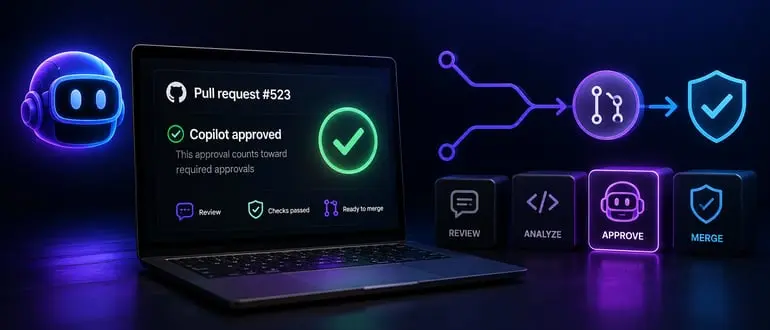
Artificial Intelligence is rapidly embedding itself into the GitOps control loop. AI assistants are increasingly utilized to review infrastructure pull requests, generate complex Kubernetes manifests or Terraform modules, explain policy validation failures in plain English, and proactively analyze security implications before code is merged.
However, industry consensus dictates a cautious, guardrailed approach. AI is not granted autonomous write access to production environments. Instead, AI operates safely within the pull request workflow: it suggests optimizations, flags anomalies, and drafts configurations, while human engineers and automated validation controllers provide the final, non-negotiable checkpoints. This symbiotic relationship ensures that speed and intelligence do not outpace safety and traceability.
Conclusion
The evolution of cloud computing has made one thing abundantly clear: manual, invisible infrastructure management is an unsustainable relic of the past. As systems scale to meet the demands of modern digital enterprises, organizations must adopt workflows that are transparent, reproducible, and resilient.
GitOps provides the definitive answer to this challenge. By transforming pull requests into the universal control hub for cloud operations, it unites developers and operations teams under a single, transparent language of declarative intent. It neutralizes infrastructure drift, secures the software supply chain, simplifies incident response, and seamlessly accommodates the next wave of platform engineering and AI automation.
In the modern enterprise, code is no longer just for applications—it is the blueprint for reality. And through GitOps, the pull request has officially become where cloud operations begin.