









Executive Overview
Nearly four years have elapsed since the seismic commercial launch of OpenAI’s ChatGPT, soon followed by Anthropic’s Claude, effectively inaugurating the era of generative artificial intelligence (genAI). Yet, despite the staggering daily volume of human interaction shifting toward conversational engines, a glaring transparency blackout has persisted. Digital marketers, data scientists, and content strategists have operated largely in the dark, starved of empirical, granular data regarding how consumers phrase their prompts, how platforms construct their response methodologies, and how modern user journeys unfold within generative ecosystems.
For years, the industry has been forced to rely on legacy search query data, reverse-engineering traditional keyword metrics to infer genAI interactions. With the notable exception of Bing—which has distinguished itself through commendable transparency by explicitly reporting the "Grounding Queries" that drive its "fan out" response architectures—major tech giants have kept their prompt datasets tightly locked behind proprietary walls.
That paradigm, however, is beginning to fracture.
Recent discoveries confirm that Google’s AI Mode is actively logging both initial and conversational follow-up prompts directly into Google Search Console (GSC) as traditional search queries. This accidental or architectural disclosure offers SEO professionals an unprecedented window into user intent within generative search environments. By leveraging precise Regular Expressions (regex) and external API-driven tools, search marketers can extract, analyze, and capitalize on these conversational artifacts.
This report provides an investigative breakdown of how this discovery came to light, the technical mechanics of isolating genAI prompts within GSC, the risks and rewards of third-party tool integration, and a strategic framework for transforming conversational search data into a competitive advantage.
Detailed Chronology: Uncovering the AI Mode Leak in Search Console
The realization that Google Search Console was quietly ingesting conversational AI prompts did not come from an official Google announcement or a developer documentation update. Instead, it was unearthed through the sharp-eyed observation of digital marketing practitioners operating in the trenches of technical SEO.
The LinkedIn Disclosures
The trail began when Anastasia Kourou, SEO Manager at Greece-based Relevance Digital Agency, noticed anomalous query data populating a client’s Search Console profile. Among the standard keyword variations were distinctly conversational, multipart phrases that bore no resemblance to traditional informational or transactional search queries. Most perplexingly, GSC was recording stark, fragmented inputs such as single-word affirmations like "yes" and contextual modifiers like "yes, pricing."
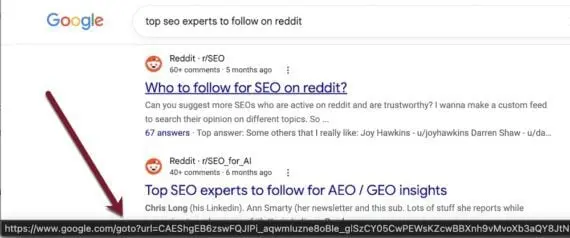
Driven by investigative curiosity, Kourou took her findings to LinkedIn, directly tagging Google’s Search Advocate, John Mueller. She posted screenshots and raised a pointed question: Why was Search Console indexing bizarre, genAI-like conversational fragments as standard search queries?
John Mueller’s Confirmation
In a subsequent LinkedIn interaction, Mueller addressed the inquiry, confirming what many forward-thinking SEOs had begun to suspect. The anomalous queries were not data glitches or crawling anomalies; they were authentic, recorded follow-up prompts generated by real human users interacting with Google’s AI Mode.
Because AI Mode operates as an ongoing dialogue rather than a single-shot query-and-response interface, the software captures the user’s conversational thread—including contextual refinements like "yes" or "tell me more"—and processes them through underlying search and retrieval pathways. In doing so, these conversational breadcrumbs leak directly into the performance reports visible to site owners within Search Console.
The Expansion of Regex Filtering
Following Mueller’s informal confirmation, the SEO community mobilized to reverse-engineer scalable methods for filtering these conversational anomalies out of standard dataset noise.
Shortly after the initial disclosure, Jean-Christophe Chouinard, an SEO strategist at Tripadvisor, published an expanded, highly detailed Regular Expression framework. Chouinard’s contributions expanded the filtering capabilities beyond simple long-tail queries to capture complex follow-up structures, including conversational continuations such as "yes, please," "show me alternatives," and "tell me more." This collaborative, crowdsourced technical refinement transformed a curious anecdote into a reproducible, actionable data-extraction methodology for enterprise SEO teams.
Supporting Context & Metrics: The Shifting Architecture of Search
To understand why this discovery represents a watershed moment for digital marketing, one must examine the broader evolution of search engine mechanics over the last half-decade.
The Transparency Gap in Conversational AI
When conversational agents first disrupted the digital landscape, they decoupled discovery from traditional web indexing. Platforms like ChatGPT and Claude operated as closed ecosystems. Users submitted prompts, and Large Language Models (LLMs) synthesized answers drawn from pre-trained weights or real-time Retrieval-Augmented Generation (RAG) pipelines, rarely exposing the underlying query mechanics back to the originating content creators.
For website owners, this created a profound attribution crisis. Traffic could plummet or surge based on an AI platform’s citation preferences, yet web analytics and keyword ranking tools remained blind to why or how the AI decided to reference a particular URL.
While Microsoft attempted to bridge this gap by introducing "Grounding Queries" in Bing—allowing publishers to see the exact queries the AI generated to search the web before answering a user prompt—Google’s integration of generative experiences directly into its core search infrastructure (AI Mode) creates a unique hybrid data stream.
Decoding Search Console Metrics: Impressions, Clicks, and Zero-Intent Noise
When analyzing these newly uncovered genAI prompts within Search Console, SEO professionals must adjust their analytical mental models. Traditional SEO metrics—where high impressions coupled with low clicks indicate poor ranking or bad meta descriptions—do not always apply in the same way to conversational prompts.
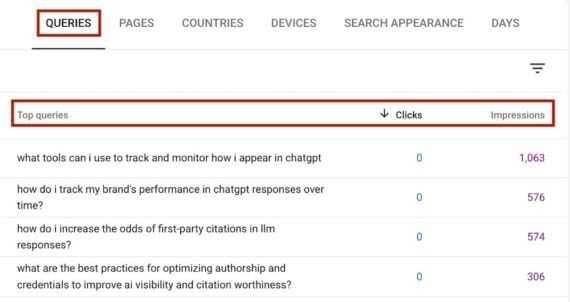
- High Impressions, Zero Clicks: Many long-tail, hyper-specific prompts identified via regex display substantial impression counts paired with an absolute lack of click-through traffic. This divergence can stem from two distinct phenomena:
- Automated Monitoring Software: A significant portion of hyper-detailed, corporate-focused prompts may actually originate from proprietary prompt-tracking software and competitor intelligence tools rather than human buyers.
- Direct AI Summaries: The user’s intent was fully satisfied inside the generative AI interface via a synthesized summary, eliminating the need to click through to the underlying web page, even though the page was cited as a foundational source.
- Contextual Fragmentation: Follow-up prompts like "yes, pricing" carry zero standalone semantic value. Without the conversational context of the initial prompt—such as "Can I integrate this CRM with Salesforce?"—the phrase "yes, pricing" is entirely meaningless. However, when aggregated alongside the broader session stream, these fragments map out the exact psychological decision trees modern consumers travel when evaluating products and services via conversational interfaces.
Official Statements and Technical Mechanics: How to Isolate AI Prompts
Because Google Search Console’s standard user interface is not natively designed to segment genAI interactions from traditional keyword data, practitioners must employ programmatic filtering techniques.
Method 1: Utilizing Regular Expressions (Regex) in GSC
The most accessible method for identifying potential AI Mode prompts involves isolating queries by length and structural complexity. Because human prompts in conversational AI interfaces tend to mimic natural, grammatical sentences rather than fragmented keyword strings, word-count filters are remarkably effective.
To execute this within the native Search Console interface:
- Navigate to the Performance report and select Add Filter.
- Choose Query and set the condition to Custom (regex).
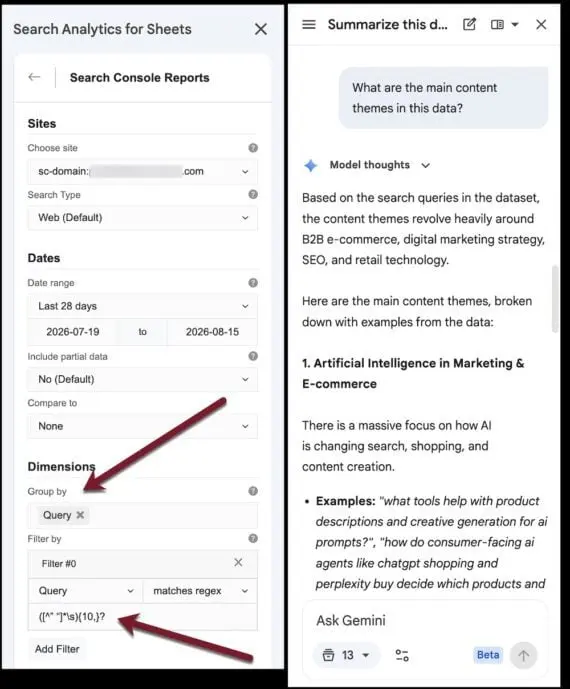
- Input a word-boundary regex string designed to capture long-form queries containing a specific threshold of words (e.g., ten or more words):
([^" "]*s)10,? - Review the resulting dataset. You will instantly notice a shift from commercial keywords (e.g., "best CRM software 2026") to conversational, interrogative, and highly idiosyncratic sentences (e.g., "what tools can i use to track and monitor how i appear in chatgpt").
For deeper analysis, advanced regex strings—such as those pioneered by Jean-Christophe Chouinard—can be structured to catch conversational follow-up anomalies containing words like "yes," "more," "compare," or "alternatives" immediately adjacent to session parameters.
Method 2: Leveraging External API Tools
While the native GSC interface is sufficient for spot-checking, its front-end reporting limits the volume of queries you can view and export. For enterprise-level data mining, the Search Console API provides comprehensive access to the long tail of search query data.
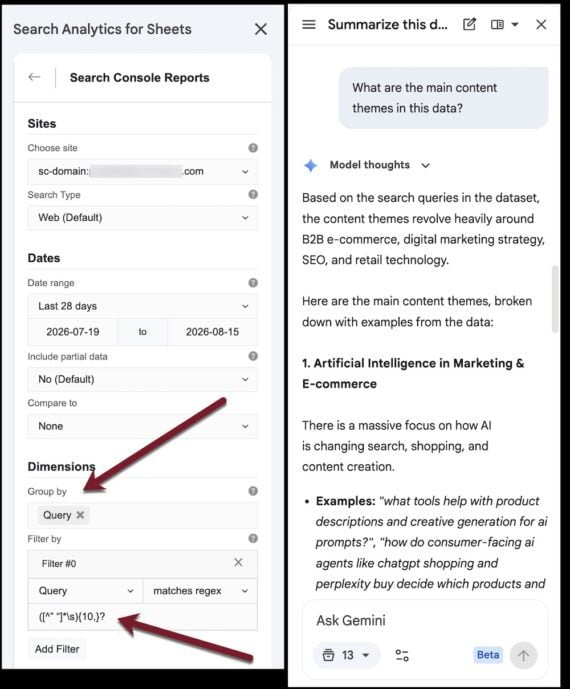
Because writing custom API scripts can be a barrier for non-technical team members, many SEO professionals rely on free third-party tools that interface directly with the GSC API:
- Search Analytics for Sheets: A popular Google Workspace extension that exports deep historical Search Console data directly into Google Sheets.
- Custom Gemini/LLM Integrations: Once exported into a spreadsheet, SEOs can feed the regex-filtered query lists directly into local AI models (such as a Gemini or Claude sidebar) to automatically cluster thousands of unstructured prompts into cohesive content themes, user intents, and semantic clusters.
The Trade-Off: While third-party spreadsheet extensions eliminate the need for software engineering resources, practitioners must weigh the inherent data-privacy risks. Uploading sensitive, proprietary search performance logs to external tools requires careful compliance review, particularly for enterprise brands operating under strict data governance policies.
Future Outlook: Strategic Implications for SEO and Content Optimization
The discovery that Google’s AI Mode leaks conversational prompts into Search Console is more than a technical curiosity—it is a strategic roadmap for the future of digital marketing. As search engines definitively transition from indexing keywords to orchestrating conversations, the entire architecture of search engine optimization must adapt.
1. Shift from Keyword Targeting to Intent Orchestration
For decades, SEO has been anchored around keyword volume, difficulty scores, and exact-match optimization. The emergence of genAI prompts proves that modern users are no longer searching via shorthand strings of nouns; they are treating search engines as consultative partners.
Content strategies must evolve to mirror this shift. Instead of building pages optimized to rank for isolated terms, digital marketers must construct comprehensive, modular content hubs designed to answer complex, multi-layered questions. If GSC reveals that users are following up initial queries with phrases like "yes, pricing" or "show me enterprise security compliance," content must be structured to immediately address auxiliary downstream concerns without forcing the user to hunt for sub-menus.
2. Monitoring Competitor Intelligence and Automated Scrapers
The presence of hyper-specific, unusually structured prompts in GSC—often boasting high impression volumes but zero organic traffic—serves as an early-warning radar for competitive intelligence. Brands can analyze these patterns to determine what questions rival firms, market researchers, and automated brand-monitoring bots are asking AI engines about their products, pricing models, and executive leadership.
3. The Imperative of Brand Mention Tracking in LLMs
As generative engines increasingly synthesize answers without sending outbound referral traffic, traditional metrics like click-through rate (CTR) and organic sessions will continue to decouple from true brand visibility. Marketers must learn to optimize not just for traditional search engine result pages (SERPs), but for RAG (Retrieval-Augmented Generation) inclusion. Understanding the exact conversational prompts that trigger a mention of your brand in AI Mode allows content teams to refine their digital PR, structured data markup, and authoritative publishing schedules to ensure they are the primary source the AI relies upon when constructing its synthesis.
Conclusion
The accidental exposure of AI Mode prompts within Google Search Console marks the end of the "blind spot" era in generative search optimization. While major AI platforms continue to guard their proprietary prompt data closely, Google’s architectural overlap with Search Console has handed search marketers a master key.
By aggressively implementing regular expression filters, tapping into API-driven spreadsheet tools, and learning to interpret the fragmented breadcrumbs of conversational follow-ups, forward-thinking SEOs can reverse-engineer the human mind in the age of AI. The brands that master this data today will dictate the terms of digital discovery tomorrow.