







Executive Overview
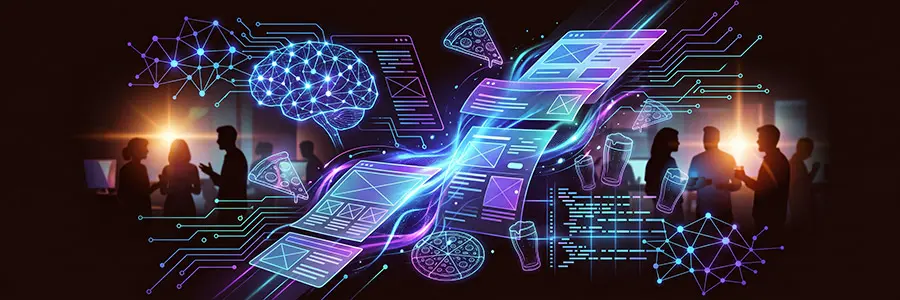
As the boundaries between reality and fabrication continue to dissolve, the global digital ecosystem faces an unprecedented existential crisis. Synthetic media—ranging from hyper-realistic deepfake video to pinpoint voice cloning and algorithmically manufactured viral movements—has fundamentally undermined the foundational currency of the modern internet: trust. In response to this escalating threat, leading experts in artificial intelligence, digital provenance, and socio-technical disinformation are convening for a landmark, free-to-attend webinar titled "Deepfakes, Disinformation, and the Battle for Digital Trust."
Scheduled for August 26th at 5:00 PM BST, the upcoming event brings together two of the world’s foremost authorities on the subject: Henry Ajder, renowned generative AI expert and founder of Latent Space Advisory, and Renee DiResta, research professor at Georgetown University and author of the acclaimed book Invisible Rulers. Together, they will dissect the technological mechanics, societal ramifications, and structural frameworks required to combat synthetic deception at scale.
At the center of the discussion will be C2PA (Coalition for Content Provenance and Authenticity) Content Credentials—an open technical standard designed to trace media provenance and verify digital assets from creation to consumption. This comprehensive report explores the themes of the upcoming webinar, the macro-level challenges posed by generative disinformation, and the multi-layered solutions required to safeguard our collective perception of reality.
The Escalating Crisis of Synthetic Deception
The digital landscape has undergone a seismic shift over the past half-decade. What was once the exclusive domain of well-resourced nation-state actors and advanced academic laboratories is now accessible to anyone with an internet connection and a modest consumer device. Generative artificial intelligence has democratized the tools of deception, making it trivially easy to generate compelling, deceptive content in mere seconds.
The Triad of Deception: Video, Audio, and Synthetic Virality
Modern generative AI attacks digital trust across three distinct vectors:
- Hyper-Realistic Video: Modern diffusion models and neural rendering techniques can produce photorealistic video footage of real individuals engaging in actions they never performed, uttering words they never spoke, or occupying spaces they never visited. The degradation of visual verification—long the gold standard of documentary evidence—means that seeing is no longer believing.
- Instantaneous Voice Cloning: Today’s text-to-speech architectures require merely a few seconds of raw audio sample to generate a pitch-perfect, emotionally nuanced clone of any target voice. This capability has supercharged social engineering attacks, corporate fraud, and targeted political disinformation campaigns designed to ruin reputations or sway public sentiment during critical electoral windows.
- Manufactured Viral Moments: Beyond individual assets, algorithmic systems and coordinated networks can manufacture artificial consensus. Synthetic accounts, automated amplification loops, and fabricated grassroots movements (astroturfing) can push marginal conspiracy theories or counterfeit products into mainstream visibility before platform moderators or independent verifiers can establish the facts.
As the organizers of the upcoming event aptly frame the crisis:
"AI can now generate convincing photo-realistic video, clone a voice with just a few seconds of sample, and manufacture a viral moment before anyone can verify it’s real. The same platforms people rely on to connect and share can just as easily be used to peddle a counterfeit product, legitimize a fringe conspiracy, or make a marginal opinion look like consensus. Faced with these challenges, how do we rebuild trust in what we see, hear, and believe online?"
Detailed Chronology: The Evolution of the Deepfake Threat
To understand how the digital ecosystem arrived at this critical juncture, it is necessary to examine the rapid trajectory of generative media and the corresponding policy and technological responses.
Phase 1: The Novelty Era (2017–2019)
The term "deepfake" entered the public lexicon around late 2017, popularized by a Reddit user who utilized open-source machine learning algorithms to superimpose the faces of celebrities onto adult film actors. Initially treated as a bizarre internet novelty, computer scientists and security researchers quickly recognized the underlying threat. Early deepfakes were characterized by awkward facial mapping, unnatural blinking patterns, and noticeable lighting discrepancies, making them relatively easy to spot with the naked eye.
Phase 2: The Proliferation and Weaponization Era (2020–2023)
As generative adversarial networks (GANs) matured and transformer-based architectures emerged, the quality of synthetic media improved exponentially. The barrier to entry plummeted with the release of accessible, consumer-friendly software applications. During this period, deepfakes transitioned from celebrity-focused novelties to potent weapons of political interference, financial fraud, and non-consensual pornography. Organizations began struggling with executive-impersonation scams utilizing cloned audio, leading to multi-million-dollar corporate wire-fraud losses.
Phase 3: The Infrastructure and Provenance Era (2024–Present)
We have now entered an era where raw detection—attempting to spot a deepfake by analyzing pixel anomalies or audio artifacts—is no longer a viable long-term strategy. Because generative models improve faster than detection classifiers can be trained, the cybersecurity and digital asset management (DAM) industries are pivoting toward provenance infrastructure. Rather than asking "Is this file fake?" the industry is moving toward asking "Can we cryptographically prove where this file came from and whether it has been altered?"
Supporting Context & Metrics: The Scale of the Problem
The urgency of the August 26th webinar is underscored by staggering metrics regarding the proliferation of synthetic media and its impact on institutional trust, cybersecurity, and information integrity.
The Economic and Security Toll
According to recent cybersecurity analyses, corporate deepfake attacks—particularly real-time video and audio impersonation during virtual C-suite meetings—surged by over 3,000% between 2023 and 2025. Financial institutions have reported billions of dollars in attempted and successful fraud driven by synthetic identity creation and biometric spoofing.
The Public Perception Deficit
Public opinion polling reveals a profound societal anxiety regarding digital media integrity:
- Erosion of Credibility: Over 75% of global internet users report that they are now skeptical of news videos and audio recordings encountered on social media platforms.
- The "Liar’s Dividend": Beyond the damage caused by actual deepfakes, bad actors now routinely exploit public skepticism by dismissing genuine, incriminating evidence of wrongdoing as "AI-generated deepfakes," creating a pervasive epistemic crisis where truth becomes subjective.
- Information Overload: Platforms designed for connectivity are buckling under the weight of automated content generation, making the signal-to-noise ratio worse than at any point in internet history.
Expert Perspectives: Henry Ajder and Renee DiResta
The upcoming webinar derives its exceptional value from the combined expertise of its keynote speakers, both of whom have spent years on the front lines of technology governance and information security.
Henry Ajder: Decoding the Generative Landscape
As the founder of Latent Space Advisory and one of the world’s leading commentators on generative AI, Henry Ajder has spent years tracking the societal impacts of synthetic media. Ajder was instrumental in mapping the early rise of deepfakes, advising governments, regulatory bodies, and Fortune 500 enterprises on the risks and opportunities presented by generative technologies. His work emphasizes that policy and technology must evolve in tandem to prevent the total collapse of shared reality.
Renee DiResta: Navigating the Architecture of Disinformation
Renee DiResta, research professor at Georgetown University and author of the seminal book Invisible Rulers, brings deep insights into how information spreads, how online communities mobilize, and how malicious actors exploit platform algorithms. DiResta’s extensive research into systemic disinformation campaigns, state-sponsored interference, and the mechanics of viral manipulation provides crucial context for understanding how synthetic media is weaponized at a geopolitical scale.
Together, Ajder and DiResta will explore the intersection of technical standards and sociological resilience. They will address the hard question: How do we build trust infrastructure fit for a deceptive content landscape?
Solutions on the Horizon: C2PA Content Credentials and Beyond
During the August 26th session, the discussion will pivot heavily toward actionable solutions, focusing particularly on cryptographic provenance and systemic trust architectures.
The Role of C2PA Content Credentials
The Coalition for Content Provenance and Authenticity (C2PA) has emerged as the leading open technical standard for certifying the origin and digital history of media content. Backed by industry giants spanning software, hardware, and media, C2PA enables creators, journalists, and camera manufacturers to attach secure, tamper-evident metadata—known as Content Credentials—directly to digital files.
- Tracing Provenance: When a photograph is taken or a video is rendered, cryptographic metadata records the device used, the author, and any subsequent edits or AI transformations.
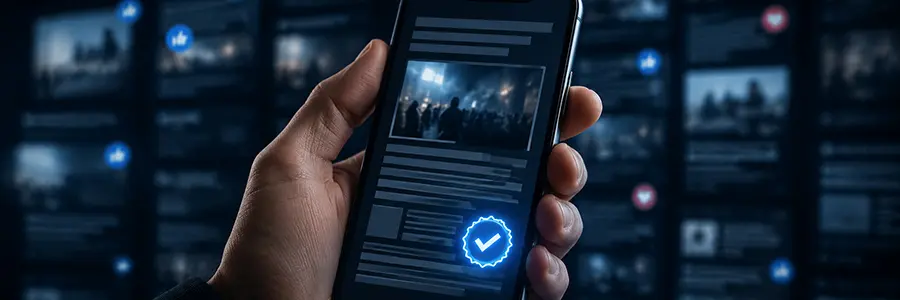
- Transparency for Consumers: End-users can inspect these credentials across supported web browsers and software platforms to see a verifiable "nutrition label" detailing the asset’s lifecycle.
- Combating Plausible Deniability: By establishing an unbroken chain of custody, C2PA helps dismantle the "liar’s dividend," allowing authentic media to be reliably distinguished from synthetic fabrications.
Technical, Social, and Structural Integration
While cryptographic standards like C2PA are foundational, the webinar panelists will emphasize that technology alone is not a silver bullet. Building a robust trust infrastructure requires a tripartite approach:
- Technical Layer: Widespread adoption of cryptographic watermarking, secure enclaves in capture devices, and standardized provenance tracking across digital asset management (DAM) systems.
- Social Layer: Enhancing digital literacy among the general public, empowering journalists with verification tools, and fostering critical media consumption habits.
- Structural Layer: Regulatory frameworks that incentivize platform accountability, deter malicious synthetic generation, and protect democratic institutions from coordinated information warfare.
Future Outlook: Navigating the Next Decade of Digital Truth
As we look toward the remainder of the decade and beyond, the battle for digital trust will define the stability of our global information ecosystem. The proliferation of multimodal AI models means that deception will become faster, cheaper, and infinitely more persuasive.
However, the rapid mobilization of technologists, researchers, and policymakers signals a growing counter-movement. Initiatives like the Deepfakes, Disinformation, and the Battle for Digital Trust webinar represent vital forums where the intellectual groundwork for a safer internet is being laid.
Event Details and Registration
For professionals working in digital asset management, journalism, cybersecurity, policy, or corporate communications, participating in this conversation is no longer optional—it is an operational necessity.
- Event Deepfakes, Disinformation, and the Battle for Digital Trust
- Date: August 26th
- Time: 5:00 PM BST
- Cost: Free to attend
- Registration Link: Digital Asset Management News Event Page
Standard subscribers to Digital Asset Management News can also add relevant industry events directly to the community calendar by registering for a free subscriber account via the DAM News Subscriptions Page.
Ultimately, the battle for digital trust is not merely a technical challenge; it is a defense of shared truth, democratic discourse, and human agency in the digital age. As Henry Ajder, Renee DiResta, and industry leaders chart the path forward, the tools to secure our digital future are coming into focus—provided the global community has the collective will to implement them.