









Executive Overview
Every day, millions of people flick light switches, turn on faucets, and ignite gas stoves without giving a second thought to the sprawling, complex network of infrastructure humming quietly beneath their feet. Yet, this vital subterranean web—comprising thousands of miles of electric lines, gas pipes, water mains, and telecommunication cables—exists in a state of chronic, dangerous fragmentation.
Major utility companies typically have precise data only for the specific assets they own and operate. When a municipal water line, a private telecom fiber cable, and a high-pressure gas main cross paths beneath a busy city street, the governing information is often scattered across disparate departments, dusty paper archives, and siloed private databases. This lack of centralized visibility culminates in a staggering statistic: approximately 200,000 "utility strikes"—instances where excavation equipment accidentally pierces an underground line—occur annually in the United States. These incidents trigger costly project delays, environmental hazards, and severe safety risks.
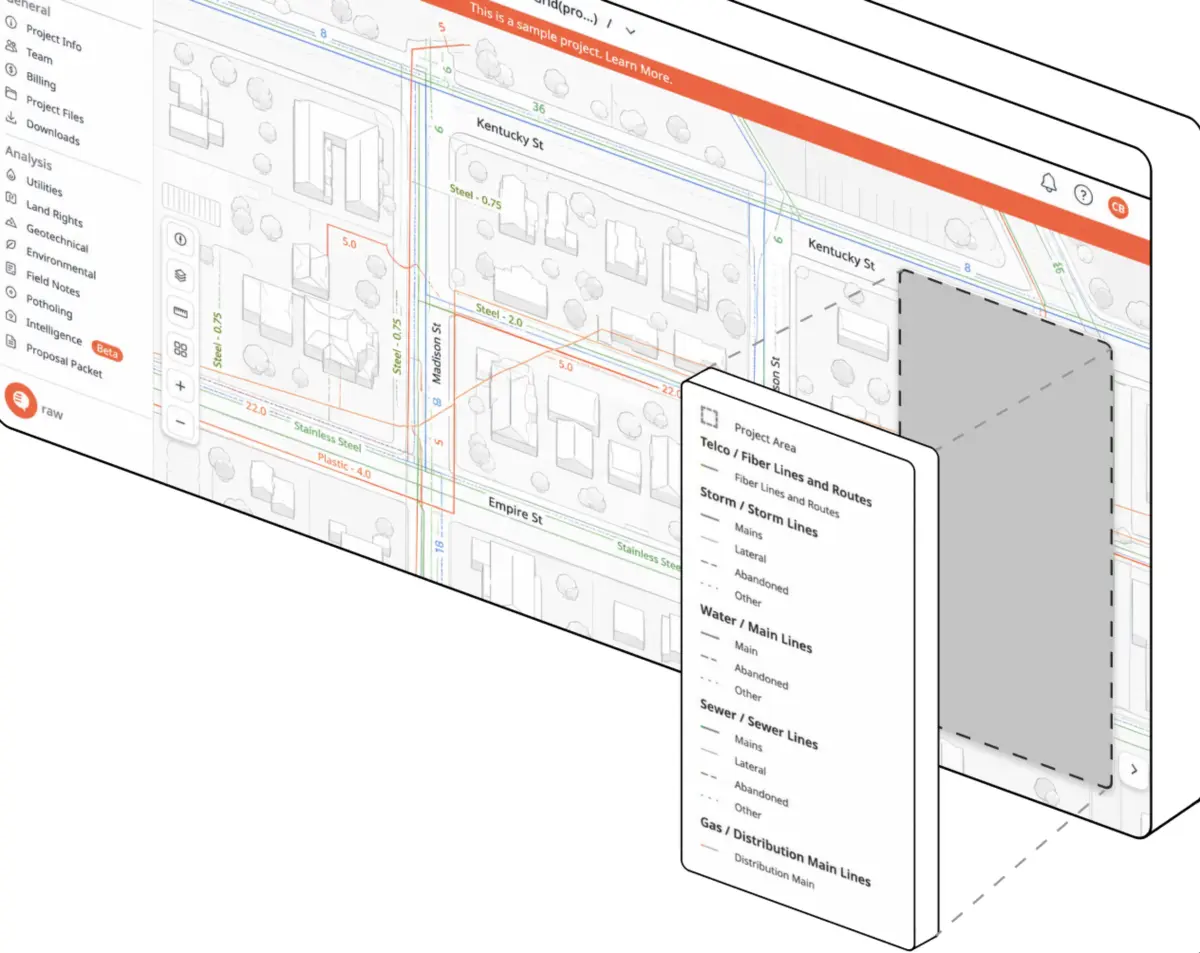
Enter CivilGrid, a spatial data startup founded in 2020 by Josh Mackanic, a veteran engineer who spent a decade at Pacific Gas and Electric (PG&E). Billed playfully by its creator as “Google Maps for what’s underground,” CivilGrid aggregates complex datasets encompassing utility assets, property ownership boundaries, and environmental regulations into a unified, accessible platform.
The startup’s mission to illuminate the dark corners of America’s subterranean infrastructure has just received a massive financial endorsement. CivilGrid has successfully closed a $26 million Series A funding round led by Spark Capital, with participation from early-stage funds Afore, A*, Ford Street Ventures, SNR, and Energy Impact Partners—a specialized fund backed by major utility companies. With early adopters like PG&E already identifying tens of millions of dollars in project savings, CivilGrid is positioning itself to transform not just how utility lines are mapped, but how civil engineering and construction projects are planned and executed across the nation.
Detailed Chronology: From a $60,000 Mistake to a Venture-Backed Enterprise
The genesis of CivilGrid can be traced directly to a high-stress, expensive operational headache that occurred while Josh Mackanic was working as an engineer at PG&E.
Like many children growing up, Mackanic harbored dreams of exploring the cosmos, leading him to pursue mechanical engineering degrees in college and graduate school. Early on, the mundanity of utility work held little appeal. "I was like, aren’t these places boring?" he recalled in an interview. However, his tenure at PG&E quickly disabused him of that notion, revealing the high-stakes, hyper-critical nature of keeping a modern society powered and functioning.
The turning point for CivilGrid arrived when a routine engineering job was abruptly halted. During an excavation project, workers unexpectedly uncovered a pipe that did not appear on any of the maps or documentation provided to the team.
"I had a job that got shut down because a pipe was in the excavation [that] we didn’t know about," Mackanic recounted. "Fortunately, we saw it before we impacted it. But then there was this three-day ordeal of running around [asking] like: ‘Whose pipe is this? Can we tap it? Can we not? What’s in it?’"
While the team ultimately avoided a catastrophic strike, the administrative scramble took three days to resolve. That brief window of uncertainty and administrative gridlock resulted in an immediate, avoidable cost of $60,000. More importantly, it planted a persistent question in Mackanic’s mind: Why do major utility providers remain fundamentally blind to infrastructure assets running parallel to, or intersecting with, their own?
Recognizing that this was an industry-wide structural failure rather than an isolated incident, Mackanic made the bold decision to leave his 10-year career at PG&E behind. He realized that attempting to solve the problem from within a conservative, lean utility company was an uphill battle.
"One of the reasons I left PG&E to start CivilGrid was because I felt like this was a problem that was going to be better solved from the outside in than the inside out," Mackanic explained. "Utilities, they run relatively lean, right? Nobody wants to pay more for their gas bill than they have to."
In 2020, Mackanic founded CivilGrid. Rather than trying to invent entirely new surveying methods—an approach that had proven slow and economically unviable for others—he focused on a much harder operational hurdle: collecting, sorting, securing, and integrating existing, fragmented data streams. By synthesizing public records, private utility assets, property lines, and environmental regulatory constraints into a single, intuitive software interface, CivilGrid created a unified digital twin of the underground world.
The startup began selling access to its platform to government entities, civil engineering firms, and utility companies—bringing his professional journey full circle by onboarding his former employer, PG&E, as a customer. Now, armed with $26 million in fresh Series A capital led by Spark Capital, CivilGrid is preparing to scale its operations to meet surging national infrastructure demands.
Supporting Context & Metrics: The Hidden Toll of Subterranean Blind Spots
The challenges that CivilGrid aims to resolve are symptomatic of a broader American infrastructure crisis. As federal funding initiatives like the Bipartisan Infrastructure Law pour billions of dollars into upgrading roads, bridges, and energy grids, the actual process of breaking ground remains notoriously bureaucratic, slow, and expensive.
At the heart of these delays is the staggering fragmentation of public and private data. While a major gas and electric provider like PG&E maintains high-resolution data on its proprietary network, it operates in a silo relative to municipal water departments, private telecommunications companies, and independent sewage districts. When projects intersect—such as laying a new electrical conduit beneath a street shared with water mains and fiber-optic cables—engineers are forced to manually cross-reference outdated blueprints, local municipal filings, and physical site surveys.
This information gap carries severe economic and operational consequences:
- The 200,000 Strike Phenomenon: Across the United States, an estimated 200,000 utility strikes occur annually, posing severe threats to worker safety, disrupting essential community services, and causing millions of dollars in property damage.
- Quantifiable Savings: The utility sector is notoriously cost-conscious, operating on tight margins to keep consumer utility bills manageable. Tools that prevent rework and route planning errors yield immediate financial returns. For instance, a comprehensive case study conducted by PG&E revealed that leveraging CivilGrid’s platform helped identify a staggering $60 million in avoidable paving costs across 1,600 planned gas distribution projects.
- Investor Confidence: The $26 million Series A round represents more than just venture capital interest; it signals strategic alignment across the energy ecosystem. Alongside lead investor Spark Capital and participants like Afore, A*, Ford Street Ventures, and SNR, the round drew investment from Energy Impact Partners—a prominent fund whose Limited Partners (LPs) include numerous major utility providers. This backing underscores the industry’s acute awareness of its own data shortcomings and its willingness to adopt external software solutions to fix them.
Official Statements and Industry Perspectives
The partnership between tech-driven startups and legacy utility providers marks a significant evolution in how critical infrastructure is managed. Industry leaders are increasingly recognizing that traditional planning methods are no longer sufficient to meet modern energy and construction demands.
Christine Cowsert, Senior Vice President of Enterprise Business and Technology Modernization at PG&E, emphasized the operational necessity of adopting advanced spatial tools in a public statement regarding the collaboration:
"California’s energy needs are growing rapidly, and our customers expect us to deliver the infrastructure they need safely, reliably, and affordably. That means planning smarter from the start with tools like CivilGrid, which help our teams identify risks earlier, build more efficiently, and avoid unnecessary costs while keeping safety front and center."
From the venture capital perspective, leading investments in infrastructure-tech (infotech) reflect a growing appetite for B2B software solutions that tackle tangible, "unsexy" physical world problems. Investors are betting that software capable of streamlining heavy civil engineering and permitting processes will unlock massive efficiencies as the country races to modernize its electrical grids, expand broadband access, and transition to renewable energy systems.
Josh Mackanic, reflecting on his transition from a mechanical engineer dreaming of space rockets to a terrestrial data entrepreneur, points out that society often overlooks the immense operational complexity required to keep basic utilities running smoothly.
"The reality is, unfortunately, we do ourselves a disservice in not championing the extent to which they work wonders every day," Mackanic noted, emphasizing that the modern expectation of turning on a light switch or boiling water without a second thought is the result of high-stakes, invisible labor.
Future Outlook: Automating the Bureaucracy of Construction
With a fresh influx of $26 million in capital, CivilGrid is poised to evolve far beyond a digital mapping tool for subterranean assets. While the startup’s current value proposition centers on giving civil engineers clear data to make informed design decisions, founder Josh Mackanic envisions a much more automated future for infrastructure development.
The next frontier for CivilGrid lies in tackling the administrative red tape that routinely bogs down construction projects in the United States. Obtaining environmental clearances, local permits, and municipal right-of-ways often takes months—or even years—before a single shovel hits the dirt. Mackanic believes that because CivilGrid has successfully captured the attention of engineers at the earliest stages of project conception, the platform is uniquely positioned to streamline the entire regulatory workflow.
"Right now, we’re providing engineers the data to be able to make a decision about where to place infrastructure," Mackanic explained in an exclusive interview with TechCrunch. However, he sees a natural extension of the platform’s capabilities:
"Once I’ve given them the constraints, it’s not too hard for me to say, ‘Well, I would recommend that you put the pipe down right here, and oh, by the way, here are the permits you need in order to move to construction on this pipe. Would you like me to file those permits? Okay, let me file those permits.’"
By leveraging the comprehensive datasets already aggregated within CivilGrid, Mackanic aims to automate permitting, route optimization, and regulatory compliance checks. If successful, the platform could dramatically accelerate project timelines for utilities, municipal governments, and private developers alike.
As America faces the monumental task of rebuilding its aging infrastructure to support an electrified, high-tech economy, tools that bring clarity to the darkness beneath our streets will no longer be considered a luxury. For CivilGrid, mapping what lies underground is merely the first step toward rewriting how physical progress is built from the ground up.