








Executive Overview
In a major policy shift targeting covert internet traffic routing across consumer hardware, home appliance giant LG Electronics USA has announced a strict ban on smart TV applications that transform televisions into always-on residential proxy nodes. The decision follows alarming research revealing that more than four out of ten applications on LG’s native operating system secretly contained software development kits (SDKs) designed to monetize users’ internet connections.
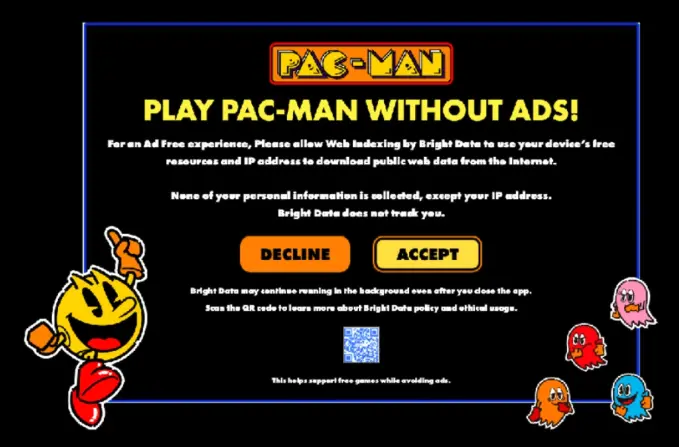
The crackdown targets commercial proxy networks that payload casual applications—ranging from classic games like Pac-Man to digital screensavers and file management tools—with third-party proxy code. Once installed, these SDKs allow paying commercial clients to route their own web traffic through the consumer’s home IP address.
Following findings published by cybersecurity telemetry platform Spur and reported by KrebsOnSecurity, LG confirmed it is enforcing mandatory app store compliance. Developers offering webOS applications containing residential proxy options must remove the code immediately or face total suspension from the platform.
This intervention underscores growing security concerns surrounding the Internet of Things (IoT) software ecosystem. Smart TVs—frequently under-monitored, constantly connected, and rarely equipped with endpoint protection—have quietly emerged as prime targets for commercial bandwidth harvesting, raising critical questions about device governance, household consent, and platform accountability.
Detailed Chronology: From Telemetry to Platform Enforcement
+-----------------------------------------------------------------------------------+
|                                 TIMELINE OF EVENTS                                |
+-----------------------------------------------------------------------------------+
|  Early July       | Spur releases telemetry showing 42%+ of LG webOS apps & 25%+  |
|                   | of Samsung Tizen apps contain residential proxy SDKs.         |
|-------------------|---------------------------------------------------------------|
|  July 2           | Initial investigative report exposes commercial proxy networks|
|                   | leveraging smart TV app monetization models.                  |
|-------------------|---------------------------------------------------------------|
|  Mid-July         | LG Electronics USA issues direct ultimatum to developers:     |
|                   | Strip proxy SDKs from webOS apps or face immediate suspension.|
|-------------------|---------------------------------------------------------------|
|  Mid-July (Cont.) | Bright Data defends operations, citing PwC compliance audits  |
|                   | and explicit user consent prompts within app interfaces.      |
|-------------------|---------------------------------------------------------------|
|  Late July        | LG faces concurrent scrutiny over Windows Update driver       |
|                   | bundling McAfee promotion apps on PC monitors (Gamers Nexus). |
+-----------------------------------------------------------------------------------+
The Initial Discovery
The issue gained widespread attention when cybersecurity firm Spur, which tracks proxy infrastructures and botnet topologies, published comprehensive telemetry detailing the penetration of residential proxy SDKs within smart TV application stores. Spur’s audit revealed that 42 percent of tested applications available on LG’s webOS platform contained embedded proxy components. A parallel analysis of Samsung’s Tizen operating system revealed that more than a quarter (25 percent) of its available applications carried similar proxy payloads.
The Media & Security Exposure
On July 2, cybersecurity investigative outlet KrebsOnSecurity highlighted Spur’s research, exposing how casual developers were quietly turning living-room hardware into nodes for global traffic-routing services. The report detailed how proxy providers incentivize app creators by offering financial payouts for every megabyte of data routed through an end-user’s internet connection.
LG’s Policy Enforcement Shift
Responding directly to inquiry regarding Spur’s findings, John Taylor, Senior Vice President of LG Electronics USA, confirmed that the company had launched an internal review and issued an explicit mandate to all webOS software creators.
"A residential proxy network is not an intended use for LG smart TVs, and LG Electronics is working with developers to remove the residential proxy option from their apps on the webOS platform," Taylor stated. "If this option is not removed, these apps will be suspended."
Taylor emphasized that LG’s app evaluation and vetting processes are undergoing an overhaul to permanently prevent residential proxy SDKs from entering the webOS catalog.
Bright Data’s Response and Parallel Controversies
As LG moved to scrub proxy code, Bright Data—identified by Spur as the dominant residential proxy vendor embedded across both LG and Samsung TV applications—issued a formal statement defending its business model. The company maintained that its network relies on explicit user consent and rigorous customer verification.
Concurrently, LG’s software practices faced scrutiny on another front. A report by hardware review outlet Gamers Nexus revealed that certain LG LCD desktop monitors were automatically pushing third-party promotional software—specifically McAfee antivirus subscription prompts—onto users’ systems via Microsoft Windows Update drivers without explicit opt-in confirmation. This highlighted broader systemic challenges regarding software monetization within LG’s hardware units.
Supporting Context & Metrics: The Mechanics of Smart TV Proxy SDKs
Understanding the Residential Proxy Economy
To understand why smart TVs have become target environments for proxy providers, one must examine the economic architecture of the residential proxy industry:
- The Demand: Web scrapers, market research firms, ad-verification brokers, and data collection operators frequently require access to authentic residential IP addresses. Using residential IPs allows them to bypass anti-scraping blocks, geo-fencing, and bot-detection mechanisms enforced by major websites.
- The Monetization Swap: App developers looking to monetize free applications integrate a proxy provider’s SDK into their software code.
- The User Choice: During installation or execution, the user is presented with a choice: view traditional in-app advertisements or accept an "ad-free" experience by agreeing to share unused device bandwidth.
+------------------------------------------------------------------------------------+
|                       RESIDENTIAL PROXY SDK MONETIZATION FLOW                      |
+------------------------------------------------------------------------------------+
|  [App Developer]  <---> Integrates SDK <--->  [Proxy Provider (e.g., Bright Data)] |
|        |                                                     |                     |
|        v                                                     v                     |
|  [Smart TV User]  <--- Bundled App (e.g., Pac-Man) ---> [External Enterprise Client]  |
|  (Renders IP Node)                                       (Routes Traffic via Home) |
+------------------------------------------------------------------------------------+
Spur Telemetry: Ecosystem Prevalence
Spur’s research provided concrete metrics on how deeply embedded these SDKs had become across major smart TV ecosystems:
| Smart TV Platform | Platform OS | Share of Analyzed Apps Containing Proxy SDKs | Dominant Proxy SDK Provider |
|---|---|---|---|
| LG Smart TVs | webOS | 42%+ | Bright Data |
| Samsung Smart TVs | Tizen OS | >25% | Bright Data / Others |
The types of applications bundled with these SDKs were rarely high-profile streaming platforms like Netflix or YouTube; instead, they consisted of utilities, utility tools, screensavers, and casual software. For instance, Spur identified a version of the arcade game Pac-Man on smart TV app stores that offered players an ad-free experience in exchange for enabling their television to act as a background network relay node.
The Technical & Network Risks
While commercial proxy vendors assert that their services are strictly segregated from local networks, cybersecurity professionals emphasize several inherent risks associated with transforming consumer devices into network proxies:

- Bandwidth & Performance Degradation: Background traffic routing consumes household upload and download bandwidth, causing latency issues for legitimate network traffic.
- IP Reputation Poisoning: If a client using the residential proxy engages in aggressive scraping, credential stuffing, or abuse, the innocent consumer’s home IP address—not the proxy client’s IP—gets blacklisted by security systems and web platforms.
- Consent Deficits & Dark Patterns: A primary criticism raised by security analysts centers on who provides consent. In a shared household environment, a minor or non-technical user launching a casual game on a TV can agree to terms that expose the entire home network’s external IP to third-party traffic routing.
Official Statements & Stakeholder Reactions
LG Electronics USA
Addressing the issue, John Taylor, LG Senior Vice President, framed the company’s response as part of a continuous effort to secure the webOS ecosystem and protect consumer integrity.
"A residential proxy network is not an intended use for LG smart TVs, and LG Electronics is working with developers to remove the residential proxy option from their apps on the webOS platform. If this option is not removed, these apps will be suspended."
"As part of our ongoing efforts to enhance platform quality and the user experience, LG will continue to strengthen our evaluation process for developer-submitted apps, including those that incorporate residential proxy SDKs."
Taylor indicated that LG’s auditing process is actively under way, with developers being required to push updates removing all residential proxy SDK code.
Spur Security Research
Trevor Sutter, speaking on behalf of Spur, challenged the narrative that user opt-in screens within TV apps constitute informed, meaningful consent.
"A one-time consent prompt buried in a TV app is not a substitute for meaningful transparency, ongoing control, and platform oversight. The risk is amplified when consent comes from individuals within the household who use the device but shouldn’t give consent, such as minors."
Spur argued that smart TVs represent an asymmetrical risk surface: consumers view them as traditional home appliances rather than complex internet-connected endpoints, making them ill-equipped to audit or monitor ongoing network routing from their living rooms.
Bright Data
Bright Data, identified as the primary residential proxy SDK provider present across the audited applications, defended the legality, transparency, and operational ethics of its business model in a formal response:
"Every peer opts in through a dedicated screen and receives value in return; every customer is vetted, and our practices have now undergone a second independent audit by PwC."
"We remain committed to an open, transparent internet where legitimate businesses, researchers, and institutions can responsibly access data that lives in the public domain."
Bright Data and similar providers maintain that strict Know-Your-Customer (KYC) onboarding processes prevent threat actors from utilizing their networks for malicious purposes. Additionally, they assert that technological barriers built into their SDKs prevent proxy traffic from pivoting into or interacting with other local devices connected to the user’s home network.
Future Outlook & Strategic Implications
The Escalating Battle Over Smart TV Monetization
LG’s clampdown marks a pivotal moment in the governance of smart TV operating systems. As hardware margins compress, consumer electronics manufacturers have increasingly looked toward software services, advertising networks, and platform licensing for recurring revenue. However, the prevalence of background proxy SDKs demonstrates how third-party app developers have aggressively sought alternate monetization mechanisms—sometimes at the expense of device integrity and user security.
+-----------------------------------------------------------------------------------+
|                        SMART HOME SECURITY IMPLICATIONS                           |
+-----------------------------------------------------------------------------------+
|  1. App Store Curation Gap                                                        |
|     TV OS app stores lack the rigorous static/dynamic analysis sandboxing         |
|     found in mature mobile ecosystems (iOS/Android).                              |
|                                                                                   |
|  2. Asymmetric Household Risk                                                     |
|     Non-administrative users (e.g., children) can authorize platform-wide         |
|     network configurations via casual consent prompts.                            |
|                                                                                   |
|  3. Regulatory Scrutiny                                                           |
|     Impending cyber resilience mandates (e.g., EU Cyber Resilience Act, FTC IoT   |
|     guidance) will hold platform operators accountable for covert background      |
|     data routing.                                                                 |
+-----------------------------------------------------------------------------------+
Industry-Wide Platform Accountability
LG’s decisive action places pressure on competing television manufacturers—most notably Samsung, whose Tizen OS was shown by Spur to host proxy SDKs in more than 25 percent of tested applications. If Samsung and other smart TV platform maintainers (such as Roku, Google TV, and Amazon Fire OS) do not institute equivalent app store bans, their ecosystems risk becoming the primary targets for proxy SDK integration.
Regulatory & Security Policy Pressure
The discovery of pervasive proxy SDKs in smart TVs comes at a time when regulatory bodies worldwide are sharpening their focus on IoT security and consumer privacy:
- FTC & Data Privacy: In the United States, the Federal Trade Commission (FTC) continues to scrutinize opaque data collection practices and dark patterns that trick consumers into consenting to background data tracking or bandwidth sharing.
- EU Cyber Resilience Act (CRA): European mandates are increasingly enforcing "security by default" requirements for connected hardware, placing direct liability on device vendors to audit third-party software components bundled on their hardware.
Key Recommendations for Platform Owners & Consumers
For Platform Operators (LG, Samsung, Sony, Roku):
- Implement Automated SDK Scanning: Integrate static and dynamic binary analysis into app store ingestion pipelines specifically tuned to detect commercial proxy SDK signatures (e.g., Bright Data, NetNut, PacketStream).
- Standardize System-Level Network Controls: Prevent individual unprivileged applications from altering device network routing without platform-level, PIN-protected administrative authorization.
- Establish Clear Developer Guidelines: Ban background proxy bandwidth-sharing models entirely within consumer-facing app stores.
For Consumers & Smart Home Administrators:
- Audit Installed Applications: Periodically review and uninstall unnecessary utility apps, casual games, or custom screensavers on smart TVs.
- Segment IoT Networks: Isolate smart TVs, media players, and IoT appliances onto a dedicated Guest Wi-Fi network or VLAN to prevent potential lateral network access.
- Utilize Router-Level Traffic Monitoring: Monitor network bandwidth consumption across household devices to identify anomalous, high-volume upload activity originating from smart televisions.