An estimated 50 million adults across the United States live with some degree of hearing loss, a pervasive condition that touches nearly every aspect of daily communication, professional engagement, and personal well-being. Yet, despite the widespread prevalence of the issue—and the proven medical consequences of untreated auditory decline—only about 20% of those with a diagnosed impairment actively seek or receive treatment.
The reasons for this stark disparity are complex, deeply rooted in historical industry shortcomings. Traditional hearing aids have long been plagued by societal stigma, prohibitive pricing models, physical discomfort, and the sheer logistical hurdles of acquiring and maintaining specialized medical devices. Furthermore, conventional hardware often relies on legacy directional microphones that struggle to isolate speech in chaotic, real-time acoustic environments like bustling restaurants or crowded family gatherings. This creates an exhausting, cognitively draining listening experience that frequently leads wearers to abandon their devices altogether.
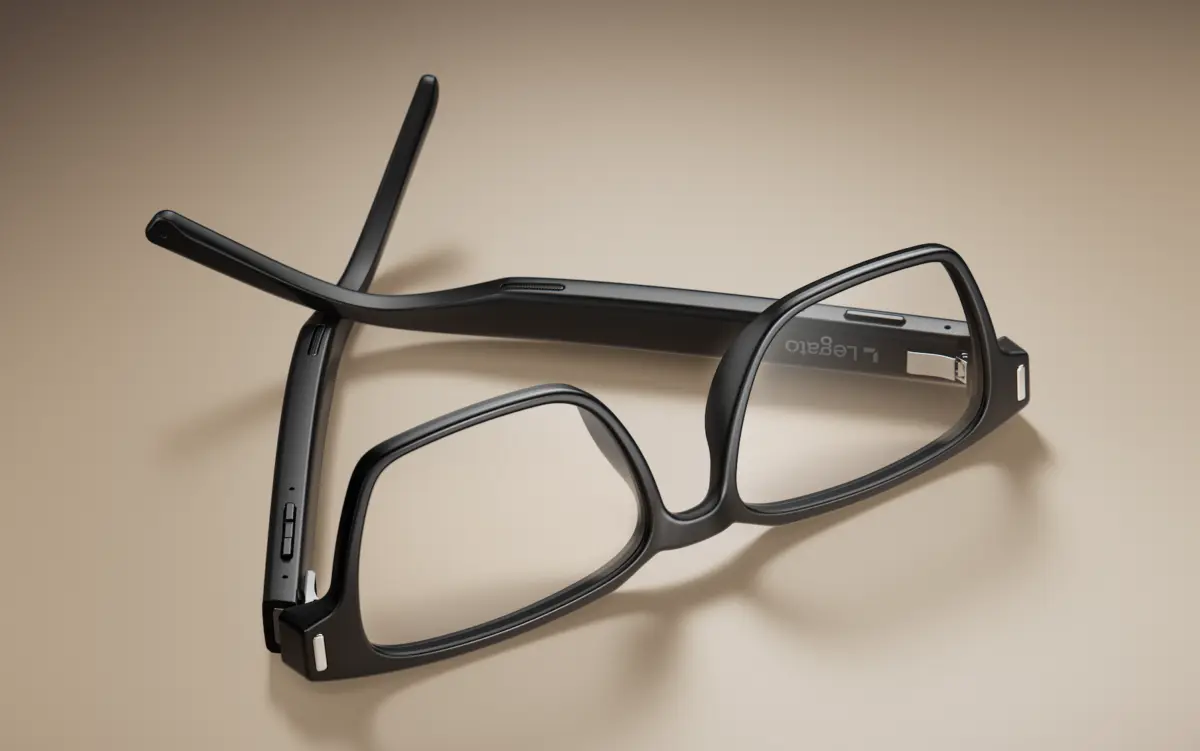
Enter Legato, an ambitious new entrant in the consumer health and wearable technology sector. Emerging from stealth with $12 million in seed and institutional funding, Legato is looking to fundamentally upend the stagnant hearing care market. The company’s core innovation, the forthcoming Legato Frames, cleverly embeds patented, state-of-the-art hearing-assistance technology directly into the arms of ordinary, stylish eyewear. By fusing vision correction with advanced acoustic engineering, Legato aims to achieve a bold mission: making hearing care as ubiquitous, effortless, and socially acceptable as wearing a pair of prescription eyeglasses.
Supported by prominent backers including Neotribe Ventures, Listen, and Village Global, Legato is scheduled to officially launch its flagship product to consumers later this fall through a nationwide network of eye-care providers. By deliberately targeting the underserved demographic of individuals with mild-to-moderate hearing loss, the startup is positioning itself at the lucrative intersection of consumer electronics, artificial intelligence, and preventative healthcare.
Detailed Chronology: From Big Tech Roots to Disruptive Startup
The genesis of Legato is a masterclass in industry experience converging with fresh entrepreneurial vision. The company was co-founded in late 2024 by Mehul Trivedi and Steve Romine, two seasoned veterans of the audio and wearable technology sectors whose paths previously crossed at the consumer electronics giant Bose.
The Bose Pedigree
During their respective tenures at Bose, Trivedi and Romine played pivotal roles in shaping modern personal audio. Trivedi spearheaded the commercial creation and launch of Bose Frames—pioneering audio-augmented sunglasses that proved consumers were eager to wear smart technology on their faces. Romine managed the company’s dedicated hearing aids division, granting him deep, front-line insight into the clinical nuances, regulatory landscapes, and psychological barriers associated with traditional hearing care devices.
Following their time at Bose, the two co-founders pursued separate, high-profile trajectories in the wearable space. Trivedi transitioned to EssilorLuxottica, where he led smart eyewear initiatives and played a foundational role in the development and rollout of the blockbuster Meta Ray-Ban smart glasses. Romine, meanwhile, deepened his expertise in direct-to-consumer auditory solutions by serving as the Chief Operating Officer of Audicus, a prominent digital-first hearing aid provider.
The Spark of Innovation
Despite their success within major corporate ecosystems, both executives recognized a persistent market gap. During a period of professional sabbatical, Trivedi began intensely researching the convergence of advanced hearing technology and everyday smart eyewear. His deep dive led him to discover a novel suite of acoustic and signal-processing technologies that he believed could finally bridge the historical divide between vision hardware and hearing assistance.
Recognizing the immense potential of the breakthrough, Trivedi reached out to Romine. Combining Trivedi’s mastery of smart eyewear form factors and consumer product scaling with Romine’s deep-seated knowledge of audiology and hearing care operations, the duo officially established Legato in late 2024.
The intervening months have been defined by rapid, stealthy execution. Backed by $12 million in early-stage capital, the co-founders quickly transitioned their intellectual property from the drawing board to functional hardware prototypes. The majority of the startup’s initial funding has been strategically channeled into rigorous product research and development, mechanical architecture refinement, and early marketing groundwork to ensure a seamless retail launch.
Supporting Context & Metrics: The Scale of the Problem and the Tech Behind the Solution
To truly understand Legato’s market opportunity, one must examine the staggering statistics surrounding auditory health in the modern world, as well as the technological innovations required to solve them.
The Hearing Loss Crisis
50 Million: The approximate number of adults in the United States currently affected by hearing loss.
20%: The shockingly low percentage of diagnosed individuals who actually pursue treatment or utilize assistive devices.
Mild-to-Moderate Demographics: The primary target segment for Legato, representing the largest, most underserved slice of the overall hearing-loss population who often feel traditional medical-grade hearing aids are "overkill" for their daily needs.
Beyond Clear Audio: The Broader Health Implications
As Trivedi emphasizes, addressing hearing loss is rarely just about catching the dialogue on a television program or hearing a whisper across a room. At its core, the issue is fundamentally about human connection. Clinical research has repeatedly demonstrated strong correlations between untreated hearing loss and accelerated cognitive decline, social isolation, clinical depression, and an increased risk of developing dementia. By lowering the psychological and financial barriers to continuous auditory support, wearable technologies like Legato Frames have the potential to deliver profound preventative healthcare outcomes.
Engineering the Impossible: Form Factor Meets Acoustic Physics
Developing an audio-assistive device that fits inside the slim, delicate arms of a standard pair of eyeglasses required overcoming monumental engineering hurdles. Traditional hearing aids rely on bulky behind-the-ear or in-canal housings to accommodate directional microphones, amplifiers, and power sources.
Legato tackled this constraint by designing a proprietary acoustic system, a custom signal-processing software stack, and a revolutionary mechanical architecture from the ground up.
Open-Ear Design with Privacy: While the frames utilize an open-ear design that leaves the ear canals unblocked—drastically improving comfort and eliminating the "occlusion effect" common in traditional hearing aids—they do not leak sound into the surrounding environment. Legato integrated a sophisticated dual-speaker system that projects sound directly toward the wearer’s ear while simultaneously executing real-time acoustic cancellation. As a result, sound leakage is reduced by a staggering 99% just a few inches away from the user, ensuring total privacy.
AI-Driven Sound Separation: Traditional hearing aids often depend on basic directional microphones that amplify whatever sound happens to be directly in front of the user. While effective in quiet rooms, this approach fails miserably in dynamic environments like restaurants, where background chatter, clinking silverware, and ambient music create an acoustic soup. Legato replaces this legacy approach with an advanced, AI-powered processing system. The onboard artificial intelligence continuously analyzes the acoustic landscape, dynamically differentiating between ambient background noise and human voices. It selectively amplifies only the speech components, providing crystal-clear conversations without inflicting the mental exhaustion typical of conventional devices.
Frictionless Usability: Eschewing complex smartphone apps, manual volume rollers, or tiny configuration buttons, the Legato experience is designed to be completely invisible to the user’s daily routine. The glasses are built to be donned in the morning and worn comfortably for up to 16 hours straight without requiring manual fiddling or constant configuration.
Official Statements and Industry Vision
The leadership team at Legato envisions a future where taking care of one’s hearing is as routine as putting on prescription lenses to correct blurry vision.
In an exclusive interview detailing the startup’s public unveiling, Co-Founder Mehul Trivedi articulated the company’s grand philosophical ambition:
"Our goal is to make hearing as ubiquitous as vision. It’s kind of a no-brainer that you go to an eye exam, you get your glasses, you wear your glasses, and you’re happy, and you do that for the rest of your life — and the idea of it being blurry again where you would just stop wearing them is not a consideration. I think that’s what we want to do with hearing: just make it something that people address and almost forget about."
Elaborating on the unique user experience they set out to create, Trivedi emphasized the importance of eliminating compromise:
"We wanted to deliver an experience that was unique. So a form factor that’s really discreet and looks normal. They’re meant to feel and look like regular glasses. And so, we want it to be a product that’s effortless, easy to use, with kind of no controls that you need to fiddle with, works everywhere, works throughout your day, doesn’t need a ton of configuration, and just delivers you better hearing."
Connecting the product back to its broader societal mission, Trivedi underscored the deep clinical importance of daily wear:
"We have an opportunity to address a population with this product and build something that delivers without all the compromises of traditional hearing aids. Hearing, at first glance, it’s not so much just like ‘I want to hear the TV better.’ It’s really about connection. When you hear better, you connect to the world. It reduces dementia risk and depression risk. There’s impactful hearing health factors associated with better hearing. We’ve got a product that lives on people for 16 hours that is trusted to help them with their hearing and their vision, and we’d love to continue helping them in every way we can."
Future Outlook: Distribution Strategy and Market Disruption
As Legato prepares for its commercial debut in the fall, all eyes will be on how the market receives this novel category of AI-powered hearing eyewear. The startup’s go-to-market strategy represents a strategic departure from both traditional audiology clinics and purely direct-to-consumer e-commerce brands.
Rather than selling strictly online or through specialized hearing aid dispensers, Legato plans to distribute its frames primarily through select eye-care providers nationwide. This hybrid healthcare-retail approach is brilliant in its simplicity: it meets consumers where they are already accustomed to purchasing vision correction, normalizing the acquisition of hearing technology within a trusted medical and retail environment.
Furthermore, by embedding the technology into standard eyewear frames, Legato expects to price its product at a fraction of the cost of traditional, high-end medical hearing aids, which frequently retail for thousands of dollars out-of-pocket. Crucially, because the devices are distributed through eye-care clinics and double as prescription or non-prescription eyewear, purchasers may be eligible to utilize their vision insurance benefits to offset the cost—a massive win for consumer affordability.
What Lies Ahead
Legato’s $12 million seed injection provides the startup with a solid financial runway to execute its upcoming product launch, scale its manufacturing partnerships, and expand its footprint across optometry and ophthalmology clinics nationwide. If the company succeeds in bridging the psychological gap between vision care and hearing assistance, Legato Frames may well catalyze a paradigm shift across the entire consumer health tech landscape.
By eliminating stigma, slashing costs, leveraging cutting-edge artificial intelligence, and wrapping everything into a familiar, stylish form factor, Legato is poised to transform how millions of adults interact with the acoustic world—proving that better hearing can finally be seen, without ever being noticed.