








By Investigative Tech Desk
Executive Overview
Germany’s aggressive anti-piracy landscape is facing a pivotal crossroads. For years, copyright holders and Internet Service Providers (ISPs) have operated a specialized clearinghouse—the Clearing Body for Copyright on the Internet (CUII)—to bypass traditional legal red tape and enact swift blockades against structural copyright infringers. While the underlying philosophy of CUII has always relied on the principle that illegal content must vastly outweigh legal material on a targeted domain, recent legal actions and newly uncovered regulatory paperwork have thrown a spotlight on the math behind these blockades.
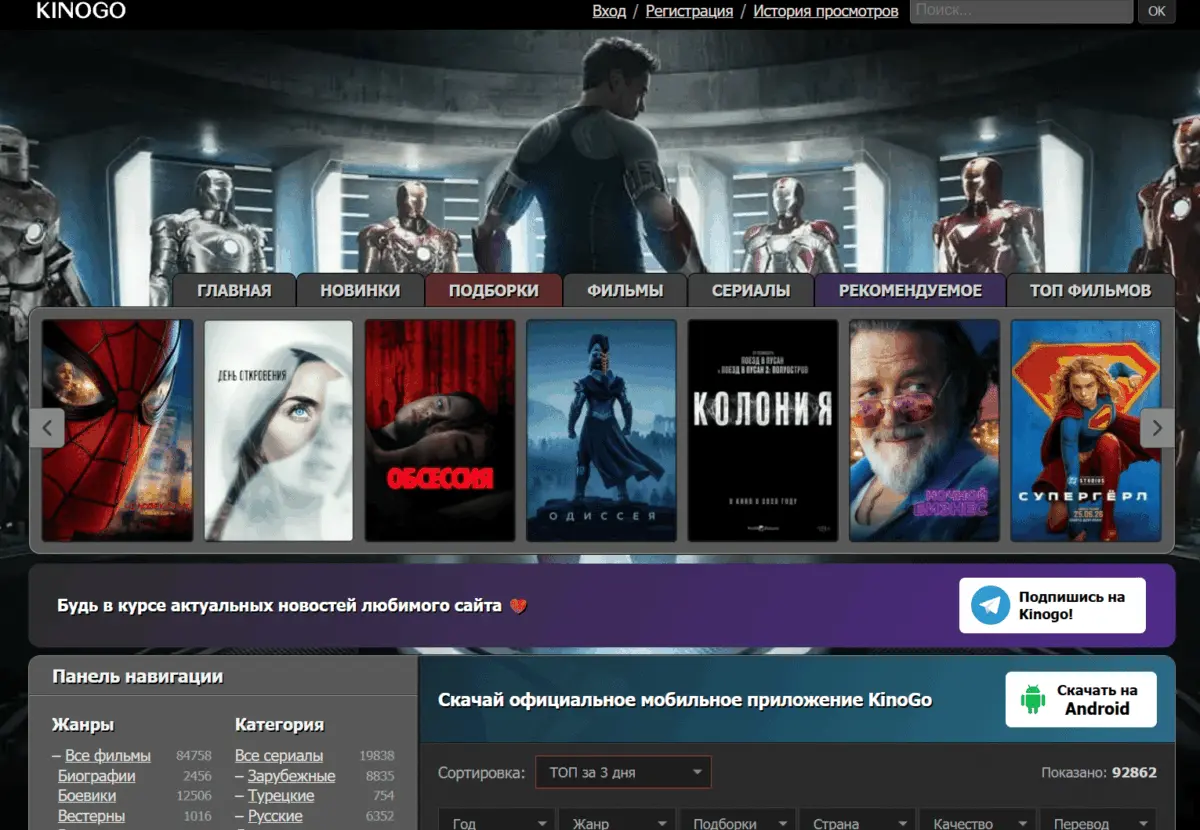
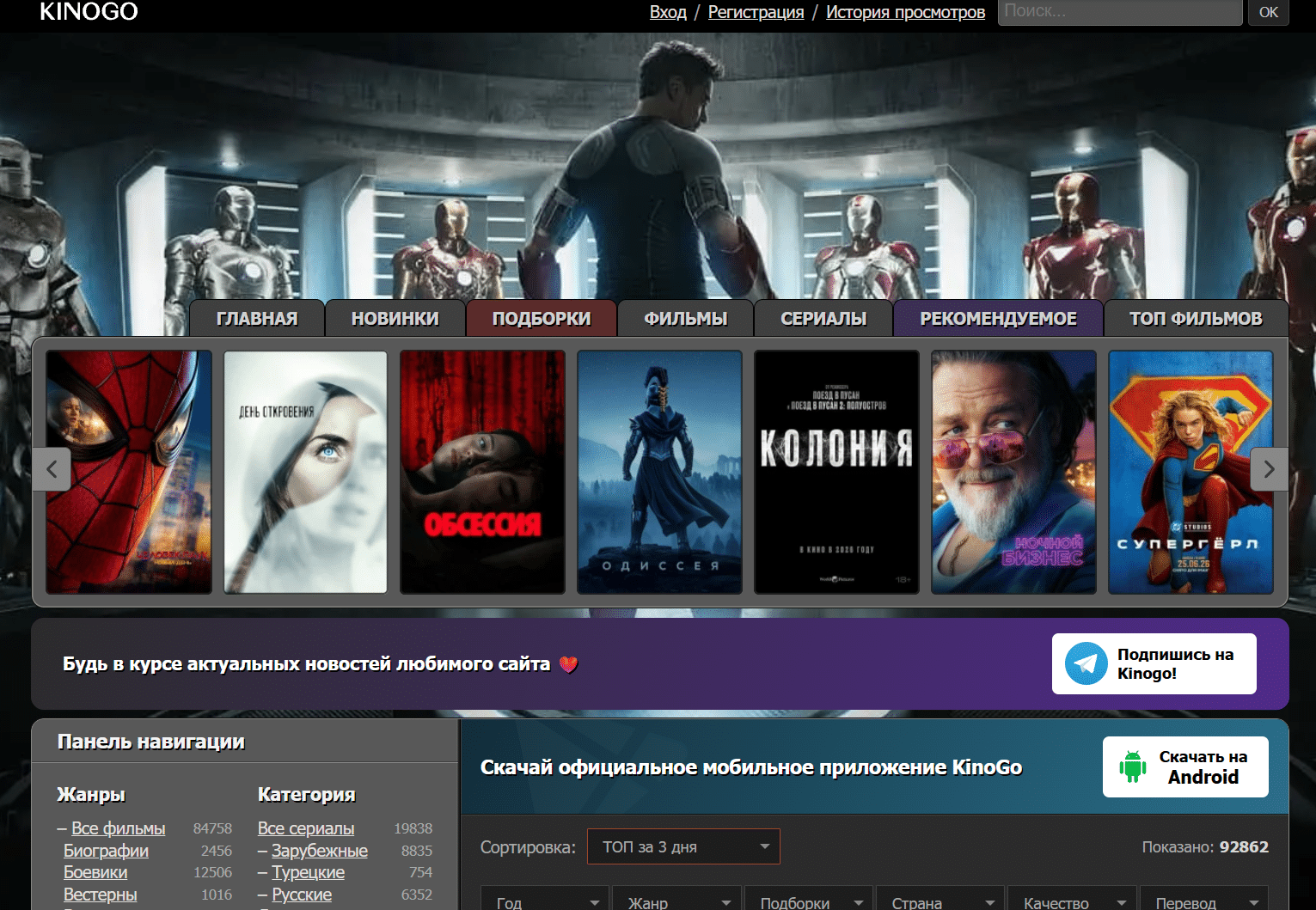
Recent court actions from the Cologne Regional Court have highlighted an emergent quantitative baseline: an 81.5% infringement floor. When streaming giants like KinoGo are brought down with an infringing library share evaluated as low as 82.4%, the question of what constitutes a "structurally infringing" platform becomes far more than an abstract legal debate. It transforms into a high-stakes guessing game of statistics, random sampling, and potential systemic exploits.
This deep-dive investigation examines how Germany’s site-blocking mechanisms function following structural legal reforms in mid-2025, analyzes the statistical thresholds utilized by private investigators, reviews historical data on blocked domains, and explores whether site operators could theoretically exploit these metrics by padding their libraries with legal content.
Detailed Chronology & Structural Evolution of CUII
The Administrative Era (2021–Mid-2025)
When major German internet providers first joined forces with copyright holders in March 2021, the system was designed for maximum speed and minimal bureaucratic friction. Operating under the auspices of CUII, a specialized committee was empowered to issue administrative blocking recommendations. Once the committee flagged a site, the Federal Network Agency provided a regulatory sign-off, and ISPs immediately implemented DNS and IP-level blocks.
This framework effectively streamlined site censorship in Germany, cutting out the drawn-out timelines of traditional civil litigation. However, it also courted significant criticism from civil liberties groups and digital rights advocates who pointed out a glaring lack of judicial oversight and institutional transparency.
The Judicial Shift (Mid-2025–Present)
Recognizing growing vulnerabilities regarding due process, the stakeholders behind the German site-blocking regime fundamentally rewrote their code of conduct in mid-2025. Under the updated framework, administrative-only decrees were largely retired in favor of a court-backed approach.

Today, every new site-blocking action must originate with a rightsholder filing a formal lawsuit against at least one participating ISP. Once a competent court—most notably the Cologne Regional Court—confirms the legitimacy of the block, the remaining ISPs fall in line and enact the blockade across their networks.
While CUII no longer holds the sole authority to issue binding legal orders, it remains the central intelligence hub. The clearinghouse continues to communicate block recommendations, publish detailed technical dossiers, and aggregate transparency metrics for all participating telecom giants. Recent July 2026 filings reveal that this reformed judicial pipeline is running at full throttle, successfully targeting prominent portals such as Streamed (streamed.pk, streamed.st) and KinoGo (kinogo.ec).
Supporting Context & Metrics: The Science of Structural Infringement
To secure a blocking order under the current German regime, rightsholders cannot merely complain about isolated links of pirated content. They must prove that the target platform is a structurally copyright-infringing website, making a blocking order legally "reasonable and proportionate."
The Investigator’s Sampling Methodology
Because examining an entire multi-terabyte pirate streaming site or forum database is practically impossible, CUII and rightsholders rely on a rigorous statistical methodology.
- Randomized Sampling: A private investigator is commissioned to pull a random sample of content directly from the target domain.
- Statistical Confidence: The sample size is calculated to evaluate the site’s overall library at a strict 95.5% confidence level.
- Infringement Ratio: The resulting data yields an interval representing the minimum and maximum percentage of infringing content present on the site.
For example, recent data paints a stark picture of how heavily compromised these domains are:
- Streamed: Evaluated between 96.16% and 100% infringing content.
- KinoGo: Evaluated between 82.4% and 94.6% infringing content.
Historical Context: The Evolving Threshold Table
| Target Domain | Ruling Date | Estimated Infringement Share |
|---|---|---|
| KinoGO | July 2026 | 82.4% to 94.6% |
| LIVETV.SX | April 2026 | 85.28% to 96.72% |
| SPORTPLUS | February 2026 | 88.8% to 100% |
| MegaKino | February 2024 | 89.8% to 100% |
| Kinoger | November 2025 | 91.4% to 99.0% |
| Anna’s Archive | September 2025 | 91.6% to 94.8% |
| NSWPedia | January 2026 | 94.4% to 99.8% |
| s.to | February 2021 | 94.84% to 100% |
| LibGen | May 2024 | 96.07% to 98.23% |
| Streamed | July 2026 | 96.16% to 100% |
| cine.to | June 2022 | 96.28% to 100% |
The 81.5% "Line" and the Threat of Legal Padding
The most explosive revelation to emerge from recent CUII document disclosures is the crystallization of a specific percentage: 81.5%.
In a March 2025 block order targeting major streaming and download portals (HDFILME, STREAMCLOUD, and FILMPALAST), CUII explicitly outlined the legal standard for dominance:

"The illegal content on the websites far outweighs the legal content. This is the case in any event when at least 81.5% of the website’s content is illegal."
This precise figure traces back to a January 2025 default judgment handed down by the Cologne Regional Court against the download portal NOX—a case left entirely uncontested by the site’s operators.
The KinoGo Close Call
With KinoGo’s lower statistical bound registering at 82.4%, the site skirted dangerously close to the 81.5% mark. When a platform drifts this close to the regulatory floor, it raises fundamental questions about the stability of the metric. If a site dips below 81.5%, does legal content officially outweigh pirated content? And if so, does the site instantly become immune to CUII blockades?
The "Legal Filler" Exploit Dilemma
This mathematical baseline invites a fascinating theoretical loophole: Can pirate sites weaponize legal content to evade censorship?
In theory, an enterprising site operator could aggressively pad their digital library with public domain movies, open-source creative commons media, or massive tranches of AI-generated filler content. By artificially inflating the total volume of legitimate files, an operator could theoretically drag the private investigator’s random sample interval well below the 81.5% line—all while keeping their core library of high-demand pirated Hollywood blockbusters entirely intact.
Official Statements and Regulatory Clarifications
To address these pressing questions regarding statistical boundaries and potential exploits, TorrentFreak reached out directly to the Clearing Body for Copyright on the Internet (CUII) for clarification.
CUII’s Official Position
In an official statement addressing the 81.5% metric, CUII pushed back against the idea that the figure represents a rigid quantitative quota:
"81.5% is not a fixed quantitative limit," CUII stated, pointing instead to the underlying proportionality test established by the Federal Court of Justice.
According to CUII, a site blockade is legally proportionate when illegal content so comprehensively dominates the platform that any remaining legal content is rendered entirely negligible. The clearinghouse emphasized that the courts do not look at percentages in a vacuum:
"The decisive question is not a percentage, but whether a site operates an infringement-based business model that is criminal under German copyright law. CUII blocks only domains used for such sites."
Consequently, CUII dismissed the viability of the "legal filler" exploit, noting that simply padding a database with public domain or AI-generated media would fail to alter the holistic, criminal character of an established pirate enterprise.
Future Outlook: Malware, Expansion, and the Road Ahead
As Germany’s site-blocking machinery continues to mature under its hybrid judicial-administrative model, the scope of targeted domains is expanding rapidly beyond traditional movie and television streaming portals.
Alongside high-profile media targets like KinoGo and Streamed, CUII’s net has widened to capture alternative distribution hubs, including academic shadow libraries like Anna’s Archive, ebook repositories like LibGen, and gaming ROM repositories like Romsns.com. Fresh transparency disclosures reveal that Romsns.com was recently added to the official block list—a decision reinforced by security scans from platforms like VirusTotal, which flagged the domain for multiple malware distributions.
What Lies Ahead?
- Litigation Bottlenecks: While the mid-2025 shift requiring an initial court judgment introduced much-needed judicial oversight, it remains to be seen whether rightsholders will face scaling bottlenecks as they are forced to initiate formal lawsuits for every new target domain.
- Evasion Tactics: As anti-piracy algorithms and private investigator sampling techniques grow more sophisticated, operators of illicit networks will likely pivot toward decentralized architectures, rapid domain-hopping, and encrypted delivery mechanisms that defy simple DNS-level ISP blocks.
- The Resilience of the Business Model: Despite the courts drawing lines at 81.5% and scrutinizing proportionality, the enduring global demand for unauthorized content—exemplified by KinoGo’s 50 million monthly visits—ensures that the cat-and-mouse game between German rightsholders and pirate infrastructure will persist for the foreseeable future.