Executive Overview
Artificial intelligence has officially crossed the threshold from a speculative technological curiosity into the most fiercely contested battleground in the modern music industry. As major record labels, independent publishers, and powerful labor coalitions scramble to establish legal boundaries, copyright protections, and transparent labeling mandates, one of hip-hop’s most visionary architects has stepped forward to offer a radically different perspective.
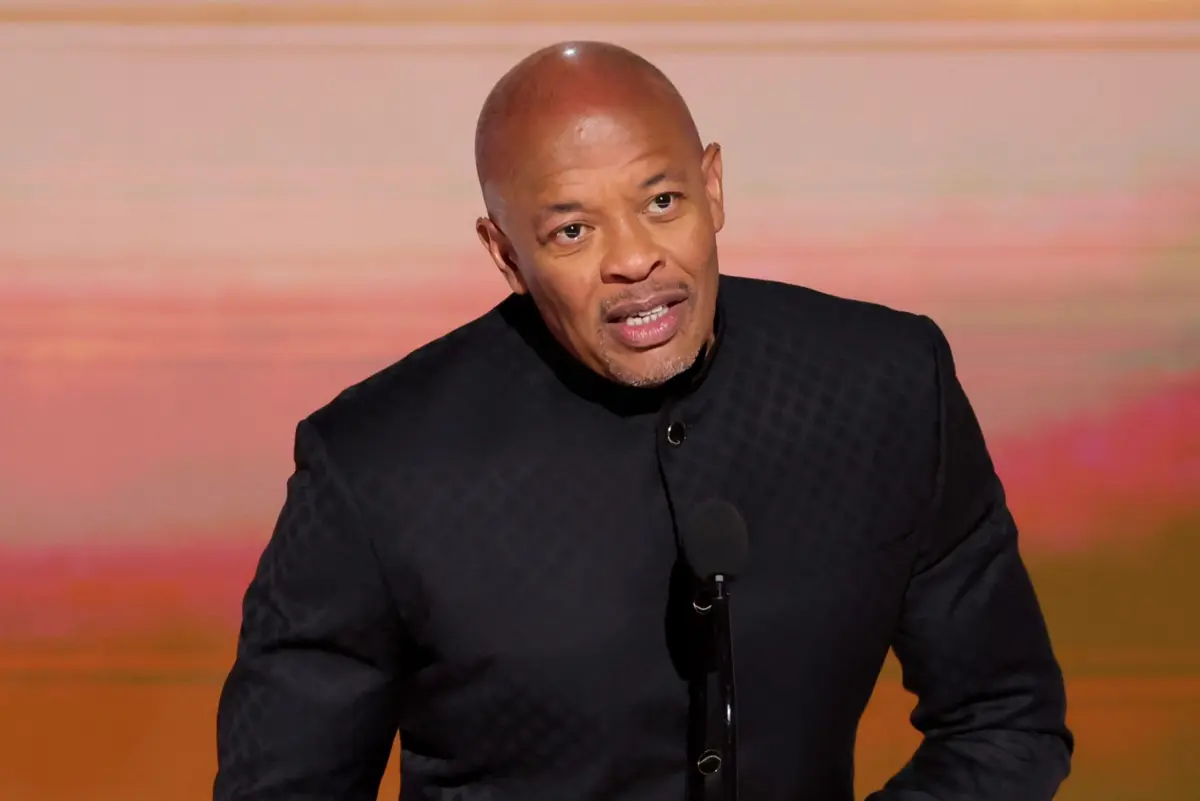
Dr. Dre, the legendary producer, performer, Aftermath Entertainment founder, and Beats by Dre co-founder, has boldly declared that artificial intelligence should not be feared as an existential threat to human artistry. Instead, he views it as the latest revolutionary instrument in the producer’s toolbox—comparable to the introduction of the synthesizer or the drum machine decades ago. According to Dre, apprehension toward AI stems primarily from a lack of foundational creativity rather than any legitimate artistic menace.
This viewpoint, shared alongside his longtime business partner and collaborator Jimmy Iovine in a comprehensive interview with The New York Times, arrives at a critical juncture. The broader commercial music ecosystem is currently paralyzed by high-stakes copyright litigation, legislative lobbying, and frantic policy shifts by streaming giants like Apple Music and Spotify. Yet, for elite hitmakers like Dre and fellow producer Timbaland, the technology represents an experimental frontier—a dynamic mechanism to test, iterate, and push sonic boundaries.
This report examines Dr. Dre’s provocative stance on artificial intelligence, contextualizes it within his monumental career milestones—including his recent entry into the billionaire ranks and historic corporate exits—and analyzes the turbulent, high-stakes legal and regulatory wars shaping the future of AI in recorded music.
Detailed Chronology: From Analog Pioneers to AI Integration
To fully understand Dr. Dre’s relaxed, pragmatic philosophy toward generative music technology, one must trace the evolutionary trajectory of modern music production. The skepticism currently greeting artificial intelligence is by no means unprecedented; it is merely the latest chapter in a long history of resistance to technological disruption within the creative arts.
The Historical Precedent of Disruption
When electronic rhythm composers, commonly known as drum machines, first emerged in the mid-20th century and gained mainstream traction in the 1980s, traditional instrumentalists frequently dismissed them as sterile, soulless gadgets that would destroy the integrity of human drumming. Similarly, when Robert Moog and other visionaries popularized the synthesizer, classical traditionalists and purists argued that electronic waveforms could never replicate the emotional resonance of acoustic instruments.
Dr. Dre experienced these shifts firsthand. Rising to prominence as a founding member of the World Class Wreckin’ Cru and later as the sonic mastermind behind N.W.A, Dre helped pioneer the West Coast G-funk sound by aggressively embracing emerging samplers, drum machines, and digital workstation technologies. He weaponized these innovations to create dense, layered, funk-infused soundscapes that defined an era of hip-hop.
[Analog Era: Live Instruments]
       │
       ▼ (Disruption: Drum Machines & Synthesizers)
[Digital Revolution: Samplers & DAWs]
       │
       ▼ (Current Disruption: Generative AI Tools)
[The Modern Producer's Arsenal]
When discussing artificial intelligence with The New York Times, Dre drew a direct parallel to these past industrial panics. Recounting a recent debate with industry peers who fiercely opposed AI, Dre recalled his response:
"OK, you sound like the person that would have been against the drum machine when it came out. Or synthesizers, right? It’s a new tool for creativity. Some people are afraid of learning new things."
Modern Implementation and "Closet" Producers
Unlike critics who view AI exclusively as a mechanism to clone human voices or automate song generation wholesale, Dre frames his personal use of the technology through an experimental, iterative lens. He utilizes AI algorithms not to bypass the creative process, but to converse with his own compositions: "as a tool to see what it would do with what I just did."
Jimmy Iovine reinforced this sentiment, noting that other elite architects of modern rhythm and sound are quietly engaging with the technology behind closed doors. "So is Timbaland—another brilliant producer," Iovine remarked. "By the way, there’s a lot of closet AI producers out there."
This pragmatic adoption by industry titans highlights a profound schism in the music world. While underground creators and top-tier producers experiment with generative models to spark ideas, expand chord progressions, or alter audio textures, the institutional framework of the music business is locked in aggressive combat with AI developers.
Supporting Context & Metrics: Empire Building and Financial Milestones
Dr. Dre’s authoritative voice in these debates is underpinned by a career defined by unprecedented commercial success, technological disruption, and financial accumulation. His ability to anticipate consumer trends and hardware shifts has consistently placed him decades ahead of the curve.
Reaching Billionaire Status
In early 2026, Dr. Dre achieved a historic career milestone when he was officially named to Forbes’ 2026 Billionaires List for the very first time. At 61 years of age, Dre’s estimated net worth officially surpassed the $1 billion threshold, cementing his legacy not only as a cultural icon but as one of the most astute entrepreneurs in entertainment history.
This financial milestone builds upon decades of high-value corporate transactions:
- The Apple-Beats Acquisition (2014): Alongside Jimmy Iovine, Dre co-founded Beats Electronics and Beats Music. In May 2014, Apple acquired the hardware and streaming juggernaut in a landmark deal valued at $3 billion, instantly reshaping the tech and music landscapes and making Dre one of the wealthiest figures in hip-hop.
- Catalog Divestment (2023): Demonstrating continued financial maneuvering, Dre executed a massive transaction selling a collection of his master recording income streams, music publishing assets, and related properties to Shamrock Holdings and Universal Music Group for over $200 million.
The Intersection of Tech and Culture
Given his deep ties to Apple—where he served as an executive following the Beats acquisition—Dre’s perspective on technological integration carries immense weight. He has consistently operated at the intersection where hardware meets culture, making his assessment of artificial intelligence less of a theoretical musing and more of a calculated observation from a seasoned industry titan.
Interestingly, when asked by interviewers what query he most recently submitted to an AI chatbot, Dre bypassed complex musical prompts entirely, offering a grounded, human response: "How do you put on muscle and lose fat at the same time? That’s everything."
Official Statements and Industry-Wide Legal Battles
While Dr. Dre and his peers view generative technology through the lens of creative experimentation, the broader music industry is embroiled in existential legal warfare. The fundamental conflict centers on data ingestion: generative AI models require massive datasets of copyrighted audio to train their neural networks, frequently scraping commercial music without authorization, licensing, or compensation.
Landmark Copyright Lawsuits
The legal landscape shifted dramatically in the weeks leading up to Dre’s interview, marked by major lawsuits targeting prominent AI music generation and technology firms:
- Round Hill Music vs. Suno and Anthropic:
Independent music publisher Round Hill Music filed a sweeping copyright infringement lawsuit against AI companies Suno and Anthropic. The complaint alleges that both firms systematically scraped hundreds of copyrighted songs to train their large language and audio models without securing permissions or paying licensing fees. - Major Label Actions Against Suno:
Suno has faced mounting pressure from the "Big Three" record labels—Universal Music Group, Sony Music Entertainment, and Warner Music Group. While Suno reached a landmark settlement with Warner Music Group last year, and subsequently struck a licensing agreement with BMG (which separately sued Anthropic over what it termed "widespread and systematic infringement"), the litigation battle remains fierce across the sector.
The Push for Universal Labeling and Transparency
As courts attempt to untangle the complexities of fair use and training data copyright, trade organizations and streaming platforms are rushing to implement self-regulatory measures to protect consumers and human artists.
- Spotify’s "AI Persona" Tag: Spotify rolled out strict profile labeling protocols, identifying artist accounts that appear to be entirely computer-generated as "AI Personas" to ensure listeners know the origin of the content they stream.
- Apple Music’s Transparency Mandate: Apple Music announced plans to introduce automated labeling for tracks derived from AI platforms later this year, aligning with consumer demand for transparency.
- The Global Coalition Initiative: Last month, a powerful coalition comprising the RIAA (Recording Industry Association of America), IFPI, the Recording Academy (The Grammys), and SAG-AFTRA united to demand a universal industry labeling program for AI-produced and AI-assisted songs. Much like mandatory parental advisory labels flagging explicit lyrical content, this proposed system aims to tag synthetic audio clearly across all digital service providers.
Future Outlook: Navigating the Synthetic Horizon
The dichotomy between Dr. Dre’s optimistic embrace of artificial intelligence and the music industry’s defensive legal posture highlights a defining paradox of the digital age: tools of creation are inherently dual-use.
┌────────────────────────────────────────────────────────┐
                 THE MUSIC INDUSTRY'S AI PARADOX
└────────────────────────────────────────────────────────┘
          │                                      │
          ▼                                      ▼
┌──────────────────┐                  ┌──────────────────┐
│   CREATIVE USE   │                  │  LEGAL/ETHICAL   │
│ (Dre / Timbaland)│                  │ (Labels / RIAA)  │
├──────────────────┤                  ├──────────────────┤
│ • Sound design   │                  │ • Data scraping  │
│ • Iteration      │                  │ • Unauthorized   │
│ • Idea testing   │                  │   voice cloning  │
│ • New "synth"    │                  │ • Copyright theft│
└──────────────────┘                  └──────────────────┘
For visionary producers who understand the fundamental grammar of music composition, AI functions simply as an advanced synthesizer—an amplifier of human imagination. To these creators, the technology does not replace the soul of the artist; it merely accelerates the synthesis of new ideas.
Conversely, for publishers, labels, and labor unions representing millions of session musicians, songwriters, and vocalists, unconstrained generative AI poses a catastrophic threat to economic livelihood and intellectual property rights. Without robust legislative frameworks, transparent metadata tagging, and mandatory licensing agreements, the commercial viability of human-authored music risks being undermined by infinite streams of synthetic content.
Ultimately, Dr. Dre’s diagnostic assessment cuts to the heart of the matter. The fear of artificial intelligence in the arts is rarely about the technology itself, but rather about the adaptability of the creator. As the legal battles in federal courts play out and streaming platforms enforce rigorous labeling standards, the music industry is undergoing a permanent transformation. Those who survive and thrive will likely adopt Dre’s mindset—treating AI not as an enemy to be feared, but as a disruptive canvas waiting to be shaped by human vision.