Executive Overview
In the modern digital ecosystem, the seamless fluidity of the internet often creates an illusion of instantaneous permanence. Users have grown accustomed to typing a query into a search bar, clicking a result, and immediately accessing their destination. However, beneath this polished veneer lies a complex, highly mechanical infrastructure governed by crawl budgets, server redirects, and search engine indexing latency. When a high-traffic web platform modifies its online address—whether for structural load-balancing, cybersecurity hardening, or infrastructural optimization—a distinct friction emerges between the live web environment and what search engines display to the public.
This friction is particularly visible during platform migrations of large-scale digital literature repositories, such as Z-Library. Maintaining expansive academic databases, textbooks, and general-interest publications requires robust network management, which occasionally necessitates shifting core domain names. When these transitions occur, users frequently encounter cached search results, temporary indexing gaps, and outdated directory links.
Understanding the mechanics of search engine indexing latency transforms how digital navigators interpret these transitions. Rather than viewing temporary link anomalies as service disruptions, recognizing them as standard administrative and algorithmic delays provides a clearer picture of how modern web architecture operates. This report explores the technical realities of domain migrations, the mechanics of crawl latency, the nuances of maintaining continuous access to extensive online repositories, and the strategies users can employ to navigate the shifting digital landscape.
Detailed Chronology: The Anatomy of a Web Domain Migration
To comprehend why a platform’s web address can appear altered in search engine results pages (SERPs), one must examine the chronological sequence of a web domain migration. A domain transition is rarely an abrupt, instantaneous flick of a switch; rather, it is a calculated, multi-stage engineering process that unfolds over days, weeks, or even months.
Phase 1: Preparation and Infrastructure Provisioning
Before any public-facing change occurs, platform administrators configure new hosting environments, secure fresh domain names, and replicate backend databases. For massive document repositories hosting millions of academic journals, monographs, and literary texts, data integrity is paramount. User account structures, search functionalities, and metadata indices must be meticulously cloned and tested in a staging environment to ensure seamless continuity. During this phase, the public remains entirely unaware of the impending shift, as legacy systems continue to handle 100% of incoming traffic.
Phase 2: The Direct Server-Side Migration
Once the new infrastructure passes rigorous internal testing, administrators execute the migration. This involves pointing the new domain to the active servers and configuring permanent server redirects—specifically HTTP 301 redirects—from the old URLs to their corresponding new locations. According to web migration best practices outlined by major technical SEO authorities, a properly implemented 301 redirect signals to automated search crawlers that a page has permanently moved, passing crucial ranking signals, link equity, and authority metrics to the new address.
Phase 3: The Crawl Latency Window
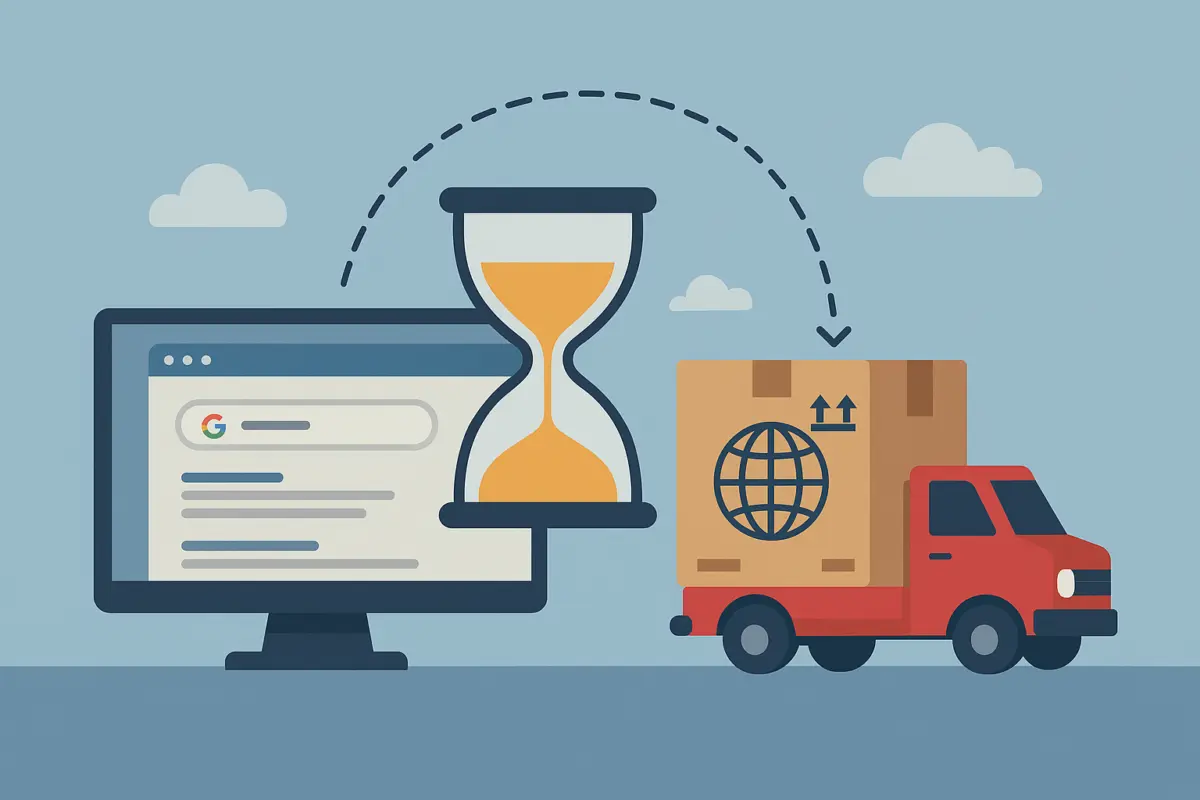
This is where the user-facing friction originates. Search engines like Google, Bing, and alternative indexers do not operate via instantaneous telepathy; they rely on automated software robots known as crawlers or spiders. These crawlers discover web updates by traversing links, processing sitemaps, and re-evaluating previously indexed pages on a scheduled basis dictated by algorithmic crawl budgets.
When a domain migrates, a temporal gap opens. Even though the old URL now redirects to the new address, search engine crawlers require time to:
- Discover the server-side redirect instructions.
- Crawl the new target location and verify its structural integrity.
- Decouple the historical indexing data from the legacy URL.
- Re-map ranking signals, metadata, and snippet cache to the modern address.
During this window—which can span anywhere from a few days to several weeks depending on the site’s authority and crawler frequency—users searching for the platform will often see legacy URLs dominating search engine results. Clicking these older links may successfully redirect the user thanks to the 301 configuration, but the presence of obsolete domain strings in search snippets frequently breeds confusion.
Phase 4: Full Index Consolidation
In the final phase of the migration lifecycle, search engine algorithms fully process the redirect chain, drop the obsolete URL from active rankings (or relegate it entirely), and index the new domain as the primary canonical source. At this juncture, search queries return the current zlibrary official domain natively, restoring direct alignment between search engine snippets and active browser routing addresses.
Supporting Context & Metrics: The Mechanics of Crawl Delays and Digital Libraries
To fully grasp the challenges associated with locating current web properties during a migration, one must examine the quantitative and qualitative data surrounding internet indexing practices, cache persistence, and the unique footprint of massive digital repositories.
The Scale of Indexing Latency
According to telemetry data and technical analyses published by platforms like IndexCheckr and Google Search Central guidelines, search engines process billions of updates incrementally. The global web is simply too expansive for instantaneous global refreshes.
- Crawl Budgets: Search engines allocate a finite amount of computational resources—known as a crawl budget—to each domain based on its popularity, server response time, and update frequency. Smaller or newly established domains during a migration may experience restricted crawl allocations, lengthening the time required for complete index updates.
- Cache Persistence: Search engine memory is stubbornly persistent. Cached copies of legacy pages, including titles, descriptions, and deep links, remain stored on distributed server clusters long after the underlying web server has been decommissioned or redirected. This explains why users frequently encounter "ghost listings"—search results that point to outdated addresses or return temporary server errors.
- Third-Party Propagation: Beyond primary search engines, the broader internet ecosystem relies on archived links, academic citation boards, discussion forums, and personal bookmarks. When a digital library shifts its infrastructure, these external nodes preserve historical references indefinitely unless actively updated by community moderators or webmasters.
The Digital Footprint of Z-Library
Platforms offering vast electronic repositories—spanning peer-reviewed academic journals, historical monographs, textbooks, and general-interest literature—generate immense, persistent user demand. Because these platforms serve as critical research hubs for students, independent researchers, and international scholars who often face prohibitive paywalls for academic literature, user engagement remains exceptionally high regardless of underlying infrastructural updates.
When user demand intersects with infrastructural changes, the high volume of search queries targeting the platform magnifies the impact of crawl latency. Millions of concurrent users seeking the active zlibrary website address simultaneously test the limits of search engine caching mechanisms. If search engines are slow to update their indexes, waves of users encounter mismatched search results, leading to a spike in reliance on direct directory resources, verified community hubs, and institutional marketing strategies that emphasize direct navigation over search engine dependency.
Official Statements and Technical Guidelines on Website Migrations
Navigating domain transitions effectively requires adherence to established technical protocols. Major search engines and web infrastructure authorities have published extensive guidelines detailing how site moves should be handled and what users and administrators should expect during the transition phase.
Google Search Central Insights
According to official documentation provided by Google Search Central regarding site moves and domain migrations:
"A site move can result in temporary fluctuations in search performance and indexing visibility. When transitioning to a new URL structure or domain, search engines require adequate time to process redirects, update index databases, and consolidate ranking signals. Administrators should utilize permanent 301 redirects, submit updated XML sitemaps via Search Console, and maintain patience as automated crawlers process the structural modifications."
Google’s engineering teams consistently emphasize that fluctuations in search visibility during a migration are a normal algorithmic artifact, not a penalty or a permanent loss of digital presence. The core function and authority of the website remain intact on the backend, even if the public-facing browser string experiences a transitional phase.
Industry Perspectives on Domain Evolution
In a comprehensive 2025 technical analysis published by Semrush regarding website migration best practices, industry experts underscored the psychological impact of domain changes on everyday users:
"A website domain is essentially the public routing address connecting visitors to a hosted service. When administrators update server configurations for security resilience, load balancing, or rebranding, users frequently experience a transient phase of confusion. Outdated bookmarks return server errors, search engines serve cached copies from previous weeks, and the gap between active publishing and visible search updates widens."
Furthermore, insights from academic library marketing strategies and digital curation studies highlight that massive electronic repositories must actively communicate structural changes through trusted community channels. Because search engines lag behind real-world server configurations, reliance on centralized, verified directory resources acts as a stabilizing force for communities seeking uninterrupted access to digital literature.
Future Outlook: The Evolution of Search, Indexing, and Digital Access
As the internet continues to scale at an exponential rate, the relationship between domain migrations, search engine indexing latency, and user navigation will undergo significant transformation. Several emerging trends and technological shifts will shape how platforms manage address transitions in the future.
1. The Shift Toward Real-Time Indexing Architectures
Traditional search engine architecture relies on batch-processing crawlers that periodically sweep the web. However, the rise of real-time web indexing protocols, accelerated by advancements in artificial intelligence and distributed ledger technologies, points toward a future where crawl latency could be dramatically reduced. As search engines adopt more dynamic, event-driven crawling models—where server-side updates instantly trigger algorithmic re-evaluations—the temporal gap between a domain migration and its reflection in SERPs will narrow.
2. Enhanced Decentralization and Direct Navigation
As platforms facing persistent regulatory scrutiny, infrastructural scaling challenges, or cybersecurity threats increasingly adopt decentralized hosting models and frequent domain rotations, user behavior is shifting away from traditional search engine dependency.
- Directory Resilience: Users are increasingly relying on verified, decentralized directory portals, cryptographic signature verification, and community-driven knowledge bases to track active web properties.
- Reduced Reliance on SERPs: When search engines are slow to update their indexes due to algorithmic caution or crawl latency, direct navigation channels—such as RSS feeds, secure community forums, and official metadata repositories—bypass search engine friction entirely.
3. Improved Migration Tooling for Administrators
Web infrastructure providers are developing more sophisticated automated migration frameworks. Modern content delivery networks (CDNs) and cloud hosting providers now offer instantaneous global propagation of DNS updates and intelligent redirect management that minimizes the window of indexing confusion. As these tools become standard practice for large-scale digital repositories, the administrative friction associated with updating a zlibrary official domain will continue to decrease.
4. User Education and Digital Literacy
Ultimately, navigating the modern web requires a higher baseline of digital literacy. As the public becomes more conversant with the technical realities of server configurations, 301 redirects, and search engine caching, temporary indexing gaps will be increasingly understood as routine administrative maintenance rather than mysterious disruptions.
Conclusion
The intersection of search engine indexing latency, domain migrations, and digital literature repositories highlights the complex machinery operating beneath the surface of the everyday internet. When platforms like Z-Library update their infrastructure, transition to new hosting environments, or modify their web addresses to ensure operational resilience, search engines require time to catch up.
Crawl delays, persistent cache memories, and transitional search snippets are natural consequences of how automated web crawlers process structural changes. By understanding these technical realities—and by prioritizing verified direct directory resources over outdated search engine results—users and researchers can maintain uninterrupted access to vast digital collections. As web architecture continues to evolve toward greater speed and decentralization, mastering the nuances of digital navigation remains an essential skill for exploring the modern web.