
Executive Overview
The global ecommerce ecosystem is undergoing a profound structural evolution, driven largely by rapid advancements in artificial intelligence, shifting consumer discovery habits, and an escalating demand for cross-border logistics velocity. As traditional search engine optimization yields ground to large language model (LLM) discovery layers and autonomous agentic systems, merchants are forced to adapt or risk obsolescence.
This week’s roundup of curated services for ecommerce merchants highlights a sweeping wave of technological transformations. From major open-source platform updates and foundational supply chain overhauls to massive venture capital infusions in social commerce and autonomous marketing engines, the digital retail landscape is shifting from reactive tool management to predictive, AI-driven automation.
Key developments shaping the industry include WooCommerce’s performance-focused version 11.0 release, Adobe Commerce’s introduction of a machine-readable Catalog Agent designed for AI crawlers, and Cainiao Group’s aggressive three-day cross-border delivery rollout. Furthermore, monumental funding rounds—such as Whatnot’s $545 million Series G and RepSpark’s $22 million strategic investment—demonstrate unwavering investor confidence in specialized retail technology, social shopping, and B2B infrastructure.
Detailed Chronology: Platform Updates and Technological Breakthroughs
Core Platform and Catalog Innovations
WooCommerce 11.0: Speed and Recovery Optimization
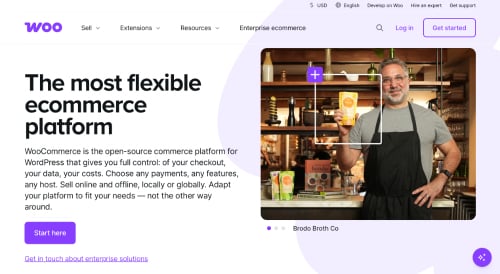
Open-source giant WooCommerce has officially released version 11.0, bringing significant architectural refinements aimed at backend efficiency and conversion optimization. Among the most notable updates is order-screen optimization, which drastically accelerates query execution times. By minimizing server timeouts and reducing empty search counts, store administrators can manage high-volume inventories with unprecedented fluidity.
Additionally, WooCommerce 11.0 debuts Checkout Recovery. This native feature allows merchants to test and iterate upon automated abandoned-cart messaging frameworks, systematically gauging shopper responses to re-engage prospective buyers before a sale is permanently lost.

Adobe Commerce Catalog Agent
In a move that underscores the swift transition from traditional web indexing to AI-driven discovery, Adobe Commerce has introduced its new Catalog Agent. Built natively into the Magento-derived infrastructure, this tool enriches standard product detail pages with structured, machine-readable data layers. By synthesizing existing commerce services—including inventory counts, dynamic pricing, granular product attributes, and cross-item relationships—the Catalog Agent prepares merchant catalogs to be seamlessly consumed and recommended by LLM-powered discovery engines and autonomous AI crawlers.
Kibo Commerce Unifies Agentic AI and OMS
Kibo Commerce has released a major architectural update integrating agentic AI directly into its composable commerce and order management systems (OMS). Moving past basic chat interfaces, Kibo’s model-agnostic framework is structured around five core operational pillars: configure, explain, analyze, engage, and optimize. This framework enables enterprise merchants to automate complex backend workflows and frontend customer interactions simultaneously.
Fulfillment, Logistics, and Global Trade
Cainiao Group’s Three-Day Cross-Border Logistics
Addressing the persistent friction of international shipping, Cainiao Group—the global logistics arm of Alibaba—has launched a lightning-fast, three-day door-to-door parcel delivery service spanning 15 key international trade lanes. By integrating global air cargo lines, localized ground transportation networks, expedited customs clearance channels, and automated fulfillment hubs, Cainiao aims to bridge the gap between overseas manufacturing and Western consumer expectations for rapid delivery.
ShipBob Introduces Anthropic-Verified AI Fulfillment Suite
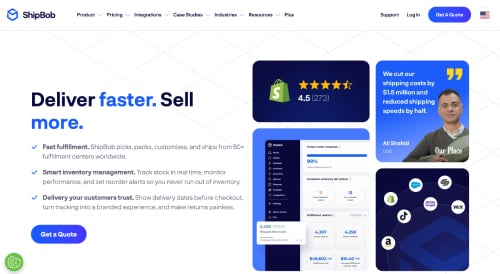
Fulfillment provider ShipBob has rolled out a comprehensive AI suite embedded across its entire operational stack, ranging from merchant-facing software dashboards to warehouse floor robotics. Anchored by Model Context Protocol (MCP), the system safely connects AI architectures to live merchant operations. Whether deployed via a native Claude connector or through "Bobby," ShipBob’s conversational in-dashboard agent, merchants can now query inventory status, forecast supply bottlenecks, and automate logistics commands using natural language.
Marketing Automation, Sales Enablement, and Audience Targeting
AI Bulk Listing Generator
To combat the labor-intensive nature of catalog management, the AI Bulk Listing Generator has officially launched. The platform allows ecommerce operators to import structured product matrices via spreadsheets and instantly generate thousands of optimized, brand-consistent listings in minutes. The tool natively supports major ecosystems including Shopify, WooCommerce, Etsy, Amazon, eBay, BigCommerce, and Wix, significantly slashing time-to-market for multi-channel merchants.
Minty Shopify App Bridges Browsing and Buying
AI-powered shopping companion Minty has expanded its ecosystem by launching a dedicated Shopify app. The integration connects Shopify storefronts directly into Minty’s expansive network of consumers, surfacing targeted cashback and reward incentives precisely at the point of purchase intent. Operating across AI chat interfaces, mobile applications, and traditional browser extensions (Chrome and Safari), the app empowers merchants to recapture high-intent shoppers who browse their catalogs and depart without converting.
Knowband PrestaShop Solutions
Plugin developer Knowband has released a trio of customer engagement and SEO modules designed specifically for PrestaShop’s global merchant base of over 160,000 stores. The release includes Form Studio for custom data collection, a WhatsApp Business API CRM Module for automated transactional alerts and live chat widgets, and an advanced Blog Module engineered for search engine optimization and organic traffic generation.
Wunderkind and Cordial Partnership
Identity resolution leader Wunderkind has announced a strategic partnership with cross-channel messaging platform Cordial. By marrying Wunderkind’s proprietary identity graph and predictive AI decisioning engines for anonymous web traffic with Cordial’s sophisticated message orchestration framework, brands can seamlessly expand their addressable audience pools and deploy hyper-personalized campaigns across email, SMS, and push notifications.
Wayy.ai Secures $2K Pre-Seed and Launches Sales Co-Founder
Solopreneurs and small business owners have a new automated ally following Wayy.ai’s $2 million pre-seed funding round led by Zero to One Ventures. Alongside the funding announcement, Wayy.ai launched an AI-powered "virtual salesperson." The software automates prospecting, outreach, and investor communications, allowing early-stage founders to delegate tedious administrative sales workflows and concentrate on core product development.
Eyeota and Zeotap Data Integration in Amazon DSP
Data solutions providers Eyeota and Zeotap Data have joined forces to integrate Eyeota’s global audience ecosystem directly into Amazon Demand-Side Platform (DSP). This integration grants advertisers access to privacy-compliant, intent-driven, and behavioral audience segments across high-value environments such as Prime Video and Twitch, optimizing digital ad spend in a cookieless advertising landscape.
Adobe ChatGPT Plugin Integration
Adobe has extended its massive ecosystem of over 70 creative and productivity tools into a native plugin for ChatGPT. Creators and digital marketers can now execute complex asset generation tasks—ranging from photo editing and dynamic video compilation to marketing collateral design and PDF generation—entirely through conversational prompts within the ChatGPT interface.
Rokt Brain V4 Real-Time Checkout Decisioning
Post-purchase commerce platform Rokt has unveiled Brain V4, an advanced machine learning engine engineered for real-time checkout customization. By evaluating consumer history, contextual data, advertiser bids, and product inventory in milliseconds, Rokt Brain applies sophisticated auction ranking and brand guardrails to present each individual buyer with the most relevant cross-sell offer or post-purchase experience.
Social Commerce and Capital Investments
Whatnot Secures $545 Million Series G
Live-shopping powerhouse Whatnot has completed a massive $545 million Series G funding round led by prominent investors ICONIQ, Lightspeed, and Avra. Driven by exploding consumer demand for interactive, community-led retail, Whatnot announced that its August gross merchandise volume (GMV) alone eclipsed its entire full-year 2025 financial performance. The capital will be deployed toward next-generation seller tools, deeper AI integrations, and global market expansion.
RepSpark Raises $22 Million for B2B Specialty Retail
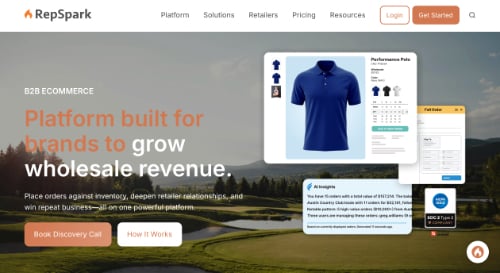
Wholesale commerce platform RepSpark has secured $22 million in strategic growth equity from Headlight Partners. Serving brands across specialty niches such as golf, swim, fitness, tactical gear, and footwear, RepSpark will utilize the funds to scale its B2B enterprise software suite, expand its third-party integration ecosystem, and enhance its proprietary AI-powered wholesale tools.
Markable Advances Social Commerce with AI Video and 3D Collages
Creator monetization platform Markable has launched two advanced tools designed to transform digital content into direct revenue streams: an AI-driven video editor and a 3D visual collage generator. The video editor automatically processes raw creator footage into polished, shoppable clips, complete with automated script generation, voiceovers, and visual enhancements. Meanwhile, the 3D visual tool turns standard product imagery into realistic, interactive digital collages.
Supporting Context & Metrics: The Macro Picture
The convergence of these announcements reveals several underlying macroeconomic and technological trends dictating the direction of modern retail:
- The Shift to Agentic Workflows: The introduction of systems like Kibo’s agentic framework, ShipBob’s MCP-powered fulfillment suite, and Wayy.ai’s sales co-founder indicates that software is moving beyond passive dashboards. Merchants are increasingly delegating core operational decisions to autonomous AI agents that can reason, execute, and optimize in real time.
- LLM Discoverability as a Core SEO Pillar: With Adobe Commerce introducing Catalog Agents specifically for AI crawlers, search engine optimization is expanding past human-centric Google rankings. Brands must now optimize their data architecture for machine consumption, ensuring that LLMs can accurately parse, understand, and recommend products within conversational shopping environments.
- Explosive Capital Inflows into Niche Ecosystems: Mega-rounds such as Whatnot’s $545 million raise and RepSpark’s $22 million injection prove that institutional investors remain eager to fund platforms that solve deep verticalized problems—whether that is real-time video auctions for hobbyists or specialized wholesale portals for specialty apparel brands.
Official Statements and Industry Insights
Industry leaders accompanying this week’s product rollouts emphasized the urgency of modernization. Commenting on the integration of their fulfillment AI suite, ShipBob executives noted that connecting predictive logistics software directly to warehouse robotics through secure protocols marks the definitive end of manual inventory management for SMB merchants.
Similarly, representatives from Cainiao Group emphasized the critical nature of cross-border velocity, stating that modern consumers view international purchases with the same immediacy as domestic shipments, making a guaranteed three-day turnaround a mandatory competitive advantage rather than a luxury.
In the realm of social and agentic commerce, Kibo Commerce representatives highlighted that unifying order management with model-agnostic AI allows enterprise brands to remain flexible in a rapidly shifting technology landscape, insulating their tech stacks from sudden breakthroughs or obsolescence in underlying foundational models.
Future Outlook: What Merchants Must Anticipate
As the digital commerce landscape barrels through the second half of the decade, merchants must prepare for a fundamentally restructured consumer journey. The traditional funnel—characterized by static search queries, banner ads, and disconnected checkout experiences—is rapidly being supplanted by conversational, AI-mediated discovery, instant cross-border logistics, and immersive social shopping experiences.

To remain competitive, ecommerce operators should prioritize three core strategic initiatives over the coming quarters:
- Adopt Structured Data Readiness: Ensure that product catalogs are meticulously formatted with rich attributes, pricing matrices, and inventory levels to be easily ingested by AI crawlers and LLM discovery engines.
- Embrace Autonomous Backend Operations: Implement AI-driven workflow automation tools—ranging from bulk listing generators to inventory-connected fulfillment agents—to reduce overhead and accelerate time-to-market.
- Diversify Sales Channels: Explore emerging social commerce platforms, live-shopping integrations, and B2B wholesale networks to capture high-intent buyers where they increasingly spend their time.
By embracing these agile, technology-forward platforms, merchants can insulate their operations against market volatility and position themselves for sustainable, high-margin growth in an increasingly automated global marketplace.