Executive Overview
The global film, television, and broadcast production sectors are undergoing a quiet but rapid infrastructural revolution. As studios commit to ambitious net-zero carbon targets, the roaring, diesel-spewing generators that historically lined the perimeters of production sets are being systematically phased out. In their place, high-capacity Battery Energy Storage Systems (BESS) have emerged as the clean, silent, and efficient future of location power.
However, this rapid transition to high-capacity battery technology has introduced complex regulatory, safety, and legal challenges. Lithium-ion systems capable of powering massive lighting rigs, camera packages, and video villages carry immense energy densities. In response, municipal fire marshals, occupational safety boards, and studio risk-management teams have dramatically tightened safety protocols.
+-----------------------------------------------------------------------+
|                    THE COMPLIANCE GAP IN ON-SET BESS                  |
+-----------------------------------------------------------------------+
|  "COMPLIANT" (Self-Tested)            |  "CERTIFIED" (Third-Party)    |
|  - Internal safety claims             |  - Rigorous laboratory stress |
|  - Subject to field rejection         |  - Guaranteed site access     |
|  - High liability exposure            |  - Full insurance compliance  |
+-----------------------------------------------------------------------+
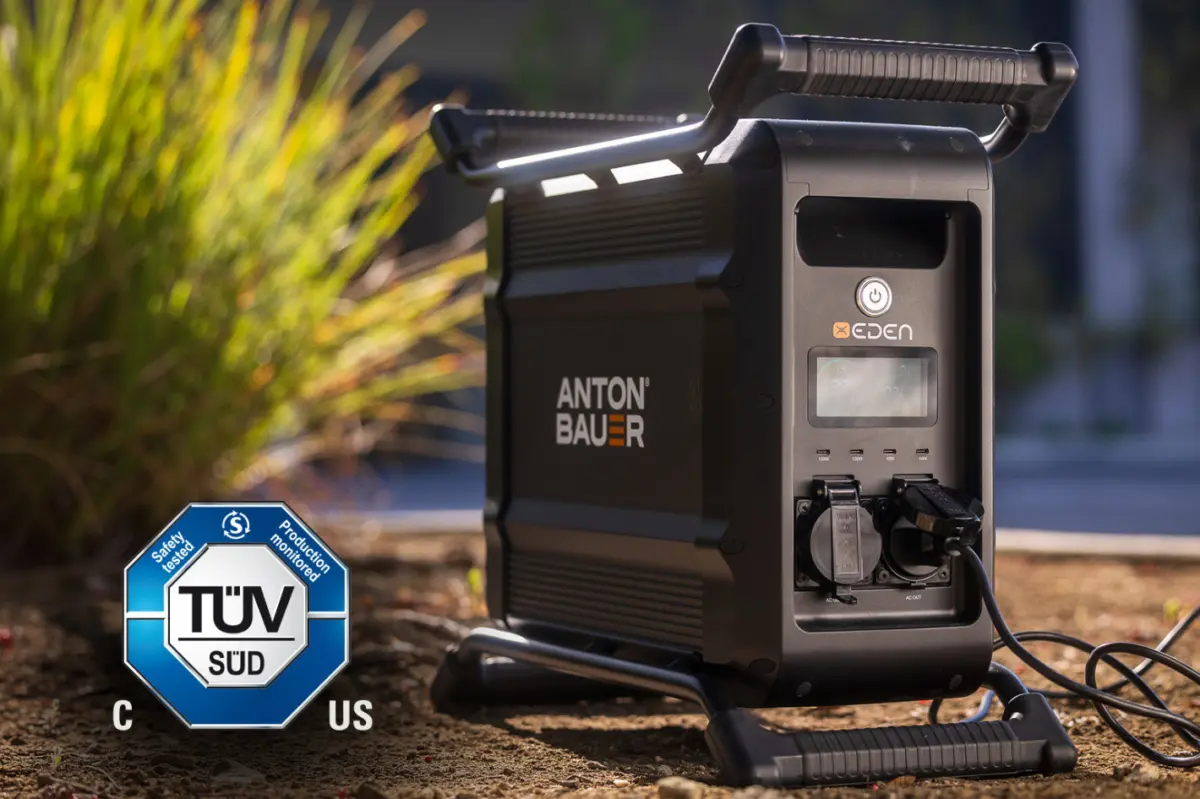
In this highly scrutinized landscape, Anton/Bauer—a Videndum brand and a pioneering force in mobile power solutions for over half a century—has secured a landmark regulatory milestone. The company’s EDEN Mobile Power Station has officially achieved full, third-party UL Listed (United States) and cUL Listed (Canada) certifications.
This development establishes EDEN as the only Battery Energy Storage System in its class cleared for professional use across both the United States and Canada. Unlike competitors that rely on self-testing or "compliance" workarounds, Anton/Bauer has subjected its flagship mobile power station to rigorous, independent destructive testing.
The achievement is not merely a technical victory; it represents a major shift in how production equipment is vetted, leased, and deployed in an era where safety inspections can instantly halt multi-million-dollar projects.
Detailed Chronology: The Evolution of On-Set Power and the Regulatory Crackdown
To understand the significance of the EDEN certification, one must look at the historical trajectory of on-set power and the shifting regulatory framework governing entertainment production.
       1970s-2010s                  2010s-2020s                    2024+
+-----------------------+     +---------------------+     +---------------------+
|   Diesel Generators   | --> | Early Battery BESS  | --> | Certified Green BESS|
| Loud, high emissions, |     | Silent, zero-emiss, |     | Rigorous UL/cUL     |
| uncertified safety.   |     | uncertified hazards.|     | compliance, legal.  |
+-----------------------+     +---------------------+     +---------------------+
The Transition to Green Energy
For decades, location shoots relied almost exclusively on tow-behind diesel generators. While reliable, these units presented significant drawbacks:
- Constant noise required long cable runs to isolate the generator from the sound stage.
- Exhaust fumes posed localized health risks and contributed to carbon footprints.
- Fuel logistics required dedicated personnel and created spill hazards.
The introduction of lithium-ion BESS units promised to solve these issues. They offered silent operation, zero localized emissions, and the ability to be positioned directly on-set. However, early adoptions of high-capacity batteries on set bypassed strict electrical and fire safety vetting. Many units brought to sets were modified consumer power stations or industrial battery banks built without specialized safety certifications.
The Rise of Stringent Enforcement
As the density and scale of these battery systems increased, regulatory bodies took notice.
- In the United States, major streaming platforms (such as Netflix, Amazon Prime Video, Apple TV+, and Disney+) and legacy studios began establishing strict safety mandates.
- Local fire departments and Authorities Having Jurisdiction (AHJs) in major production hubs—including Los Angeles, Atlanta, New York, and Honolulu—began demanding proof of certified testing before permitting battery storage systems near sound stages or historic locations.
In Canada, the regulatory push has been even more direct. Provincial safety authorities, such as the Electrical Safety Authority (ESA) in Ontario and Technical Safety BC, have actively inspected filming locations. Under Canadian electrical codes, inspectors have the authority to immediately shut down productions and red-tag non-certified electrical equipment.
For a major production, even a single day of shutdown due to non-compliant gear can result in losses ranging from $250,000 to over $1,000,000. The risk of using uncertified equipment has quickly transitioned from a minor technicality to an existential financial threat for production companies and rental houses.
Supporting Context & Metrics: The Science of cUL/UL Certification
The distinction between "compliant" and "certified" is often misunderstood. A manufacturer can claim their product is "designed to comply" with safety standards based on internal evaluations. However, a third-party UL/cUL Listing means the device has been physically sent to an OSHA-approved Nationally Recognized Testing Laboratory (NRTL). There, it undergoes destructive testing to verify that it behaves safely under extreme electrical, thermal, and mechanical stress.
+------------------------------------------------------------------------+
|                     EDEN SAFETY TESTING BENCHMARKS                     |
+------------------------------------------------------------------------+
|  TEST CATEGORY        |  METHODOLOGY            |  OBJECTIVE           |
+-----------------------+-------------------------+----------------------+
|  Thermal Runaway      |  Forced single-cell     |  Prevent propagation |
|                       |  overheating            |  to adjacent cells   |
+-----------------------+-------------------------+----------------------+
|  Mechanical Abuse     |  Drop, impact, and      |  Ensure enclosure    |
|                       |  vibration testing      |  retains integrity   |
+-----------------------+-------------------------+----------------------+
|  Electrical Stress    |  Overcharge, short-     |  Verify BMS cut-off  |
|                       |  circuit simulation     |  and fuse response   |
+-----------------------+-------------------------+----------------------+
Thermal Runaway Mitigation
The primary safety concern with high-capacity lithium-ion batteries is thermal runaway—a phenomenon where an internal short circuit or external heat source causes a battery cell to enter an uncontrollable, self-heating state, potentially resulting in fire or explosion.
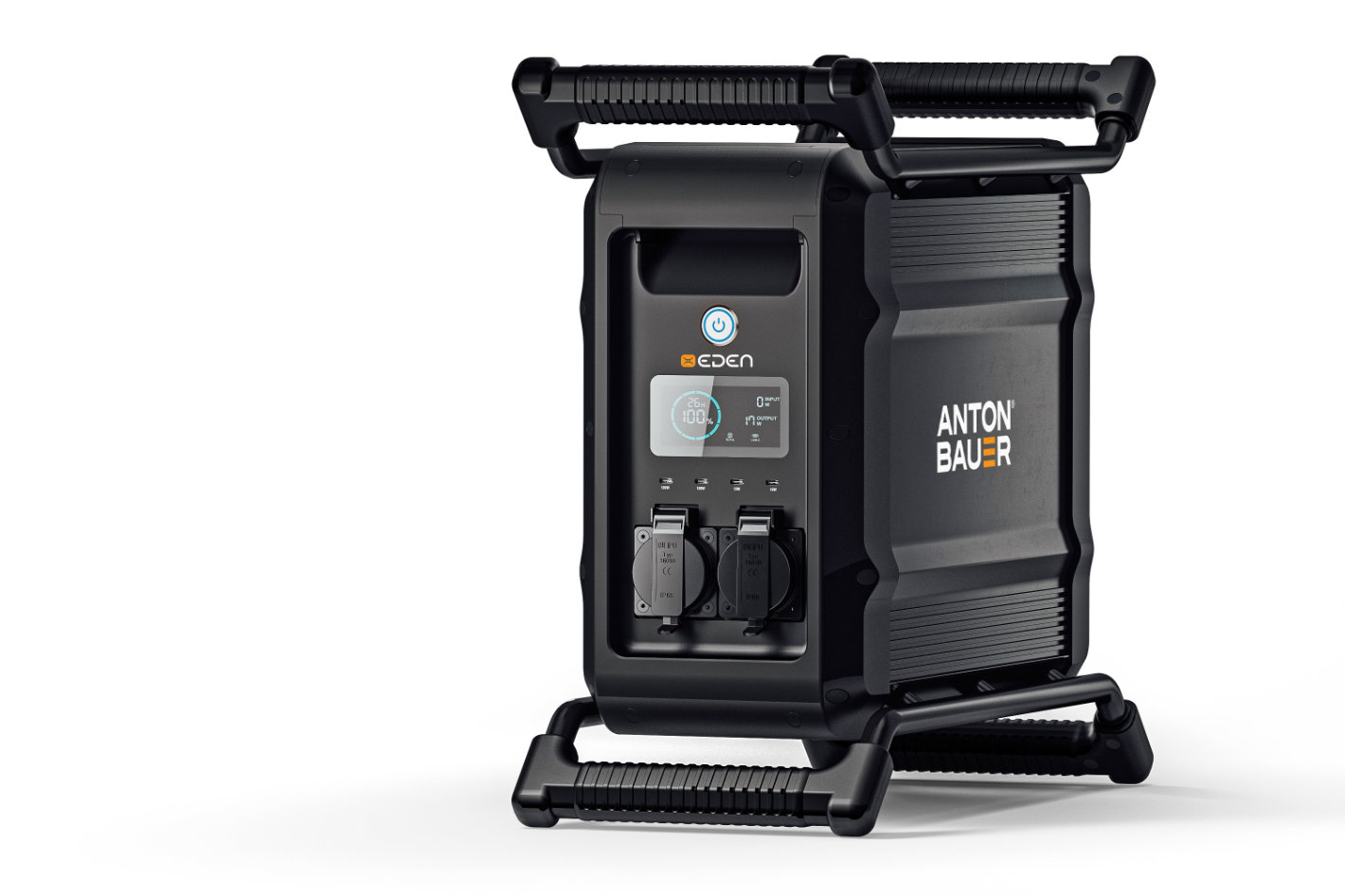
To earn dual cUL/UL certification, the Anton/Bauer EDEN was subjected to worst-case scenario testing:
- Single-Cell Failure Simulation: Engineers intentionally induced thermal runaway in a single cell within the EDEN battery pack.
- Propagation Prevention: The internal design was evaluated to ensure that the heat from the failing cell did not propagate to neighboring cells. The test confirmed that the EDEN’s passive propagation resistant (PPR) design successfully contained the thermal event, venting gas safely without causing a chain-reaction fire.
Structural and Mechanical Integrity
On-set equipment is subjected to harsh environments. It is loaded onto grip trucks, rolled over gravel, exposed to rain, and bumped by heavy machinery.
- Impact and Drop Testing: The EDEN’s chassis was subjected to high-impact drop testing to ensure that structural deformation would not breach the internal battery modules or compromise electrical isolation.
- Environmental Sealing: The unit was tested against water ingress and dust penetration, verifying that it can operate reliably in unpredictable outdoor environments without risking short circuits.
Electrical Safety and Fail-Safes
The electrical architecture of the EDEN was analyzed to ensure redundant safety systems:
- Battery Management System (BMS): The digital brain of the unit was tested for its ability to detect over-voltage, under-voltage, over-current, and extreme temperatures, instantly disconnecting the battery modules before a hazard could develop.
- Physical Isolation: Fuses, contactors, and physical switchgear were certified to safely interrupt high-voltage DC current under full load conditions.
Official Statements: Industry Implications and Risk Management
The dual certification of the EDEN Mobile Power Station has drawn praise from both equipment designers and rental house operators, who view the milestone as a turning point for on-set liability.
Andrew Hutton, Product Manager at Anton/Bauer, emphasized the rigorous testing philosophy behind the achievement:
"To earn dual cUL/UL certification, EDEN was stress-tested for worst-case scenarios, including thermal runaway under high loads and structural integrity in harsh production environments. For rental houses and studio managers, this isn’t just about power—it’s about liability protection and ensuring that a safety inspection never results in a production shutdown."
The Rental House Dilemma
For equipment rental houses, the liability of stocking uncertified power systems has become a major concern. If a non-certified battery system fires or causes electrical damage on a client’s set, the rental house faces significant legal exposure.
Furthermore, as insurance underwriters write stricter policies regarding lithium-ion battery storage and transport, stocking certified equipment is becoming a prerequisite for obtaining commercial liability insurance.
+------------------------------------------------------------------------+
|                       THE LIABILITY CHAIN ON SET                       |
+------------------------------------------------------------------------+
|  [Underwriters] -> Require certified gear to maintain coverage         |
|         |                                                              |
|  [Rental Houses] -> Must stock cUL/UL listed units to protect assets   |
|         |                                                              |
|  [Studios/Producers] -> Demand certified gear to avoid costly shutdowns |
+------------------------------------------------------------------------+
By securing the dual cUL/UL certification, Anton/Bauer provides rental houses and production managers with a reliable paper trail. Whether a production is filming in St. John’s, Newfoundland, or Honolulu, Hawaii, the EDEN unit carries the exact safety credentials required by local inspectors, insurance adjusters, and studio safety officers.
Future Outlook: The New Standard for On-Set Power
The certification of the Anton/Bauer EDEN is likely to accelerate the adoption of clean energy in the entertainment industry, establishing a new baseline for on-set power systems.
+------------------------------------------------------------------------+
|                     FUTURE TRENDS IN PRODUCTION POWER                  |
+------------------------------------------------------------------------+
|  1. Regulatory Standardization                                         |
|     Uncertified BESS units face phase-out by major global studios.     |
|                                                                        |
|  2. Hybrid Cloud Fleet Management                                      |
|     Integration of real-time monitoring with certified hardware.       |
|                                                                        |
|  3. Complete Diesel Displacement                                       |
|     High-capacity, certified battery arrays replacing heavy generators.|
+------------------------------------------------------------------------+
Setting a New Industry Standard
As studios continue to implement carbon-reduction strategies, the demand for high-capacity battery systems will grow. However, the window for uncertified "compliant" systems is rapidly closing. The success of the EDEN’s certification process will likely push other manufacturers to pursue formal third-party testing, raising safety standards across the industry.
Integration with Cloud-Based Fleet Management
The physical safety of the EDEN is further supported by modern software management. Anton/Bauer has introduced cloud-based platforms for battery management, allowing rental houses and fleet managers to monitor the health, charge status, and temperature of their power stations remotely. This combination of certified physical hardware and real-time digital monitoring allows for predictive maintenance, ensuring units are serviced long before any safety threshold is crossed.
Conclusion
As the film and television industry navigates its green transition, safety and reliability remain paramount. By securing dual cUL/UL certification, the Anton/Bauer EDEN Mobile Power Station addresses the critical need for safe, legal, and high-performance mobile power. It offers production teams a reliable, zero-emission solution that meets the highest safety standards, ensuring that the transition to clean energy does not come at the expense of on-set safety or operational continuity.