Executive Overview
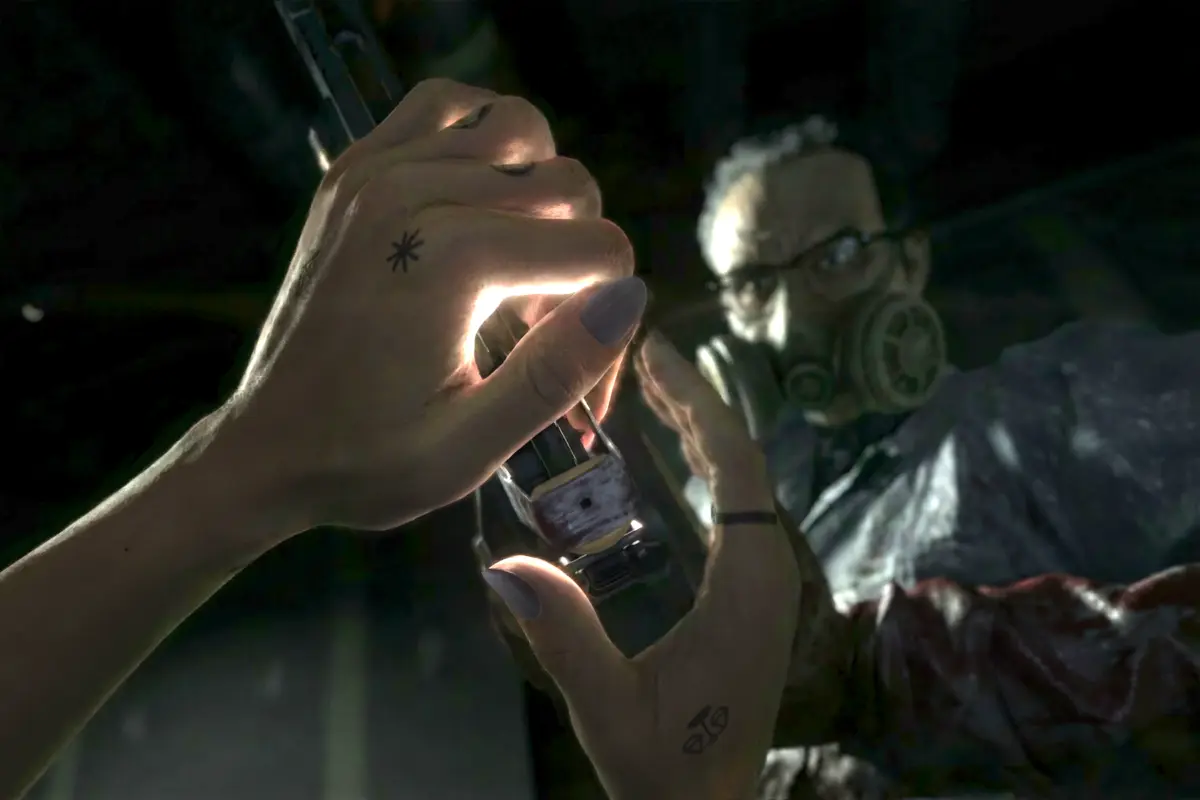
In a sweeping restructuring that marks yet another sharp pivot in its multi-year, high-stakes interactive entertainment experiment, Netflix has officially shut down two of its internal video game development houses. Among the casualties is Night School Studio—the critically acclaimed indie developer behind the supernatural thriller Oxenfree and the recently launched, high-profile horror game Unhinged, which boasted creative backing from Hollywood heavyweights David Fincher and Zach Cregger.
Alongside Night School, Netflix has shuttered Moonloot, a Helsinki-based studio established in 2022 to fuel the streamer’s European development footprint. The closure of Night School Studio comes less than two months after Unhinged hit the market, highlighting a ruthless operational efficiency and an acute intolerance for sluggish adoption curves within Netflix’s executive ranks.
The move significantly pares down Netflix’s in-house game development footprint. Once characterized by aggressive acquisitions and splashy hiring sprees aimed at building a formidable AAA development arm, the streaming titan’s internal gaming apparatus has been systematically dismantled. Today, Netflix’s proprietary development operations are essentially reduced to Next Games—also located in Helsinki—alongside a centralized publishing and production team that coordinates projects with external, third-party developers.
This latest bloodletting is not an isolated incident, but rather the culmination of a multi-year retreat from heavy-capital game development. Under the leadership of Alain Tascan, Netflix’s President of Games who stepped into the role at the tail end of 2024, the strategy has undergone a radical triage. The division is no longer chasing prestige AAA blockbusters or sprawling open-world epics. Instead, it has doubled down on a hyper-focused four-pillar framework: kids’ titles under the "Netflix Playground" banner, party games like "Netflix Minigolf," narrative-driven experiences, and mainstream sports offerings such as "FIFA World Cup: Launch Edition."
As Netflix attempts to carve out a viable niche in the living room—utilizing smartphones as controllers for television-based gameplay—industry observers are left questioning the long-term viability of the streaming giant’s gaming ecosystem. With multiple studios shuttered, sold, or spun off in rapid succession, the grand vision of Netflix as a dominant gaming powerhouse appears to be quietly evaporating, replaced by a much more cautious, cost-effective mobile and casual strategy.
Detailed Chronology: The Rise and Fall of Netflix’s Studio Network
To understand the magnitude of the recent closures, one must trace the trajectory of Netflix’s gaming ambitions from their speculative infancy to their current, heavily trimmed reality.
The Acquisition Spree (2021–2022)
When Netflix first breached the gaming sector, leadership viewed interactive entertainment as the ultimate retention tool and the logical next frontier for its intellectual property. To fast-track this vision, the company initiated an aggressive acquisition strategy:
- September 2021: Netflix announced its acquisition of Night School Studio, a critically adored indie shop famous for its distinct narrative pacing and dialogue mechanics in Oxenfree. It was billed as a foundational building block for Netflix’s narrative gaming vertical.
- March 2022: Netflix acquired Next Games for approximately $72 million, securing a foothold in Helsinki—a renowned European hub for mobile game development.
- 2022: The company founded Moonloot in Helsinki as part of an effort to organically incubate new game concepts and leverage regional development talent.
- Later in 2022: Netflix acquired Spry Fox, the studio behind cozy strategy game Cozy Grove, and established Boss Fight Entertainment, alongside the formation of a Southern California-based AAA studio dubbed "Team Blue," which famously recruited industry veterans from Blizzard and Bungie.
The Great Unraveling (2024–2026)
The promised golden age of Netflix gaming quickly collided with the economic realities of game development and shifting corporate priorities. The dismantling of the internal studio network occurred in rapid, escalating phases:
- October 2024: Netflix pulled the plug on Team Blue before the AAA studio had even shipped a single title, signaling that the company’s appetite for high-budget, multi-year console development had soured.
- Late 2024: Alain Tascan assumed the role of President of Games, immediately initiating a comprehensive review of the division’s portfolio, cost structures, and strategic alignment.
- December 2024: Spry Fox was quietly divested, sold back to its original founders in a rare instance of a studio escaping the corporate restructuring axe with its independence intact.
- October 2025: Boss Fight Entertainment was shuttered. The closure came directly on the heels of the studio shipping a mobile tie-in for Netflix’s massive global phenomenon, Squid Game—a stark reminder that even association with the streamer’s biggest intellectual properties could not shield a studio from operational consolidation.
- February 2026: The hammer fell on Night School Studio and Moonloot. The demise of Night School is particularly jarring given the high-profile rollout of Unhinged, a horror title backed by the distinct cinematic visions of David Fincher and Zach Cregger. Released fewer than eight weeks prior to the shutdown, Unhinged failed to secure the sustained commercial momentum or strategic value required to save its creators from the corporate cull.
Supporting Context & Metrics: The Shifting Architecture of Netflix Gaming
The contraction of Netflix’s studio system reflects a broader re-evaluation of how subscription-based video-on-demand services can monetize interactive media. When Netflix bundled mobile games into its core subscription tiers at no extra charge, initial engagement metrics were low—with industry analysts frequently estimating that fewer than 1% of subscribers actively engaged with the games catalog daily.
Faced with this adoption gap, the corporate strategy pivoted away from trying to convert traditional gamers via standalone mobile app downloads. Instead, the focus shifted toward living-room integration and frictionless, cross-device play.
The Four-Pillar Framework
Under Alain Tascan, Netflix games have been funneled into a rigid, highly disciplined strategic matrix designed to maximize casual engagement and minimize production risks:
- Kids ("Netflix Playground"): Interactive experiences designed to keep younger demographics glued to the Netflix ecosystem through recognizable characters and lightweight mechanics.
- Party ("Netflix Minigolf"): Social, pick-up-and-play titles optimized for gatherings and living room console-style interaction using smartphones as gamepads.
- Narrative: The vertical once anchored by Night School Studio, focusing on story-driven adventures and branching choices. With Night School gone, this pillar now relies more heavily on external partnerships and pre-existing IP adaptations.
- Mainstream ("FIFA World Cup: Launch Edition"): High-profile sports and broad-appeal titles aimed at capturing massive, global casual audiences who might not identify as traditional gamers.
The Pivot to TV and Mobile-as-Controller
A significant portion of internal excitement—and remaining resource allocation—is now concentrated on cloud-streamed games playable directly on smart TVs, using a smartphone as the primary controller. Titles like Unhinged and FIFA World Cup: Launch Edition were built to test this exact hardware-agnostic paradigm.
However, the closure of Night School Studio suggests that while the concept of TV-based, phone-controlled narrative gaming remains part of the roadmap, Netflix is no longer willing to bankroll the expensive, dedicated internal development teams required to build these experiences from scratch. The company is increasingly leaning on external partnerships, outsourcing the creative risks to independent developers while retaining publishing and distribution control.
Official Statements and Industry Reaction
The suddenness of the closures caught both the development community and consumers off guard, triggering widespread discourse across developer forums and industry analyst notes.
In a statement provided to Variety on Thursday, a Netflix spokesperson addressed the layoffs with customary corporate concision:
"We are incredibly grateful to the talented colleagues we’re saying goodbye to today. We thank them for all their contributions to Netflix, and wish them the best."
No further details regarding severance packages, relocation assistance, or the specific financial triggers behind the shuttering of Night School and Moonloot were disclosed.
The news was initially broken to the public by GameFile, underscoring the secretive nature of internal corporate communications within the streaming giant. Within hours, former developers took to social media to voice their frustrations, mourning the loss of a studio that had cultivated a fiercely loyal following through titles like Oxenfree, Oxenfree II: Lost Signals, and Afterparty.
Industry analysts have pointed out the bitter irony surrounding Unhinged. To secure creative contributions from auteurs of the caliber of David Fincher (Se7en, Fight Club, Mindhunter) and Zach Cregger (Barbarian) is a massive coup for any entertainment company. For Netflix to greenlight, produce, and release such a prestige-backed project, only to shutter the developing studio less than two weeks shy of its two-month anniversary, signals an unforgiving internal metric system where immediate ROI or strategic alignment supersedes creative pedigree.
Future Outlook: Can Netflix Make Gaming Work?
As the dust settles on the ruins of Night School Studio and Moonloot, the fundamental question facing Netflix leadership is whether an internal game development model is viable for a company whose core competency remains passive video streaming.
The remaining footprint—Next Games in Helsinki and an external publishing team—represents a leaner, more agile operation. By shedding the high overhead, studio management costs, and creative friction of internal development hubs like Team Blue, Boss Fight, and Night School, Netflix has drastically reduced its financial exposure to the notoriously volatile gaming industry.
Yet, this retreat carries its own set of risks. Without dedicated internal studios capable of pushing technological boundaries and innovating on proprietary platforms, Netflix risks reducing its gaming catalog to a collection of derivative reskins, superficial IP cash-grabs, and casual minigames that fail to move the needle on subscriber acquisition or retention.
The future of Netflix gaming will likely hinge on the success or failure of its living-room television initiatives. If the bet on smartphone-controlled TV gaming catches fire with the mass market, the company may find a sustainable, low-friction avenue for interactive entertainment. If it falters, the recent studio shutdowns may look less like a strategic pivot and more like the beginning of a quiet, inevitable exit from the gaming space entirely.
For now, the era of Netflix as an aggressive, AAA-hunting studio owner has officially drawn to a close. What remains is a stripped-down, highly calculated experiment in casual and cross-screen entertainment—one that leaves a trail of closed studios and displaced talent in its wake.