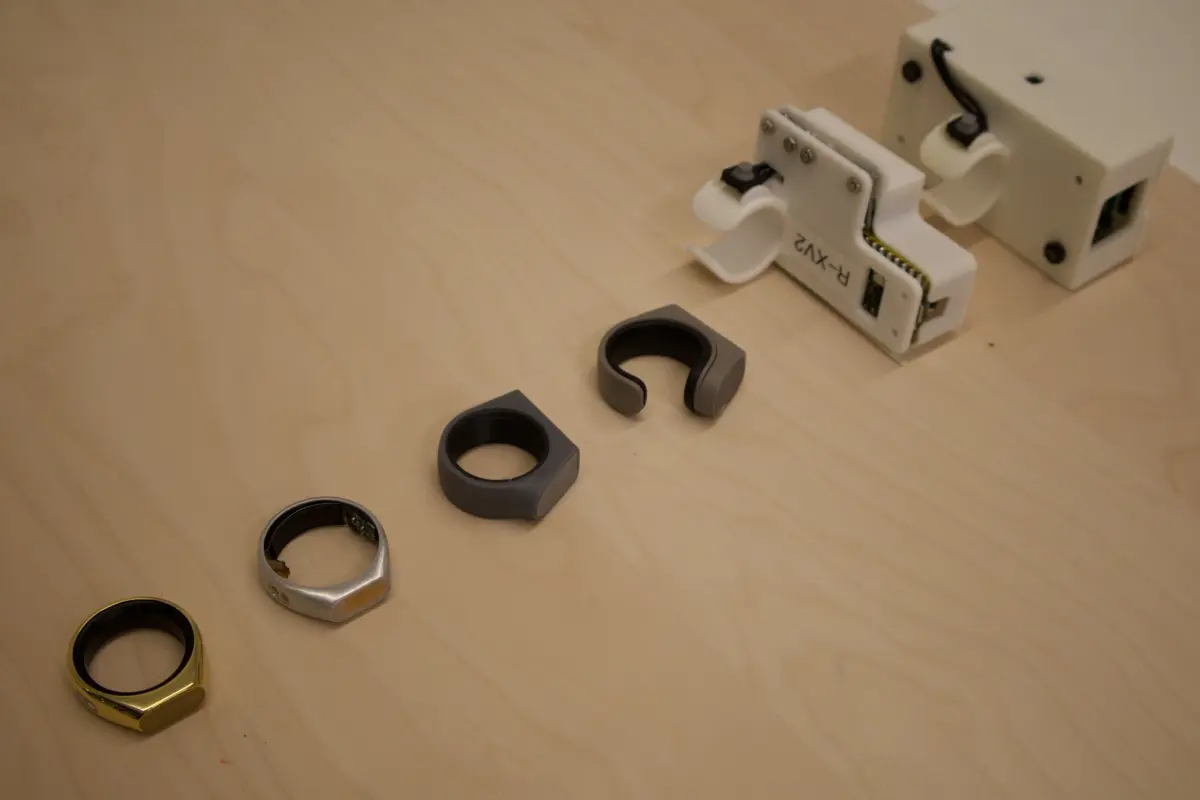
Executive Overview
The landscape of consumer hardware is undergoing its most radical transformation since the dawn of the smartphone. Over the past two years, the market has been flooded with a new breed of artificial intelligence notetaking devices. From credit-card-sized gadgets slipped into pockets and sleek lapel pins to high-tech pendants and transcription-enabled earbuds, the industry has gone all-in on a singular promise: to capture the nuances of human conversation, transcribe them in real time, and distill them into clean summaries and actionable task lists.
Yet, as the novelty of recording multi-person meetings begins to plateau, the cutting edge of AI hardware is shifting its focus inward. A fresh wave of wearables—specifically smart rings—is betting that consumers want to capture stray thoughts, fleeting ideas, and personal voice memos with the exact same frictionless ease.
Leading this charge is Sandbar, an ambitious startup founded by former Meta employees. Sandbar is the creator of Stream, a private voice-recording smart ring designed to blend seamlessly into daily life while capturing unstructured human thought. The company has quietly amassed $36 million in total funding, punctuated by a recent $23 million Series A round co-led by prominent venture capital firms Adjacent and Kindred Ventures.
In a recent episode of TechCrunch’s flagship Equity podcast, co-host Rebecca Bellan sat down with Sandbar co-founder and CEO Mina Fahmi to discuss the evolution of voice hardware, why previous generations of recording devices struggled to achieve mainstream adoption, and why keeping humans firmly in control of their data is the ultimate key to unlocking the true potential of wearable tech.
Detailed Chronology: The Evolution of Ambient AI Hardware
To understand Sandbar’s market positioning and the rise of smart-ring technology, it is essential to trace the rapid evolution of AI-driven notetaking hardware over the last several years.
Phase 1: The Meeting Room Revolution (2023–2024)
The initial wave of AI hardware was built almost exclusively around corporate productivity and group settings. Devices like the Rabbit R1, Humane AI Pin, and various standalone pendants were marketed as all-knowing digital assistants designed to clip onto clothing or sit flat on a boardroom table.
These devices relied heavily on always-on microphones, attempting to parse complex multi-party conversations. However, they faced immediate headwinds:
- Social Friction: Pointing a camera or wearing a conspicuous recording pin in public spaces raised immediate privacy alarms among bystanders.
- Battery Drain: Continuous audio streaming and local-to-cloud processing quickly exhausted the physical limits of small battery architectures.
- Information Overload: Users quickly discovered that sifting through hours of unedited meeting transcripts was often more cumbersome than simply writing down notes manually.
Phase 2: The Shift Toward Discreet Wearables (Late 2024–2025)
Recognizing the social awkwardness and practical limitations of chest-mounted pins and bulky pendants, hardware manufacturers began miniaturizing components. The focus shifted away from heavy enterprise meeting tracking toward personal capture.
Audio gear manufacturers integrated AI microchips directly into earbuds, while health-tech pioneers looked at biometric form factors. However, audio devices required users to have earbuds actively in their ears, and wrist-worn fitness trackers lacked the intimate proximity required for clean, whisper-quiet voice note capture.
Phase 3: The Smart Ring Era & The Emergence of Sandbar (Late 2025–Present)
By late 2025, the smart ring emerged as the definitive form factor for discreet, ambient computing. Unlike smartwatches that demand visual attention or pins that broadcast recording capabilities, a ring offers continuous physical contact with the user while remaining virtually invisible to the outside world.
In November 2025, former Meta employees stepped out of stealth to launch Sandbar, formally introducing Stream—a smart ring engineered specifically for private voice notes and ambient music control. Rather than attempting to record every public conversation around the user, Stream was designed with a specific philosophy: intentional, private capture.
Momentum accelerated rapidly for the startup. By March 2026, Sandbar successfully secured a $23 million Series A funding round, bringing its cumulative venture backing to $36 million and signaling intense investor appetite for localized, privacy-first AI wearables.
Supporting Context & Metrics: The Venture Landscape and Form-Factor Physics
The willingness of venture capitalists to pour tens of millions of dollars into companies like Sandbar is grounded in both shifting consumer behavior and the physics of wearable hardware design.
The Financial Fuel: A $36 Million Bet
The $23 million Series A round secured by Sandbar—spearheaded by Adjacent and Kindred Ventures—places the startup in an elite tier of early-stage hardware companies. Hardware is notoriously difficult and capital-intensive to scale, requiring intricate supply chains, rigorous quality control, and significant inventory investments before achieving profitability. That institutional investors are willing to back a pre-scaling ring startup underscores a broader market consensus: the smartphone interface, while dominant, is experiencing peak saturation as the primary gateway for digital input.
Why Rings Over Pendants?
During his appearance on the Equity podcast, Sandbar CEO Mina Fahmi addressed the graveyard of voice hardware devices that came before Stream. According to Fahmi, many previous products failed because they violated fundamental social contracts and ergonomic realities:
- The Conspicuousness Problem: Devices clipped to lapels or worn as heavy necklaces immediately alter social dynamics, making people around the wearer self-conscious and hesitant to speak freely.
- The Ergonomics of Capture: A ring is uniquely positioned on the body. It is an established form factor that consumers are already accustomed to wearing daily (thanks to Oura, Apple, and traditional jewelry).
- Intentionality: By utilizing a ring, the physical gesture required to trigger a thought capture becomes micro-intentional, reducing accidental recordings and ensuring that the user remains the master of their own data pipeline.
Official Statements & Insights: Inside the Equity Podcast Interview
The conversation between TechCrunch’s Rebecca Bellan and Sandbar CEO Mina Fahmi provided a rare, behind-the-scenes look at the philosophy driving modern hardware startups. Below are key excerpts and conceptual breakdowns from their dialogue.
Mina Fahmi on Overcoming Past Hardware Failures
"So many voice hardware devices before Stream struggled to break through because they tried to replicate the smartphone experience in a smaller box, or they ignored the fundamental social friction of recording the world around you."
Fahmi emphasized that the graveyard of AI gadgets is filled with products that tried to solve problems users didn’t actually have, while ignoring the social friction of always-on surveillance. By pivoting the narrative from "recording everyone else" to "capturing your own fleeting thoughts," Sandbar positioned Stream as an extension of human cognition rather than an external monitor.
The Human-Centric AI Philosophy
A core pillar of Fahmi’s strategy—and a central theme of the podcast—is the concept of keeping the human firmly in control. In an era where many generative AI companies push for fully autonomous agents that make decisions, execute tasks, and scrape data without user intervention, Sandbar is taking a more disciplined approach.
"We are betting that keeping the human firmly in control is what it’ll take to get wearable tech right."
Rather than allowing an AI to autonomously interpret every stray whisper or background sound, Stream acts as a high-fidelity capture tool that respects human agency. The ring gathers the raw material of human thought, but leaves the categorization, editing, and execution safely in the hands of the user. This design philosophy dramatically mitigates privacy risks and reduces the likelihood of "hallucinated" actions or accidental data leaks.
Future Outlook: Where Ambient AI Wearables Go From Here
As the dust settles on the initial hype cycle of AI pins and pendants, the trajectory of consumer hardware is pivoting toward quiet integration. The future of AI is not about shouting commands at a lapel pin or staring at a glowing screen; it is about ambient, frictionless tools that disappear into the background of daily life.
1. Mainstream Adoption of Smart Jewelry
With heavyweights and agile startups alike pushing into the smart ring category, rings are poised to become the standard multi-functional wearable of the late 2020s. Health tracking, contactless payments, and now private voice computing are converging into single, elegant pieces of jewelry.
2. The Battle for Local Privacy
As consumer awareness regarding data privacy reaches an all-time high, hardware startups that rely on cloud-heavy processing will face increasing scrutiny. Companies that can process voice notes locally on-device—or guarantee zero-retention data policies—will win the trust of enterprise workers and privacy-conscious consumers alike.
3. Redefining Productivity
The ultimate test for devices like Sandbar’s Stream will not be how many hours of audio they can capture, but how effectively they can bridge the gap between inspiration and execution. If ambient voice rings can successfully eliminate the friction of journaling, brainstorming, and note-taking without introducing new layers of digital clutter, they may well succeed where early AI pendants stumbled.
For now, the backing of major venture firms and the strategic insights of founders like Mina Fahmi suggest that the next great computing revolution won’t be held in your hand—it will be worn on your finger.
To listen to the full conversation with Mina Fahmi, subscribe to TechCrunch’s Equity podcast on YouTube, Apple Podcasts, Spotify, Overcast, or wherever you get your audio.