Executive Overview
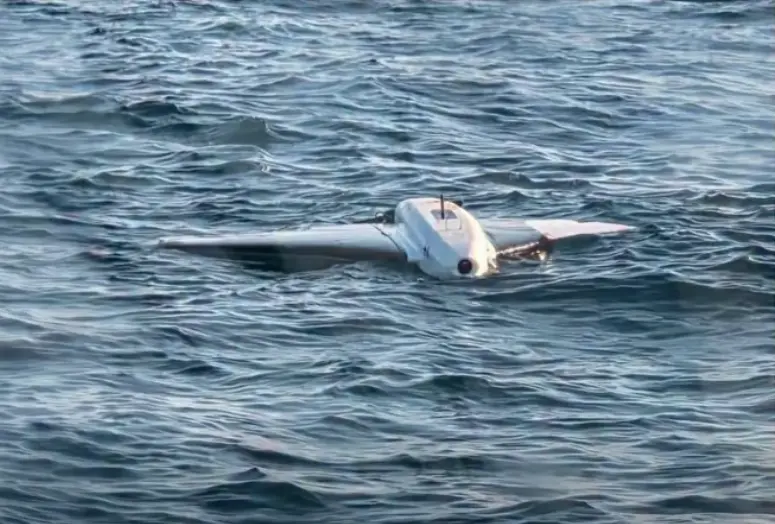
The geopolitical friction spilling over from Russia’s protracted war in Ukraine crossed a dangerous new threshold on August 11, when Romanian military forces executed a controlled underwater detonation of two Russian-made drones found adrift in the Black Sea. The unmanned aerial vehicles (UAVs) were discovered alarmingly close to the Neptun Deep offshore natural gas project—the largest natural gas development in Romania’s territorial waters and a cornerstone of future European Union energy independence.
The incident, confirmed by Romania’s Ministry of National Defense, underscores the escalating vulnerabilities of critical European energy infrastructure operating in close proximity to an active maritime theater of war. As Black Sea security deteriorates under the pressure of continuous regional hostilities, stray munitions, reconnaissance platforms, and kamikaze drones increasingly threaten both commercial shipping lanes and multi-billion-dollar energy installations.
For Romania, a frontline NATO member state sharing a 650-kilometer land border with Ukraine, the discovery of hostile hardware floating directly over strategic energy corridors marks a troubling escalation. While previous incursions have largely manifested as airspace violations or debris impacts in isolated border regions, the August 11 maritime discovery highlights an expanding vector of risk: underwater and surface assets drifting dangerously near vital economic lifelines.
This comprehensive report examines the chronology of the operation, the tactical implications for Black Sea energy security, the broader history of Russian drone incursions into Romanian territory, and the strategic outlook for NATO’s southeastern flank.
Detailed Chronology: The August 11 Operation
Discovery at Sea
The sequence of events began on the morning of August 11, when a commercial support vessel operating in the vicinity of the Neptun Deep offshore perimeter spotted suspicious floating objects bobbing on the surface of the Black Sea. Recognizing the potential hazard to navigation and the sensitivity of the operational zone, the vessel’s crew immediately alerted maritime authorities.
The Neptun Deep project site, located within Romania’s exclusive economic zone (EEZ), is heavily monitored due to its immense economic and strategic value. The immediate vicinity serves as a hub for heavy maritime traffic, geological surveys, and engineering vessels engaged in laying the groundwork for what will soon become the EU’s largest domestic natural gas source.
Coast Guard Response and Military Interoperability
Upon receiving distress notifications from the commercial sector, the Romanian Coast Guard mobilized a fast-response cutter carrying specialized army personnel to secure the area. Arriving at the coordinates provided by the commercial vessel, the Coast Guard team secured a safety perimeter and began recovering the floating debris.
Preliminary inspections by military personnel aboard the cutter confirmed the presence of two distinct Russian-designed Gerbera-type drones, alongside scattered metallic and composite debris. The Gerbera platform, increasingly utilized by Russian forces in Ukraine as a reconnaissance and decoy drone, represents a persistent tactical nuisance that can double as a loitering munition depending on payload configurations.
To confirm the origin of the recovered hardware, Romanian defense authorities initiated immediate diplomatic and military channels with Kyiv. Ukrainian defense officials quickly examined the technical specifications provided by Bucharest and officially confirmed that the systems did not belong to the Ukrainian Armed Forces, sealing the attribution to Russian inventories.
Explosive Ordnance Disposal (EOD) and Controlled Detonation
Given the inherent instability of recovering waterlogged ordnance containing potentially live electronic components or unexploded booster charges, the commanding officers on-site elected not to hoist the drones aboard the Coast Guard vessel. Instead, the task was handed over to elite explosive ordnance disposal (EOD) divers from the Romanian Naval Forces.
Later that same day, Defense Minister Radu Miruță released official footage via social media—subsequently picked up by international news agencies including Reuters—documenting the final phase of the operation. The video captured specialized Romanian army divers deploying tactical charges near the floating wreckage. A controlled underwater explosion subsequently vaporized one of the drones, neutralizing the maritime hazard and restoring safety to the shipping lanes.
Supporting Context & Metrics: The Neptun Deep Stakes and Black Sea Vulnerabilities
The Neptun Deep Significance
To fully understand the gravity of the August 11 incident, one must examine the strategic importance of the Neptun Deep project. Developed jointly by OMV Petrom (controlled by Austria’s OMV) and Romgaz (Romania’s state-owned gas producer), Neptun Deep is the largest natural gas project in the Romanian Black Sea and the most significant energy infrastructure initiative in the European Union in recent years.
- Production Capacity: The project is projected to deliver approximately 100 billion cubic meters of natural gas over its operational lifecycle.
- EU Energy Security: Once fully operational, Neptun Deep is slated to transform Romania into the largest natural gas producer in the entire European Union, effectively replacing Russian pipeline gas imports for millions of households and industrial consumers across Central and Eastern Europe.
- Geopolitical Exposure: Because the gas fields lie roughly 160 kilometers off the Romanian coast in deep waters, securing the maritime approach, subsea pipelines, and production platforms presents an unprecedented logistical and military challenge for Bucharest and NATO.
The Anatomy of the Threat: Gerbera Drones
The identification of Gerbera-type drones in Romanian waters highlights an evolution in Russian unmanned aerial tactics. Unlike the heavy, long-range Geran-2 (Iranian-designed Shahed-136 variants) kamikaze drones that carry massive explosive warheads, Gerberas are generally constructed from lighter materials such as foam and fiberglass, functioning primarily as reconnaissance platforms, electronic intelligence gatherers, or low-cost decoys designed to overwhelm air defense networks.
However, their presence floating at sea indicates that these systems are being launched in vast quantities across southern Ukraine and the Black Sea basin. Unrecovered or downed units frequently fall victim to sea currents and prevailing winds, drifting across maritime borders into NATO territory. Whether these specific units were shot down by Ukrainian air defenses or suffered mechanical failures during long-range flight paths remains under investigation by Romanian military intelligence.
A History of Incursions: Romania’s Growing Toll
The maritime discovery is not an isolated event; rather, it is the latest chapter in a prolonged series of security breaches that have plagued Romania since the onset of Russia’s full-scale invasion in February 2022.
- The May 29 Apartment Strike: In one of the most harrowing escalations of the war for a NATO neighbor, a Russian Geran-2 drone carrying a live explosive payload struck an apartment building in southeastern Romania on May 29. The impact injured a woman and a child, caused extensive structural damage, and forced the emergency evacuation of 70 local residents.
- Prior Infrastructure Damage: Earlier incidents documented by civil defense authorities include a Russian drone strike that severely damaged a local industrial workshop and an electricity transmission pole, necessitating the hasty evacuation of over 500 civilians living near the borderlands of the Danube Delta.
- Airspace Violations: Numerous unauthorized crossings of Romanian airspace by Russian UAVs have forced Bucharest to scramble sophisticated fighter jets—including F-16s—on expensive combat air patrol missions. According to recent defense analyses, intercepting a handful of wayward drones can cost Western-aligned militaries millions of dollars in fuel, maintenance, and missile expenditures (such as a recent operation where Romania expended roughly $17 million to down three incoming drones).
Official Statements and Diplomatic Reactions
Ministry of National Defense Response
Defense Minister Radu Miruță has maintained a stance of transparency coupled with resolute deterrence, utilizing digital platforms to update the public while reassuring international partners that Romanian forces maintain absolute control over national sovereign space and maritime domains.
"Our EOD divers executed a textbook neutralization of these foreign military assets to guarantee the safety of our civilian mariners and protect critical infrastructure developments in our economic zone," Minister Miruță noted in statements following the release of the operation video. He further emphasized that Romania remains in constant communication with regional allies to trace the trajectory and origin of all unidentified aerial and maritime hazards.
NATO and Allied Consultations
While NATO’s Article 5 has not been formally invoked regarding these recurring debris impacts and stray drone incursions, the North Atlantic Treaty Organization’s Allied Land Command and Maritime Command have intensified intelligence-sharing protocols with Bucharest.
NATO military planners recognize that the Black Sea has effectively transformed into an active contested zone. The alliance has steadily reinforced its "Air Shield" and "Enhanced Vigilance Activities" (eVA) across Romania and Bulgaria, deploying advanced radar systems, anti-aircraft batteries, and maritime patrol aircraft to monitor the western basin of the Black Sea around the clock.
Ukrainian Collaboration
The swift confirmation by Ukrainian defense partners that the recovered Gerbera drones did not originate from Ukrainian inventories underscores the high level of military intelligence coordination between Kyiv and Bucharest. Despite political sensitivities regarding border incidents, both nations recognize that Russian military operations in the southern sector pose an indiscriminate hazard to all Black Sea littoral states, regardless of their combat status.
Future Outlook: Securing the Black Sea Energy Frontier
As the war in Ukraine grinds through its third year with no immediate diplomatic resolution in sight, the security outlook for the Black Sea remains tense and volatile. The August 11 incident serves as a stark warning to energy corporations, maritime insurers, and NATO defense planners alike.
1. Hardening Maritime Infrastructure
Operators of the Neptun Deep project, alongside other critical infrastructure installations in the Romanian EEZ, will likely be forced to accelerate investments in multi-layered security perimeters. This includes deploying dedicated surface radar systems, acoustic underwater sensors, and electronic jamming countermeasures capable of neutralizing stray or targeted drones before they can compromise multi-billion-dollar drilling rigs or pipeline hubs.
2. Adaptation of NATO’s Black Sea Strategy
The frequency of airspace and maritime violations points to an urgent need for more cost-effective counter-drone (C-UAS) technologies along NATO’s eastern flank. Relying on million-dollar air-to-air missiles fired from fighter jets to intercept cheap, foam-built drones is financially and logistically unsustainable. Future defensive postures will likely pivot toward ground-based mobile air defense groups, directed-energy weapons (lasers), and dense electronic warfare umbrellas stationed strategically along the Romanian coast.
3. Commercial Shipping and Insurance Implications
Commercial maritime traffic operating through the western Black Sea—crucial for grain exports from Ukraine as well as regional energy logistics—faces elevated risk premiums. Shipowners navigating near Romanian and Bulgarian waters must contend with the unpredictable hazard of drifting naval mines and unexploded drone debris. Enhanced naval patrolling by the Romanian Coast Guard and Allied naval task forces will be vital to keeping these critical commercial corridors open and economically viable.
In conclusion, the destruction of the two Russian-made drones near the Neptun Deep project is far more than a routine military disposal operation; it is a vivid symptom of a widening security crisis. As Romania solidifies its position as Europe’s premier emerging natural gas powerhouse, safeguarding its maritime and territorial frontiers against the collateral damage of Russian aggression remains an imperative task for both national defense forces and the broader NATO alliance.