Executive Overview
The artificial intelligence boom has brought about an unprecedented paradox: the very technology driving the future of global computing is physically threatening to melt down under its own weight. Modern data centers, packed dense with GPUs executing complex machine learning workloads, consume staggering amounts of electricity, much of which is instantly converted into punishing thermal energy. The resulting heat management crisis has pushed traditional semiconductor design to its absolute limits, forcing engineers to seek revolutionary solutions.
In a classic demonstration of modern technological recursion, the industry is now turning to AI to solve the very thermal problems that AI itself created.
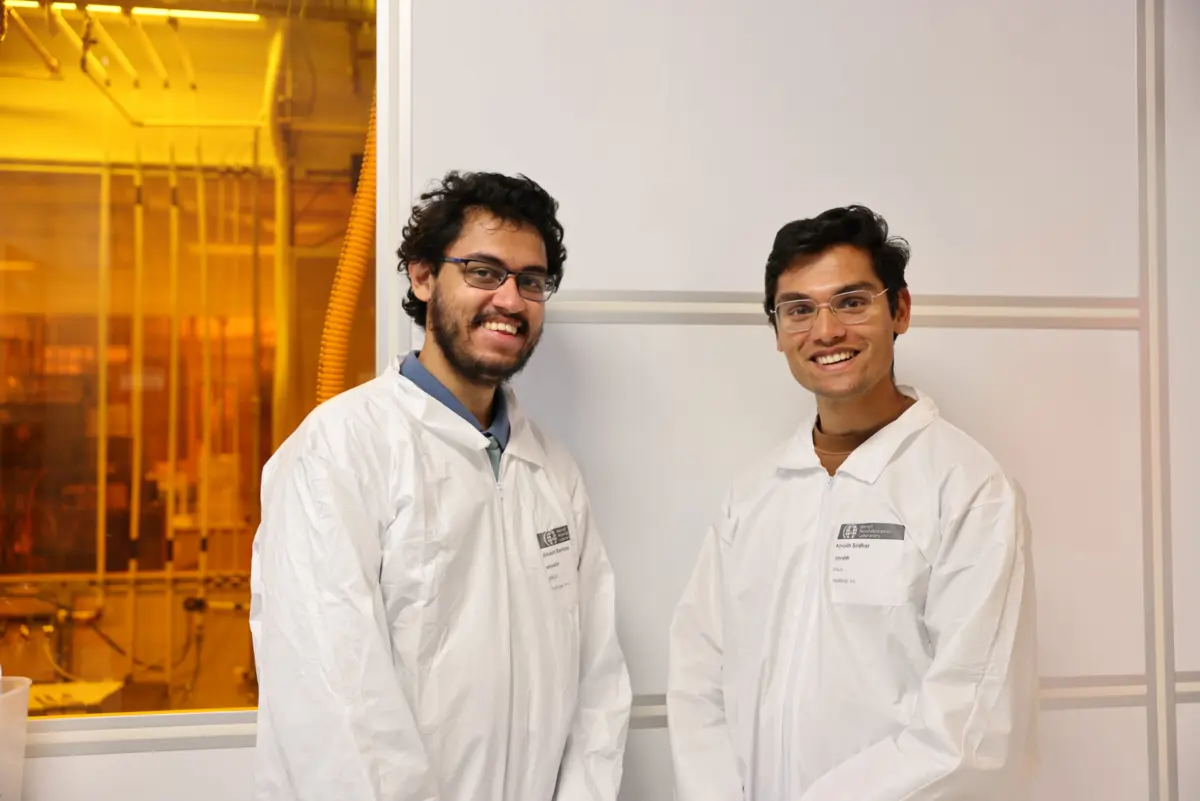
Enter Discovered Materials, a high-profile startup emerging from the prestigious Y Combinator ecosystem with a heavy-hitting $9 million seed round led by Lightspeed India Partners, alongside investments from Peak XV Partners and notable angel investors including Paul Graham, Gokul Rajaram, and Thariq Shihipar. Founded by Advaith Sridhar and Akash Ramdas, the company is deploying autonomous swarms of AI agents to scour the periodic table and engineer novel semiconductor materials capable of mitigating extreme chip heat.
By marrying Anthropic’s cutting-edge language models with proprietary foundational physics simulators, Discovered Materials claims it can scale materials science research from a sluggish human trickle into an around-the-clock digital flood. Yet, despite the breathless excitement surrounding AI-driven discovery, the path from a simulated atomic structure to a functional, commercially viable GPU component remains fraught with immense manufacturing, physical, and economic hurdles.
Detailed Chronology: From Stanford Labs to Autonomous Silicon Swarms
The genesis of Discovered Materials lies in the complementary backgrounds of its co-founders. Akash Ramdas spent years deep in the academic trenches, earning a doctorate in materials science from Stanford University, where he intimately experienced the tedious, painfully slow grind of traditional laboratory experimentation. Alongside him is Advaith Sridhar, whose engineering pedigree includes pioneering work on autonomous agents at Persona AI and Luma Labs.
During his doctoral research, Ramdas operated much like every materials scientist before him: manually formulating hypotheses, executing a handful of laboratory guesses per day, and waiting weeks or months for physical test results. Recognizing that the staggering pace of generative AI could be harnessed to bypass these biological limitations, the duo teamed up to build an automated software pipeline.
The system relies on custom harnesses built around Anthropic’s frontier models. These AI agents operate 24/7 in the cloud, autonomously generating material leads based on high-level research directions provided by human supervisors. Once a potential chemical composition or atomic lattice is dreamed up by the language models, the pipeline routes the candidate through specialized foundational physics models trained by the startup. These models run rigorous simulations to verify whether the proposed material possesses genuine utility for semiconductor architecture or if it should be immediately discarded.
"Ramdas was doing maybe 20 guesses a day during his PhD," Sridhar noted in an interview. "We’re able to do thousands of guesses a day now by having these agents run 24/7 on the cloud, exploring research directions that he gives them."
Capitalizing on this massive leap in computational throughput, Discovered Materials formally announced its public arrival by releasing details on hundreds of newly discovered materials. Simultaneously, the startup launched the "Material Discovery Bench," a specialized benchmarking tool designed to track and evaluate how various frontier AI models handle the complex physics of materials science challenges.
While rivals such as MatNex, SandboxAQ, and CuspAI have entered the fray with their own AI-driven material discovery platforms, Discovered Materials is attempting to carve out a defensible moat via laser-focus. Rather than trying to solve every chemical mystery under the sun, the startup is betting that an uncompromising focus on the thermal bottlenecks of semiconductor manufacturing is the most direct path to commercial viability.
Supporting Context & Metrics: The Physics Bottleneck and the "Whack-a-Mole" of Atoms
The semiconductor industry’s thermal crisis is no secret. As chip architectures shrink down to the nanometer scale while packing in billions—and soon trillions—of transistors, managing heat dissipation has become just as critical as raw processing power. Traditional materials like silicon, copper, and standard thermal interface substances are hitting fundamental physical limits.
However, discovering a new material that looks promising on a computer screen is only the opening act of a punishing engineering gauntlet. Hemant Mohapatra, the Lightspeed partner who spearheaded the investment round, describes the process as playing a high-stakes game of "whack-a-mole with atomic structures."
The core obstacle lies in the engineering trade-space. If the AI pipeline identifies a novel atomic arrangement that drastically reduces heat generation or supercharges thermal dissipation, it frequently introduces catastrophic side effects. The material might prove entirely impossible to manufacture at scale using existing semiconductor fabrication facilities, or its newly discovered thermal properties might inadvertently compromise vital electrical conductivity and signal propagation.
"A material is only useful in the real world if all of them converge at once, which is what makes this a really interesting search problem," Mohapatra explained.
Furthermore, the economics of AI-driven prediction are shifting rapidly. Mohapatra anticipates that the baseline business of predicting novel substances will soon become commoditized as foundational models improve and become more widely accessible. The true differentiator for Discovered Materials, he argues, is not merely the software pipeline, but Ramdas’s deep domain expertise and the startup’s ability to swiftly transition from digital simulation to physical lab validation.
Despite the hype surrounding artificial intelligence in drug discovery and materials science, historical precedent demands a heavy dose of skepticism. Across the broader tech landscape, very few AI-discovered molecules or materials have made a definitive commercial splash. In the pharmaceutical space, Insilico Medicine’s Renterosib stands as a rare milestone, having advanced into a Phase III clinical trial as the first generative AI-discovered drug to reach that advanced stage of testing.
In the realm of materials science, promising concepts have regularly emerged—such as MatNex’s rare-earth-free permanent magnets or novel semiconductor substrates developed through collaborations between Panasonic and Citrine Informatics. Yet, true commercial deployment at scale remains elusive. According to Mohapatra, the generation of candidate materials is no longer the primary bottleneck holding back AI materials science.
"Filtering them correctly and synthesizing them is the bottleneck," he stated. Sridhar echoes this grounded sentiment, acknowledging that while their proprietary data pipelines and software expertise provide an edge against deep-pocketed frontier labs, the physical reality cannot be bypassed. "A lot of this will involve actually going into wet labs and making things as well," Sridhar admitted. "And this is the process that cannot be sped up."
Official Statements and Strategic Vision
The leadership team at Discovered Materials has a clear, albeit ambitious, roadmap for turning digital computations into tangible market value. Rather than attempting to vertically integrate and manufacture chips themselves—a capital-intensive nightmare reserved for industry titans like TSMC or Intel—the startup intends to operate as an intellectual property powerhouse.
When the autonomous agents successfully identify high-value candidates that pass both physical simulations and initial laboratory testing, Discovered Materials plans to patent the use of those specific materials within GPU architectures, as well as the proprietary manufacturing processes required to fabricate chips out of those substances. The startup will then license these breakthroughs directly to major semiconductor manufacturers.
Sridhar remains optimistic about the timeline, expressing hope that the startup will secure its first commercially viable, patent-worthy materials within the next year.
Investors, meanwhile, are viewing the investment through a pragmatic lens. While the ultimate goal is to solve the thermal ticking time bomb inside modern data centers, the venture capital backers recognize that the journey will require a delicate balance of speculative AI architecture and tedious, old-school physical chemistry.
Future Outlook: Can AI Fix the Hardware It Enabled?
As global demand for generative AI training and inference continues its exponential climb, the pressure on data center infrastructure will only intensify. Power grids are already straining under the weight of incoming facility expansions, and cooling bills are skyrocketing. The thermal limitations of silicon are no longer a distant theoretical concern; they are an active drag on the economic and environmental viability of the AI revolution itself.
Discovered Materials represents a fascinating test case for the recursive loop of technological advancement: using software generated by AI to optimize the hardware required to run AI.
If Sridhar, Ramdas, and their swarms of autonomous agents can successfully navigate the brutal trade-offs of atomic design—translating digital guesses into manufacturable, electrically sound, thermally superior materials—they could secure a lucrative niche at the absolute foundation of the hardware supply chain.
However, if they fall victim to the traditional valley of death that swallows most advanced materials science startups, they will serve as another cautionary tale about the limits of digital acceleration in a physical universe. Whether AI can conquer the laws of thermodynamics in time to save its own infrastructure remains the billion-dollar question for the next decade of silicon engineering.