







Executive Overview
In the modern video game landscape, commercial success is rarely confined to a single domestic market. As digital storefronts flatten global distances, reaching players in overseas territories is no longer an optional growth strategy—it is an economic necessity. Yet, the critical engine driving this global expansion, localization, remains one of the most misunderstood, marginalized, and undervalued disciplines in game development.
While programmers, level designers, and narrative directors occupy the spotlight, localizers frequently operate in the shadows. They are the linguistic and cultural architects who transform a localized hit into a global phenomenon, yet they routinely face exclusion from game credits, grueling crunch cycles, and an existential threat from the rise of generative artificial intelligence and crude machine translation.
Compounding these systemic labor issues is a structural disconnect within development studios. To the average game developer, localization functions inside a black box. For better or worse, traditional workflows often isolate localizers from the broader development team, creating an "us versus them" mentality where translation is treated as a late-stage, copy-paste chore rather than an integral, creative pillar of production.
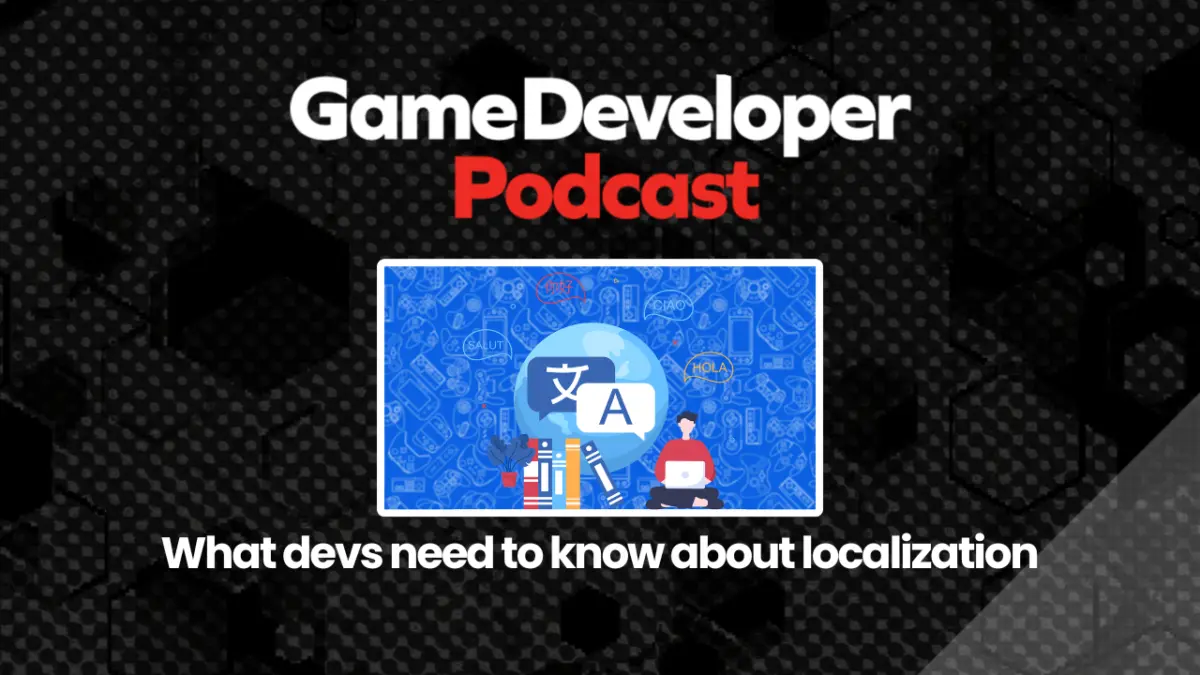
In a recent episode of the Game Developer Podcast, host Bryant Francis sought to dismantle this insular dynamic. By bridging the gap between core developers and linguistic specialists, the episode unpacks what creators of all stripes must understand about collaborating with localizers. Beyond addressing logistical bottlenecks, the conversation illuminates why translating games into diverse linguistic landscapes is a deeply artistic, passionate, and intellectually demanding craft—one that requires direct integration into the creative pipeline.
Detailed Chronology: The Evolution of Localization and the Push for Industry Reform
To understand the current crisis in game localization, one must examine the chronological shift from the early days of literal porting to the sophisticated cultural adaptation demanded by today’s audiences.
Era 1: The Wild West of Literal Translation (1980s–1990s)
In the nascent decades of the video game industry, localization was rarely referred to as such; it was simply "translation." Consoles like the NES and Sega Genesis brought Japanese titles to Western shores, often accompanied by infamous, heavily altered scripts.
- Limited Toolsets: Translators worked with raw text dumps, completely devoid of visual context, character profiles, or branching narrative trees.
- The "Zero Context" Standard: Because code space was at an absolute premium, text had to be violently abbreviated, leading to iconic anomalies like "All your base are belong to us." During this era, translation was viewed purely as a technical hurdle, not a creative endeavor.
Era 2: The Professionalization of Narrative and Voice (2000s–2010s)
As games grew in cinematic scope, budgets swelled, and voice acting became standard, the role of the localizer began to evolve.
- Rise of Specialized Agencies: Major publishers established dedicated localization QA (LQA) pipelines and contracted specialized translation houses.
- The Acknowledgment Gap: Despite handling massive scripts—often rivaling the length of feature films or novels—translators were systematically omitted from core credits. The credits roll would frequently list only the senior studio heads or the overarching agency, reducing human labor to corporate entities.
Era 3: The Contemporary Crisis—AI, Crunch, and Isolation (2020s–Present)
Today, localization sits at a volatile intersection of technological disruption and labor exploitation.
- The Crunch Epidemic: Because localization is almost invariably scheduled at the tail end of a project’s lifecycle, localizers are the ultimate inheritors of upstream delays. When a development team slips its deadline by three months, the localization window is rarely extended; instead, translators are forced to crunch, translating millions of words in hazardous, sleepless sprints.
- The Generative AI Threat: Studio executives looking to cut operational costs have increasingly turned toward Large Language Models (LLMs) and automated machine translation. This existential threat devalues human nuance, ignoring the reality that games require deep cultural resonance, emotional subtext, and playful localization (such as rewriting jokes, riddles, and slang) that AI simply cannot replicate authentically.
- The Black Box Reality: Internal studio silos continue to persist. Developers drop text strings into a localization management platform (LMP) and walk away, expecting a flawless multi-language output without ever briefing the translation team on the game’s core themes, mechanics, or character dynamics.
Supporting Context & Metrics: The Economics and Realities of Global Play
The friction between game developers and localizers is not merely a cultural misunderstanding within offices; it carries profound financial and artistic ramifications.
The Market Imperative of Overseas Revenue
According to global games market data, regions outside of North America account for the vast majority of video game consumption.
- Geographic Expansion: Markets in Asia-Pacific, Latin America, and Europe drive billions in annual revenue. For indie developers and AAA studios alike, a localized release can expand a game’s total addressable market (TAM) by 300% to 500%.
- The Cost of Bad Translation: Poor localization directly impacts player retention and brand equity. A confusing user interface (UI) translation, a broken dialogue trigger, or tone-deaf cultural references can trigger review-bombing campaigns on platforms like Steam, instantly alienating an entire regional audience.
[ Traditional Production Pipeline ]
Upstream Dev Delay ──► Compressed Localization Window ──► Extreme Crunch / Burnout ──► Suboptimal Output
The Human Cost: Metrics of Invisibility
While precise, centralized global statistics on localization labor are difficult to aggregate due to pervasive non-disclosure agreements (NDAs) and fragmented contracting, industry advocacy groups and unions have begun painting a stark picture:
- Credit Omission: Surveys among freelance and agency-backed localizers indicate that over 40% of practitioners have worked on titles where their names were entirely absent from the final credits.
- Underpaid Labor: Word rates for translation have stagnated or declined over the past decade, even as inflation has risen and the technical complexity of games (featuring dynamic dialogue systems, gender-variable pronouns, and context-dependent UI text) has skyrocketed.
- The Illusion of AI Efficiency: Studies evaluating machine translation in creative media consistently show that post-editing AI text takes longer and yields lower emotional resonance than human-first translation, yet management continues to chase the illusion of zero-cost automated workflows.
Official Statements and Industry Insights
The recent discourse sparked by the Game Developer Podcast episode—hosted by Bryant Francis, edited by Pierre Landriau, and featuring original music by Mike Meehan—highlights an urgent industry-wide call for reform.
Bridging the Gap: Insights from the Game Developer Podcast
The core thesis of the episode centers on the dismantling of the "black box" mentality. Francis and his guests unpack critical shifts in perspective that developers must adopt:
"Localization is not a mechanical copy-paste operation executed at the final whistle of production. It is an act of co-creation. When you hand a script to a localizer without context, you are asking them to paint a portrait blindfolded."
Industry veterans frequently emphasize that localizers act as the first true audience and critics of a game’s narrative. They spot plot holes, logical inconsistencies in branching dialogue, and unintended cultural faux pas long before the title goes gold. By integrating localizers early—treating them as extensions of the narrative and design departments—studios protect their intellectual property from embarrassing or offensive missteps abroad.
The Craft: Passion Over Machinery
Contrary to the sterile output of generative AI, human localization is an intensely creative discipline.
- Linguistic Re-engineering: Translating a pun from English to Japanese or a culturally specific idiom from Portuguese to German requires profound lateral thinking. A literal translation destroys the humor or emotional weight; a localized adaptation recreates the feeling of the original text within the target culture.
- Emotional Resonance: Voice direction, performance cues, and localization notes ensure that voice actors in foreign territories deliver lines with the precise emotional cadence intended by the original director.
Future Outlook: Re-Engineering the Localization Pipeline
As the video game industry navigates economic contraction, changing labor laws, and the ethical dilemmas surrounding generative artificial intelligence, the future of localization hangs in the balance. Will studios double down on extractive, automated cost-cutting, or will they elevate localization to its rightful place as a core creative discipline?
1. Early Integration and Collaborative Workflows
The studios that thrive in the coming decade will be those that shatter the black box.
- Shift-Left Localization: Bringing localizers into the production pipeline during pre-production or early alpha allows translators to understand game mechanics, explore build environments, and ask clarifying questions.
- Visual Context Tools: Providing translation teams with access to build builds, video captures, and design documentation drastically reduces errors and eliminates the guesswork that leads to crunch.
2. Ethical Standards and Fair Labor Practices
Pressure from labor unions, advocacy groups, and conscious consumers is shifting expectations around developer ethics.
- Mandatory Credits: Industry standards must evolve to ensure that every individual who contributes to a game’s linguistic and cultural adaptation—whether full-time employee, contractor, or agency specialist—is formally credited.
- Sustainable Scheduling: Project managers must bake realistic localization windows into their master production schedules, treating translation as an unmovable pillar rather than a buffer zone to absorb upstream development delays.
3. Reclaiming Craft in the Age of AI
While generative tools will undoubtedly find a niche in low-stakes tasks (such as translating internal documentation or generating placeholder text), the core creative output of games demands human empathy, wit, and cultural intelligence.
- Valuing Human Artistry: Gamers are increasingly vocal about supporting human-crafted art, writing, and performance. Studios that proudly champion human localization as a hallmark of quality will build deeper trust with international communities.
Conclusion
Localization is the bridge that transforms a localized passion project into a global phenomenon. For too long, this vital discipline has been obscured by technical silos, crushed by impossible deadlines, and threatened by the cold calculus of automated translation.
As explored on the Game Developer Podcast, the path forward requires a fundamental cultural shift within game development studios. By dismantling the black box, respecting the immense creative labor of translators, and integrating localization from day one, the industry can unlock new heights of artistic expression and commercial success. It is time to bring localizers out of the shadows and into the core of the development family where they belong.