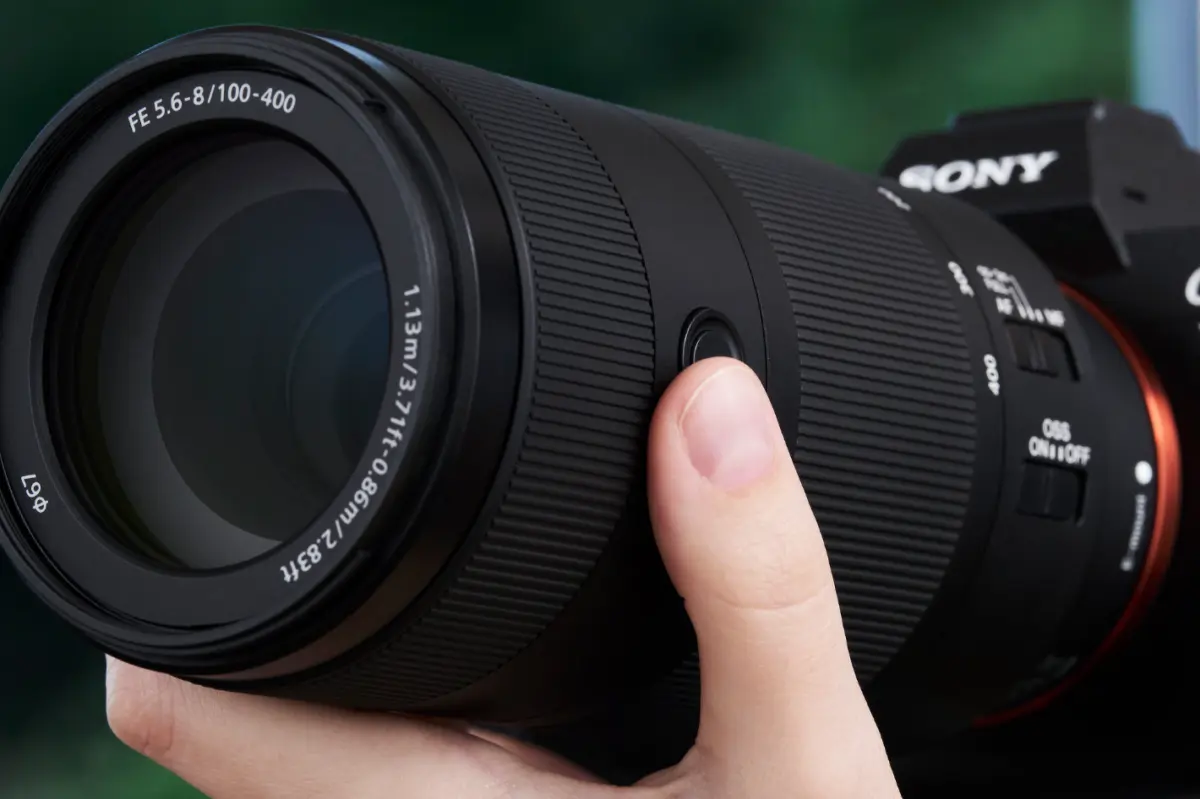
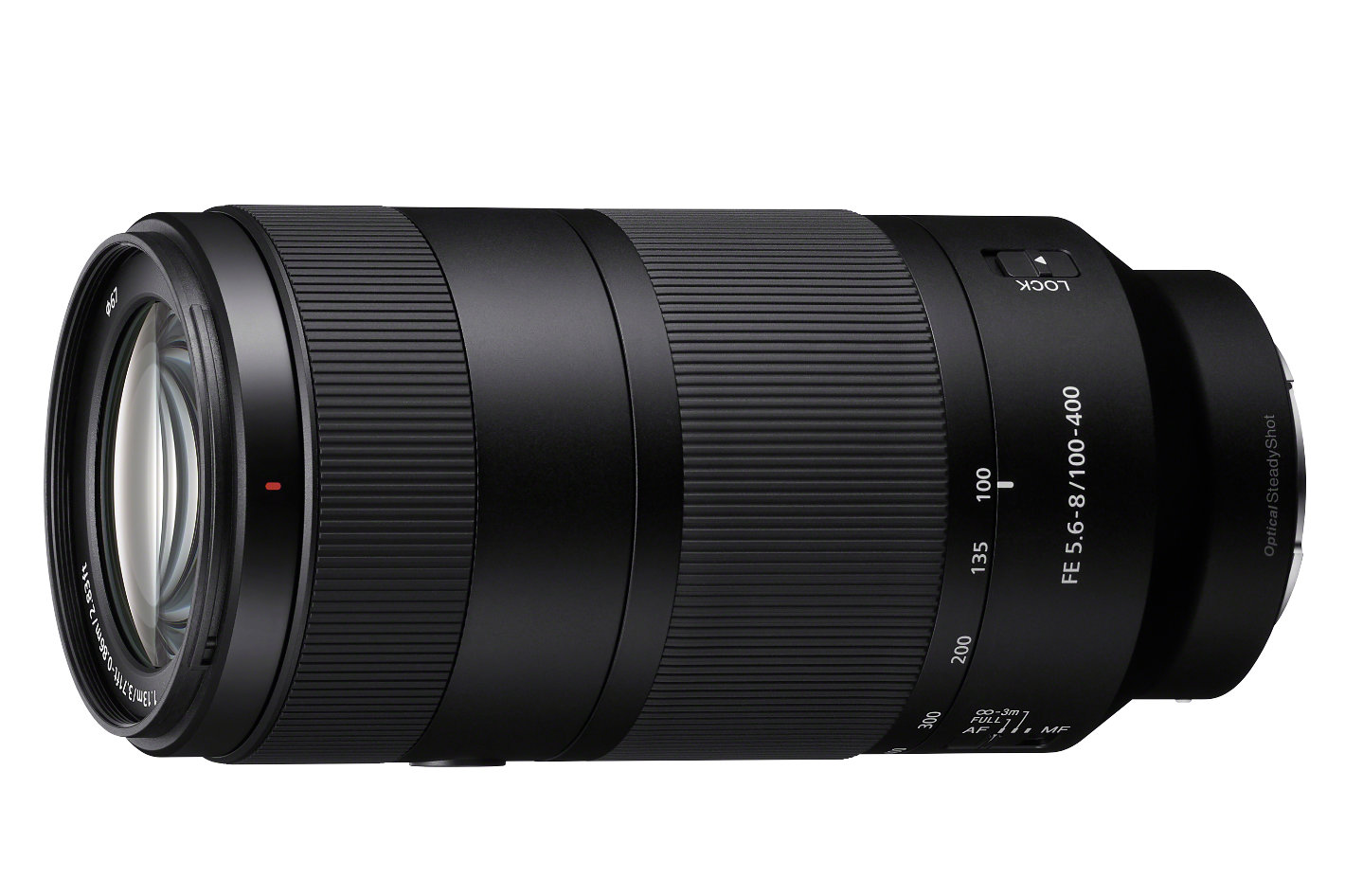
In an era where wildlife, sports, and aviation photography have traditionally been gated by the high cost and physical toll of heavy glass, Sony has announced a disruptive addition to its E-mount lineup: the Sony FE 100-400mm F5.6-8 OSS. Priced at an aggressive $849.99 and weighing an astonishingly light 654 grams, this new lens aims to redefine expectations for the enthusiast and hobbyist market.
For years, full-frame photographers seeking a 400mm reach had to choose between premium, heavy professional-grade telephotos or third-party compromises that often lacked native performance optimization. With the FE 100-400mm F5.6-8 OSS, Sony is targeting a highly coveted sweet spot: extreme portability, competitive optical performance, and first-party system integration at a sub-$900 price point. However, in a highly unusual move for the imaging industry, Sony has indicated a prolonged runway for this product, with consumer availability slated for September 2026. This investigative report explores the technical architecture, strategic market positioning, and broader industry implications of Sony’s upcoming super-telephoto zoom.
Detailed Chronology
To understand the positioning of the FE 100-400mm F5.6-8 OSS, one must examine the evolution of Sony’s telephoto lens roadmap.
Historically, Sony’s flagship offering in this focal range has been the FE 100-400mm F4.5-5.6 GM OSS (G Master). Launched to critical acclaim as part of Sony’s premium line, the G Master variant was engineered for uncompromising edge-to-edge sharpness, fast dual-linear motor autofocus, and robust weather sealing. Yet, with a retail price hovering around $4,300 in various international markets and a weight of nearly 1,400 grams, the G Master remained an investment reserved for professionals, specialized agencies, and affluent hobbyists.
Recognizing a significant market gap between consumer-grade standard zooms and cost-prohibitive super-telephotos, Sony initiated a parallel design philosophy. The goal was to create a highly transportable, optically sound alternative that retains native camera functionalities—such as high-speed burst shooting and advanced tracking—without the physical and financial burden of the G Master.
The announcement of the FE 100-400mm F5.6-8 OSS marks the culmination of this development cycle. However, the projected September 2026 release date introduces an intriguing chronological anomaly. In the fast-paced digital imaging sector, a two-year lead time between announcement and retail availability is exceedingly rare. This timeline suggests that Sony is signaling its long-term roadmap early to deter enthusiast switchers to rival mirrorless platforms, while concurrently navigating global supply chains and optimizing production facilities for high-volume manufacturing.
Supporting Context & Metrics
The FE 100-400mm F5.6-8 OSS is a study in optical compromise and engineering ingenuity. By adjusting the maximum aperture at the telephoto end to F8, Sony’s optical engineers succeeded in reducing the physical footprint of the lens to a fraction of its G Master sibling.
Physical Dimensions and Weight Comparison
Metric
FE 100-400mm F4.5-5.6 GM OSS
FE 100-400mm F5.6-8 OSS
Variance (%)
Weight
Approx. 1,395g (without tripod mount)
Approx. 654g
-53.1%
Target Price
~$4,300.00
$849.99
-80.2%
Max Aperture (Wide)
F4.5
F5.6
-0.66 Stops
Max Aperture (Tele)
F5.6
F8.0
-1.0 Stop
At just 654 grams, the new lens weighs less than a standard 24-70mm F2.8 zoom. This ultra-lightweight profile fundamentally alters how a super-telephoto can be utilized. Rather than requiring monopod support or causing neck strain during prolonged field excursions, this lens can comfortably be shot handheld for hours, fitting easily into compact travel bags.
Optical Formula and Image Quality
To deliver high-fidelity images across a demanding 4x zoom range, Sony utilized a sophisticated optical path:
Extra-low Dispersion (ED) Elements: The lens incorporates two ED glass elements designed to mitigate chromatic aberrations. This minimizes color fringing along high-contrast borders—a common flaw in budget telephoto lenses when capturing birds against bright skies or reflective metal surfaces on aircraft.
Aspherical Elements: Two aspherical elements are strategically positioned to control spherical aberration and distortion, ensuring that resolution remains sharp from the center of the frame to the extreme corners throughout the entire focal range.
[Front Element] ---> (Aspherical Element 1) ---> [ED Element 1] ---> [ED Element 2] ---> (Aspherical Element 2) ---> [Aperture/Rear Group]
Macro Capabilities and Teleconverter Integration
Beyond long-range capture, the lens doubles as a highly capable close-up tool. It boasts a variable minimum focusing distance of:
0.86 meters (2.82 feet) at the 400mm telephoto end.
1.13 meters (3.71 feet) at the 100mm wide end.
With a maximum magnification ratio of 0.41x, users can capture intricate details of insects, flora, and small products without swapping to a dedicated macro lens.
For photographers demanding even greater reach, the lens maintains compatibility with Sony’s native teleconverters. When paired with the SEL20TC (2.0x Teleconverter), the lens extends to:
800mm on full-frame bodies.
1,200mm when operated in APS-C crop mode (or on APS-C bodies like the Alpha 6700).
Note: While the use of a 2.0x teleconverter reduces the light transmission by two stops (shifting the maximum aperture at 800mm to F16), modern Sony sensors with high ISO capabilities and advanced autofocus algorithms remain highly functional under daylight conditions at these apertures.
Sony’s decision to employ a linear motor drive ensures that the autofocus remains whisper-quiet, rapid, and precise. This is critical for capturing erratic subjects such as wildlife and athletes.
A key differentiator of first-party Sony glass is its ability to unlock the maximum performance of high-end camera bodies. While third-party alternatives are often electronically capped at lower burst rates, the FE 100-400mm F5.6-8 OSS fully supports continuous shooting with AF/AE tracking at up to 120 frames per second when paired with Sony’s flagship global-shutter Alpha 9 III.
For videographers, the lens addresses common production pain points:
Focus Breathing Compensation: When paired with compatible Alpha bodies, the lens suppresses the distracting shift in angle of view that occurs when pulling focus between subjects at different distances.
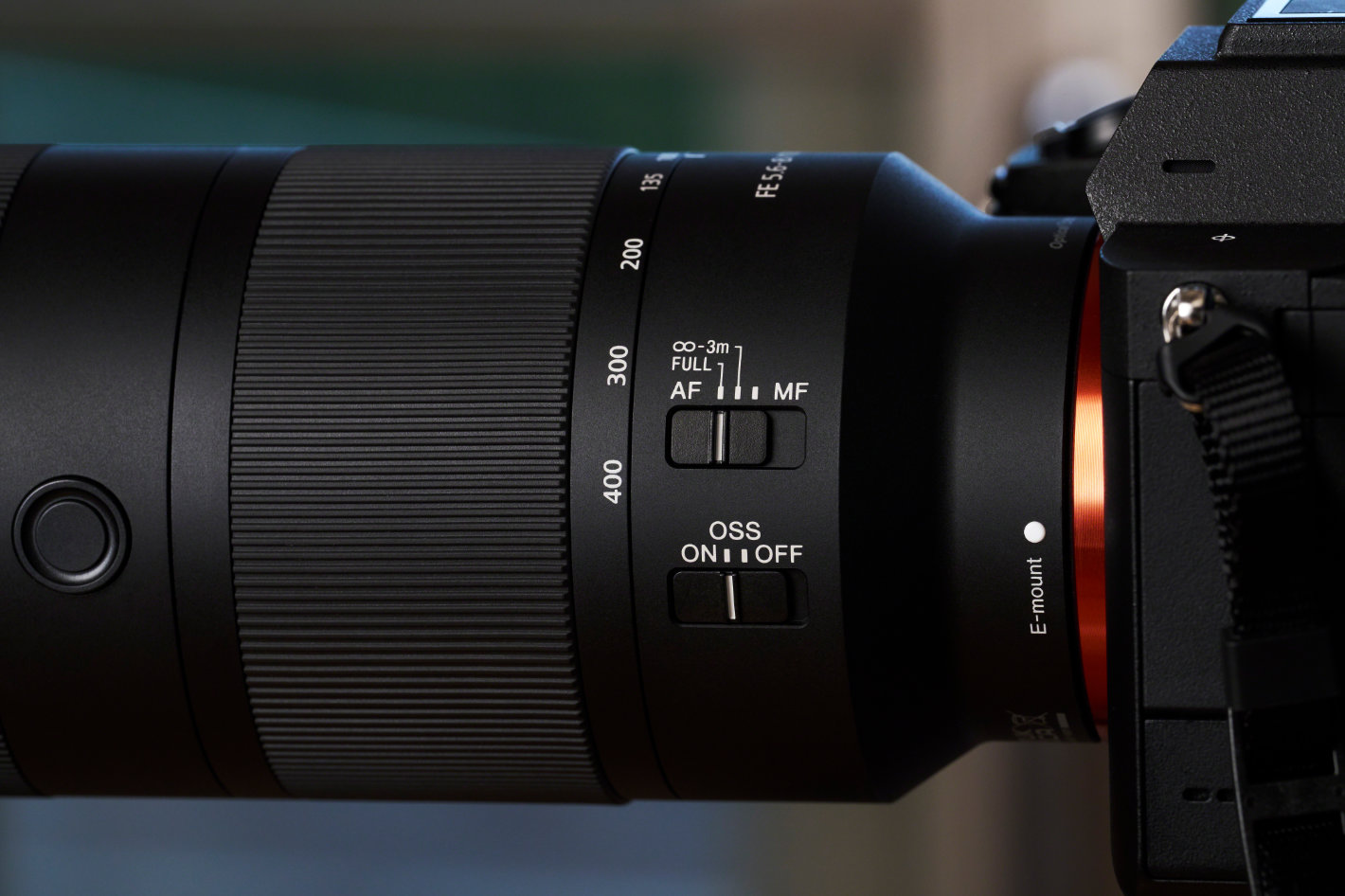
Coordinated Image Stabilization: The built-in Optical SteadyShot (OSS) works in tandem with the camera body’s In-Body Image Stabilization (IBIS) and Active Mode digital stabilization to deliver stable, fluid handheld footage, minimizing the micro-jitters common to high-focal-length filming.
Official Statements
The strategic intent behind this lens is clearly outlined by Sony’s leadership. In a press statement accompanying the product disclosure, Yang Cheng, Vice President of Imaging Solutions at Sony Electronics, emphasized the democratization of professional-tier technology:
"With the needs of a large set of hobbyist photographers in mind, from birders to parents, we used our expertise in professional lens technology to create a high-quality, affordable super-telephoto zoom lens that will go the distance."
Cheng’s statement highlights a deliberate pivot in Sony’s product design philosophy. By explicitly mentioning "birders to parents," Sony is targeting two distinct consumer demographics:
The Budget-Conscious Outdoor Enthusiast: Individuals who demand the reach required for wildlife photography but cannot justify the multi-thousand-dollar expense or physical weight of G Master or prime telephoto lenses.
The Everyday Family Documentarian: Parents capturing youth sports from the sidelines, where a lightweight, fast-focusing zoom is essential, but high-end professional features are secondary to convenience and cost.
By leveraging engineering insights gained from their G Master and G-series development cycles, Sony has managed to strip away weight and cost while preserving the critical electronic communication and autofocus speed that make the Alpha system highly competitive.
Future Outlook
The introduction of the FE 100-400mm F5.6-8 OSS is poised to reshape the competitive landscape of the mirrorless camera market. Historically, third-party manufacturers like Sigma and Tamron have dominated the budget-friendly telephoto space with offerings such as the Sigma 100-400mm F5-6.3 DG DN OS Contemporary and the Tamron 150-500mm F5-6.7 Di III VC VXD. These lenses have long been the default recommendation for budget-conscious Sony shooters.
By entering this segment with an $849.99 option, Sony is mounting a direct offensive against third-party manufacturers. The native advantages of first-party Sony glass—including:
Support for continuous shooting speeds beyond 15 frames per second (which Sony restricts on third-party lenses),
Native teleconverter compatibility,
Perfect synchronization with camera-body active stabilization and focus breathing compensation,
make the FE 100-400mm F5.6-8 OSS an incredibly compelling option, even with its slower F8 aperture at the long end.
The primary variable remaining is the projected September 2026 release date. A timeline of this length is highly unusual, raising questions about whether Sony is announcing this lens well ahead of production readiness to preempt competitor releases, or if they are anticipating prolonged supply chain stabilization for specialized optical components.
Regardless of the delay, the announcement establishes a clear benchmark for what consumer-tier telephoto lenses can achieve. By delivering G Master-derived autofocus capabilities, optical stabilization, and teleconverter support in a chassis weighing just 654 grams, Sony is ensuring that high-performance telephotography will soon be lighter, cheaper, and more accessible than ever before.