






Executive Overview
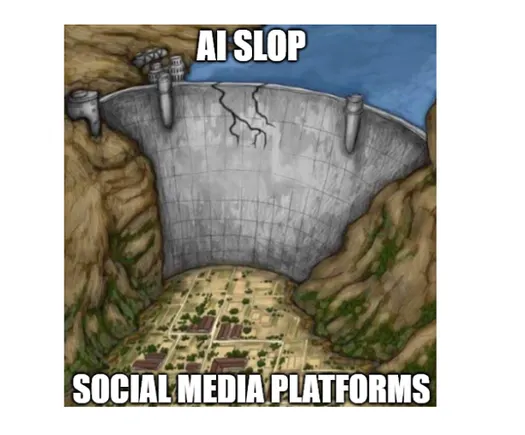
The global social media ecosystem is currently experiencing an existential identity crisis. Across virtually every major digital platform—from legacy networks to microblogging giants—human-created content is being steadily and aggressively drowned out by an unprecedented deluge of artificial intelligence-generated media. Text, images, audio, and video synthesized by machine learning models are saturating our digital feeds, transforming once-vibrant communities of human interaction into automated echoes of synthetic noise.
In response to this rapid descent into algorithmic saturation, social media companies are finding themselves forced to reevaluate their strategies. Having initially rushed to embrace generative AI as the next great frontier of digital engagement, platforms are now scrambling to implement restrictions, filters, and moderation policies designed to curb the tsunami of synthetic content. The core motivation is survival: maintaining even a semblance of the meaningful human connections that originally built the modern internet.
Yet, these half-measures may prove too little, too late. As audiences push back against what is colloquially referred to as "AI slop," the pendulum is beginning to swing toward radical alternatives. Rumors and reports are swirling that even legacy platforms, such as a prospective relaunch of MySpace, are exploring the ultimate regulatory nuclear option: a total, uncompromising ban on artificial intelligence-generated content.
This deep dive investigates the structural forces driving the anti-AI backlash on social media, the historic war against inauthentic engagement, the profound miscalculation made by tech executives who mistook programmatic efficiency for genuine public desire, and what a strictly human-only digital future might look like.
Detailed Chronology: From Generative Hype to the Synthetic Flood
To understand how the social web arrived at its current crossroads, it is necessary to examine the rapid, almost frictionless integration of generative artificial intelligence into consumer software over the past several years.
Phase 1: The Honeymoon Period of Algorithmic Creativity (2022–2023)
When advanced generative AI models burst into the public consciousness, the narrative pushed by Silicon Valley was overwhelmingly utopian. Platforms framed these new tools not as replacements for human creativity, but as democratic multipliers of human potential. Users were promised the ability to paint masterpieces with a text prompt, draft eloquent prose in seconds, and conjure photorealistic imagery out of thin air.
During this initial phase, social media corporations rushed to integrate native AI tools into their user interfaces. Meta, Google, X (formerly Twitter), Snapchat, and TikTok all introduced features allowing users—and automated bots—to generate content on the fly. Executives envisioned a frictionless utopia where engagement metrics would soar as the barrier to content creation dropped to zero.
Phase 2: The Tipping Point and the Rise of "AI Slop" (2023–2024)
By late 2023, the utopian vision began to fracture under the weight of sheer volume. Because generating synthetic content is virtually cost-free and infinitely scalable, bad actors, engagement-farming operations, and casual users alike began flooding feeds with low-effort, high-frequency automated posts.
The internet quickly coined terms like "AI slop" and "dead internet theory" to describe the phenomenon. Feeds that were once populated by vacation photos from friends, thoughtful commentary from peers, and genuine artistic expression became cluttered with hyper-saturated, uncanny-valley images, robotic thought-leadership essays, and endless streams of automated clickbait. The algorithms, optimized for engagement metrics like clicks and watch time, frequently rewarded this synthetic material, pushing authentic human voices further down the algorithmic totem pole.
Phase 3: The Regulatory Panic and the Pivot to Restrictions (2024–Present)
As user dissatisfaction reached a boiling point, retention rates began to wobble, and consumer trust plummeted, platform architects realized they had a crisis on their hands. Major networks began introducing reactive measures: watermarking mandates, mandatory labeling tags for AI-generated media, and algorithmic downgrading of known automated profiles.
However, these measures have largely proven inadequate. Labeling a piece of content as "AI-generated" does not stop it from clogging a user’s timeline. Recognizing that half-measures are failing to restore user trust, industry observers note that the next logical step in the evolution of social media is not mere regulation, but total prohibition. Reports indicate that even nostalgic digital landmarks—such as a potential revival of MySpace—are considering anchoring their entire value proposition on a single, radical promise: a strictly human-only digital sanctuary free from synthetic pollution.
Supporting Context & Metrics: The Anatomy of Inauthentic Engagement
The intense public rejection of generative AI on social media does not occur in a vacuum. It is the latest chapter in a decades-long war against inauthentic engagement, digital spam, and algorithmic manipulation.
The Decades-Long War Against Bots
Long before large language models and diffusion-based image generators dominated headlines, social media platforms were locked in a perpetual arms race against spammers, botnets, and coordinated inauthentic behavior (CIB). From political interference operations to commercial click-farms, platforms have spent billions of dollars attempting to preserve the integrity of their ecosystems.
User sentiment surveys have consistently shown an overwhelming public hatred for bot activity. When platforms introduced automation tools that allowed ordinary users to behave like industrial bot farms—generating endless streams of synthetic text and imagery—they fundamentally blurred the line between spam and user-generated content. As industry analysts frequently point out: bots are still bots, and inauthentic engagement is still inauthentic engagement, regardless of whether it is repackaged as "creative assistance" or "visual generation."
The Elon Musk Precedent and Platform Promises
The depth of public anxiety surrounding automated manipulation was memorably crystallized during the tumultuous acquisition of Twitter by billionaire Elon Musk in 2022. One of the central, rallying cries of the buyout was Musk’s vow to "defeat the spam bots or die trying."
While the practical success of that crusade remains a subject of intense debate among cybersecurity experts, the political and cultural resonance of the promise was undeniable. It struck a nerve because it tapped into a universal consumer sentiment: internet users are utterly exhausted by fake interactions.
The arrival of consumer-facing generative AI tools has paradoxically upended this paradigm. While users continue to wage war against malicious spam, tech platforms have attempted to reframe benign AI bots as positive, friendly collaborators. Platforms want audiences to marvel at how "human-like" their machine learning systems have become. Yet, to the average user, the distinction between a malicious political bot and a helpful creative AI bot matters very little when both are clogging up the digital town square with low-value noise.
The Fundamental Paradox of Social Media
At its core, the backlash highlights a fundamental contradiction in the modern tech business model. Social media platforms have gradually veered away from genuine social engagement and drifted toward passive, algorithmically optimized entertainment.
Yet, human psychology has not evolved in tandem with silicon chips. Despite the ubiquity of screens, human beings remain biologically and psychologically wired to seek out authentic human experiences, shared vulnerabilities, and genuine creative expression. An algorithm churning out a technically flawless, yet emotionally hollow, digital painting cannot replace the cultural resonance of a flawed, authentic human creation. When platforms flood feeds with synthetic material, they systematically erode the very foundation that made social media valuable in the first place.
Official Statements and Industry Perspectives
The friction between corporate tech optimism and grassroots consumer rejection has generated a fascinating array of commentary from industry leaders, platform executives, and digital sociologists.
The Silicon Valley Miscalculation
Speaking anonymously to digital media researchers, several product managers at major social networks admitted that platform leadership severely misread consumer desires.
"We operated under the assumption that if you give people more powerful tools to create content, they will use them to build a richer, more vibrant world," noted one senior software engineer at a prominent social media enterprise. "What we failed to account for was that creation is only half the equation. Consumption is where the community lives. People do not want to live in a world where they are consuming things manufactured by machines for other machines."
The Counter-Narrative: The Anti-AI Safe Haven
The growing appetite for human-only spaces has opened the door for disruptive market entrants. Reports surrounding the exploratory relaunch of MySpace emphasize a deliberate return to basics. By positioning the platform as an antidote to algorithmic bloat and AI-generated noise, stakeholders believe they can capture a disillusioned demographic that has abandoned contemporary platforms.
Digital culture analysts suggest that this could spark a broader market segmentation. Just as organic food carved out a lucrative, premium niche against industrial agriculture, "organic social media" may soon emerge as a high-value category.
"The future may not belong to the platform with the most advanced AI," argues Dr. Elena Vance, a professor of digital sociology at the Oxford Internet Institute. "The winning platform of the next decade might well be the one that can legally and technically guarantee its users: No bots, no synthetic text, no generative art. Just humans."
Future Outlook: Navigating the Post-Synthetic Landscape
As the social media industry looks toward the horizon, the trajectory of generative AI integration faces a severe reckoning. The consumer backlash is no longer a localized phenomenon confined to tech-savvy forums; it is beginning to impact broader adoption metrics and user retention across mainstream applications.
1. The Rise of Cryptographic Provenance and Verification
In the near term, platforms that choose not to enact total bans are rushing to adopt cryptographic content verification standards (such as C2PA specifications). These digital watermarks aim to trace the exact lineage of an image or video, proving whether it was captured by a human lens or synthesized by a neural network. While this provides transparency, it remains to be seen whether users will tolerate scrolling through feeds littered with "Verified Human" badges, or if they will simply migrate to spaces where synthetic content is outright prohibited.
2. The Threat to Broader AI Adoption
The most significant casualty of the current social media AI backlash may be general public enthusiasm for the technology itself. When generative AI is experienced primarily as "slop" on public feeds—associated with scams, low-effort marketing, and the degradation of online discourse—it poisons the well for legitimate, high-value enterprise and scientific applications of AI. If consumers learn to associate generative tools with digital pollution, the political and regulatory pressure to restrict these technologies will only intensify.
3. Toward a Bifurcated Digital Future
Ultimately, the internet is hurtling toward a bifurcated reality. On one side will lie the synthetic web: automated, hyper-personalized, machine-to-machine environments designed for high-efficiency entertainment, gaming, and enterprise workflows. On the other side will emerge walled gardens of authenticity—exclusive digital spaces where human identity is strictly verified, synthetic media is outlawed, and social interaction is prized precisely because it is difficult, messy, and undeniably human.
As platforms weigh their next moves, one truth remains absolute: the foundational premise of social media was never about artificial intelligence processing data at scale. It was about people talking to people. Until tech executives remember that fundamental truth, the great human rebellion against the machines will only gather momentum.