In the fast-paced ecosystem of search engine optimization (SEO), visibility is inextricably linked to discoverability. Before a webpage can capture a coveted spot on Google’s Search Engine Results Pages (SERPs), before it can drive conversions, and before it can be surfaced by modern AI-powered search engines, it must first be discovered, crawled, and indexed by automated web crawlers.
Google has recently refreshed its core "Crawling infrastructure" documentation, introducing a pivotal section titled "Optimize your crawl budget." This updated guidance provides webmasters, developers, and digital marketers with unprecedented clarity regarding how Googlebot allocates its finite computing resources across the billions of URLs populating the modern web.
For large-scale e-commerce platforms, content-heavy publishers, and emerging digital brands, understanding crawl budget dynamics is no longer an optional technical nuance—it is an existential operational requirement. A poorly structured, unoptimized website creates severe inefficiencies for search engine bots, resulting in delayed indexing, overlooked inventory, and missed revenue opportunities.
This comprehensive analysis deconstructs Google’s latest documentation updates. We will examine the foundational mechanics of crawl budgets, review actionable strategies for new and established websites, evaluate the critical performance and architectural factors influencing bot behavior, analyze the nuances of modern URL caching, and provide expert perspective on maximizing your site’s search footprint.
Detailed Chronology: The Evolution of Google’s Crawl Management
To fully appreciate the significance of Google’s latest documentation update, one must contextualize the historical evolution of how search engines interact with server infrastructure.
The Early Days of Web Crawling
In the nascent stages of search engines, crawling was treated as an unthrottled race. Bots would scrape web servers with minimal regard for bandwidth constraints, occasionally causing smaller servers to crash under the sheer weight of simultaneous HTTP requests. As the web expanded exponentially, this brute-force approach became entirely unsustainable—both for webmasters paying for bandwidth and for Google managing processing power.
The Birth of "Crawl Rate Limit" and "Crawl Demand"
Google recognized that server health and resource efficiency were paramount. This realization led to the conceptualization of two primary forces that dictate bot behavior:
Crawl Rate Limit: A protective threshold designed to maximize indexing while avoiding server overload. If Googlebot detects that a site is responding slowly or throwing 5xx server errors, it immediately dials back its crawling speed.
Crawl Demand: The reflection of how desperately Google wants to crawl a URL, driven primarily by content freshness, global popularity, and the presence of internal and external hyperlinks.
The Modern Infrastructure Update
The newly published guidelines unify these historical principles into a streamlined, actionable framework for modern developers. By introducing explicit recommendations surrounding gradual rollouts, technical performance benchmarks, and HTTP status code utilization, Google is actively teaching webmasters how to co-design their digital architecture alongside the Googlebot ecosystem.
Supporting Context & Metrics: Decoding the Mechanics of Crawl Budgets
What exactly is a crawl budget? In practical terms, it is the number of pages Googlebot can and wants to crawl on your site within a given timeframe.
Why Crawl Budget Matters
Given the staggering volume of global URLs created every single day, Google cannot afford to spend infinite time on any single domain—even powerhouse enterprises like YouTube, Amazon, or Wikipedia operate under resource constraints.
If your website contains 500,000 pages, but Googlebot’s daily allotment for your domain is only 5,000 requests, a massive architectural backlog is created. If your site structure is chaotic, confusing, or plagued by low-value parameterized URLs, Googlebot will waste its precious allocation on administrative pages, pagination loops, or thin content, leaving your most valuable product and category pages unvisited.
Key Drivers of Crawl Allocation
Google’s documentation highlights several core variables that determine how your budget expands or contracts over time:
Site Maturity and Launch Status: Every brand-new website begins its lifecycle with a conservative crawl budget. Google defaults to caution to protect your server infrastructure.
Update Frequency and Freshness: Websites that consistently publish fresh content—and dynamically signal those changes via clean XML sitemaps—train Googlebot to visit more frequently.
Performance and Load Latency: Speed is a ranking factor, but it is also a crawling factor. Servers that respond in milliseconds invite deeper, more aggressive crawling.
Link Equity and Popularity: Pages fortified with robust internal and external link profiles signal high authority, demanding more frequent re-crawling by the search engine.
Official Guidelines & Core Takeaways for Webmasters
Google’s updated documentation outlines specific, actionable directives. Here is a granular breakdown of the primary recommendations and how digital teams should respond to them.
1. The "Conservative" Launch Protocol
“When launching a site, start with a modest number of pages to ensure that Google can cover all the important content without overloading your servers.”
For newly minted domains, launching a massive site map containing tens of thousands of URLs on day one is a strategic error. Googlebot will encounter an unfamiliar server, experience slow response times due to cold caches, and immediately scale back its crawl requests.
Best Practice: Adopt a staged rollout. Deploy your core foundational pages (Homepage, About, Contact, Terms, and a curated selection of top-tier category pages) first. Allow Google to establish a baseline trust metric before scaling up your digital footprint.
2. Gradual Inventory and Content Expansion
“Over time, the crawl budget increases based on the site’s size and updates. Regular updates (especially if automatically included in its XML sitemaps) encourage the Googlebot to return.”
E-commerce platforms are notoriously prone to "batch publishing" errors—such as dropping 5,000 new SKUs into a database all at once. This creates an erratic publishing cadence that confuses search bots.
Best Practice: Smooth out your content pipeline. If you are launching a large inventory of products, pace them out. Instead of unleashing 100 products in a single afternoon, distribute them evenly—roughly three to five products per day over the course of a month. Keep your XML sitemaps meticulously up-to-date to reflect these micro-updates instantly.
3. The Velocity Connection: Page Speed and Server Latency
“Improving your site’s load time may increase its crawl budget.”
There is a direct correlation between technical performance and bot efficiency. If a Googlebot scraper has to wait three seconds for a single HTML document to render, it can only process a fraction of the pages it could have parsed if the document loaded in 200 milliseconds.
Best Practice: Routinely audit your site performance using Google Search Console, PageSpeed Insights, and core Web Vitals diagnostic tools. Invest in robust content delivery networks (CDNs), optimize database queries, minimize bloated JavaScript, and upgrade your hosting infrastructure to handle concurrent bot requests smoothly.
4. Link Topology and Popularity Signals
“Popular pages receive more frequent crawls. Googlebot crawls pages with many inbound links (external and internal) more frequently.”
Internal linking is not merely an exercise in user navigation; it is a mechanism for distributing bot traffic. Orphaned pages—pages with zero internal links pointing to them—rely solely on XML sitemaps for discovery and are frequently deprioritized in crawl queues.
Best Practice: Build robust, contextual internal linking structures. Ensure that your highest-value commercial pages are linked prominently from high-traffic hubs like your homepage or top-level category navigation. Furthermore, pursue high-authority external backlinks to signal overall domain importance to Google’s algorithmic crawlers.
Deep Dive: The Controversial Addition of "URL Caching" and Status 304
One of the most notable technical additions to Google’s updated documentation revolves around URL caching and the utilization of specific HTTP status codes:
“Support 304 (Not Modified) HTTP status codes. If a page hasn’t changed since Google last crawled it, returning a 304 code tells Google to reuse the cached version, saving your server bandwidth and resources.”
The Efficiency Promise
From a purely technical perspective, the logic behind the 304 status code is impeccable. When Googlebot requests a URL, a properly configured server checks if the resource has been modified since the timestamp provided in the If-Modified-Since request header. If no changes have occurred, the server returns a lightweight 304 Not Modified header with an empty body, sparing the server from rendering and transmitting the full HTML payload. This preserves bandwidth, reduces CPU strain, and accelerates the crawling process.
The Hidden SEO Risk
While the server-side resource savings are undeniable, seasoned SEO practitioners must exercise extreme caution. Blindly applying 304 status codes across an entire website can introduce unintended algorithmic consequences:
Staleness Signals: If a server aggressively returns 304 codes for core content pages over an extended period, Google’s systems may interpret the content as stagnant, abandoned, or irrelevant, potentially resulting in suppressed rankings or a slower update cycle in the SERPs.
Indexation Volatility: In worst-case scenarios, mismanaged caching directives can confuse crawlers regarding the canonical state or freshness of a document, occasionally triggering temporary drops in index visibility.
Strategic Recommendation: Where to Use 304s Safely
To balance server efficiency with SEO preservation, webmasters should adopt a selective approach:
Deploy 304s on Low-Priority, Static Assets: Utilize 304 status codes aggressively for utility pages where SERP ranking fluctuations do not impact revenue—such as terms of service agreements, privacy policies, archived historical posts, and permanently expired or out-of-stock product templates that rarely change.
Avoid Blanket Caching on Dynamic Revenue Drivers: Keep active, high-intent commercial landing pages, frequently updated blog posts, and primary category hubs free from aggressive 304 restrictions, ensuring that Googlebot always receives fresh, fully rendered HTML confirmations upon every visit.
Future Outlook: Crawl Optimization in the Age of AI Search
As we look toward the future of digital discovery, the mechanics of crawling and indexing are undergoing a paradigm shift. With search engines increasingly integrating generative AI capabilities—such as Google’s Search Generative Experience (SGE)—the demand for fresh, precise, and instantly accessible data has never been higher.
The Rise of Real-Time Indexing Pressures
Traditional crawl budgets were designed around periodic indexing cycles. However, as consumers demand real-time answers, news updates, and dynamic inventory checks, search engine bots are shifting toward continuous, event-driven crawling models. Websites that fail to optimize their server infrastructure, maintain clean sitemaps, and manage their crawl budgets effectively will find themselves left behind in automated AI summaries and conversational search results.
Actionable Roadmap for Webmasters
To future-proof your digital presence against evolving search algorithms, enterprise SEO teams and developers should immediately execute the following checklist:
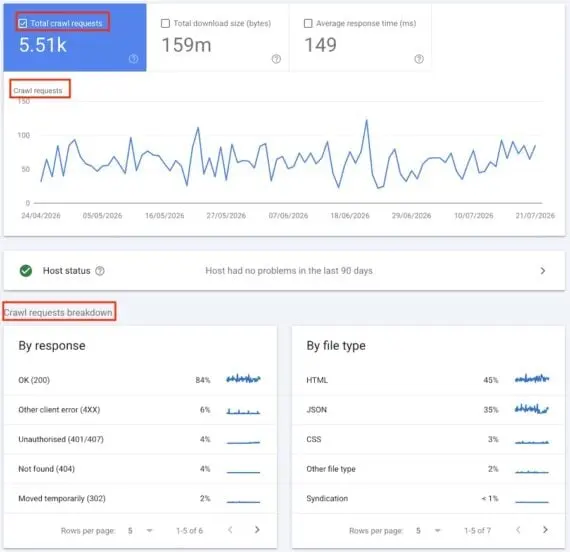
Audit Your Crawl Stats Report: Regularly review the "Crawl stats" report inside Google Search Console to monitor host status anomalies, total daily requests, and file-type distribution.
Prune Low-Value Content: Identify and prune "thin" or dead-weight URLs (such as expired parameters, duplicate tag archives, and low-value attachment pages) using noindex tags or strategic 404/410 status codes to prevent crawl budget waste.
Enhance Server Responsiveness: Continuously optimize server response times, ensuring that your Time to First Byte (TTFB) remains consistently low under peak traffic and bot load.
Refine Sitemap Hygiene: Ensure that your XML sitemaps only include clean, canonical, indexable URLs, excluding redirected, broken, or blocked pages entirely.
By aligning your technical infrastructure with Google’s explicit crawling guidelines, you transform search engine bots from unpredictable obstacles into reliable, highly efficient partners in your brand’s digital growth.