Executive Overview
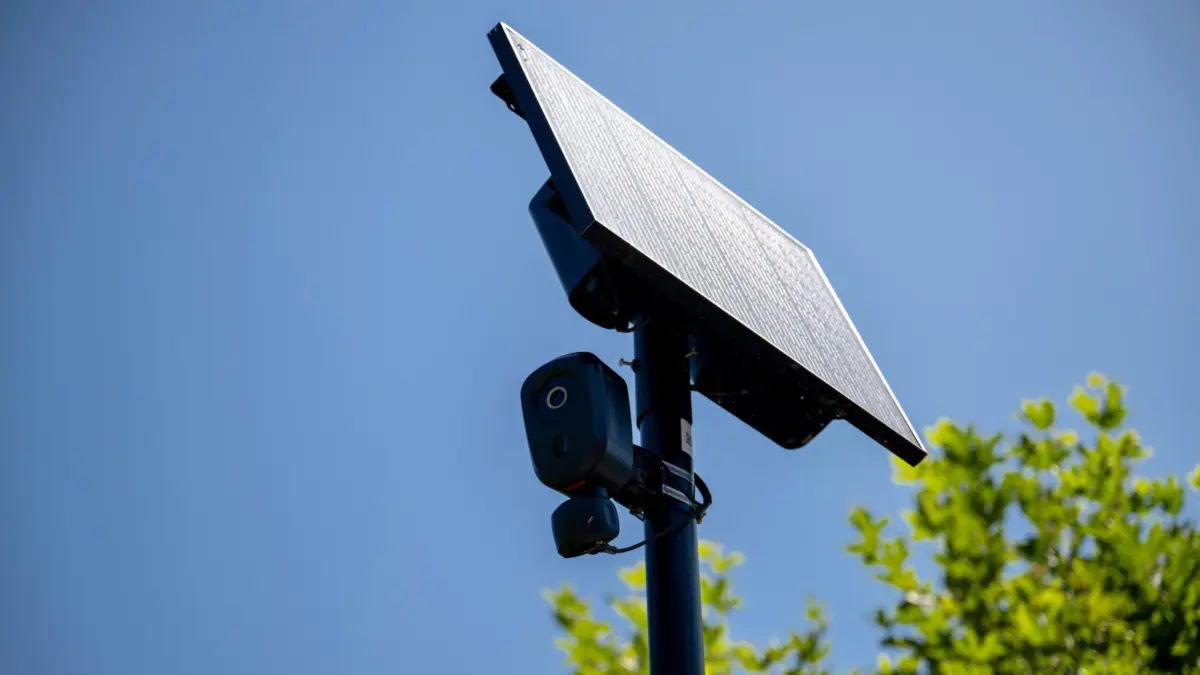
As municipalities across the United States increasingly grapple with the rapid expansion of automated surveillance, a central question looms large over city councils and police precincts alike: How do we balance the imperative to solve violent crimes with the constitutional right to privacy? At the heart of this national debate stands Flock Safety, a police-tech titan valued at an estimated $8 billion. Operating a sprawling network of roughly 120,000 automatic license plate reader (ALPR) cameras nationwide, the company has positioned itself as an indispensable utility for modern law enforcement.
However, a burgeoning surveillance backlash is threatening to upend this status quo. Driven by investigative reports highlighting severe systemic misuses—including law enforcement officers tracking romantic partners and stalking citizens—cities are beginning to cancel contracts, while state legislatures draft bills to limit or entirely ban ALPR deployment.
In response to this mounting public pressure, Flock announced a series of platform updates intended to curb illicit surveillance. Yet a closer examination of these changes reveals significant loopholes. Critics, civil liberties groups, and technology experts argue that the debate shouldn’t merely focus on whether a surveillance tool catches criminals, but how that tool is fundamentally architected. By evaluating Flock’s product design choices—ranging from unverifiable security inputs to permissive data retention windows—this investigation explores the trade-offs inherent in building a national surveillance apparatus and asks whether security must inherently come at the expense of civil liberties.
Detailed Chronology & Regulatory Crossroads
The Rise of a Police-Tech Giant
While automatic license plate readers have existed in various forms since the 1990s—primarily deployed for highway toll collection and automated traffic enforcement—Flock Safety revolutionized the industry by turning ALPR technology into a networked, cloud-connected intelligence platform. Instead of operating in functional silos, individual police departments could suddenly tap into a shared ecosystem. A camera capturing a vehicle in a small rural town could instantly communicate data to a major metropolitan precinct hundreds of miles away.
This hyper-connected model propelled Flock to extraordinary heights, securing massive municipal contracts and vaulting the company to an $8 billion valuation. Police departments praised the technology for its ability to track stolen vehicles, locate amber-alert suspects, and solve high-priority property and violent crimes efficiently.
The Tipping Point: Systemic Misuse
The narrative surrounding Flock began to fracture significantly as investigative reports exposed the darker side of unchecked access. A landmark investigation by The Washington Post cataloged roughly 50 distinct instances where law enforcement officers abused systems provided by Flock and its competitors. The documented abuses frequently involved stalking and harassment, primarily targeting women.
In one egregious case in Wisconsin, a woman discovered that her police officer ex-boyfriend had queried database systems to track her vehicle 179 times. In another alarming scenario, a woman found herself stalked by her local chief of police, leaving her with virtually no internal chain of command or oversight mechanism to report the abuse. These revelations shattered the illusion that access controls within law enforcement databases were entirely foolproof, sparking outrage among privacy advocates and ordinary citizens.
Flock’s Policy Updates and the Enforcement Gap
Feeling the heat from municipal pushback, Flock announced a series of platform modifications aimed at mitigating illicit searches. Under the updated protocols, officers are required to input a valid criminal case number before running a search query, and automated software flags abnormal usage patterns to department administrators.
Despite these measures, civil liberties groups quickly pointed out gaping loopholes. Most glaringly, Flock confirmed to investigators that its platform does not independently verify the authenticity of the case numbers entered by officers. Much like previous safeguards that could be bypassed through deceptive administrative practices, an officer intent on illicit surveillance can easily input a completely fabricated case number and proceed with the search unchecked.
Furthermore, these cosmetic adjustments fail to address the core philosophical objection raised by privacy advocates: that Flock has effectively transformed what was pitched as a localized crime-fighting tool into a continuous, mass surveillance network tracking the daily movements of ordinary citizens.
Supporting Context & Metrics: The Architecture of Compromise
The debate over Flock Safety often devolves into a binary argument: defenders of the technology ask, If these cameras help solve kidnappings and violent crimes, what is the harm? They argue that on an average day, the cameras quietly record transient data that no one bothers to examine, but when tragedy strikes, they serve as an invaluable digital dragnet.
However, technology and policy analysts argue this framing deliberately avoids the core issue. The functionality of Flock’s network is not an accident of nature; it is the direct result of deliberate design choices regarding data collection, search permissions, data retention, and cross-jurisdictional sharing. Accepting the utility of technology in law enforcement should not require a blind surrender to the specific architectural terms dictated by a vendor.
1. The Case Number Verification Flaw
Consider the newly instituted case-number requirement. The stated intention is to guarantee that every query is anchored to a legitimate criminal investigation. Yet, by failing to integrate these searches with internal police department record management systems (RMS), Flock relies entirely on the honor system.
An alternative design philosophy is entirely feasible. A more robust, privacy-conscious system could require that every entered case number cryptographically or programmatically match an active entry in the local police agency’s verified records database. While such an integration would demand more complex technical collaboration and represent a slightly more intrusive IT lift for departments, it would create an infallible audit trail and practically eliminate rogue searches.
2. Tailoring Surveillance to Emergencies
Flock frequently points to high-stakes emergencies—such as child abductions and missing persons cases—as its primary justification. Yet, the current architecture grants officers broad, everyday access to expansive regional and national datasets for routine infractions.
If society wishes to prioritize the recovery of missing persons without sliding into total mass surveillance, the system could be architected to restrict access by default. For instance, broad cross-jurisdictional searches could be locked behind active, verified emergency protocols such as an Amber Alert. Under this design, heightened data sharing would trigger automatically during verified crises and expire immediately afterward, preserving emergency utility without necessitating perpetual, nation-wide tracking of innocent commuters.
3. Data Retention and the Seven-Day Reality
The scope of surveillance is defined not just by where data can be searched, but how long it is stored. Flock operates largely as a national clearinghouse, permitting agencies to harvest and retain data for months or even years.
Yet, internal metrics tell a different story regarding utility. Flock’s own data indicates that roughly 90% of all actionable searches occur within the first week following an incident. Recognizing this, the company recently updated its recommended data retention guideline to seven days. However, this remains merely a recommendation; individual law enforcement agencies retain the contractual autonomy to hoard data indefinitely. A privacy-forward architecture would hard-code expiration parameters into the software, ensuring that data is automatically purged the moment its statistical utility for crime-solving expires.
Official Statements & Industry Perspectives
The structural tension surrounding Flock Safety has drawn sharp commentary from key stakeholders across the legal, corporate, and political spectrums, highlighting a profound philosophical divide over the future of public safety.
-
The Civil Liberties Perspective:
Chad Marlow, Senior Policy Counsel at the American Civil Liberties Union (ACLU), has maintained a staunchly critical stance regarding corporate self-regulation. In interviews discussing the adequacy of Flock’s new guidelines, Marlow half-joked that the only acceptable Flock contract is "one that is never signed," emphasizing that voluntary corporate policies are an insufficient substitute for binding legislative bans and strict statutory limits on surveillance. -
The Corporate Defense:
Conversely, Flock Safety CEO Garrett Langley has defended the company’s mission and utility, publicly acknowledging that his vision for modern policing naturally places him at odds with privacy advocacy groups like the ACLU. Langley and other corporate defenders argue that withholding modern technological tools from law enforcement leaves communities vulnerable in an era where criminal networks increasingly leverage advanced mobility and digital infrastructure. -
The Municipal Reckoning:
As public pressure mounts, the divide is no longer confined to theoretical debates. City councils nationwide are finding themselves caught in the crossfire. Some municipalities have outright canceled their contracts with Flock, pivoting either to competing providers or stepping back entirely to reassess how public safety technology should be governed. Others are taking a deliberate pause, engaging local communities in intensive town halls to draft strict, locally enforced municipal ordinances that dictate exactly how, when, and by whom license plate data can be accessed.
Future Outlook: The Path Forward for Communities and Tech
The friction surrounding Flock Safety marks a watershed moment in the intersection of artificial intelligence, data collection, and civil rights in America. The fundamental tension is clear: narrowing the scope of Flock’s technology to satisfy privacy advocates would fundamentally alter the company’s core business pitch. Its $8 billion valuation does not rest on simply selling cameras—a commodity market since the 1990s—but on offering a centralized, highly connected national network that aggregates massive volumes of movement data.
As communities increasingly drive their own policy bargains, the future of policing technology will likely be decided on a jurisdiction-by-jurisdiction basis through legislative action rather than corporate benevolence. Whether through state-level statutory bans, strict municipal data-retention caps, or mandatory technical integrations like verifiable RMS case-number matching, the era of unchecked, self-regulated police surveillance is drawing to a close.
Ultimately, the debate over Flock Safety forces a fundamental societal reckoning. It challenges citizens, lawmakers, and technologists to answer a definitive question: How much of our daily privacy are we truly willing to surrender in exchange for the promise of security, and who gets to write the terms of that bargain?