Executive Overview
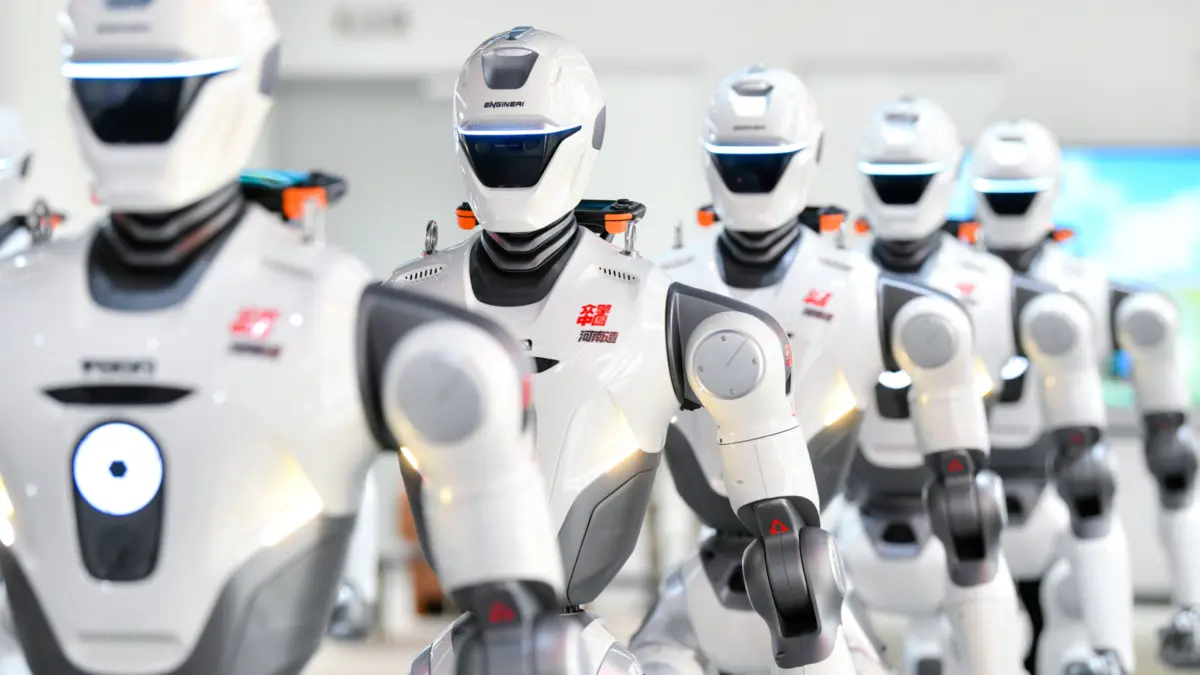
In a dramatic policy escalation that signals a profound shift in global technology governance, the Federal Trade Commission (FTC)—operating under an increasingly partisan, Trump-aligned mandate—has issued a sweeping, unprecedented ban on the foreign import of advanced robotic systems. The directive targets a broad class of hardware, encompassing humanoids, quadrupeds, and specialized wheeled platforms. Framed as a critical national security imperative and an urgent economic defense measure, the ban represents much more than a routine update to traditional trade policy. Instead, it marks a pivotal moment where geopolitics, artificial intelligence, and heavy hardware collide.
For decades, Washington’s playbook for handling disruptive Chinese technology imports—whether solar panels, electric vehicles, or commercial drones—relied on predictable economic levers: targeted tariffs, anti-dumping duties, and procurement restrictions. These measures routinely triggered intense domestic debates weighing consumer prices against national industrial health. However, the FTC’s new stance treats advanced robotics not as isolated mechanical novelties, but as the physical frontier of the artificial intelligence revolution.
By erecting administrative and structural barriers against foreign competitors—most notably Chinese market leaders like Unitree—the Trump administration is expanding its protective perimeter well beyond software labs. It is attempting to shield a nascent domestic robotics sector that is still finding its commercial footing.
Yet, this intervention carries a heavy paradox. While domestic manufacturers praise the move as a long-overdue countermeasure against systemic cybersecurity risks and predatory pricing, the nation’s academic and industrial researchers warn of a crippling side effect. American universities and corporate labs have grown deeply dependent on cheap, high-performance Chinese hardware to train and refine AI-driven robot fleets. By cutting off access to affordable quadrupedal and humanoid platforms, the FTC’s directive risks choking the very research ecosystem it aims to protect, threatening to slow the domestic progress of the physical AI industry even as it attempts to secure it.
Detailed Chronology: From Novelty Acts to National Security Directive
To understand the weight of the FTC’s recent ruling, one must trace the rapid evolution of humanoid and quadrupedal robotics from laboratory curiosities to strategic assets. Until very recently, the public perception of robotics was shaped by viral videos of experimental machines dramatically stumbling on stage or clumsily attempting to open doors. These clumsy prototypes were largely viewed as expensive, fragile tech demos confined to well-funded academic settings.
However, the convergence of advanced machine learning architectures and mechanical engineering dramatically accelerated the timeline over the past few years. By 2025 and 2026, robotics transformed into the tangible embodiment of the artificial intelligence boom. Companies like Unitree in China began mass-producing agile quadrupeds for thousands of dollars, while domestic giants like Boston Dynamics and emerging startups like Figure and 1X began refining humanoids capable of complex, generalized labor.
The timeline of escalation leading up to the FTC’s announcement unfolded along several distinct fronts:
- Late 2025: Chinese manufacturers achieved massive commercial breakthroughs, seamlessly distributing advanced quadrupeds and early humanoid units across Western markets. Industry data underscored a widening price-to-capability gap, alarming Western defense analysts and domestic manufacturing advocates alike.
- Early 2026: Cybersecurity vulnerabilities moved to the forefront of political discourse. Public anxiety was amplified by high-profile incidents—including a widely publicized case where an independent researcher easily hijacked control of thousands of commercial robotic vacuum cleaners remotely. Regulators began viewing smart hardware not just as tools, but as potential vectors for corporate and state espionage.
- Spring 2026: Tech industry analysts recognized robotics as the physical edge of generative AI. Reports surfaced that the administration was also weighing bans on open-source Chinese AI models that rival domestic powerhouses like OpenAI and Anthropic at a fraction of the operational cost.
- Mid-2026 (Last Week): The FTC issued its sweeping ban on foreign imports of advanced robots. Citing severe data collection risks—ranging from mapping private living rooms to scanning sensitive industrial and military facilities—the commission drew a hard administrative line. Simultaneously, Google DeepMind announced breakthrough AI models designed to accelerate humanoid learning, culminating in feats like tying trash bags, which highlighted the rapid maturation of robot dexterity.
- Present Week: Unitree prepares to launch its initial public offering (IPO), targeting a nearly $6 billion valuation benchmark, while US researchers scramble to assess the operational fallout of a sudden prohibition on their primary testing hardware.
Supporting Context & Metrics: The Asymmetry of the Transpacific Robotics Market
The economic and structural realities underpinning the FTC’s decision reveal a stark asymmetry between the United States and Chinese robotics ecosystems. While American firms hold early advantages in foundational algorithmic reasoning and niche, high-end engineering, China has mastered the art of scalable, cost-effective hardware manufacturing.
The Financial Chasm
The price differential between American and Chinese robotics hardware is not merely competitive; it represents an entirely different economic paradigm.
- Unitree Quadruped Systems: Available commercially starting at approximately $4,600.
- Boston Dynamics Counterparts: Comparable high-end robotic dogs can run upwards of $278,000.
This staggering 60-to-1 cost disparity dictates where research capital flows. According to an internal market intelligence review conducted by the Association for Advancing Automation (A3), 90% of recent robotics research papers published by US universities relied directly on hardware built by Unitree, China’s leading humanoid and quadruped manufacturer.
[US University Labs & R&D]
       │
       ├── Historically Reliant On: ──> Unitree Hardware (~$4,600 per unit)
       │                               (Comprises 90% of US academic research papers)
       │
       └── Domestic Alternative: ─────> Boston Dynamics / Startups (~$278,000+ per unit)
The Capital Markets Landscape
The valuation gap mirrors the hardware disparity. Unitree’s impending IPO, targeting a valuation close to $6 billion, sets a monumental public market benchmark. By contrast, domestic US humanoid companies are still navigating early-stage venture funding and struggling to scale production.
- Figure: Developing advanced humanoids, but yet to achieve mass commercial manufacturing scale.
- 1X: Progressing steadily, but commercial shipments to residential consumer markets remain largely unrealized.
The AI Open-Source Dimension
Compounding these hardware dynamics is the software debate. The administration is reportedly weighing restrictions on Chinese open-source AI models—such as Kimi—which routinely rival products from OpenAI and Anthropic while costing significantly less. Proponents of open models estimate that restricting access could block businesses from realizing an estimated $25 billion in annual operational savings. The robotics ban is therefore viewed by economists not as an isolated trade dispute, but as an extension of an aggressive, all-encompassing strategy to erect a "Silicon Curtain" around America’s technological frontier.
Official Statements & Industry Reactions
The FTC’s ruling has cleaved the technology and manufacturing sectors into two distinct camps: domestic hardware producers who view the ban as a necessary defense shield, and academic researchers who view it as a self-inflicted administrative wound.
The Defense and Domestic Manufacturing Perspective
Proponents of the ruling argue that the cybersecurity threats posed by foreign-connected hardware are both immediate and profound. Modern advanced robots are mobile data centers, equipped with high-resolution cameras, spatial LiDAR, audio sensors, and continuous cloud connectivity.
Gavin Kenneally, CEO of Ghost Robotics—a prominent US-based manufacturer specializing in four-legged inspection robots—strongly endorsed the FTC’s actions. In an official statement, Kenneally emphasized that the threat vector is real, pointing to regulatory disclosures citing alarming proof-of-concept breaches, such as the incident where remote actors compromised thousands of connected household cleaning units.
"If today’s announcement encourages stronger cybersecurity and a more level competitive environment, that’s good for customers and good for the robotics industry," Kenneally noted via email.
Supporters argue that without protective measures, American startups will be hollowed out before they can achieve economies of scale, leaving critical infrastructure dangerously dependent on adversarial supply chains.
The Research and Development Backlash
Conversely, industry associations and academic leaders caution that the policy ignores the practical mechanics of how technological innovation actually occurs. Aaron Prather, Director of Market Intelligence for the Association for Advancing Automation (A3), highlighted the immediate hurdles created by the ruling.
"The ruling creates a challenge for US humanoid researchers," Prather explained. "Chinese models offer the best price-to-capability ratio available."
Without access to affordable, robust hardware fleets to test reinforcement learning algorithms—such as training robots to manipulate finicky objects, fold laundry, or manage warehouse logistics—research labs face a severe bottleneck. Critics argue that forcing institutions to rely exclusively on high-cost domestic prototypes will artificially constrain the volume of experiments conducted, ultimately slowing the velocity of American AI and robotics advancement rather than accelerating it.
Future Outlook: Navigating the Strategic Frontier
As the dust settles on the FTC’s sweeping directive, the long-term ramifications remain difficult to forecast precisely, largely due to the numerous carve-outs, conditional exemptions, and gray areas embedded within the official order.
However, the symbolic impact is unmistakable. The federal government no longer views humanoid and advanced robotics as whimsical tech gadgets or sci-fi novelties. Instead, Washington has formally categorized the physical AI sector as a vital national security frontier—one requiring aggressive state intervention to wall off from foreign competition.
For an industry that spent its formative decades known primarily for awkward engineering failures and mechanical instability, this newfound geopolitical significance marks a massive paradigm shift. Whether this protectionist wall will successfully incubate a self-sustaining, secure domestic robotics manufacturing base, or whether it will starve American academic researchers of the affordable tools needed to maintain their edge, will define the trajectory of the automation age for the next decade.
As Unitree prepares its historic public market debut and US labs grapple with sudden hardware shortages, the race for physical AI supremacy has officially entered a hardened, high-stakes phase.