By Shane Snider | August 13, 2026
Executive Overview
In a massive maneuver to accelerate the global buildout of artificial intelligence, chipmaking giant Nvidia has forged strategic partnerships with six financial titans—Apollo, BlackRock, Blackstone, Brookfield, Goldman Sachs, and KKR. The newly established financing platforms are designed to mobilize more than $500 billion in third-party capital over time, fundamentally reshaping how AI infrastructure is funded, structured, and deployed.
On paper, the initiative solves one of the most glaring friction points in the modern tech landscape: the staggering capital intensity required to buy advanced graphics processing units (GPUs) and construct hyper-scale AI factories. By turning high-density compute into an underwritable, usage-linked asset backed by residual-value support, the arrangement removes a major roadblock from operators’ balance sheets and accelerates financial closes.
However, industry experts warn that the $500 billion headline figure masks a deeper, more stubborn reality. While easier capital can clear the hurdle of financial procurement, it cannot manufacture physical electrons, clear congested grid interconnection queues, or speed up the supply chains for heavy electrical equipment. As financial roadblocks dissolve, the true bottleneck of the AI boom is shifting rapidly toward physical real estate, power availability, and grid readiness—leaving analysts to question whether well-funded silicon will end up sitting idle while waiting for the grid to catch up.
Detailed Chronology and Structural Mechanics
To understand the magnitude of Nvidia’s strategy, one must examine how compute financing has evolved over the course of the artificial intelligence boom. As generative models exploded in size and capability throughout the mid-2020s, data center operators, cloud providers, and specialized AI labs found themselves strapped for liquidity. Procuring clusters of tens of thousands of GPUs required massive upfront capital expenditures, straining corporate balance sheets and forcing difficult choices between scaling infrastructure and funding core research and development.
Nvidia’s latest move—announced in August 2026—serves as a structural bridge across this capital chasm. Through memorandums of understanding with Apollo, BlackRock, Blackstone, Brookfield, Goldman Sachs, and KKR, the chipmaker is laying the groundwork for specialized financing vehicles. These platforms are architected to provide long-duration, usage-linked financing specifically tailored for AI factories.
According to Stephen Sopko, practice lead at HyperFrame Research, the primary innovation here is not merely lowering the cost of construction, but entirely altering the financing architecture. "Treating compute as an underwritable asset with usage-linked revenue lowers the cost of capital and moves GPU spend off the operator balance sheet," Sopko explained.
A crucial mechanic within this arrangement is Nvidia’s residual-value support. Capped at 25% of an individual opportunity and evaluated on a project-by-project basis, this targeted financial backstop provides institutional lenders with a predictable baseline for pricing GPU depreciation—a metric that has historically bedeviled traditional infrastructure financiers due to rapid generational hardware cycles. By insulating lenders from catastrophic terminal-value risk, Nvidia is making institutional capital vastly more comfortable with financing cutting-edge silicon.
Yet, these arrangements remain in the memorandum of understanding phase, with final execution subject to definitive agreements. The $500 billion target represents a ceiling of capital that these platforms aim to mobilize cumulatively over time, rather than an immediate, cash-funded buildout or direct corporate expenditure by Nvidia.
Supporting Context & Metrics: Shifting Bottlenecks
While the financial engineering behind the $500 billion initiative is sophisticated, industry analysts emphasize that money alone cannot bypass the laws of physics and regulatory bureaucracy.
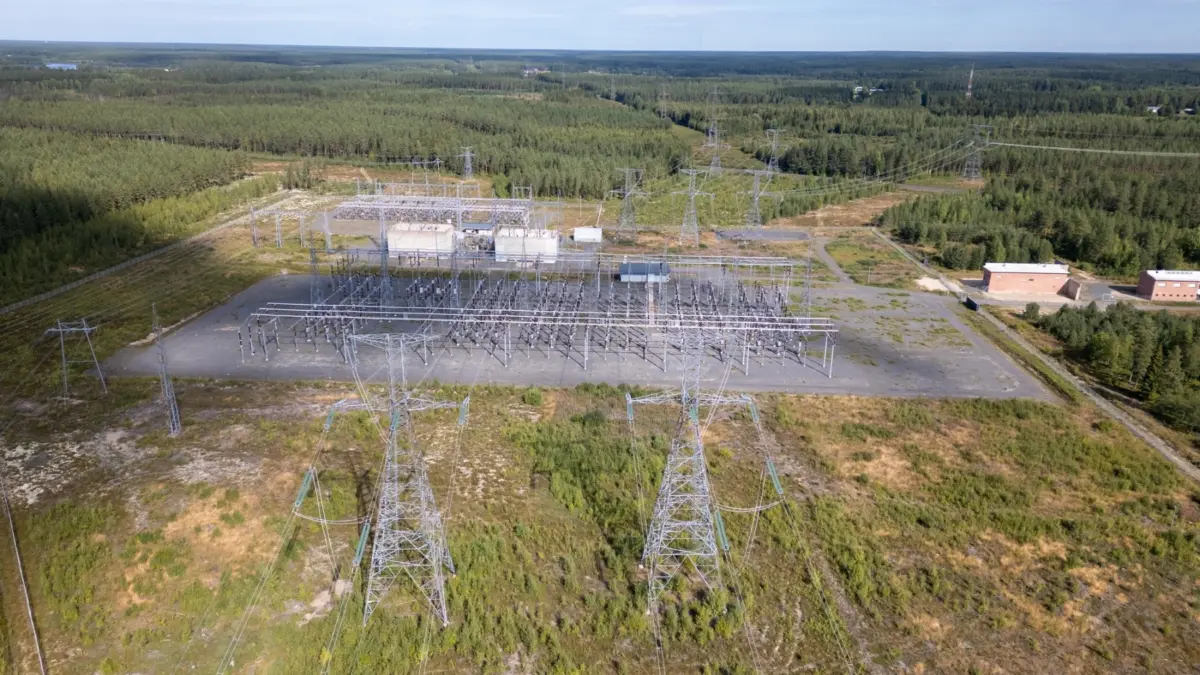
The data center industry is currently grappling with a severe supply-chain crunch for essential heavy electrical equipment. Lead times for step-down transformers, gas turbines, and specialized substation gear stretch across multiple years. Furthermore, regional transmission organizations (RTOs) and independent system operators (ISOs) are buried under unprecedented grid interconnection queues.
Sopko points out that while Nvidia’s initiative dramatically shortens the distance to a financial close, it leaves the physical world entirely untouched. "Easier capital shortens the distance to financial close," Sopko noted. "It does nothing to the interconnect queue, transformer and turbine lead times, or permitting."
This creates a high-stakes timing mismatch. If financial institutions push billions of dollars into silicon manufacturing and procurement without a corresponding acceleration in grid development, operators face a perilous mismatch. "Financed silicon arriving ahead of energization" risks turning a capital shortage into a utilization crisis, transforming what should be revenue-generating infrastructure into expensive, unpowered warehouse inventory.
Consequently, the real estate and energy attributes that were once treated as secondary considerations are now the most valuable commodities in the data center ecosystem. Power-ready sites, brownfield locations with legacy electrical infrastructure, and projects possessing fully executed interconnection agreements are experiencing an explosive surge in leverage. Developers who control land parcels with near-term power allocations can command premium valuations, as capital is no longer the primary gatekeeper to market entry.
Official Statements and Industry Perspectives
The announcement has triggered a wide spectrum of reactions across Wall Street and the enterprise technology sector, ranging from cautious optimism to deep structural skepticism.
Nvidia has increasingly integrated power generation and grid-awareness into its deployment philosophy. Through strategic alignments—such as its collaboration with Emerald AI and major energy providers like AES, Constellation, Invenergy, NextEra Energy, Nscale Energy & Power, and Vistra—Nvidia is designing AI factories that can act as flexible grid assets, capable of dynamically modulating power consumption based on real-time grid conditions.
Furthermore, Nvidia’s partnership with data center operator IREN aims to support up to 5 GW of infrastructure aligned with Nvidia’s standardized DSX architecture—a modular blueprint integrating compute, networking, software, advanced cooling, and power facilities. IREN’s model illustrates the exact synergy Nvidia’s financing platforms require: the silicon and compute layers can be seamlessly financed through third-party capital, but the physical facility itself must still be energized and operational.
Despite these grand blueprints, seasoned industry analysts are urging caution. Jack E. Gold, president and principal analyst at J.Gold Associates, has raised pointed questions regarding the underlying health and sustainability of these financial arrangements.
Gold characterized the initiative as another iteration of the circular financing patterns that have characterized parts of the tech sector’s expansion. He questioned who is actually driving the demand for these massive financing pools and whether the underlying market demand for AI workloads can sustain such aggressive capital deployment.
"If the demand does soften, and the borrowers can’t pay back the financing due to low revenues, who gets left holding the bag, and for how much?" Gold asked, highlighting the systemic risks should macroeconomic conditions or enterprise AI adoption rates falter.
While acknowledging that the long-term imperative to scale AI data centers is undeniable, Gold warned against market overexuberance. "I worry that the market may be hyperventilating," he said. "I’d like to see a more nuanced and conservative approach."
Future Outlook: Navigating the 2027–2028 Infrastructure Horizon
As the industry looks ahead to 2027 and 2028, the battlegrounds of the AI revolution are shifting decisively from silicon design and software optimization to real estate, energy procurement, and electrical engineering.
Sopko predicts that site selection and project commissioning will emerge as the absolute limiting factors for enterprise AI growth. The headline-grabbing $500 billion financing target should not be interpreted purely as a signal of unbridled end-user demand, but rather as a strategic masterclass by Nvidia in predicting—and attempting to clear—where the industrial bottleneck is migrating next.
By successfully abstracting and underwriting the compute layer, Nvidia has effectively removed the financial friction from buying GPUs. However, in doing so, it has shone an uncompromising spotlight on the physical deficiencies of the global power grid.
Moving forward, the winners of the AI infrastructure race will not simply be those with the deepest pockets or the most aggressive financial backing. Instead, success will belong to operators who have holistically integrated the entire infrastructure stack—securing power-ready land, locking down brownfield substations, and establishing resilient utility partnerships before seeking massive compute financing. For everyone else, an abundance of available capital coupled with a lack of available power could prove to be an expensive and frustrating lesson in the limits of financial engineering.