Executive Overview
The global digital economy is undergoing a structural transformation. What began as a decentralized peer-to-peer experiment has matured into a multi-billion-dollar commercial layer. By 2024, an estimated 562 million people worldwide owned cryptocurrency, embedding digital assets deeply into the daily habits of consumers and international markets alike. For enterprises, integrating blockchain-based assets is no longer a peripheral marketing tactic or an experimental add-on; it has become an operational necessity for cross-border commerce, friction-free settlements, and reaching digitally native demographics.
Yet, moving beyond traditional fiat payment rails to accept cryptocurrencies introduces unique architectural and operational challenges. A business cannot simply drop a digital wallet address onto a checkout page and expect seamless financial workflows. Integrating decentralized assets requires robust software capable of managing complex transactions, maintaining rigorous compliance, enforcing strict security controls, and syncing flawlessly with existing enterprise resource planning (ERP) and accounting software.
As the crypto payment landscape matures, corporate decision-makers are shifting away from generic off-the-shelf tools and evaluating specialized infrastructure. They are systematically weighing asset flexibility, security protocols, automation capabilities, and custody models—such as the choice between third-party custodial services and self-hosted, non-custodial environments like BitHide. This report examines the critical criteria guiding modern enterprise crypto adoption, exploring the operational mechanics, strategic trade-offs, and compliance frameworks shaping the future of digital asset payments.
Detailed Chronology: The Evolution of Merchant Crypto Adoption
To understand where enterprise crypto payments stand today, it is essential to trace how merchants and payment processors arrived at this juncture. The timeline of merchant crypto adoption reflects a steady shift from speculative friction to institutional-grade integration.
[2010–2013: The Wild West]
  └── Early adopters accept raw Bitcoin manually via basic wallet addresses. High volatility and no automated accounting.

[2014–2017: First-Wave Gateways]
  └── Early payment processors emerge, allowing instant fiat conversion to mitigate risk. Adoption remains niche and tech-heavy.

[2018–2021: The Stablecoin Revolution]
  └── The rise of USDT and USDC provides price stability. Enterprises begin exploring blockchain rails for B2B settlements.

[2022–2024: Institutional Maturity]
  └── 75% of US retail executives eye crypto integration. Focus shifts to advanced APIs, multi-wallet control, and self-hosted security.
2010–2013: The "Wild West" Era of Direct Transfers
In the early days of cryptocurrency commerce, accepting Bitcoin meant publishing a public cryptographic hash directly onto a company website. Transactions were verified manually, accounting was rudimentary, and price volatility posed a massive operational risk. There were no APIs, automated webhooks, or compliance guardrails.
2014–2017: The Rise of First-Wave Payment Processors
As digital assets gained wider recognition, specialized payment processors entered the market. These platforms allowed merchants to accept cryptocurrencies while automatically converting them into local fiat currency (such as USD or EUR) at the point of sale. While this largely eliminated price volatility risks, it locked merchants into third-party ecosystems, often with high intermediary fees and limited control over underlying wallet infrastructure.
2018–2021: The Stablecoin Revolution and B2B Exploration
The maturation of stablecoins—cryptocurrencies pegged directly to fiat currencies like the U.S. dollar, such as Tether (USDT) and USD Coin (USDC)—fundamentally changed the corporate calculus. Enterprises realized they could harness the speed, global reach, and low cost of blockchain rails without suffering from the erratic price swings of Bitcoin or Ethereum. B2B cross-border settlements began moving away from sluggish legacy wire systems (like SWIFT) toward instant, programmatic stablecoin transfers.
2022–Present: Institutional Infrastructure and Modular Control
Today, the market has entered an era of institutional maturity. Enterprises are no longer looking for simple checkout plugins; they demand enterprise-grade infrastructure that fits neatly into existing financial stacks. The modern stack requires sophisticated access controls, automated payout routines, multi-wallet architectures, and robust reporting mechanisms. Companies now actively debate the merits of self-hosted, non-custodial tools—such as BitHide—that grant internal teams complete sovereignty over their digital asset operations without sacrificing security.
Supporting Context & Metrics: The State of Merchant Adoption
To contextualize the operational urgency behind modern crypto payment infrastructure, industry data highlights a clear trajectory toward widespread enterprise integration.
A landmark survey conducted by Deloitte among 2,000 senior retail executives in the United States revealed the shifting sentiment of corporate leadership: nearly 75% of respondents indicated that their organizations planned to accept cryptocurrency or stablecoin payments within a two-year window. This staggering figure underscores that digital asset acceptance has transitioned from a fringe IT project to a core corporate strategy aimed at capturing new market segments.
+-------------------------------------------------------------------+
|               Key Metrics in Enterprise Crypto Payments           |
+-------------------------------------------------------------------+
| Global Crypto Ownership (2024):         ~562 Million individuals  |
| Retail Executives Planning Adoption:    ~75% (Deloitte Survey)    |
| Primary Asset Focus for Merchants:      Stablecoins (USDT / USDC) |
| Core Infrastructure Requirements:       Custody, Security, API    |
+-------------------------------------------------------------------+
Furthermore, the demographic profile of the modern consumer demands this shift. With Triple-A data estimating that approximately 562 million people worldwide owned cryptocurrency in 2024, merchants face a distinct commercial imperative. Failing to support digital assets means turning away a massive, affluent, and technologically fluent consumer base that prefers transacting via blockchain rails.
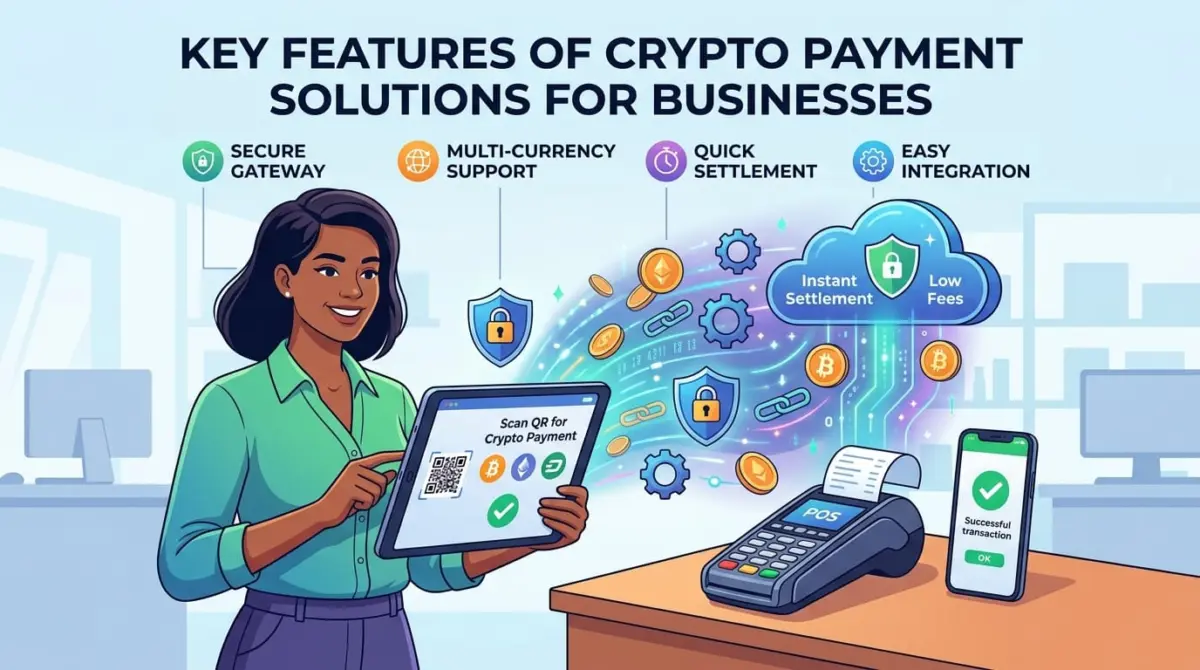
However, scaling to meet this demand requires balancing several critical operational pillars:
- Asset Support & Flexibility: Going beyond single-token acceptance to support multi-chain ecosystems.
- Custody & Risk Models: Choosing between fully managed custodial services and self-hosted environments.
- Security Controls: Implementing role-based access permissions, multi-signature approvals, and hardware-level encryption.
- Workflow Automation: Reducing manual overhead via scheduled transactions and bulk programmatic payouts.
- System Integration: Deploying APIs, checkout widgets, and hosted payment gateways that sync effortlessly with internal financial reporting software.
Official Statements and Industry Insights
Industry leaders, compliance officers, and financial technologists increasingly view crypto payment architecture not merely as a sales channel, but as an advanced component of corporate treasury and financial engineering.
On the Shift Toward Self-Sovereignty and Security
Security and control remain top priorities for chief financial officers (CFOs) and chief information security officers (CISOs) adopting blockchain payments. Industry analysts frequently emphasize that holding digital assets carries intrinsic operational responsibilities.
"When an enterprise steps into the digital asset economy, it assumes the role of its own bank. Traditional chargeback mechanisms do not exist on the blockchain. Therefore, infrastructure must be chosen with an uncompromising focus on access control, multi-wallet isolation, and operational transparency."
— Enterprise Fintech Solutions Analyst
This philosophy has driven the popularity of self-hosted, non-custodial solutions. Platforms like BitHide embody this shift, enabling organizations to run wallet infrastructure entirely within their own perimeter. By keeping private keys and access credentials in-house, companies mitigate third-party counterparty risk while retaining granular command over every transaction lifecycle.
On the Eliminating Friction in Global Trade
Treasury executives dealing with international suppliers and overseas customers face constant friction from traditional correspondent banking networks. Cross-border wires take days, incur punishing foreign exchange fees, and lack transparent tracking.
"Stablecoins have effectively solved the cross-border B2B settlement problem. By combining blockchain rails with automated corporate payout tools, multinational enterprises can settle international invoices in seconds rather than days, drastically optimizing working capital."
— Global Payments Strategy Director
Deep Dive: Core Components of Enterprise Crypto Infrastructure
Selecting the right crypto payment solution requires a granular understanding of the moving parts that make up a modern payment gateway.
1. Custodial vs. Self-Hosted Models
The foundational decision for any corporate IT and finance team is determining where the cryptographic keys reside:
- Custodial Solutions: A third-party provider manages wallet operations, private keys, and technical maintenance. This model offers rapid deployment and convenient user interfaces, making it attractive for smaller merchants with limited technical resources. However, it introduces counterparty risk—if the custodian faces regulatory scrutiny, technical failure, or insolvency, client funds can be compromised.
- Self-Hosted (Non-Custodial) Solutions: The enterprise operates the wallet software within its own secure infrastructure. Solutions like BitHide provide this architecture, giving businesses direct control over their assets. While this model demands greater internal technical oversight and robust access management policies, it ensures absolute sovereignty over funds and eliminates external platform dependencies.
2. Asset Selection and Stablecoin Dominance
While accepting foundational cryptocurrencies like Bitcoin (BTC) and Ethereum (ETH) is vital for capturing enthusiast demographics, stablecoins (primarily USDT and USDC) drive the vast majority of commercial B2B and high-value B2C transactions. Stablecoins eliminate price volatility risks, allowing businesses to price goods and services accurately in fiat equivalents while settling instantly on-chain. Robust payment infrastructure must support multi-chain environments (such as Ethereum, Tron, Polygon, and Binance Smart Chain) to ensure transaction fees (gas) remain manageable for customers.
3. Granular Security and Access Management
Because blockchain transactions are irreversible—lacking the chargeback protections of traditional credit card networks—internal security controls are paramount. Enterprise-grade payment gateways must feature:
- Role-Based Access Control (RBAC): Restricting viewing, approval, and execution privileges based on employee job functions.
- Multi-Signature & Multi-Approval Workflows: Requiring multiple authorized stakeholders to sign off on large outflows or automated payouts.
- IP Whitelisting and Advanced Encryption: Securing API endpoints and administrative dashboards against unauthorized access attempts.
4. Automation and Operational Efficiency
Manual transaction monitoring quickly becomes unmanageable as sales volume scales. Modern payment infrastructure incorporates automation tools such as:
- Automated Sweeping: Automatically routing incoming funds from checkout addresses into primary cold storage or treasury wallets.
- Programmatic Payouts: Executing payroll, vendor settlements, and affiliate commissions in bulk via API calls.
- Real-time Webhooks: Instantly notifying order management systems when a blockchain transaction achieves the required number of network confirmations.
5. Seamless Integration and Financial Reporting
A crypto payment gateway is only as good as its ability to communicate with the rest of the tech stack. Enterprises require versatile integration vectors, including developer-friendly REST APIs, customizable checkout widgets, and plug-and-play e-commerce modules. Furthermore, clear, exportable transaction records are vital for tax compliance, auditing, and corporate financial reporting.
Frequently Asked Questions
What is a crypto payment gateway?
A crypto payment gateway is specialized software that facilitates cryptocurrency transactions for merchants. It generates unique payment addresses for each order, monitors blockchain networks for transaction broadcasts, confirms network validation, and instantly notifies the merchant’s e-commerce platform when payment is complete. It functions similarly to a traditional credit card processor, but operates entirely on decentralized blockchain rails.
How can a business eliminate exposure to crypto price volatility?
The most effective strategy is utilizing stablecoins (such as USDT or USDC), which maintain a 1:1 peg with fiat currencies. Alternatively, many modern payment gateways and wallet tools offer automatic conversion features, instantly swapping incoming volatile cryptocurrencies (like Bitcoin or Ethereum) into stablecoins or local fiat currency upon receipt.
Can customers reverse or chargeback a crypto payment?
No. Blockchain transactions are immutable and final once validated by the network. Unlike credit card payments, there is no built-in chargeback mechanism. If a refund is necessary due to a returned item or canceled service, the merchant must manually initiate a new transaction sending funds back to the customer. Consequently, clear, transparent crypto refund policies are essential for any business entering this space.
Is it legal for a business to accept cryptocurrency payments?
In the vast majority of major global markets, yes. However, businesses must adhere to local financial regulations, including anti-money laundering (AML) and know-your-customer (KYC) guidelines where applicable, and maintain meticulous records for tax reporting. Because regulatory frameworks vary significantly by jurisdiction, companies should consult legal and accounting professionals before deploying live crypto payment systems.
Future Outlook: The Next Horizon of Digital Asset Commerce
Looking ahead, the integration of cryptocurrency into mainstream commercial operations will only accelerate. As central bank digital currencies (CBDCs), Layer-2 scaling solutions (such as Lightning Network and Arbitrum), and advanced privacy-preserving compliance tools mature, the friction surrounding digital asset transactions will continue to shrink.
In the near future, we can expect:
- AI-Driven Treasury Management: Autonomous agents managing liquidity pools, optimizing gas fees, and executing cross-border supplier payments programmatically via stablecoin rails.
- Universal Interoperability: Payment gateways that automatically abstract underlying blockchain mechanics, allowing customers to pay with any asset while merchants receive their preferred settlement currency seamlessly.
- Regulatory Harmonization: Clearer, globally standardized compliance frameworks that provide legal certainty for enterprises handling digital assets, encouraging conservative institutional players to enter the market.
Ultimately, the businesses that thrive in this new economic era will be those that treat cryptocurrency payments not as a temporary novelty, but as foundational financial infrastructure. By investing in secure, flexible, and automated payment solutions—whether custodial or self-hosted platforms like BitHide—forward-thinking organizations will secure a decisive competitive advantage in the global digital economy.