Executive Overview
For years, the commercial space industry has operated under the shadow of a single heavy-hitting titan: SpaceX. Driven by the relentless, record-breaking flight cadence of the Falcon 9, the global marketplace has enjoyed an era of unprecedented access to low-Earth orbit (LEO). Yet, beneath the surface of this apparent abundance, a quiet crisis has been brewing. According to industry insiders and commercial satellite operators, the world is facing a severe, structural shortage of payload capacity.
Compounding this issue, SpaceX has begun scaling back elements of its Falcon 9 program, while its next-generation, fully reusable heavy-lift vehicle—Starship—remains tethered primarily to internal deployments of the company’s Starlink broadband constellation. With rideshare options tightening and uncertainties looming over future availability, satellite operators are experiencing a harsh reality check.
Enter the era of the boutique, dedicated launch provider.
The viability of this alternative market received a massive shot in the arm when Germany’s Isar Aerospace successfully steered its propane-fueled Spectrum rocket into orbit for the first time, deploying a batch of CubeSats from a remote spaceport in northern Norway. This hard-won triumph—achieved following the bitter disappointment of a failed test flight a year prior—marks a watershed moment for the European space sector. It offers a desperately needed independent path to orbit, reducing Europe’s reliance on legacy heavyweights like Arianespace and Avio, and paving the way for a new generation of agile launch startups.

Among those cheering loudest from the sidelines are executives at Astroscale, a Tokyo-headquartered pioneer in satellite servicing and orbital debris mitigation. Underscoring the desperate appetite for flexible, dedicated launch solutions, Astroscale made headlines by inking multi-mission contracts with Isar Aerospace before the startup had even reached orbit. In an exclusive interview with Ars Technica, Astroscale’s Group Chief Operating Officer, Chris Blackerby, detailed the high-stakes calculations driving his company’s launch strategy, the rigorous due diligence required to trust unproven rockets, and the sprawling, futuristic ecosystem of orbital maintenance, rendezvous and proximity operations (RPO), and refueling.
Detailed Chronology of a Breakthrough
The timeline leading to Isar Aerospace’s historic orbital flight is a masterclass in resilience, engineering iteration, and cross-border commercial ambition.
- The Setback: In late 2025, Isar’s inaugural test flight of the Spectrum rocket ended in failure, dealing a temporary blow to the startup’s ambitions and reminding the broader market of the unforgiving nature of orbital rocketry.
- The Pivot and Due Diligence: Rather than shying away from an unproven vendor, savvy commercial customers like Astroscale saw an opportunity. Recognizing that their precise orbital servicing missions could not rely on unpredictable rideshare accommodations, Astroscale deployed technical teams to Isar’s manufacturing facilities. They conducted extensive on-site audits, vetted engineering leadership, and reviewed proprietary telemetry.
- The Contract Signings: Confidence bolstered by thorough vetting, Astroscale signed a landmark agreement with Isar in March 2026, building upon an earlier preliminary pact. This secured dedicated rides for two of the most complex upcoming missions in commercial spaceflight: ELSA-M and ADRAS-J2.
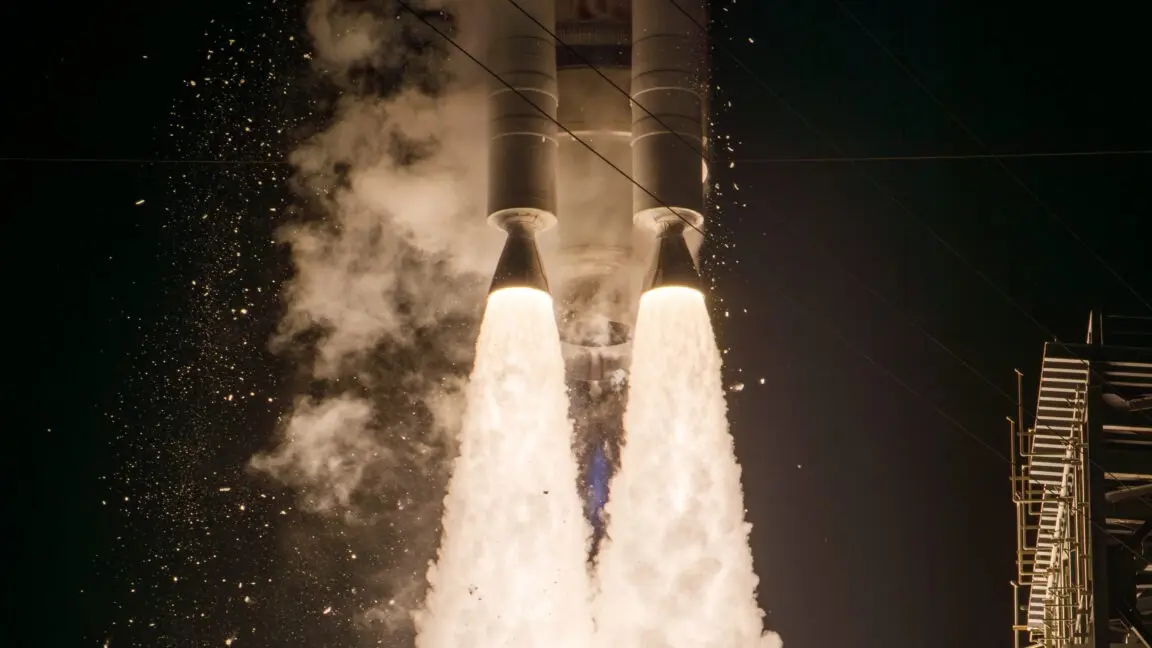
- The Launch Success: At approximately 5:00 AM local time on a Sunday morning in September 2026, Chris Blackerby and his executive team sat glued to a live webcast originating from Norway. Powered by nine propane-fueled engines, the Spectrum rocket pierced the Arctic sky, successfully clearing every staging milestone, operating its upper stage flawlessly, and cleanly deploying its commercial payloads into LEO.
- The Industry Ripple Effect: Isar’s success instantly reverberated across the global aerospace landscape. It validated the European Union’s institutional backing—bolstered by substantial investments from the European Space Agency (ESA) alongside the Norwegian and German governments—and signalled that a competitive 1-ton-class launch market was finally moving from the drawing board to reality.
Supporting Context & Metrics: The Anatomy of the Launch Crunch
To understand why established companies like Astroscale are willing to absorb the high risk of booking unproven vehicles, one must examine the macroeconomic and technical metrics governing the modern space economy.
The Math of Rideshares vs. Dedicated Launches
For standard communications constellations or earth-observation networks destined for standardized sun-synchronous orbits, rideshare missions aboard a Falcon 9 are economical and efficient. However, for specialized operators—such as those performing debris removal, life-extension servicing, or active space situational awareness—rideshares are practically and mathematically non-viable.

[Satellite Servicing Target] <---> [Unique Orbital Plane / Inclination]
                                    ^
                                    | (Requires precise insertion)
                       [Dedicated Launch Vehicle (e.g., Isar Spectrum)]
                                    ^
                                    | (Impractical via standard multi-customer rideshare)
Servicing a defunct satellite or space asset requires a dedicated insertion into a specific orbital plane, altitude, and inclination. Attempting to achieve this via a traditional rideshare brokerage introduces layers of orbital maneuvering, fuel consumption, and scheduling friction that can compromise mission objectives before the servicing vehicle even reaches its target.
The 1-Ton Class Desert
When mapping out the available global launch market for payloads weighing between 500 and 1,000 kilograms, analysts find a surprisingly barren landscape.
- Rocket Lab: While historically reliable with its Electron rocket, the vehicle’s payload capacity is too restrictive for larger next-generation servicing craft like ELSA-M and ADRAS-J2. (Though Rocket Lab’s upcoming Neutron rocket promises higher capacity, it is not yet operational).
- Firefly Aerospace: Operating successfully in the 1-ton class with its Alpha rocket, Firefly remains one of the few proven alternatives, though it has periodically navigated its own operational hurdles.
- Defunct or Pivoting Startups: Once-promising ventures like Relativity Space and Astra initially targeted this sweet spot before pivoting toward larger reusable architectures or shifting business models entirely.
This vacuum left a gaping opening for Isar Aerospace’s Spectrum, which sits squarely in the 1,000-kilogram payload class to LEO—making it an ideal match for medium-sized, highly specialized spacecraft.
Official Statements & Insights: Inside Astroscale’s Strategy
In his conversation with Ars Technica, Chris Blackerby offered a transparent look into the corporate philosophy, technical milestones, and long-term economic vision driving Astroscale’s portfolio.

The Calculus of Trusting an Unproven Launcher
Addressing the inherent risk of contracting with a launch provider that had not yet reached orbit, Blackerby emphasized that thorough, boots-on-the-ground engineering assessments made all the difference:
"We had teams go out there to do due diligence research at their manufacturing site and talk to a lot of their technical leaders. So we were pretty confident already. Certainly, the launch was incredible. Checking off all the markers, all the milestones, deploying the payloads—it was everything we could have hoped for."
Mastering Rendezvous and Proximity Operations (RPO)
Astroscale’s operational pedigree is rooted in incremental technological validation—the classic "crawl, walk, run" methodology. Its groundbreaking ADRAS-J (Active Debris Removal by Astroscale-Japan) mission, conducted in partnership with JAXA, successfully approached, imaged, and circled a non-cooperative, un-communicative H-IIA rocket upper stage drifting in orbit.
According to Blackerby, the lessons learned from ADRAS-J fundamentally reshaped the engineering for its successor, ADRAS-J2:
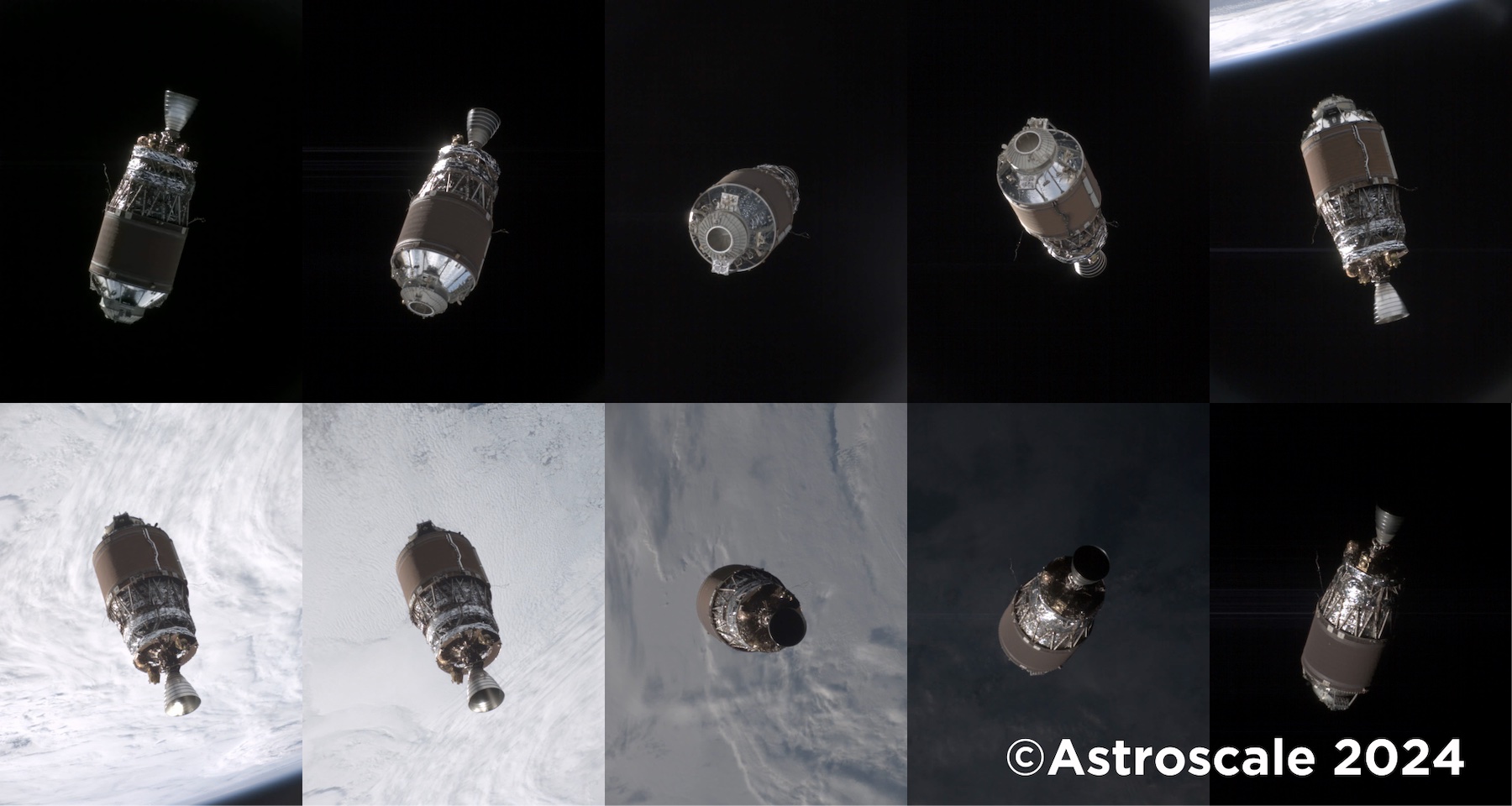
- Stability Discovery: Telemetry and exquisite imagery from ADRAS-J revealed that the target rocket body was surprisingly stable, pointing its payload adapter consistently toward Earth rather than tumbling wildly.
- Enhanced Safety Protocols: Because RPO missions require autonomous spacecraft to approach dead metal at walking speeds within meters of the target, developing robust anomaly detection and abort algorithms is paramount.
- Data Inheritance: The algorithmic foundation built during ADRAS-J’s fly-around operations directly informs upcoming missions, such as ISSA-J1, which will tackle significantly more complex targets like decommissioned satellites featuring protruding, potentially rotating solar arrays.
Toward Economic Sustainability
Astroscale is systematically constructing a multi-tier commercial portfolio. While early demonstration missions like ELSA-D were internally funded through equity markets, and missions like ADRAS-J and ELSA-M involved deep institutional partnerships with JAXA, ESA, and the UK Space Agency, the company is rapidly approaching a crucial financial threshold.
"With ADRAS-J2, we’re getting toward being revenue-positive with these missions. Our missions going forward, for the most part, are revenue-positive. If we look at that from the perspective of sustainability… economic financial sustainability, we’re already getting to that point."
Future Outlook: The Dawn of the Orbital Servicing Economy
The successful debut of Isar Aerospace’s Spectrum rocket and the aggressive posture of companies like Astroscale signal a profound shift in how humanity manages its presence in near-Earth space. We are moving away from an era of purely disposable space utilization and entering a sophisticated, circular orbital economy.
The Military and Commercial Demand Signal
Beyond commercial debris removal, the market for orbital servicing is expanding rapidly into national security and infrastructure maintenance. Astroscale’s upcoming Provisioner mission, contracted by the US Space Force, aims to demonstrate active satellite refueling—a capability that will redefine the operational lifespan of high-value defense and commercial assets.

Furthermore, initiatives like the Defense Innovation Unit’s (DIU) deorbit-as-a-service studies, alongside global demands for close-in inspection and threat identification, point toward an explosive market for advanced RPO technologies.
What Lies Ahead in the 2030s
As boutique launch providers like Isar Aerospace, Rocket Factory Augsburg, and PLD Space scale up their manufacturing and flight cadences over the remainder of the decade, the current launch crunch is expected to ease. Simultaneously, Astroscale anticipates that by the early 2030s, the technological milestones achieved via ELSA-M, ADRAS-J2, and Provisioner will coalesce into a fully commercialized, repeatable, and economically viable servicing ecosystem.
In this emerging future, space will no longer be treated as a limitless cosmic junkyard. Instead, supported by a resilient, diversified web of boutique launch providers and cutting-edge orbital mechanics, space will become a managed, sustainable, and truly permanent domain of human enterprise.