By Shane Snider, Senior News Writer, Data Center Knowledge August 17, 2026
Executive Overview
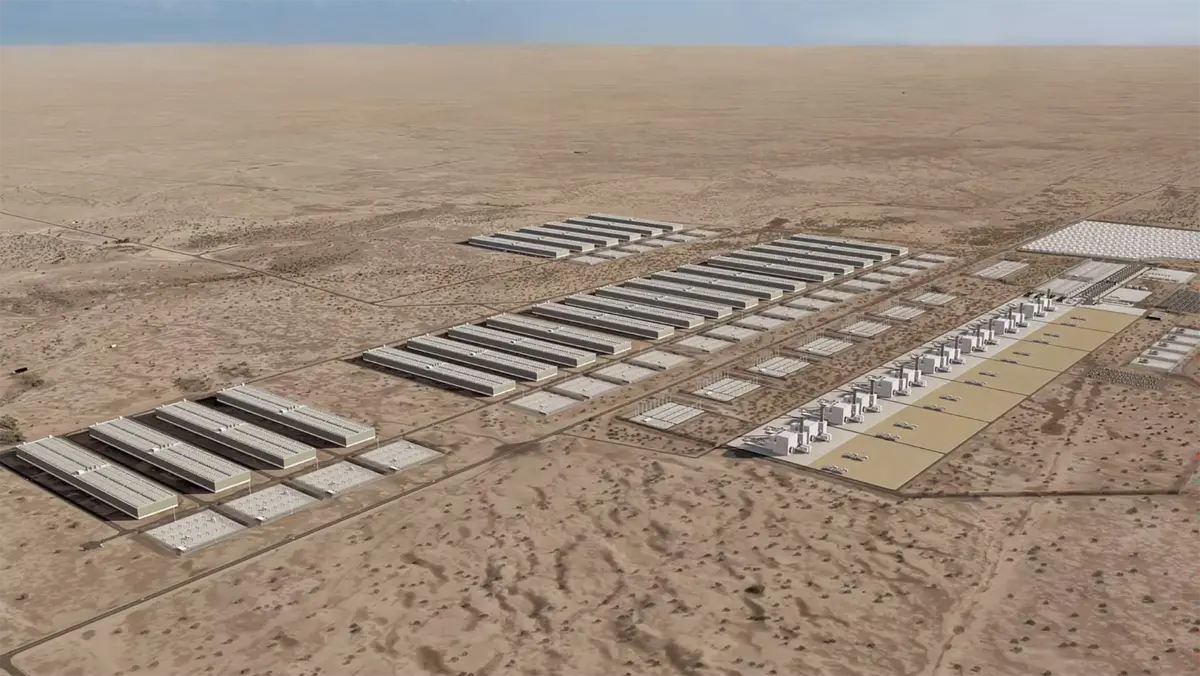
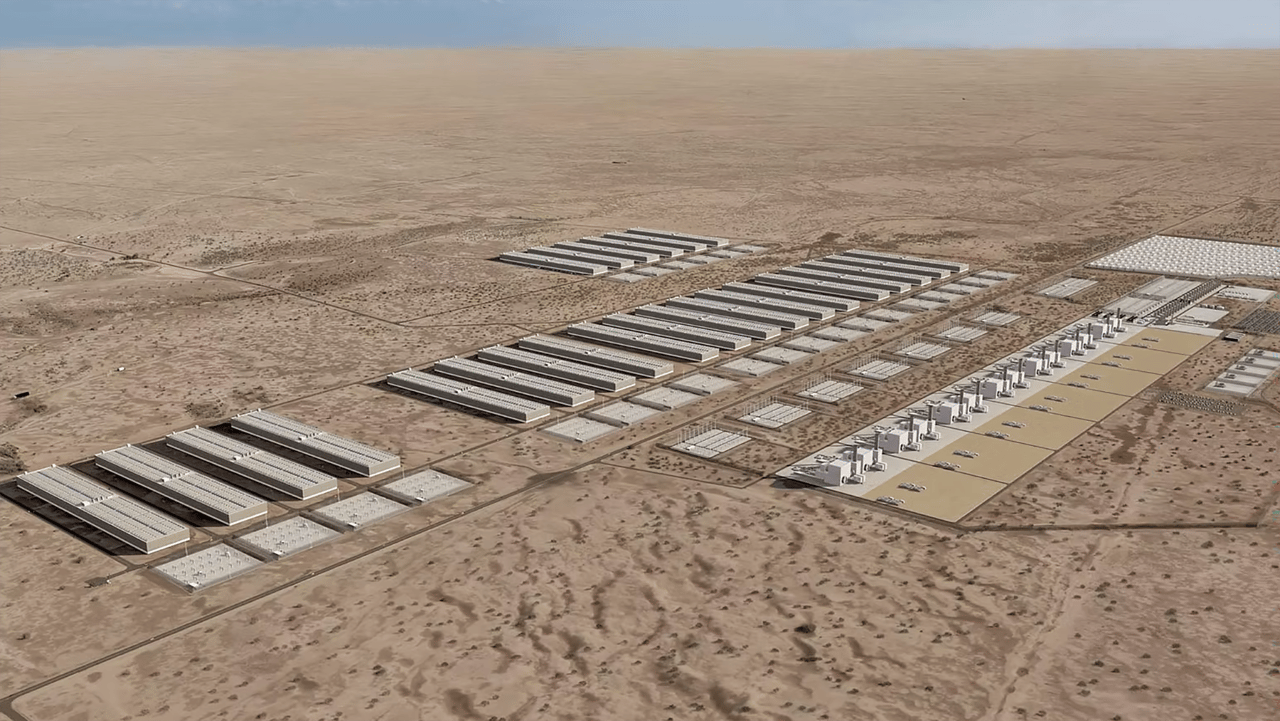
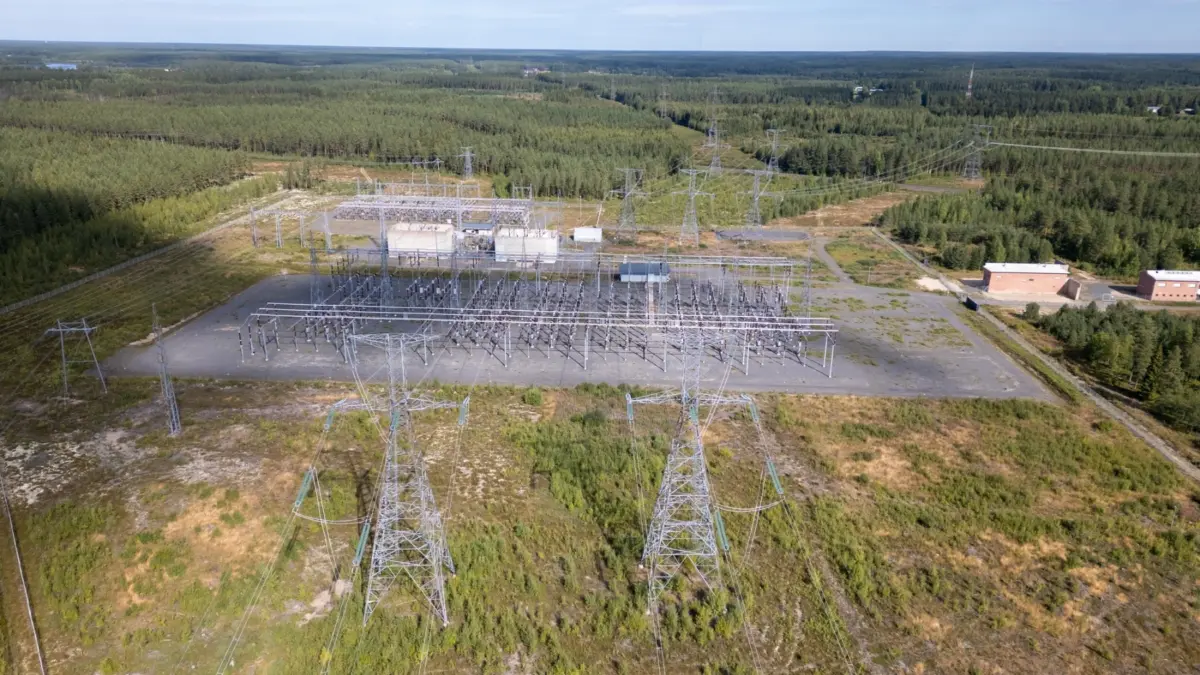
Amazon is engineering one of the most ambitious and controversial energy strategies in the history of the digital infrastructure sector. At an expansive 8,000-acre site in Pecos County, Texas—known as the GW Ranch—the tech giant is developing a colossal artificial intelligence data center campus backed by a dedicated, on-site power generation system.
Initially designed as a self-contained, behind-the-meter operation to bypass agonizingly slow public grid connection queues, the project is evolving. Amazon has confirmed to Data Center Knowledge that it is now "actively exploring" a transition to front-of-the-meter grid service. The long-term vision: leverage this private energy behemoth to ultimately pump surplus electricity back into the public grid, benefiting regional customers.
However, the scale of the project has triggered intense public scrutiny. Regulatory documents filed with the Texas Commission on Environmental Quality (TCEQ) by Pacifico Energy—Amazon’s partner in the venture—outline a natural gas-fired power facility housing up to 35 simple-cycle turbines. While calculated under maximum operational assumptions (running 8,760 hours a year), the plant’s permitted thresholds have captured national headlines for projected annual emissions of roughly 33 million tons of carbon dioxide equivalent ($textCO_2texte$).
This development underscores a desperate scramble by hyperscalers to secure unprecedented volumes of energy for generative AI workloads, even if it means stepping directly into the power generation business.
Detailed Chronology: How the GW Ranch Project Unfolded
The path from a quiet Texas real estate acquisition to a national flashpoint over AI energy consumption has moved at breakneck speed.
August 7, 2026: Cleanview first uncovered Amazon’s hidden hand in the development, connecting municipal and state construction filings to the remote GW Ranch site in Pecos County, roughly 17 miles north of Fort Stockton.
Early August 2026: Amazon formally confirmed its acquisition of the 8,000-acre site and its intent to procure power directly from Pacifico Energy, bypassing the local utility distribution architecture.
State Regulatory Filings: Publicly accessible TCEQ preliminary determinations brought the sheer magnitude of the venture to light, revealing plans for a natural gas-fired plant featuring 35 simple-cycle turbines and a nominal output capacity of 5,000 MW.
Media Storm: Major outlets, including The New York Times, The Verge, and Futurism, amplified concerns regarding the plant’s maximum allowable emissions cap, thrusting the intersection of AI compute growth and fossil fuel dependency into the political spotlight.
Mid-August 2026: Responding to inquiries from Data Center Knowledge, Amazon broke its silence regarding its long-term network strategy, revealing that the behind-the-meter installation is eyed for a future front-of-the-meter pivot that could feed electricity back into the Electric Reliability Council of Texas (ERCOT) market.
Supporting Context & Metrics: The Scale of GW Ranch
To grasp the unprecedented nature of the GW Ranch project, one must examine the staggering metrics associated with Pacifico Energy’s permits and the operational realities of modern hyperscale AI factories.
Power Generation vs. IT Load
Generation Capacity: Pacifico Energy’s public disclosures describe the GW Ranch as a multi-phased energy project boasting up to 7.65 GW of total gas generation capacity, supplemented by 1.8 GW of battery energy storage systems (BESS) and up to 750 MW of solar PV.
The TCEQ Baseline: The preliminary environmental permits filed via TCEQ specifically detail a 5,000 MW nominal output configuration driven by 35 simple-cycle gas turbines. Public materials do not yet reconcile the gap between the 5,000 MW permit configuration and the broader 7.65 GW project description.
Deployment Timeline: Pacifico targets first power generation by the first quarter of 2027, scaling to 1 GW online by 2028, and surpassing 5 GW of online capacity by 2031.
IT Load: Amazon has tightly guarded the campus’s planned IT load specifications, keeping competitive metrics close to the vest.
Environmental Footprint and Maximum Emissions
The figures dominating mainstream media coverage—specifically the estimated 33 million tons of annual $textCO_2texte$ emissions—represent a theoretical ceiling rather than a realistic forecasting metric. TCEQ calculated these figures using maximum operating assumptions, presuming all 35 turbines run continuously for all 8,760 hours of the calendar year. Actual emissions will depend heavily on load factors, grid dispatch dynamics, and the integration of promised renewable assets.
Resource Conservation and Water Management
Given the arid West Texas climate, water scarcity is a primary constraint. Amazon and Pacifico have structured the utility plan to mitigate community impact:
Phase 1 Cooling: The initial operational phase will utilize dry-cooling methods, requiring zero water for power generation cooling.
Future Phases: Subsequent expansions are designed to rely primarily on brackish groundwater—an unpotable underground resource that does not draw from local municipal drinking supplies.
Produced Water: Project developers are also actively evaluating the use of "produced water" (wastewater generated during oil and gas extraction) as an alternative non-potable cooling source.
Official Statements and Expert Analysis
Building an isolated energy island of this magnitude is a radical departure from traditional data center deployment models. Industry analysts and technical experts emphasize just how difficult this engineering feat truly is.
The Reality of Behind-the-Meter (BTM) Construction
Joshua Rhodes, a prominent researcher at the University of Texas who specializes in electricity markets and infrastructure economics, notes that true behind-the-meter developments of this caliber are exceedingly rare.
"Many have talked about doing behind-the-meter generation, but didn’t proceed when they realized how hard it is," Rhodes explained in an interview with Data Center Knowledge.
Furthermore, constructing a private power plant places hyperscalers in direct competition with traditional electric utilities for scarce heavy industrial hardware.
"It will still compete with the electric grid in that turbines are scarce right now," Rhodes cautioned. "If 5 GW of turbines go to this behind-the-meter data center, they won’t be available for other uses."
Why the Strategy Is Pivoting Front-of-the-Meter
By initiating the project as an isolated BTM network, Pacifico and Amazon successfully bypassed the notoriously bottlenecked ERCOT interconnection queues. However, maintaining a permanently isolated private network creates regulatory and economic inefficiencies.
Amazon’s official stance clarifies that the BTM phase is a launchpad rather than an endpoint. In a statement provided to Data Center Knowledge, an Amazon spokesperson revealed that the company is "actively exploring" a transition to front-of-the-meter grid service. The ultimate goal is to architect the facility so that its massive energy infrastructure can eventually "add supply to benefit other customers" across Texas.
Transitioning from an isolated private microgrid to a grid-integrated asset operating under ERCOT introduces significant regulatory hurdles.
The ERCOT Puzzle
When asked how the GW Ranch’s existing generation assets would integrate into a future ERCOT connection, expert Joshua Rhodes admitted the path forward remains murky:
"This part is still unclear. It should become clearer as ERCOT’s Batch Zero process and subsequent large-load batches move forward."
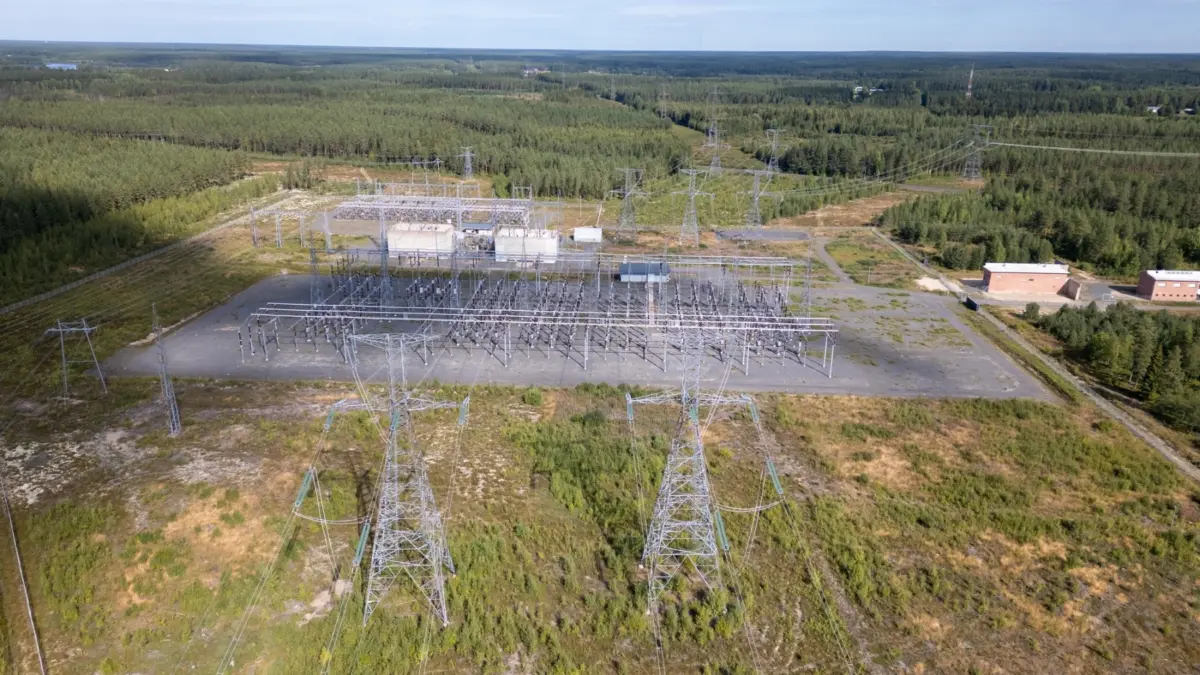
ERCOT’s Batch Zero represents a systemwide study process specifically designed to evaluate qualifying large-load connection requests exceeding 75 MW. The framework groups eligible projects together to conduct comprehensive reliability assessments, allocate available regional transmission capacity, and identify necessary high-voltage grid upgrades.
Withdrawal-Limited Private Use Networks (WLPUN)
ERCOT maintains specific frameworks governing large loads seeking co-location with private generation under what is known as a Withdrawal-Limited Private Use Network (WLPUN)—often colloquially called "bring-your-own-generation."
However, the legal and operational challenge for Amazon lies in establishing how a facility designed to consume private power can legally pivot to exporting power back to the grid while simultaneously maintaining high-availability power guarantees for mission-critical AI servers. Exactly how ERCOT will treat these blended generation-and-load assets remains a subject of intense debate among Texas energy regulators.
Future Outlook: Are Hyperscalers Becoming Utilities?
Despite the monumental scale of the GW Ranch project, industry experts do not believe tech behemoths are pivoting toward becoming permanent utility operators. The core economics simply do not align with Big Tech’s primary business models.
"I don’t think that hyperscalers want to be in the power business—the margins are too low," Rhodes observed. "I think this is just a necessity for some right now."
For Amazon, Microsoft, and Google, securing power has become the ultimate bottleneck to capturing market share in the generative AI race. When traditional utilities and public grid operators cannot build transmission lines or commission generation fast enough to match the soaring power demands of GPU clusters, tech giants are forced to take matters into their own hands.
What Lies Ahead for GW Ranch
As the GW Ranch project marches toward its targeted 2027 launch, several critical questions remain unanswered:
The Interconnection Agreement: Will Amazon officially file an ERCOT large-load interconnection request, and what transmission upgrades will be mandated by ERCOT’s study phases?
The Generation-to-Load Balance: How will the 7.65 GW energy blueprint be formally balanced against the campus’s undisclosed IT load and future data center phases?
Environmental Mitigation: How will public pressure regarding carbon emissions influence the final deployment of solar and battery storage assets at the site?
One thing is certain: the GW Ranch serves as a watershed moment for digital infrastructure. It proves that the future of AI will not be written solely in server racks and silicon chips, but in power plants, gas turbines, and high-voltage transmission strategies.