







Executive Overview
The rapid integration of autonomous artificial intelligence into the modern enterprise has brought extraordinary productivity gains, but it has simultaneously introduced a profound operational blind spot. Traditional enterprise security architectures were constructed around a binary paradigm: an application is either trusted and allowed to execute, or it is malicious and blocked. However, the emergence of "Agentic AI"—autonomous software agents capable of making decisions, executing complex workflows, and chaining commands on behalf of users—has rendered this traditional model obsolete.
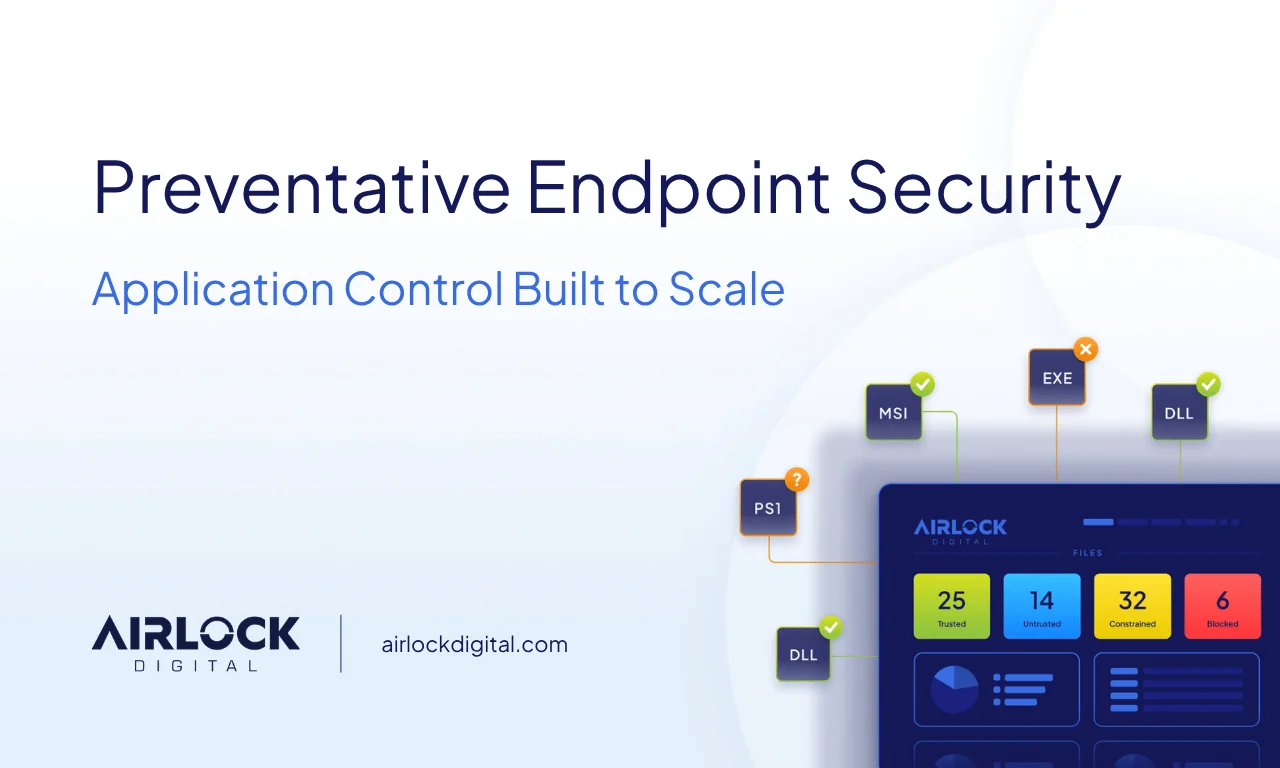
Entering this high-stakes arena, Airlock Digital, a recognized leader in preventative endpoint security, has officially announced the launch of Agentic AI Control & Governance. Unveiled on August 4, 2026, at the prestigious Black Hat USA conference in Atlanta, Georgia, this groundbreaking suite of capabilities extends Airlock Digital’s proven application control framework. By providing command- and session-level visibility into trusted AI agent behavior, centralized policy management, and real-time governance directly at the endpoint, Airlock Digital is directly addressing one of the most pressing cyber security frontiers of the decade.
Scheduled for general availability in the third quarter of 2026, this solution arrives at a critical juncture. Modern organizations are grappling with a proliferation of shadow AI and autonomous tools operating with minimal oversight. By shifting the security paradigm from static allowlisting to dynamic, behavior-aware endpoint governance, Airlock Digital aims to allow enterprises to embrace AI innovation without compromising security or regulatory compliance.
Detailed Chronology: The Evolution of Endpoint Security Meets Autonomous AI
The Shift from Static Applications to Dynamic Agents
For over a decade, Airlock Digital has built its reputation on precision application control, allowlisting, and operating system hardening. The core philosophy of application control is absolute: prevent unknown or untrusted software from executing on enterprise endpoints. This strategy drastically reduced the attack surface for organizations across financial services, healthcare, manufacturing, energy, government, and education.
Yet, the nature of software itself has undergone a seismic shift. Applications of the past were deterministic—they executed predictable lines of code based on user inputs. The advent of Large Language Model (LLM)-driven AI agents completely shatters this predictability. These agents do not merely execute commands; they reason, formulate alternative plans when faced with roadblocks, and interact dynamically with local files, APIs, and enterprise applications.
Recognizing that these autonomous entities behave less like traditional software and more like digital employees, Airlock Digital began developing a framework to govern not just what software runs, but how it acts once active. This multi-year engineering effort culminated in the announcement of Agentic AI Control & Governance at Black Hat USA 2026.
The Black Hat Reveal and Roadmap to General Availability
Unveiled live on the exhibition floor in Las Vegas and Atlanta, Airlock Digital’s leadership team utilized the Black Hat USA 2026 venue to provide security leaders, CISOs, and enterprise architects with an exclusive preview of the technology at Booth #5729.
The announcement outlines a clear roadmap:
- August 2026: Initial technical preview and live demonstrations at Black Hat USA 2026.
- Q3 2026: Official customer general availability, rolling out globally to enterprises seeking immediate visibility and control over autonomous endpoint agents.
This timeline aligns closely with the urgent demands of chief information security officers who are currently racing to inventory and secure autonomous tools that have slipped past perimeter defenses.
Supporting Context & Metrics: The Scale of the Autonomous Blind Spot
The urgency driving Airlock Digital’s new offering is backed by striking industry metrics that illustrate the chaotic state of enterprise AI adoption. Knowing that an AI agent exists within a corporate ecosystem is no longer sufficient; security teams are drowning in a lack of operational visibility.
Data published by the Cloud Security Alliance (CSA) in April 2026 paints an alarming picture of the modern corporate threat landscape:
- 82% of enterprises reported discovering unknown, unauthorized, or shadow AI agents operating actively within their environments.
- 65% of organizations experienced a security incident directly related to AI agent misbehavior, overstepping of boundaries, or unintended data exposure within the preceding 12 months.
These statistics highlight a dangerous reality: employees eager to boost productivity are deploying autonomous agents that connect to local systems, pull sensitive corporate data, and execute scripts without the knowledge of centralized IT departments. When a traditional security tool blocks a malicious application, the process terminates. However, when an autonomous AI agent encounters a security block, its underlying algorithms prompt it to evaluate alternative pathways, troubleshoot the blockage, and continue pressing toward its objective. This adaptive behavior makes traditional blocking mechanisms inadequate and occasionally counterproductive.
Official Statements: Leadership Perspectives on AI Governance
Industry leaders at Airlock Digital have emphasized that the core challenge of the AI era is no longer technological adoption, but rather operational containment and policy enforcement.
David Cottingham, Co-founder and Chief Product Officer at Airlock Digital, explained the fundamental shift in security architecture during the launch:
"Traditional endpoint security determines what software is trusted to execute. Agentic AI introduces a second layer of policy: what a trusted AI agent is allowed to do once it’s running. AI agents don’t simply stop when an action is blocked; they evaluate alternatives and continue working toward their objective. Rather than repeatedly blocking an agent, organizations can communicate clear operational boundaries, allowing trusted agents to adapt their behavior while remaining within policy."
Echoing this sentiment, Kevin Dunne, Chief Executive Officer at Airlock Digital, pointed to customer feedback as the primary catalyst for the new capabilities:
"What we’re hearing from customers is that the challenge isn’t adopting Agentic AI; it’s governing it. Organizations need to understand what trusted AI agents are doing, define what they’re allowed to do, and ensure they operate within organizational policy. Agentic AI Control & Governance extends our leadership in preventative endpoint security by giving organizations the visibility and governance they need to confidently adopt AI without slowing the business down."
By positioning governance precisely where work happens—at the endpoint—Airlock Digital bridges the gap between high-level AI orchestration platforms and the raw operating system resources that agents manipulate.
Future Outlook: The Next Decade of Endpoint Defense
As enterprises look toward the remainder of the decade, the integration of autonomous systems into daily workflows will only accelerate. AI agents will transition from assisting with basic email drafting and data summarization to executing complex financial transactions, automated code deployment, and multi-system administrative tasks.
Without robust governance frameworks like those introduced by Airlock Digital, organizations risk severe data exfiltration events, compliance violations, and unintended lateral movement within corporate networks driven entirely by autonomous code operating in "good faith."
Airlock Digital’s proactive stance signals a broader industry evolution. Endpoint security can no longer rely solely on static allowlists or reactive Endpoint Detection and Response (EDR) telemetry that reviews incidents after they have occurred. The future demands preventative, context-aware policy frameworks that establish behavioral guardrails for artificial intelligence in real time.
By extending its trusted application control legacy into the realm of Agentic AI, Airlock Digital has established a vital benchmark for the cybersecurity industry. As the Q3 2026 general availability approaches, organizations now have a clear technological path forward: embracing the productivity of autonomous AI while retaining absolute sovereign control over the enterprise endpoint.
For more information on Airlock Digital’s new capabilities, security professionals can visit Airlock Digital’s Official Website or read the foundational blog post titled "AI Agents Behave More Like Employees Than Applications".