








Executive Overview
For over a decade, cloud resiliency was evaluated through relatively simplistic metrics: high-availability SLAs, fast failover times, and regional redundancy counts. However, as global enterprise infrastructure faces sophisticated cyber threats, geopolitical fragmentation, and strict sovereign regulatory mandates, these conventional metrics are proving insufficient. Modern enterprise resilience requires systems that can continue operating under sustained pressure, shield core digital assets, and safely restore operations following catastrophic breaches or multi-system failures.
To address this evolving paradigm, Microsoft has reshaped its Azure cloud architecture, pivoting from reactive guidance to an integrated, execution-driven resiliency framework. Rather than viewing resilience as a static system guarantee, Microsoft frames cloud durability around an urban planning metaphor: treating enterprise clouds like modern metropolitan grids that incorporate redundant utilities, localized governance, and fail-safe recovery controls tailored to real-world operational constraints.
At the center of this architectural evolution is the rollout of the Azure Infrastructure Resiliency Manager (introduced at Microsoft Build), alongside AI-powered innovations such as the Resiliency Agent and the Azure Backup Model Context Protocol (MCP) Server. By combining Infrastructure Resiliency, Data Resiliency, and Cyber Recovery into a single operational interface, Microsoft aims to bridge the gap between architectural design and operational reality. This transformation transitions cloud resilience from an advisory ideal into an executable, code-driven imperative for global enterprises.
Detailed Chronology: The Evolution of Cloud Resiliency Architecture
The transformation of cloud resilience from basic uptime guarantees to automated, intelligent operational durability follows a multi-phase structural evolution across the cloud industry.
+-----------------------------------------------------------------------------------+
|                            EVOLUTION OF AZURE RESILIENCY                          |
+-----------------------------------------------------------------------------------+
|  ERA 1: Infrastructure Isolation                                                  |
|  • Single-region deployments with basic infrastructure SLAs.                       |
|  • Reactive disaster recovery reliant on manual failover scripts.                 |
+-----------------------------------------------------------------------------------+
                                         │
                                         ▼
+-----------------------------------------------------------------------------------+
|  ERA 2: Architectural Formalization & The Three Pillars                           |
|  • Broad deployment of Availability Zones (AZs) for physical isolation.           |
|  • Establishing the Three Pillars: Infrastructure, Data, & Cyber Recovery.        |
|  • Explicit delineation via the Shared Responsibility Model.                      |
+-----------------------------------------------------------------------------------+
                                         │
                                         ▼
+-----------------------------------------------------------------------------------+
|  ERA 3: Unified Intelligence & Executable Resiliency                              |
|  • Public preview of Azure Infrastructure Resiliency Manager (Build 2026).        |
|  • Introduction of AI-driven Resiliency Agent & IaC code generation.              |
|  • Azure Backup MCP Server enabling programmable, sovereign recovery workflows.   |
+-----------------------------------------------------------------------------------+
Phase 1: Infrastructure Isolation and Passive Redundancy (2010–2018)
In the early days of enterprise cloud adoption, resilience focused primarily on platform uptime and hardware redundancy. Cloud providers concentrated on establishing physical datacenter redundancy, isolated power grids, and raw compute failovers. Organizations constructed passive secondary sites, relying heavily on manual failover scripts and basic data replication. During this era, regulatory requirements were primarily regional, and multi-tenant cloud platforms treated downtime largely as an isolated infrastructure problem resolved by vendor-driven Service Level Agreements (SLAs).
Phase 2: Architectural Formalization and the Three Pillars Framework (2019–2024)
As enterprise workloads shifted to mission-critical operational systems, cloud providers recognized that platform-level guarantees were insufficient without application-level alignment. Microsoft formalized its strategy by establishing three core pillars:
- Infrastructure Resiliency: Protecting underlying compute, network, and storage components against hardware and localized environmental failures.
- Data Resiliency: Ensuring continuous data protection, immutability, and state preservation across local and regional boundaries.
- Cyber Recovery: Safeguarding system state and data payloads from malicious corruption, ransomware attacks, and insider threats.
During this period, Microsoft accelerated the deployment of Availability Zones (AZs)—physically separate locations within an Azure region equipped with independent power, cooling, and networking. Concurrently, tools like Azure Site Recovery and Azure Backup were refined to handle cross-region orchestration. However, managing these configurations required navigating multiple administrative consoles, leaving gaps between architectural designs and actual runtime deployments.
Phase 3: The Unified Intelligence & Executable Resiliency Era (2025–Present)
The public preview of the Azure Infrastructure Resiliency Manager marked a shift from manual configuration to intent-driven operational durability. Unveiled during Microsoft Build, this platform unifies telemetry, health tracking, chaos testing, and policy recommendations into a single operational view. By introducing the Resiliency Agent and the Azure Backup MCP Server, Microsoft enables systems to evaluate deployment postures, surface hidden dependencies, generate Infrastructure-as-Code (IaC) fixes, and programmatically orchestrate recovery in sovereign cloud environments.
Supporting Context & Technical Deep-Dive
The Metropolitan Analogy: Urban Planning Meets Cloud Architecture
To help enterprise leaders conceptualize modern cloud risk, cloud architects compare resilient cloud engineering to municipal city management. A modern city does not rely on a single power station, one transit artery, or a centralized control center. Instead, it incorporates distributed utility grids, flexible traffic routing, localized emergency services, and strict building codes tailored to regional environmental conditions.
       MUNICIPAL CITY GRID                    AZURE CLOUD ENVIRONMENT
+------------------------------+        +------------------------------+
|  Multiple Utility Grids      | <----> |  Availability Zones (AZs)    |
|  Localized Emergency Care    | <----> |  Isolated Regional Boundaries|
|  Regional Building Standards | <----> |  Sovereignty & Compliance    |
|  Dynamic Traffic Rerouting   | <----> |  Health-Aware Load Balancers |
+------------------------------+        +------------------------------+
Cloud resiliency operates under identical principles. Systems must tolerate localized infrastructure disruptions—such as a single host failure, datacenter power loss, or regional fiber cut—without triggering cascading service outages across the larger network.
The Shared Responsibility Dynamic
A core tenet of Azure’s operational model is that resiliency is co-engineered between the platform vendor and the enterprise customer. Microsoft manages the underlying cloud foundation, while the customer configures workload topologies, application dependencies, and compliance parameters to match their business requirements.
+-----------------------------------------------------------------------+
|                   CUSTOMER RESPONSIBILITY BOUNDARY                    |
|  • Application Architecture & Microservices Dependency Mapping        |
|  • RTO / RPO Target Configurations & Recovery Testing                 |
|  • Data Sovereignty, Jurisdictional Boundary Rules, & Retention       |
|  • Continuous Chaos Testing, Validation, & IaC Deployment Pipelines   |
+-----------------------------------------------------------------------+
=========================================================================
+-----------------------------------------------------------------------+
|                   MICROSOFT AZURE PLATFORM FOUNDATION                 |
|  • Physical Datacenter Security, Power Grids, & Environmental Controls|
|  • Availability Zones (AZs) & Regional Isolation Boundaries          |
|  • Core Infrastructure (Compute, Network Fabric, Storage Systems)    |
|  • Orchestration Services (Azure Backup, Azure Site Recovery)         |
+-----------------------------------------------------------------------+
In sovereign and strictly regulated sectors, the customer’s governance role becomes even more crucial. Organizations must explicitly govern where data resides, dictate replication paths across paired or unpaired regions, and enforce compliance guidelines without violating local jurisdictional requirements.
Technical Architecture Matrix: Key Capabilities
To maintain high availability and operational durability, Azure relies on an integrated stack of infrastructure components, recovery engines, and management frameworks:
| Resiliency Component | Primary Layer | Key Capabilities | Operational Impact |
|---|---|---|---|
| Availability Zones (AZs) | Infrastructure Foundation | Physically isolated datacenters with independent power, cooling, and networking within a region. | Prevents localized host, facility, or power grid failures from taking down the application. |
| Azure Site Recovery (ASR) | Orchestration & DR | Application-aware data replication, continuous health tracking, and automated failover orchestration across paired or unpaired regions. | Mitigates major regional outages by shifting active workloads to secondary infrastructure. |
| Azure Backup | Data & Cyber Recovery | Isolated, immutable backup retention, point-in-time recovery points, and anti-tamper security controls. | Enables recovery from ransomware, data corruption, and unauthorized deletion events. |
| Azure Chaos Studio | Validation & Testing | Controlled fault-injection testing (network latency, service outages, resource exhaustion). | Validates system resilience against unpredictable failure modes before incidents occur. |
| Azure Infrastructure Resiliency Manager | Governance & Management | Unified dashboard combining Azure Advisor, Chaos Studio, and Azure Monitor telemetry into an application-centric view. | Provides clear visibility into zonal health, configuration drift, and compliance posture. |
| Resiliency Agent | AI Automation Engine | Evaluates workload configurations, calculates cost/availability trade-offs, and generates ready-to-deploy IaC templates. | Moves resiliency management from manual, advisory models to automated, executable code. |
Architectural Shifts: Zone-First Design and Flexible Regional Replication
Modern Azure architectures rely on a zone-first design approach, building workloads to automatically tolerate the loss of an entire Availability Zone. While zone-redundant services insulate workloads from facility-level disruptions, global disaster recovery strategy requires regional planning.
Historical cloud architectures relied on rigid "paired regions" for cross-region disaster recovery. However, modern sovereignty requirements, data-residency laws, and capacity constraints mean paired regions do not fit every scenario.
Azure Site Recovery addresses this challenge by supporting flexible replication across both paired and unpaired regions. This capability allows enterprise architects to select secondary locations based on strict regulatory compliance, latency budgets, and jurisdictional requirements, moving away from rigid default pairings toward adaptable, workload-driven architectures.
                  ZONE-FIRST ARCHITECTURE (WITHIN A REGION)
      +----------------------------------------------------------------+
      |                         AZURE REGION                           |
      |  +------------------+  +------------------+  +--------------+  |
      |  | Availability     |  | Availability     |  | Availability |  |
      |  | Zone 1           |  | Zone 2           |  | Zone 3       |  |
      |  | [App Unit A]     |  | [App Unit B]     |  | [App Unit C] |  |
      |  +--------+---------+  +--------+---------+  +-------+------+  |
      +-----------|---------------------|--------------------|---------+
                  |                     |                    |
                  +---------------------+--------------------+
                                        │
                         Load-Balanced Synchronous State
                                        │
                                        ▼
                  FLEXIBLE REGIONAL RECOVERY (CROSS-REGION)
      +----------------------------------------------------------------+
      |                   AZURE SITE RECOVERY (ASR)                    |
      |  Orchestrates asynchronous replication across target region    |
      |  (Paired or Unpaired based on Sovereignty & Data Residency)    |
      +-------------------------------+--------------------------------+
                                      │
                                      ▼
                      +--------------------------------+
                      |    TARGET SECONDARY REGION     |
                      |   (Compliant Data Jurisdiction)|
                      +--------------------------------+
The AI Transformation: Shifting from Guidance to Executable Resiliency
Historically, cloud monitoring tools alerted administrators to configuration gaps through static dashboards, leaving engineering teams to manually draft, test, and deploy infrastructure changes.
The Resiliency Agent redefines this lifecycle through three structural capabilities:
- Workload Evaluation & Gap Discovery: The agent analyzes real-time deployment topologies, cross-resource dependencies, and traffic paths to identify hidden points of failure, single-region dependencies, or unattached data stores.
- Trade-Off Analysis: Rather than enforcing rigid configuration rules, the agent evaluates operational trade-offs across financial cost, recovery objectives (RTO/RPO), performance budgets, and regulatory policies.
- Infrastructure-as-Code (IaC) Generation: Once an optimization path is approved, the Resiliency Agent generates standardized IaC scripts (such as Terraform or Bicep templates). These scripts can be checked into version control and integrated into continuous deployment pipelines, embedding resiliency fixes directly into standard DevOps workflows.
+---------------------------------------------------------------------------+
|                    THE CONTINUOUS RESILIENCY LIFECYCLE                    |
+---------------------------------------------------------------------------+
  [ 1. DESIGN & DISCOVER ] ──► System topology evaluation & dependency mapping
            │
            ▼
  [ 2. EVALUATE & TRADEOFF] ──► AI Agent assesses RTO/RPO, cost, & compliance
            │
            ▼
  [ 3. GENERATE IAC ] ───────► Resiliency Agent emits Bicep/Terraform code
            │
            ▼
  [ 4. DEPLOY VIA DEVOPS ] ──► Code checked into CI/CD continuous deployment
            │
            ▼
  [ 5. VALIDATE VIA CHAOS ] ─► Fault injection via Chaos Studio checks health
            │
            └───────────────────────────────────────────────────────────────┘
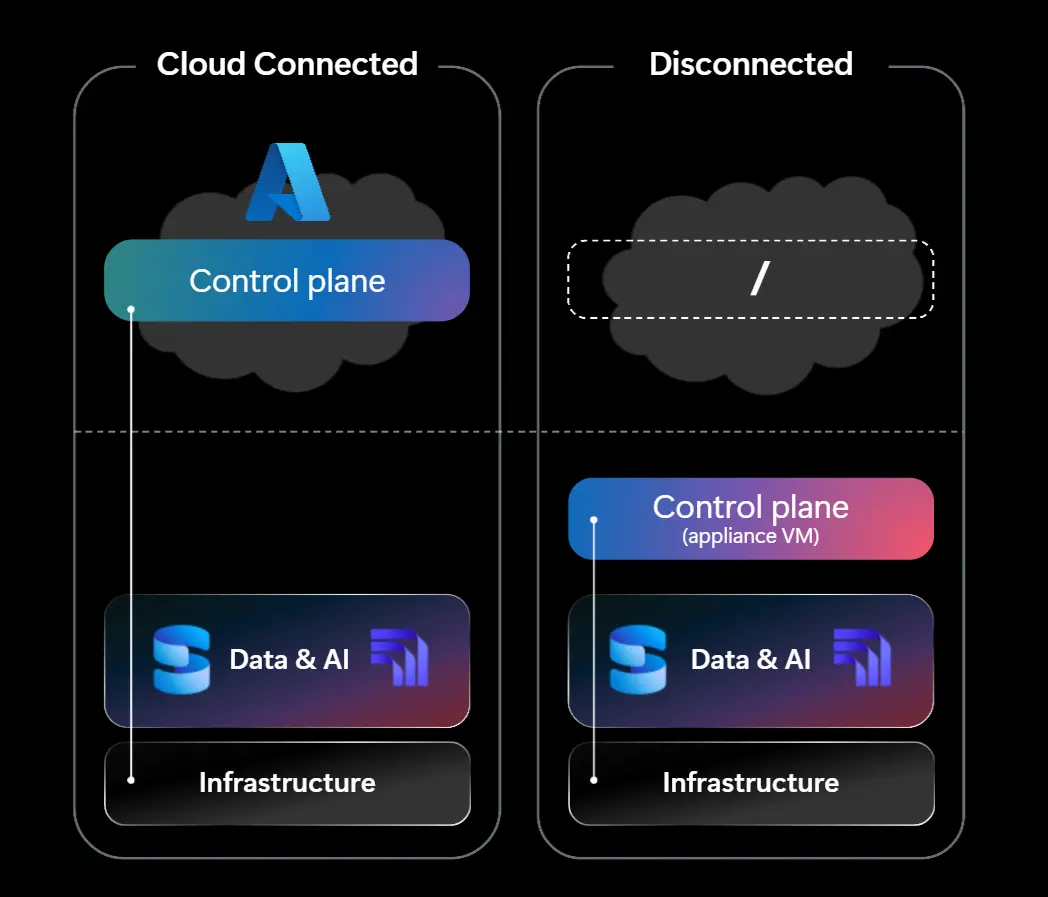
For enterprises operating in sovereign cloud environments, the Azure Backup MCP Server exposes these recovery capabilities via standard Model Context Protocol interfaces. This structure allows software developers to integrate backup posture checks, automated restore validation, and data readiness workflows into custom applications while adhering to localized operational constraints.
Official Statements
Reflecting on the industry shift toward intelligent operational durability, senior cloud strategists emphasize the need to move beyond traditional high-availability metrics:
"Resiliency in the cloud can no longer be defined merely as a metric of availability or failover speed. In today’s operating climate, true resilience is an operational necessity—it is the capacity of an enterprise to absorb shock, adapt to complex regulatory environments, and safely restore operations under adverse conditions."
— Lead Cloud Infrastructure Strategist
Highlighting the transition from static architectural advice to execution-driven remediation, platform engineers stress the significance of embedding resilience directly into code:
"Historically, cloud platforms provided recommendations that sat in monitoring tools until a human team had time to address them. By introducing intelligent capabilities like the Resiliency Agent that generate deployable Infrastructure-as-Code templates, we bridge the gap between design intention and actual implementation. Resiliency transitions from a static playbook into active code embedded within the CI/CD pipeline."
— Enterprise Systems Architect
Addressing the operational realities of sovereign and highly regulated industries, risk mitigation specialists point out the critical role of custom recovery topologies:
"Organizations operating within sovereign or strict regulatory boundaries cannot rely on default disaster recovery setups. The ability to programmatically validate recovery readiness using toolsets like the Azure Backup MCP Server ensures that continuity strategies satisfy hyper-local governance requirements while remaining fully automated."
— Information Security & Regulatory Compliance Director
Future Outlook: Autonomous Cloud Operations and Zero-Trust Resilience
As enterprise IT architectures grow increasingly complex, maintaining system resilience using manual configuration methods will become increasingly impractical. The future of cloud infrastructure points toward autonomous, self-healing environments that continuously monitor system state, run background stress tests, and adjust underlying resources dynamically.
+--------------------------------------------------------------------+
|                  FUTURE AUTONOMOUS CLOUD MODEL                     |
+--------------------------------------------------------------------+
|  CONTINUOUS MONITORING                                             |
|  • Real-time anomaly detection and operational health tracking.    |
+--------------------------------------------------------------------+
                                  │
                                  ▼
+--------------------------------------------------------------------+
|  PREDICTIVE HEALING & SIMULATION                                   |
|  • Background chaos injection without downtime.                     |
|  • Machine-learning models predicting resource degradation.        |
+--------------------------------------------------------------------+
                                  │
                                  ▼
+--------------------------------------------------------------------+
|  AUTONOMOUS REMEDIATION                                            |
|  • Automated deployment of IaC templates to mitigate threats.      |
|  • Real-time data rehydration during cyber-attack incidents.       |
+--------------------------------------------------------------------+
Several transformative trends are shaping the future of enterprise cloud durability:
- Convergence of Cyber Recovery and Disaster Recovery: The historic divide between infrastructure disaster recovery (handling hardware outages) and cyber recovery (rebuilding state following ransomware breaches) is rapidly closing. Unified control planes will evaluate data integrity and system health concurrently, automating secure system rehydration from clean restore points.
- Predictive, Self-Healing Infrastructure: Leveraging deep system telemetry and predictive analytics, future systems will proactively isolate degrading hosts, re-route application traffic, and adjust storage replication settings before unexpected service disruptions manifest.
- Programmatic Sovereign Alignment: As data protection mandates diversify globally, compliance frameworks will move toward automated control policies. Organizations will programmatically restrict data paths, control regional failovers, and validate operational readiness via standardized interfaces like the Model Context Protocol (MCP).
- Ecosystem Alignment via Unified Services: Frameworks such as Azure Essentials, Microsoft Unified, and Azure Accelerate are evolving to help organizations transition through every phase of the resiliency lifecycle—offering continuous architectural evaluation alongside standardized operational support.
By shifting from passive compliance checks to continuous, automated lifecycle validation, modern cloud platforms provide organizations with the tools required to operate with confidence—ensuring mission-critical workloads remain adaptable, recoverable, and secure in an unpredictable world.