









Executive Overview
In the relentless rush of modern scientific output, groundbreaking discoveries frequently emerge only to be obscured by the sheer volume of daily research. From the annals of paleopathology and remote-controlled entomology to the outer bounds of stellar evolution, brilliant insights routinely hover just out of the public eye.
This retrospective examines a curated collection of recent scientific advancements that risked being lost in the noise. By synthesizing peer-reviewed findings from across disciplines, this report details how modern analytical techniques—ranging from high-resolution computed tomography (CT) and stable isotope tracing to advanced optical interferometry—are fundamentally rewriting our understanding of history, biology, and the cosmos.
We explore the true, violent causes behind ancient Incan sacrifices, the martial prowess of elite women in dynastic Egypt, the engineering marvels of amphibious cyborg insects, the confirmation of a massive stellar companion to Betelgeuse, the exoneration of a Renaissance duke accused of treasonous poisoning, and the hydrodynamic secrets of slumbering sperm whales.
Detailed Chronology & Scientific Breakdown
1. Reassessing the Fall of the Boy of Cerro El Plomo: Blunt Force Trauma in Incan Capacocha Rituals
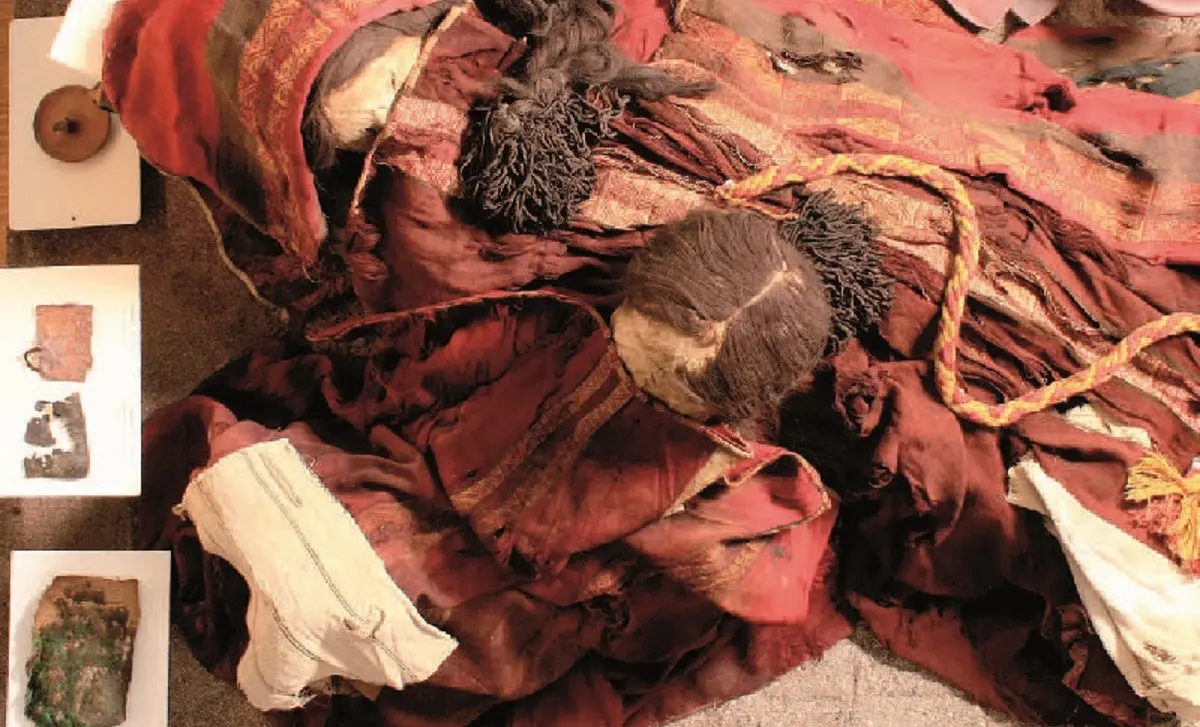
For centuries, historical chronicles left by Spanish colonizers have described the Capacocha ritual—an elite Incan state ceremony wherein children were dispatched on long pilgrimages to freezing mountain summits to serve as divine intermediaries between humanity and the gods. Long-held consensus, largely derived from the pristine preservation of these youthful remains in sub-zero alpine environments, assumed that victims of these high-altitude rites quietly succumbed to hypothermia and asphyxiation.
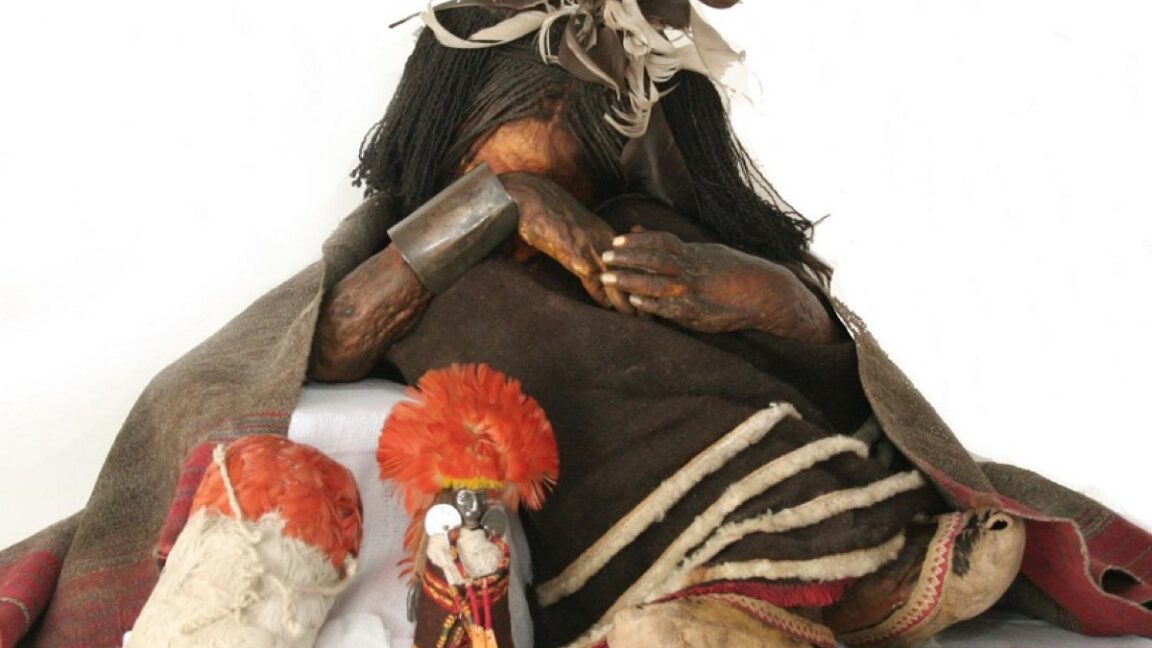
However, a landmark study published in Science Advances by an international team of researchers upends this passive narrative. By conducting a forensic re-examination of the Boy of Cerro El Plomo—one of the most famous Incan sacrificial mummies discovered to date—scientists have confirmed that the young boy died not from freezing, but from catastrophic blunt force trauma.
Forensic Evidence of the Final Hours
The research team subjected the remains to advanced radiographic imaging and osteological scrutiny, revealing critical insights into the boy’s final days:
- Absence of Frostbite: Despite being recovered from an altitude exceeding 5,400 meters in the Andes, the boy exhibited no clinical signs of cold-induced trauma or injury to his extremities prior to expiration.
- Cranial Fracture: A distinct skin lesion and an underlying, unhealed star-shaped fracture were discovered on the left frontal bone of the skull. This pattern is structurally inconsistent with an accidental fall down rocky mountain slopes and points directly to a targeted strike delivered by a traditional weapon, such as an Incan star-headed mace (champi).
- Physiological Stressors: Plantar analyses of the boy’s feet demonstrated extensive wear consistent with prolonged, grueling marches over rugged terrain—verifying the historical accounts of massive pilgrimages preceding the ritual.
- Gastrointestinal Markers: Computed tomography (CT) scans revealed a full stomach, indicating the boy partook in a ceremonial feast shortly before his death. Furthermore, a dilated esophagus pointed to acute vomiting, a physiological response frequently triggered by severe traumatic brain injury.
Expanding their investigation to the remains of two young girls recovered from the high-altitude site of Cerro Esmeralda, the researchers similarly re-evaluated marks around the neck previously assumed to indicate strangulation. Advanced imaging proved that the hyoid bones remained completely intact and structurally undisturbed; instead, the indentations were consistent with pressure exerted by heavy funerary textiles during mummification and burial containment.
2. Archery and Authority: Proving Ancient Egyptian Princesses Were Skilled Warriors
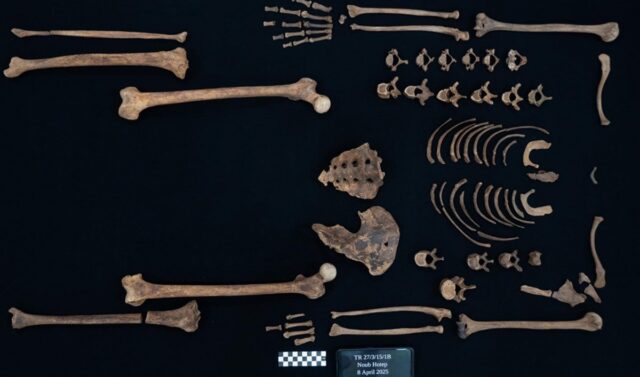
The nineteenth-century excavation of the Dahshur pyramid complex within Egypt’s Memphis Necropolis yielded extraordinary treasures, uncovering the undisturbed tombs of royal personages such as King Hor and Princess Noub-Hotep, alongside subsequent burials of Princesses Ita, Khenmet, Itaweret, and Sathathormeryt. While these tombs contained magnificent jewelry and funerary goods, they also featured weapons—bows, arrows, and maces—traditionally categorized as symbolic or prestige items meant to assert royal status in the afterlife.
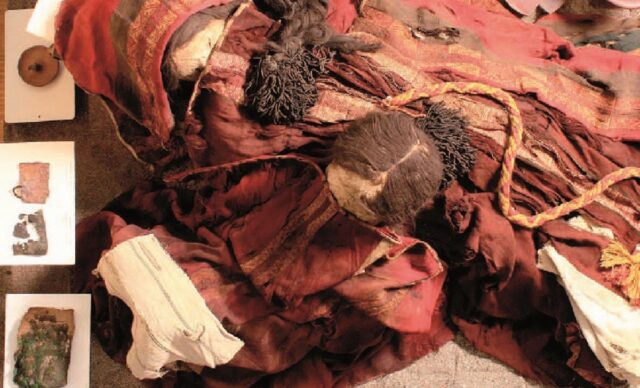
A comprehensive multi-disciplinary analysis published in Frontiers in Environmental Archaeology challenges this passive interpretation, presenting empirical osteological evidence that these royal women were not merely buried with weapons, but actively wielded them throughout their lives.
Osteological Biomarkers of Combat
Because cranial preservation was poor and several post-cranial elements were fragmented, the researchers utilized a combination of high-resolution X-ray imaging, Fourier-transform infrared (FTIR) spectroscopy of embalming resins, and rigorous osteological stress marker analysis.
The findings illuminate a striking physical reality for the women of the royal court:
- Princess Ita (Died aged 24–28): Displayed exceptionally strong upper-body muscle attachment sites, particularly along the shoulder girdle and arms, mirroring the biomechanical stress profile expected from the frequent, high-torque handling of maces and close-quarters combat daggers.
- Princess Khenmet (Died in late 30s/40s): Exhibited robust ligament insertions and cortical bone thickening, confirming lifelong engagement in physically demanding activities.
- Princess Itaweret (Died aged 20–34): Showed healed fractures to her ribs and feet, alongside skeletal adaptations in the clavicles and scapulae that directly correlate with the repetitive muscular strain of drawing heavy wooden bowstrings and stabilizing archery equipment under high tension.
As co-author Dr. Zeinab Hashesh of the University of Beni-Suef noted, these morphological adaptations demonstrate that elite women in the Middle Kingdom occupied active, functional military roles, proving that archery was practiced at a high level within the royal household.
3. Amphibious Engineering: Outfitting Cyborg Cockroaches with Miniature Diving Suits
For over a decade, bio-engineers have explored the integration of insect biology and microelectronics to create "cyborg" organisms for disaster-response applications. By hijacking an insect’s peripheral nervous system with low-power stimulators, researchers can steer living creatures through tight, hazardous rubble where traditional motorized robots fail due to weight, power constraints, and mobility limits.
However, a major obstacle has plagued terrestrial insect cyborgs: water. Disaster zones frequently feature flooded corridors, deep puddles, and submerged environments that would instantly drown an air-breathing insect. Because insects respire through tiny lateral abdominal openings known as spiracles, submergence leads to rapid anoxia.
To conquer this limitation, engineers at Nanyang Technological University (NTU) in Singapore developed an amphibious operational system, detailed in Nature Communications, by outfitting Madagascar hissing cockroaches with customized, micro-engineered diving suits.
Technical Architecture of the Aquatic Suit
The NTU system resolves the respiration barrier through a miniaturized, 3D-printed aquatic life-support harness:
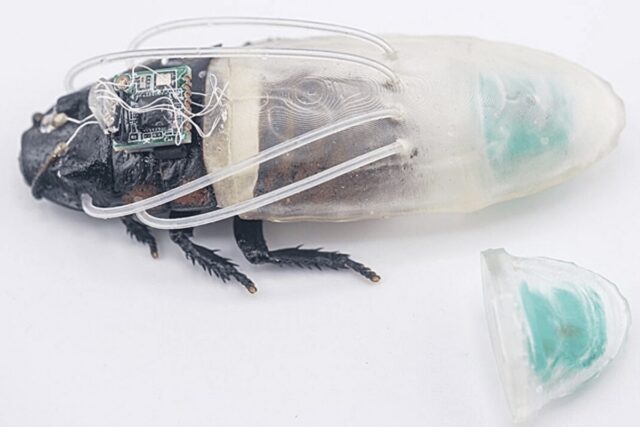
- Hydrogen Peroxide Fuel Tank: The suit houses a micro-reservoir filled with a calculated volume of diluted hydrogen peroxide ($H_2O_2$).
- Catalytic Oxygen Generation: The interior of the tank is lined with a specialized porous sponge soaked in a manganese dioxide ($MnO_2$) catalyst. Upon contact, the catalyst rapidly decomposes the hydrogen peroxide into water and high-purity oxygen gas ($O_2$).
- Targeted Delivery: Four micro-tubes route the generated oxygen directly to the insect’s spiracles, sustaining aerobic respiration while maintaining a waterproof seal over the body.
During testing, the amphibious roach successfully navigated shallow underwater obstructions and submerged environments for extended periods. While current test parameters restricted deployment to a few inches of water, future iterations will integrate onboard environmental sensors, wireless telemetry, and expanded hardware scalability for larger insect species like beetles and locusts.
4. Resolving the Betelgeuse Enigma: Firm Confirmation of a Companion Star
In late 2019 and early 2020, the astronomical community went on high alert as Betelgeuse—the brilliant red supergiant marking the shoulder of the Orion constellation—underwent an unprecedented, dramatic dimming event. While sensationalist headlines speculated that the star was on the verge of a spectacular core-collapse supernova, subsequent multi-wavelength analyses concluded that the dimming was caused by a massive ejection of stellar dust coupled with a localized surface cooling event (a stellar "cold spot").
Yet, Betelgeuse has continued to confound astrophysicists. Observational data collected via the European Southern Observatory’s Very Large Telescope (VLT), published in Astronomy and Astrophysics, has finally provided definitive confirmation of a long-predicted astronomical entity: Betelgeuse B, a faint stellar companion orbiting the red supergiant.
Orbital Dynamics and Mass Estimates
The existence of a companion star had been theorized for nearly a century based on unexplained periodicities in Betelgeuse’s light curves and radial velocity shifts. A theoretical framework published in late 2024 calculated that the companion’s orbit would place it at maximum angular separation from the primary star in December of that year, presenting a narrow observational window.
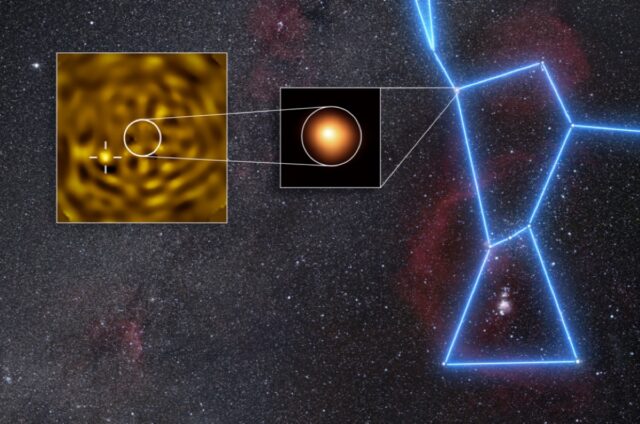
Utilizing the VLT’s advanced SPHERE (Spectro-Polarimetric High-contrast Exoplanet Research) instrument, astronomers successfully imaged the faint source after computationally subtracting the blinding glare of the supergiant primary.
- Mass Reassessment: Contrary to initial assumptions that any companion would be a small, low-mass dwarf, the data reveals that Betelgeuse B possesses roughly two to three times the mass of our Sun.
- Future Implications: With direct visual confirmation achieved, the overarching question now shifts to how this massive companion influences Betelgeuse’s mass-loss rates, angular momentum, and eventual transition toward a supernova explosion. Final verification requires a complementary observation from the opposite side of the stellar orbit.
5. Exonerating the Medici: Genetic Proof of Malaria Over Arsenic Poisoning
In October 1587, Grand Duke Francesco I de’ Medici of Tuscany and his second wife, Bianca Cappello, died within hours of each other while visiting a Medici family villa in Poggio a Caiano. Although the marshy, mosquito-ridden terrain of the Tuscan countryside made malaria a persistent and logical killer, political tensions were high during the Renaissance, and sensational rumors quickly spread that the Duke had been systematically assassinated via arsenic poisoning by political rivals or ambitious family members.
These toxicological conspiracy theories persisted for centuries, fueled by ambiguous historical medical records. However, a definitive molecular investigation published in iScience has put the rumors to rest, utilizing paleogenomic sequencing extracted directly from the historical remains.
Paleogenomic Analysis of Renaissance Remains
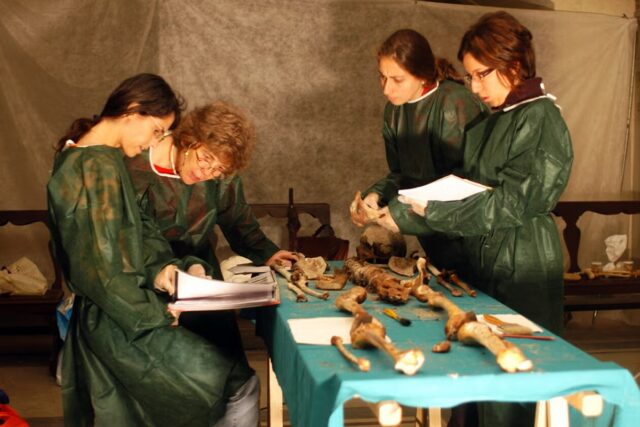
A collaborative team involving researchers from Yale University and paleopathologists from the University of Pisa analyzed bone fragments harvested from the ribs of Grand Duke Francesco and his brother, Cardinal Giovanni de’ Medici (who had similarly succumbed to a sudden, fatal fever in 1562 at the age of 19).
- Pathogen DNA Recovery: Using advanced Next-Generation Sequencing (NGS) and target enrichment strategies, the team successfully isolated degraded ancient pathogen DNA from the bone matrix.
- Species Identification: The genetic assay identified distinct malarial strains: Plasmodium falciparum—the most lethal parasite responsible for severe human malaria—was recovered from Cardinal Giovanni’s remains, while Plasmodium malariae was identified in the bones of Grand Duke Francesco.
- Historical Reconciliation: These genetic signatures align precisely with contemporary autopsy notes and clinical descriptions of violent, cyclic fevers, permanently closing the chapter on centuries of assassination speculation.
6. Hydrodynamic Secrets: Why Slumbering Sperm Whales Blow Bubbles
Sperm whales (Physeter macrocephalus) possess an unusual behavioral adaptation: they are the only cetacean species known to rest in a vertical posture. During these quiescent states, which typically last between 10 and 15 minutes, the massive marine mammals hang motionless in the water column with their heads oriented vertically toward the surface, drifting in shallow slumbers.
While marine biologists long hypothesized that this vertical orientation acts as a buffer against surface wave turbulence, a persistent physiological paradox remained: sperm whales possess enormous heads filled with specialized fatty oils, spermaceti wax, and air passages, making them inherently buoyant. Without active muscular exertion, a resting whale should naturally bob straight to the surface.
A study published in the Journal of Experimental Biology reveals how these ocean giants solve this physical dilemma: they blow micro-bubbles while they sleep.
Buoyancy Control Through Controlled Degassing
Researchers deployed high-resolution suction-cup tags containing 3D movement sensors, accelerometers, and acoustic hydrophones onto 42 free-swimming sperm whales off the coast of northern Norway. By merging high-frequency movement data with complex hydrodynamic simulations accounting for tissue density, drag, and internal gas volume, the research team mapped the mechanical forces at play during sleep cycles.
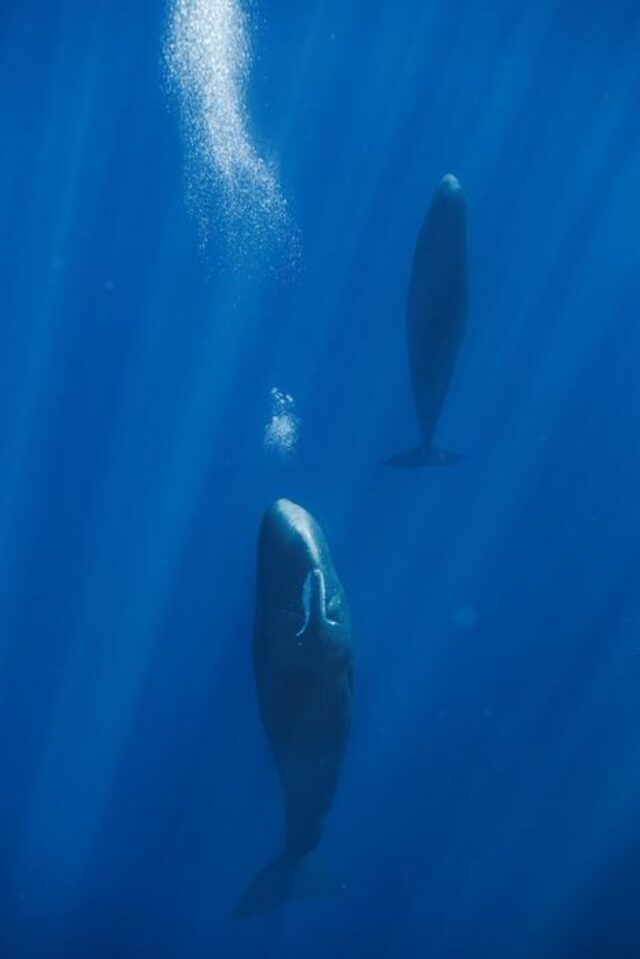
- Bubble Frequency: Whales resting near the surface released bubbles an average of 11 times during a single nap, compared to only three or four times when performing slow ascents from deep dives exceeding 200 meters.
- Hydrodynamic Equilibrium: By systematically releasing small volumes of air from their respiratory systems, the whales precisely shed positive buoyancy, allowing them to remain suspended at a constant depth without expending metabolic energy.
- Cognitive Implications: This deliberate, task-oriented release of gas raises profound questions regarding sperm whale neurobiology. It suggests that while resting vertically, the animals retain a level of motor control and environmental awareness akin to unihemispheric slow-wave sleep observed in dolphins and pinnipeds.
Supporting Context & Metrics
To contextualize the scale and impact of the studies highlighted in this roundup, the following comparative metrics illustrate the diverse methodologies and collaborative frameworks driving modern scientific discovery:
| Scientific Discovery | Primary Discipline | Principal Analytical Technique | Key Institutional Lead |
|---|---|---|---|
| Incan Child Sacrifice | Bioarchaeology / Forensic Science | High-Resolution CT Scans & Osteology | University of Chile / International Team |
| Egyptian Royal Archery | Environmental Archaeology | FTIR Spectroscopy & Biomechanical Stress Analysis | University of Beni-Suef (Egypt) |
| Amphibious Cyborg Roaches | Micro-Robotics & Bio-Engineering | 3D Printing & Catalytic $H_2O_2$ Decomposition | Nanyang Technological University (Singapore) |
| Betelgeuse Companion Star | Stellar Astrophysics | Optical Interferometry & SPHERE Imaging | European Southern Observatory (VLT) |
| Medici Malaria Genetics | Paleogenomics / Molecular Pathology | Ancient DNA (aDNA) Target Enrichment & NGS | Yale University & University of Pisa |
| Sperm Whale Buoyancy | Marine Biology / Biomechanics | 3D Accelerometry Tags & Hydrodynamic Simulation | University of St Andrews / Norwegian Researchers |
Official Statements & Expert Perspectives
The intersection of cutting-edge technology with traditional historical and biological archives has generated profound enthusiasm within the global research community.
"We found pronounced development in the upper limbs of these individuals, which correlates to repetitive, high-intensity actions like pulling a bowstring or stabilizing a weapon, proving these activities were habitual throughout their lives. This directly explains the presence of bows, arrows, and maces in the women’s tombs; these were not just symbolic gifts, but tools they actively used."
— Dr. Zeinab Hashesh, University of Beni-Suef (Frontiers in Environmental Archaeology)
Commenting on the integration of biological systems with synthetic engineering, robotics leads at NTU emphasized the scalability of the amphibious cockroach platform:

"By utilizing the insect’s native muscular actuation, we bypass the immense battery-weight limitations that hobble traditional micro-robots. Adding an active, self-regulating oxygen delivery mechanism transforms an ordinary pest into a resilient, cross-domain operative capable of traversing flooded disaster landscapes."
Similarly, the resolution of historical cold cases through paleogenomics highlights a new golden age for forensic archaeology. Researchers involved in the Medici genetic profiling noted that extracting untainted pathogen genomes from centuries-old skeletal remains bridges the gap between literary history and hard biological fact, laying to rest generations of speculative folklore.
Future Outlook
As analytical technologies continue to accelerate at an exponential rate, the boundary between historical speculation and empirical certainty grows increasingly porous.
- In Paleopathology and Archaeology: The refinement of ancient DNA extraction protocols and non-destructive bone imaging promises to unlock demographic and health data from fragile human remains across the globe, rewriting narratives of gender roles, social hierarchy, and ritual violence.
- In Bio-Robotics: The successful deployment of waterproof, oxygen-supplemented cyborg insects clears the path toward fully autonomous, multi-environment search-and-rescue squads capable of operating in subterranean, aquatic, and radioactive disaster zones.
- In Astrophysics: The confirmation of Betelgeuse B opens an exciting new chapter in stellar evolution modeling. As astronomers capture follow-up imaging from the opposite side of its orbit, researchers will gain unprecedented insight into how binary interactions shape the life cycles of massive supergiant stars on the brink of supernova.
Ultimately, these diverse studies underscore a singular truth: whether plumbing the depths of Renaissance history, tracking the flight of ancient arrows, or observing the silent sleep of leviathans in the Arctic sea, the natural and historical worlds retain infinite layers of complexity waiting to be uncovered.