






Executive Overview
In an era defined by fleeting digital attention spans and algorithmic content consumption, a quiet revolution is taking place at the intersection of high culture and social media. TikTok, the ubiquitous short-form video platform boasting over a billion active global users—predominantly from the Gen Z and millennial demographics—has deepened its commitment to bridging the gap between historical preservation and digital native audiences. Through its ongoing "Museums Come Alive" initiative, the platform is transforming how younger generations discover, interact with, and value the world’s most prestigious cultural and artistic institutions.
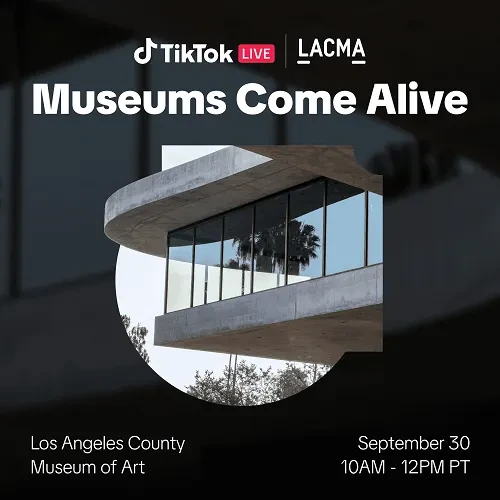
The latest activation in this ambitious series brought the digital spotlight to the West Coast, anchoring a partnership with the Los Angeles County Museum of Art (LACMA). By leveraging its powerful livestreaming infrastructure, TikTok offered millions of its users an exclusive, interactive, and behind-the-scenes look at LACMA’s architectural crown jewel: the newly minted David Geffen Galleries. Far from a passive viewing experience, the broadcast blended academic curation with live musical performances, creating a dynamic hybrid environment tailored to the preferences of modern digital consumers.
This initiative is far more than a marketing novelty; it represents a strategic evolution for TikTok. As the platform matures beyond dance trends and viral challenges, it is increasingly positioning itself as a vital infrastructure for cultural education and discovery. By bringing world-class museums directly into the feeds of users who might otherwise never step foot in a physical gallery, TikTok is addressing a critical existential challenge for the arts sector: how to remain relevant to a generation whose primary public square is digital.
Detailed Chronology: Bringing LACMA to the Global Feed
The collaboration between TikTok and LACMA unfolded over a meticulously planned week, designed to maximize both physical anticipation and digital engagement.
Phase 1: Pre-Launch Hype and Curation
Weeks before the official broadcast, curators and digital media teams at LACMA began seeding content on TikTok, utilizing short-form videos to build excitement around the opening of the David Geffen Galleries. These teaser clips offered a glimpse into the logistical marvel of moving massive art installations, restoring ancient artifacts, and preparing the sprawling new architectural space designed by renowned architect Peter Zumthor.
Phase 2: The Live Activation
The anchor of the partnership was a dedicated, multi-hour livestream hosted directly on LACMA’s official TikTok account (@lacma). The broadcast was structured to appeal to the multifaceted interests of the platform’s user base:
- Deep Dives into Antiquities: LACMA curators led live, conversational walkthroughs of the museum’s renowned Egyptian collection. Eschewing dry, academic lectures, the curators adopted an accessible, storytelling-driven format, fielding real-time questions from the chat about the mythos, preservation, and historical context of artifacts spanning millennia.
- Sonic Interventions: To break up the traditional museum tour format, the broadcast integrated live musical performances curated to harmonize with the surrounding artwork. This multisensory approach successfully blurred the lines between a traditional gallery walkthrough and a modern live-streaming event.
- Interactive Q&A: Viewers were encouraged to direct the flow of the tour through the live comment section, asking curators to revisit specific pieces, explain intricate details up close, or share lesser-known historical anecdotes.
Phase 3: Post-Event Amplification
Following the live broadcast, the content did not simply disappear. Instead, the raw footage was diced into bite-sized highlight reels, creator reactions, and educational explainers that continued to populate users’ "For You" pages days after the event concluded. This cascading content strategy ensured that the impact of the activation extended well beyond the live broadcast window, compounding its reach organically through the platform’s recommendation engine.
Supporting Context & Metrics: The Evolution of "Museums Come Alive"
The LACMA activation does not exist in a vacuum; it is the latest milestone in a sustained, global campaign by TikTok to champion historical and artistic literacy.
A Global Portfolio of Cultural Partnerships
The "Museums Come Alive" initiative officially debuted in May during International Museum Day, when TikTok forged partnerships with a diverse cohort of international cultural heavyweights. Since then, the platform has systematically rolled out high-profile activations across the globe:
- The Metropolitan Museum of Art (The Met): New York City’s premier cultural institution welcomed TikTok creators and livestream audiences into its labyrinthine halls, translating centuries of European, Asian, and American art into digestible digital narratives.
- The Museum of Modern Art (MoMA): Also in New York, MoMA utilized TikTok to demystify modern and contemporary art, a genre that often alienates casual observers due to its abstract nature. Live streams featured educators breaking down complex pieces through interactive dialogue with viewers.
- The Grand Egyptian Museum (Giza): Expanding beyond Western institutions, TikTok partnered with one of the most anticipated archaeological destinations in the world, offering global audiences unprecedented digital access to the treasures of ancient Egypt before their official physical exhibition spaces were fully accessible to the general public.
Quantifying the Impact: The Numbers Behind the Culture
While traditional museums often struggle to measure engagement beyond ticket sales and physical foot traffic, TikTok’s metrics operate on an entirely different scale. According to platform data, collective viewership for the initial rollout of "Museums Come Alive" events reached millions of unique users, many of whom self-reported as first-time digital visitors to these institutions.
| Metric Category | Traditional Museum Standard | TikTok "Museums Come Alive" Standard |
|---|---|---|
| Primary Audience | Local residents, tourists, older demographics | Global, digital-native, skewed heavily toward Gen Z |
| Reach Limitation | Bounded by physical capacity and geography | Infinite digital scale, borderless accessibility |
| Engagement Type | Passive observation, quiet contemplation | Active participation, live chat, algorithmic sharing |
| Content Lifespan | Temporary exhibition dates | Perpetual digital archive via user-generated loops |
These figures highlight a profound reality: younger generations are not necessarily apathetic toward art and history; rather, they demand access on terms that align with their digital lifestyles. When institutions meet them on platforms like TikTok, the appetite for educational content proves to be remarkably robust.
Official Statements and Industry Perspective
The convergence of Silicon Valley tech giants and traditional cultural stewards has elicited significant commentary from leaders across both sectors, reflecting a shared urgency to adapt to changing societal behaviors.
The Institutional View: Reimagining Accessibility
For institutions like LACMA, partnering with a platform like TikTok is no longer viewed as a superficial marketing stunt, but as an essential public service mandate.
"Our mission has always been to collect, preserve, and interpret works of art of the highest quality," noted a LACMA spokesperson following the David Geffen Galleries activation. "However, physical walls can inadvertently create psychological barriers. By opening our doors digitally through TikTok, we are tearing down those barriers. We are welcoming millions of people into our galleries who may never have considered a museum relevant to their daily lives."
Cultural strategists point out that museums are facing a generational handover. As older, loyal donor bases age out, institutions must cultivate relationships with younger demographics to secure future funding, membership growth, and community relevance. Digital initiatives serve as the crucial "top of the funnel" for this audience development pipeline.
The Tech Perspective: TikTok as a Cultural Connector
TikTok, for its part, views these partnerships as a natural extension of its platform ethos. While initially celebrated for dance challenges and comedy sketches, the app has aggressively diversified its value proposition, positioning itself as a primary search engine and discovery tool for younger demographics.
"TikTok has evolved far beyond entertainment; it is a primary driver of modern cultural engagement and lifelong learning," said a TikTok representative outlining the Museums Come Alive initiative. "By pairing our livestreaming technology with world-class institutions like LACMA, we are proving that education and high culture can thrive in fast-paced digital spaces. We aren’t competing with museums—we are acting as their most powerful digital docent."
Industry analysts have observed that TikTok’s community-driven algorithms excel at connecting niche educational content with receptive audiences who actively engage with history, literature, and art tags (such as #ArtHistory, #MuseumTok, and #AncientEgypt), which collectively boast billions of views on the platform.
Future Outlook: The Next Frontier of Digital Curation
As the "Museums Come Alive" initiative continues to expand, it raises critical questions about the future of physical spaces, digital curation, and the democratization of knowledge. What lies ahead for cultural institutions in an increasingly digitized world?
1. The Rise of the Hybrid Museum Experience
The success of the LACMA and Met activations signals that the future of museums is not purely physical or purely digital, but hybrid. Physical spaces will increasingly be designed with digital broadcast capabilities baked into their architecture. We can expect to see galleries featuring dedicated lighting, acoustic optimization, and streaming rigs built directly into exhibition spaces to accommodate ongoing virtual tours and creator residencies.
2. Gamification and Immersive Technologies
As augmented reality (AR) and virtual reality (VR) technologies mature and integrate more seamlessly into social media apps, initiatives like Museums Come Alive will likely move beyond flat video streams. Future activations could allow TikTok users to virtually walk through the David Geffen Galleries as digital avatars, interact with 3D renderings of Egyptian artifacts in their own living rooms via AR filters, or participate in gamified art history quizzes integrated directly into live broadcasts.
3. Democratizing Curation
Traditionally, the narrative within museums has been strictly top-down, dictated by elite curators and art historians. However, platforms like TikTok thrive on decentralization and creator-led culture. Future iterations of cultural partnerships may see prominent digital creators—ranging from independent historians to popular art commentators—co-hosting live events alongside chief curators, bringing fresh, diverse perspectives that resonate more deeply with multicultural digital audiences.
4. Ensuring Long-Term Cultural Continuity
Ultimately, the grand experiment of TikTok’s cultural initiatives addresses an urgent societal need. In an age of information overload, algorithms often threaten to fragment public discourse into shallow echo chambers. By injecting high-culture art, history, and education into the mainstream algorithmic bloodstream, platforms like TikTok are playing an unexpected yet vital role in cultural preservation.
By meeting the next generation of social media users where they already spend their time, institutions like LACMA and initiatives like Museums Come Alive are ensuring that the treasures of human history do not collect dust in forgotten archives. Instead, they are being thrust onto the global stage—vibrant, accessible, and vibrantly alive for millions to witness, question, and enjoy.