






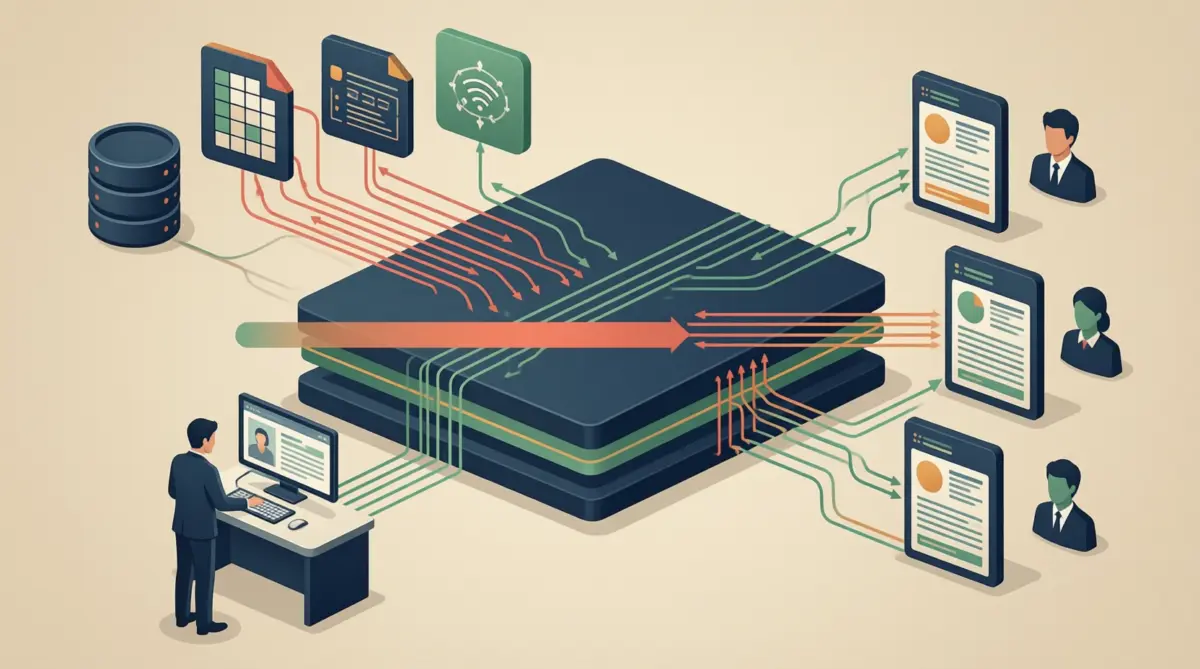
An investigative look into how accidental data architectures are undermining corporate governance, slowing down executive decision-making, and driving a quiet migration toward unified data management platforms.
Executive Overview
For most mid-market enterprises, the data stack sitting at the heart of their operations was never explicitly chosen; it was inherited. Over years of rapid growth, M&A activity, and departmental autonomy, companies accumulated an eclectic assortment of software tools. A specialized connector was bolted on to bridge an unexpected reporting gap; a reporting tool was adopted simply because a newly hired analyst brought familiarity with it; a data warehouse was selected under immense deadline pressure to satisfy an aggressive quarterly deliverable.
Individually, each decision made pragmatic sense within its specific historical context. Yet, viewed collectively, these components frequently form an amorphous, brittle ecosystem that few people within the organization fully understand anymore.
This architectural debt inevitably manifests in the metrics leadership relies upon to steer the business. More critically, structural fragmentation quietly degrades core data quality and weakens enterprise-wide governance, rendering consistent policy enforcement across disconnected systems nearly impossible. As businesses navigate an increasingly automated, AI-driven corporate landscape, the hidden costs of the "assembled stack" have evolved from a manageable operational nuisance into an existential threat to operational agility.
Detailed Chronology: The Anatomy of an Accidental Data Stack
To understand how mid-market organizations arrive at a state of technological paralysis, one must trace the evolutionary timeline of corporate data management.
Phase 1: The Reactive Genesis (Years 1–3)
A young or scaling company operates with minimal technical overhead. Data lives inside SaaS applications: Salesforce for CRM, Stripe for billing, QuickBooks or NetSuite for financials, and various marketing tools. When leadership demands cross-departmental reporting, an initial point-to-point integration is built. It is fast, inexpensive, and functional.
Phase 2: The Proliferation of Silos (Years 3–7)
As the company scales into the 100-to-1,000 employee mid-market bracket, departmental needs diverge. Marketing adopts a specialized analytics suite; finance builds complex local models in Excel fed by manual exports; operations deploys a proprietary tracking dashboard. Each department optimizes for its own workflow, oblivious to the broader data architecture.
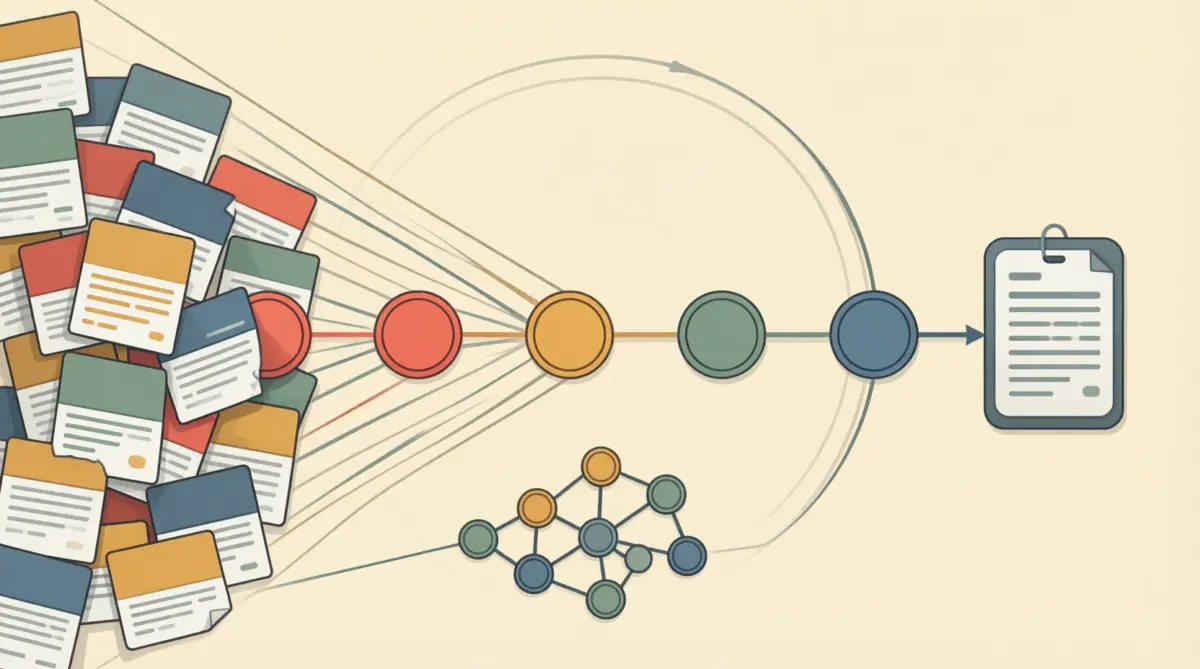
During this phase, custom scripts and lightweight connectors are introduced to move data from point A to point B. The architecture transforms into an intricate web of dependencies.
Phase 3: The Breaking Point (Years 7+)
The tipping point arrives imperceptibly. A routine Monday morning leadership meeting grinds to a halt not because of market conditions, but because the Chief Financial Officer’s revenue report conflicts entirely with the Head of Sales’ pipeline projection.
Panic ensues as teams scramble to audit underlying spreadsheets, tracing unmaintained API connectors, broken custom transformation scripts, and disparate data cleansing definitions. The infrastructure has outgrown its makeshift origins, and the business begins paying the heavy tax of technological fragmentation.
Supporting Context & Metrics: The True Cost of the Assembled Stack
The financial and operational toll of a fragmented data infrastructure extends far beyond monthly software subscription fees. It permeates every level of an enterprise, creating friction in reporting, maintenance, and strategic execution.
The Erosion of Trust and Decision Velocity
When data tools are selected in isolation, the seams between them become someone else’s problem. A marketing analyst pulls performance indicators from one ecosystem, while a finance lead references a slightly different extraction from another. Monday morning reviews routinely devolve into arguments over whose spreadsheet is accurate, shifting executive focus away from business strategy and toward data validation.
[Marketing Data Source] ---> (Custom Script A) ---> [Isolated Dashboard]
                                                                       ---> [Conflicting Reports & Debates]
[Finance Data Source]   ---> (Custom Script B) ---> [Isolated Ledger]   /
These discrepancies are not minor annoyances; they are systemic data quality failures that erode organization-wide trust in the reporting pipeline.
Furthermore, this friction inflicts a severe penalty on decision velocity. When acquiring a clean, unified answer to a fundamental business question requires days of cross-referencing legacy spreadsheets, executives eventually abandon formal analytics in favor of gut instinct. Fragmented stacks effectively force teams to bypass data governance protocols simply to preserve operational momentum.
The Maintenance Burden and Single Points of Failure
Every single connector and custom script moving data between tools represents a micro-dependency requiring constant human oversight. When the engineer or analyst who built a specific integration leaves the company—or simply becomes consumed by newer priorities—the entire downstream chain becomes fragile.
Organizations frequently underestimate this maintenance burden until they attempt a new strategic initiative, only to discover that the vast majority of their technical capacity is already consumed by "keeping the lights on." Governance suffers in tandem: when no single owner oversees the end-to-end data flow, accountability for systemic errors becomes diffuse and ambiguous.
Official Statements and Industry Insights
Industry analysts and technical leaders increasingly point to consolidation as a prerequisite for mature, scalable operations.
In its comprehensive enterprise data management tools guide, market research highlights mid-market companies (particularly those ranging from 100 to 1,000 employees) as prime candidates for business-user reporting liberated from traditional IT bottlenecks. The core diagnostic test for an organization is whether a standard business user can independently generate an accurate report under shared, centralized rules without waiting for an overburdened IT department to assemble it.
However, moving toward consolidation requires rigorous internal ownership. According to strategic technology advisory frameworks from firms like Panorama Consulting, weak governance paired with rapid tool expansion introduces severe risks, including compliance vulnerabilities, chronic data inconsistencies, and unreliable reporting. Experts recommend establishing unambiguous data ownership, standardized documentation protocols, and automated validation rules before deploying new infrastructure.
The imperative for structural overhaul is further amplified by the dawn of autonomous enterprise systems. Addressing the shifting paradigms of data lifecycles and artificial intelligence, Nick Magnuson, Head of AI at Qlik, noted during a recent industry panel:
"How we think about constructing data and supporting that data through that life cycle now [must evolve], because we’ve got autonomous things in the mix that aren’t human in nature."
As automated agents and AI-driven analytics begin consuming corporate data streams directly, the margin for error introduced by unverified, fragmented human-patched pipelines shrinks to zero.
What Changes with a Unified Platform?
To escape the trap of the assembled stack, a growing cohort of mid-market organizations is consolidating around unified data management platforms. Rather than stitching together separate products—such as dedicated extraction tools, standalone transformation engines, and external visualization dashboards—consolidated platforms offer a single managed environment where data is connected, cleaned, transformed, and served.
[Data Sources: CRM, Billing, ERP]
             │
             ▼
[Unified Platform: Connection, Cleaning, Transformation, Governance]
             │
             ▼
[Consolidated, Trustworthy Reporting for All Business Units]
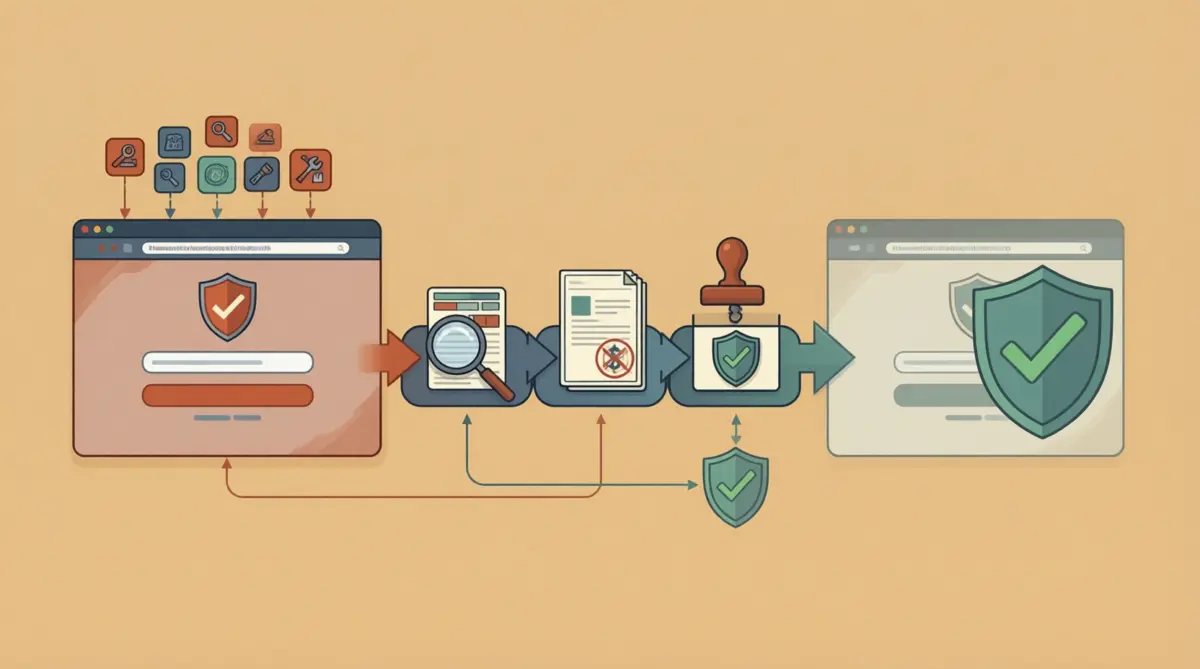
Vendors in this space focus on eliminating fragile handoffs. By centralizing ingestion, transformation, and reporting into one managed ecosystem, organizations can enforce uniform access controls, data quality checks, and governance policies at the source, rather than attempting to patch over discrepancies downstream.
Evaluating the Transition: When to Migrate (and When Not To)
Platform migration is not a universal panacea. Enterprise leadership must weigh the frequency and operational cost of existing data failures against the immediate disruption of a platform migration.
| Approach | Best Fit Scenario | Quality & Governance Mechanism | Primary Limitation |
|---|---|---|---|
| Retain the Assembled Stack | Few data sources, rare errors, manageable reporting delays. | Keep ownership profiles and manual checks explicit. | Ongoing connector maintenance and tool fragmentation persist. |
| Document Existing Stack | Knowledge is heavily concentrated in a few individuals. | Record system dependencies, calculation rules, and owners. | Documentation fails to resolve underlying fragile handoffs. |
| Repair Specific Checks | Errors are isolated, infrequent, and easily traced. | Correct validation rules behind recurring discrepancies. | Separate reporting tools still lack uniform governance rules. |
| Consolidate Platform | Chronic discrepancies, delays, and unsustainable maintenance. | Apply shared rules and single-owner accountability end-to-end. | Requires initial migration effort and connection validation. |
Key Evaluation Criteria for Decision-Makers
For executives evaluating a transition to a unified data management platform, feature checklists are secondary to foundational operational realities:
- Support Model: Is there dedicated human support available when integration pipelines fail, or is the platform entirely self-serve? For lean mid-market teams, responsive technical support is often more valuable than niche dashboard features.
- Breadth of Native Connections: Does the platform natively support the core software systems the business currently runs on, or will expensive, custom engineering work be required just to achieve baseline parity?
- Time-to-Value: How rapidly can the team produce a functioning, verified report? Fast time-to-value builds organizational momentum and secures internal buy-in across disparate business units.
Future Outlook
The era of accumulating accidental data infrastructure is drawing to a close. As data volumes swell and corporate reliance on automated, AI-driven decision-making accelerates, the hidden penalties of fragmented tech stacks—wasted hours, departmental friction, compliance risks, and compromised data quality—are becoming unsustainable.
For mid-market enterprises, the path forward does not lie in perpetually patching legacy handoffs or building increasingly complex custom scripts. Instead, the future belongs to organizations willing to audit their infrastructure honestly, embrace data consolidation, and establish rigorous, platform-enforced governance. By transforming data from a decentralized administrative burden into a unified, trustworthy corporate asset, businesses can finally ensure that their numbers reflect reality—and that their leadership teams can make decisions with absolute confidence.