







Executive Overview
The motion graphics and visual effects industry is traversing a pivotal period of disruption, characterized by a fierce technological arms race between legacy creative suites and emerging generative artificial intelligence technologies. As of late 2026, Adobe After Effects remains at the center of this storm. Following a highly active first half of the year—marked by aggressive feature rollouts, pressure from freemium alternatives, and rapid developments in third-party tooling—Adobe launched its September 2026 release (version 26.5) at the International Broadcasting Convention (IBC).
This update introduces critical advancements in native 3D workspaces and integrates closely with broader Creative Cloud updates in Premiere Pro and Photoshop. However, the release of v26.5 is not merely an incremental software patch; it represents a deeper strategic positioning by Adobe. As the industry prepares for Adobe MAX (scheduled for November 8–12, 2026), creative professionals are grappling with existential questions: Will generative AI democratize or destroy the motion design profession? Can After Effects maintain its market dominance through third-party extensibility, or will node-based competitors like Caddis disrupt its layer-based paradigm?
Furthermore, a looming hardware transition—headlined by Adobe’s official announcement to end support for Intel-based Macs in the upcoming v27 releases—signals a forced migration toward Apple Silicon and modern GPU-centric architectures. This investigative report analyzes the technical breakthroughs of After Effects v26.5, evaluates the emerging "AI-to-AE" control pipelines, examines the thriving third-party plugin ecosystem, and explores the structural shifts shaping the future of motion graphics.
Detailed Chronology: The September 2026 Release (v26.5) and Core Features
The release of After Effects v26.5 at IBC 2026 represents a targeted effort by Adobe to solidify its native 3D workflows while optimizing performance across its core engine. This build builds upon the video summaries of v26.3 released earlier in the year, serving as a bridge to the major feature drops anticipated at Adobe MAX in November.
The 3D Workspace Revolution: Turning Layers into Materials
For years, After Effects users relied on third-party plugins like Video Copilot’s Element 3D or Maxon’s Cinema 4D Lite to handle complex 3D tasks. In v26.5, Adobe has significantly expanded its native 3D toolset.
A standout feature in this release is the ability to instantly convert any standard 2D layer—whether it is text, vector artwork, or footage—into a fully dynamic 3D Material. Industry analysts and educators, including SternFX and flomotion, have demonstrated how this feature bypasses traditional, tedious texturing pipelines. By treating 2D compositions as dynamic material maps, motion designers can project, wrap, and deform flat assets onto 3D geometry in real time.
This native capability is supported by:
- Improved Environment Map Lighting: Allowing 2D-derived materials to react accurately to high-dynamic-range (HDR) lighting environments.
- Advanced Depth Map Generation: Giving artists the ability to extract depth data directly from 2D footage to drive displacement and volumetric effects without leaving the unified 3D workspace.
Ecosystem Synergies: Premiere Pro and Photoshop v26.5
The v26.5 cycle also brings parallel updates to sister applications, reinforcing Adobe’s interconnected ecosystem.
- Premiere Pro v26.5: This release introduces highly anticipated "Generative Media" tools and a revamped "Paper Edit" workflow, allowing editors to manipulate video timelines using transcribed text. It also features new creative effects designed to streamline the handoff between editing and final compositing.
- Photoshop v26.5: Adobe has introduced the "Enhance Edge Tool" and an advanced "Blemish Removal" engine. The Enhance Edge tool, which leverages cloud-based AI to solve notoriously difficult hair and edge masking challenges, has sparked debate due to its metered, credit-based pricing model. While platforms like PHLEARN have questioned whether these cloud-reliant features are worth the ongoing subscription credits, others like PiXimperfect have praised the tool’s precision compared to traditional, local methods like "Decontaminate Colors." For video editors looking for similar advanced facial cleanup tools directly within After Effects, third-party developers have stepped in, notably with the IBC 2026 updates to Digital Anarchy’s Beauty Box.
Supporting Context & Metrics: The AI-AE Axis and the Third-Party Ecosystem
As generative AI transitions from a novelty to an infrastructure layer, the relationship between After Effects and artificial intelligence has split into two distinct methodologies: AI as an external generator and AI as a workflow orchestrator.
[User/AI Agent Prompt]
       │
       ▼
[Model Context Protocol (MCP) Server]
       │
       ├─► Generates ExtendScript / After Effects Expressions
       │
       ▼
[After Effects Scripting Engine] ──► Automates Comp & Render
The Rise of MCP (Model Context Protocol) in Motion Design
One of the most significant technical developments in late 2026 is the integration of the Model Context Protocol (MCP). Originally explained by Maxon as an open standard for connecting large language models (LLMs) to external software secure environments, MCP is now being used to control After Effects.
As demonstrated by industry pipeline developers like Plainly, MCP allows AI models to write, debug, and execute complex After Effects expressions and scripts in real time. Rather than generating flat video files, an editor can instruct an AI assistant to "re-time this lower third, change the brand colors to Hex #FF5733, and generate a kinetic typography layout." The AI, acting as an MCP client, interacts directly with the After Effects API to build native, editable shape layers and keyframes. This keeps the project fully customizable and avoids the rendering artifacts common in pure video generation models.
Testing the Limits: Higgsfield AI and GPT-6 Astra
Despite these workflow improvements, some automation claims have met with skepticism. Startup Higgsfield AI recently launched its "AI Motion Designer," claiming to have "solved" motion design by pairing a proprietary After Effects plugin with OpenAI’s GPT-6 Astra to fully automate professional-grade motion graphics.
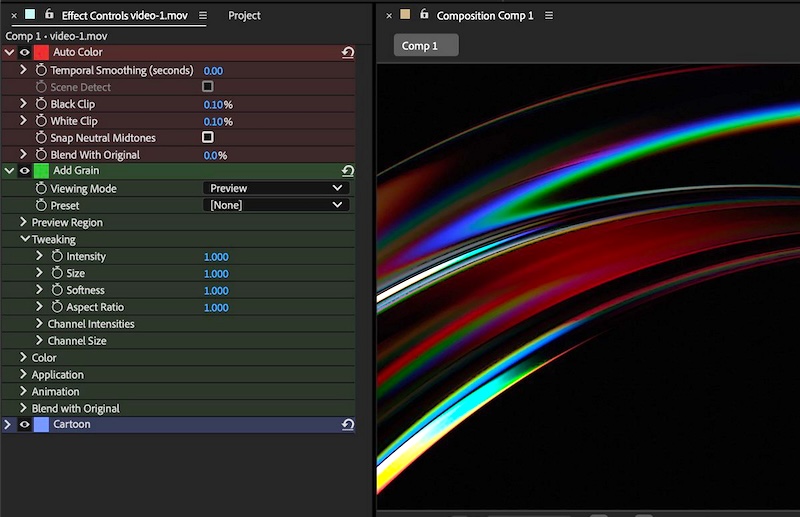
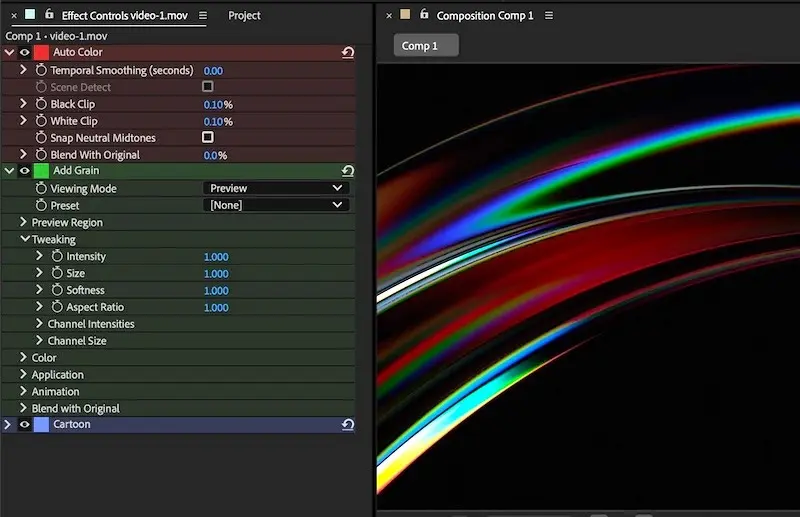
Prominent motion design educator Jake In Motion put these claims to the test, offering a realistic look at the results. While Higgsfield’s tool can successfully automate simple template modifications and basic keyframing, it struggles with complex, art-directed hierarchies and nuanced pacing. The general consensus among senior artists is that while these tools lower the barrier to entry for beginners, they cannot yet replicate the taste, timing, and conceptual thinking of a professional motion designer.
The Creative Resistance: High-End Craftsmanship Without AI
In response to the influx of generative AI, a strong counter-movement celebrating traditional animation craftsmanship has emerged.
In his curated retrospective, The Best Motion Design & Animation of 2026 (So Far), veteran animator Ben Marriott highlighted a curated selection of the year’s most visually stunning and commercially successful projects. Notably, none of the featured works utilized generative AI. Instead, they relied on traditional cel animation, complex vector physics, and meticulous 3D art direction. This showcase serves as a reminder that premium brands and high-end agencies continue to value unique, human-crafted aesthetics over the often homogeneous look of AI-generated content.
┌──────────────────────────────────────────────────────────┐
│             2026 MOTION GRAPHICS LANDSCAPE               │
├─────────────────────────────┬────────────────────────────┤
│     AI-Driven Workflows     │    Human-Centric Craft     │
├─────────────────────────────┼────────────────────────────┤
│ • Model Context Protocol    │ • Traditional Cel/Vector   │
│ • Template Automation       │ • Bespoke Art Direction    │
│ • Metered Cloud Rendering   │ • Local Compute Power      │
│ • Rapid Prototyping         │ • Unique Brand Identity    │
└─────────────────────────────┴────────────────────────────┘
Extensibility as a Survival Strategy: New Plugins
Many industry professionals believe that After Effects’ long-term viability lies in its open, extensible architecture. Rather than trying to build every tool natively, Adobe relies on a global community of developers to expand the software’s capabilities.
Several notable plugins have launched or received major updates recently:
- X-Ray (by Motion by Nick & PluginPlay): A utility designed to let artists peer through complex layer stacks, inspect hidden properties, and debug complex compositions without disrupting their visual layout.
- Quick Cover Pro & Modal Contrast (by Mikey): Free utility plugins that streamline layer blending, replacement, and color grading.
- Putty (School of Motion): A highly advanced mesh-deformation tool that outperforms After Effects’ aging Puppet Tool, allowing for organic squash-and-stretch effects.
- Sumi Ink & Entropy Particles (School of Motion): Highly specialized physics and fluid simulators that bring organic, high-fidelity natural phenomena directly into the timeline.
The Procedural Competitor: Caddis 1.1.0
While After Effects remains the industry standard, it faces growing competition from modern, node-based alternatives. The most notable challenger in this space is Caddis, which recently released version 1.1.0.
Unlike After Effects’ traditional layer stack, Caddis uses a hybrid timeline and node-graph architecture. This setup allows for complex procedural generation that is difficult to manage in After Effects. The Caddis 1.1.0 update introduces advanced particle systems, procedural layout engines, and native looping tools. This makes it an attractive alternative for digital signage and live event graphics, where procedural flexibility is key.
Official Statements & Platform Deprecations
The Intel Mac Sunset: Preparing for Version 27
In a major hardware announcement, Adobe published an official notice: End of Support for Intel-Based Macs in Upcoming v27 Releases.
[Adobe After Effects Release Roadmap]
  │
  ├─► September 2026 (v26.5): Final major cycle supporting Intel (x86) Macs.
  │
  └─► Upcoming 2027 (v27.0): Native Apple Silicon (ARM) ONLY. Legacy Intel hardware deprecated.
This decision marks the end of an era. While it will force some boutique studios and enterprise environments still running legacy Intel Mac Pros to upgrade their hardware, it allows Adobe’s engineering team to focus entirely on Apple Silicon’s Unified Memory Architecture (UMA) and dedicated hardware accelerators. Modern features like real-time 3D rendering, local neural engine processing, and multi-frame rendering (MFR) are heavily bottlenecked by older x86 mobile and desktop architectures. By deprecating Intel support, Adobe aims to improve performance and stability for the next generation of Apple Silicon chips.
Future Outlook: Adobe MAX 2026 and Beyond
As the industry prepares for Adobe MAX in November 2026, After Effects is at an important crossroads. The software is no longer just a standard layer-based compositing program; it is becoming an open hub that connects traditional keyframe animation, native 3D design, and AI-driven automation.
The rise of Model Context Protocol (MCP) servers suggests a future where the role of the motion designer will expand. Artists may shift from manually placing keyframes to acting as creative directors who guide AI systems, using natural language to orchestrate complex visual templates while retaining the ability to manually fine-tune individual layers. At the same time, the success of non-AI animation showcases and the growth of procedural tools like Caddis show that the market is diversifying.
Ultimately, After Effects’ survival does not depend on Adobe matching every new generative video model frame-for-frame. Instead, its strength lies in its precision, its massive ecosystem of professional plugins, and its ability to adapt to new technologies. As the industry moves toward the release of version 27, the motion designers who thrive will be those who combine classic animation principles with these new, automated workflows.