









Executive Overview
Just two years ago, the title "Go-To-Market (GTM) Engineer" was virtually non-existent in corporate organizational charts. Today, this hybrid professional is rapidly carving out a permanent, vital home across the technology sector. Driven by breakthroughs in artificial intelligence and workflow automation, GTM engineers are constructing sophisticated, automated revenue pipelines that once required entire departments, a sprawl of disparate software tools, and relentless manual labor.
This paradigm shift begs a foundational question for modern enterprises: What fundamentally changed, and what does this mean for how companies discover customers, nurture leads, and scale operations?
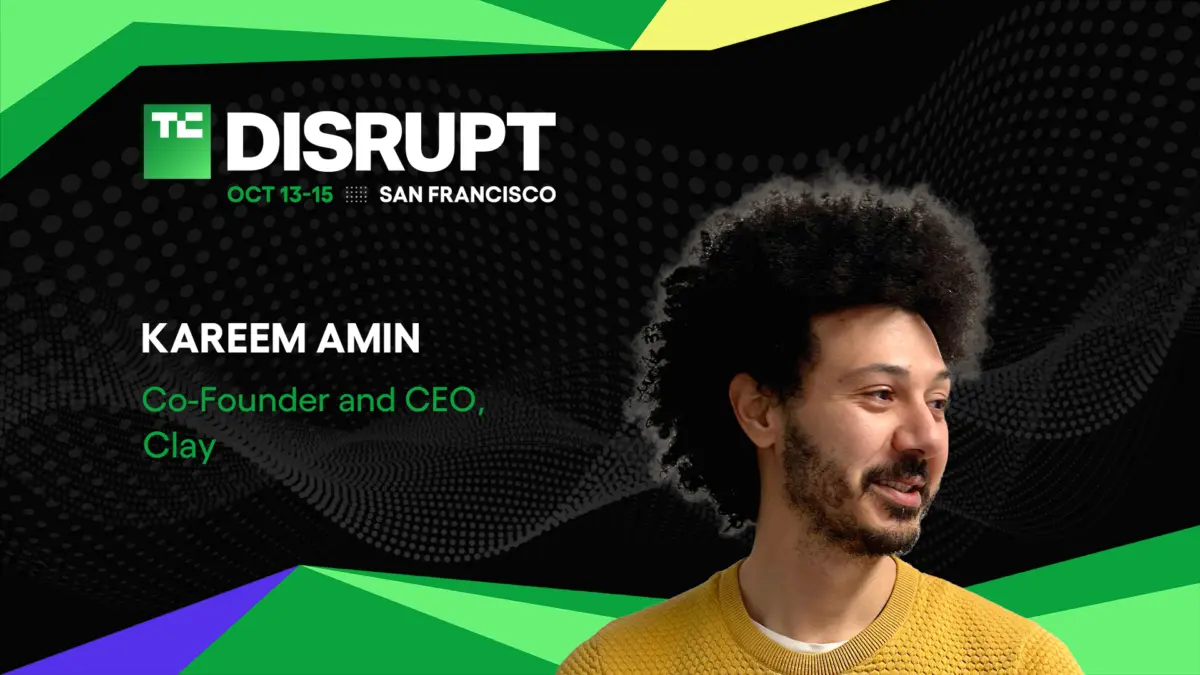
To unpack this transformation, industry leaders are turning to marquee events like TechCrunch Disrupt 2026. Taking the AI Stage at the upcoming conference is Kareem Amin, co-founder and CEO of Clay—the company that originally coined the GTM engineering discipline. In his keynote, titled “The GTM Engineer: How AI Created Tech’s Next Big Job Category,” Amin will trace the evolution of the traditional go-to-market stack, highlighting how AI-native systems are rendering legacy sales and marketing models obsolete.
As forward-thinking organizations rethink whether to throw more human capital at old processes or invest in intelligent, automated systems, understanding the GTM engineer has transitioned from a competitive advantage to an operational necessity.
Detailed Chronology: From Spreadsheets to Autonomous Revenue Pipelines
The genesis of GTM engineering is rooted in the democratization of programming capabilities—a journey spearheaded by platforms like Clay.
2017–2022: The No-Code Foundation
Clay launched in Brooklyn in 2017 with a clear, ambitious mission: to put the power of programming into the hands of non-technical workers. Initially conceived as an advanced spreadsheet tool that allowed users to connect disparate data points and automate tasks without writing a single line of code, the software quickly caught the attention of unexpected users. Sales professionals, growth marketers, and boutique agencies repurposed the platform to unearth leads and personalize outreach at scale. Recognizing where the puck was heading, Clay pivoted hard toward the go-to-market ecosystem.
2023: Naming the Discipline
By 2023, the way high-growth tech companies approached customer acquisition had fundamentally shifted. A new breed of operator was emerging—someone who sat comfortably at the intersection of data engineering, software architecture, and traditional sales strategy. Clay formally coined the term "GTM Engineer" to define this practitioner. Rather than grinding through individual, manual tasks, GTM engineers began designing systemic, automated revenue workflows.
2024–2025: Exponential Adoption and Standardization
What started as an experimental role quickly gained institutional momentum. Job boards began lighting up with roles bearing the GTM engineering moniker, backed by high-profile early adopters such as Cursor, Lovable, and Webflow. By late 2025, industry tracking indicated that approximately 100 dedicated GTM engineering job listings were hitting the market every single month.
2026 and Beyond: Institutionalization and Scale
Today, the role has moved from the bleeding edge to mainstream corporate strategy. Companies are no longer just hiring individual contributors; they are overhauling their tech stacks to support AI-native architectures. Clay itself has evolved into a powerhouse infrastructure provider, offering agentic workflows, data access layers, and proprietary tools like Claygent—an OpenAI-powered agent designed to autonomously execute complex research and outreach tasks for sales, marketing, and recruitment teams.
Supporting Context & Metrics: The Financial and Economic Realities
The rise of the GTM engineer is not happening in a vacuum; it is backed by staggering financial velocity and institutional investment in the underlying technology and talent pools.
Hyper-Growth and Unicorn Valuations
Clay’s meteoric rise mirrors the explosive demand for AI-driven GTM infrastructure. In February 2026, industry reports highlighted that the company had tripled its annual recurring revenue (ARR) to $100 million in just 12 months, prompting an employee tender offer at a $5 billion valuation.
The momentum did not stop there. In September 2026, Clay officially closed a massive $115 million Series D funding round, driving its overall valuation to a staggering $7.1 billion.

Investing in the Talent Pipeline
Recognizing that the bottleneck for this new job category is skilled talent, Clay has taken active steps to grease the wheels of education. Alongside its Series D announcement in September, the company established a $1 million community scholarship fund explicitly dedicated to training and certifying the next generation of GTM engineers.
Comparative Economic Impact of GTM Engineering
| Traditional GTM Approach | AI-Native GTM Engineering Approach |
|---|---|
| Team Structure: Large, siloed teams of SDRs, data researchers, and marketing operations specialists. | Team Structure: Lean, cross-functional GTM engineers operating automated systems. |
| Execution: Manual account research, list cleaning, and personalized email drafting. | Execution: Automated agentic workflows pulling from dozens of enriched data sources instantaneously. |
| Cost Scaling: Linear (adding headcount to increase output). | Cost Scaling: Sub-linear/Exponential leverage (software and AI scale output without proportional headcount growth). |
| Tech Stack: Disjointed point solutions requiring human intervention to bridge data gaps. | Tech Stack: Unified, programmatic environments (e.g., Clay, LLMs) handling end-to-end pipelines. |
Official Statements and Industry Insights
The emergence of the GTM engineer forces a profound strategic dilemma for founders, CEOs, and revenue leaders: When allocating capital for growth, do you hire more people to execute legacy processes, or do you build intelligent systems that empower your existing team to operate with unprecedented leverage?
Kareem Amin, reflecting on the evolution of the category he helped name, emphasizes that the traditional go-to-market playbook is fundamentally broken. For decades, scaling revenue meant scaling headcount—hiring dozens of Sales Development Representatives (SDRs) to manually comb through LinkedIn, cross-reference company registries, and fire off semi-personalized cold emails.
AI has shattered that linear equation. Today, a single GTM engineer can orchestrate workflows that dynamically scrape real-time web data, score leads using custom machine learning models, trigger context-aware AI-generated communications, and synchronize the entire output back into a CRM—all without human touchpoints until a high-intent prospect raises their hand.
Industry analysts note that this shift is shifting the center of gravity in go-to-market teams. Marketing and sales are no longer just creative or persuasive arts; they are increasingly engineering disciplines. Companies that fail to adapt risk being outpaced by lean, automated competitors who can test messaging, optimize target accounts, and close loops at a fraction of the cost and time.
Future Outlook: What to Expect at TechCrunch Disrupt 2026
As the technology sector looks toward the remainder of the decade, the integration of artificial intelligence into revenue operations will only accelerate. The GTM engineer is the vanguard of this movement.
For professionals eager to understand how this role will reshape their organizational structures, TechCrunch Disrupt 2026—taking place October 13–15 at Moscone West in San Francisco—serves as the ultimate crucible for these ideas.
Kareem Amin’s session, “The GTM Engineer: How AI Created Tech’s Next Big Job Category,” is slated to be one of the definitive highlights of the conference. It forms part of a robust agenda featuring over 200 sessions across six specialized industry stages, roundtables, and breakout rooms. With more than 10,000 founders, investors, operators, and tech leaders converging on San Francisco, alongside 250+ expert speakers and 300+ exhibiting startups, the event offers unmatched networking, dealmaking, and matchmaking opportunities.
Secure Your Place at the Forefront of Growth
GTM engineering may be a nascent job category, but it solves a timeless business challenge: How do you identify, reach, and convert the right customers without drowning in administrative overhead and bloated overhead costs?
To see firsthand how AI-native go-to-market strategies are transforming the industry—and to connect with the pioneers building tomorrow’s revenue infrastructure—attendees are encouraged to secure their passes early.
- Tickets: Registration for TechCrunch Disrupt 2026 is currently open, with special promotional pricing available.
- Team Discounts: Organizations looking to upskill their leadership and operations teams can take advantage of a 50% discount on a second pass, alongside steep group savings for teams of four or more.
Add "The GTM Engineer" to your Disrupt agenda, and prepare your organization for the next evolution of tech growth.