





Executive Overview
For the better part of the past decade, the enterprise cybersecurity narrative has been dominated by a singular, obsessive focus: securing the software supply chain. Spurred by landmark industry crises such as SolarWinds, Log4Shell, and XZ Utils, organizations poured billions of dollars into fortifying their build pipelines, generating exhaustive Software Bills of Materials (SBOMs), implementing artifact signing, and deploying advanced vulnerability scanners designed to catch compromised dependencies before they ever touched a production environment.
Today, the industry’s spotlight has shifted once again, drawn irresistibly toward the explosive rise of Artificial Intelligence. Enterprise boardrooms and security operations centers (SOCs) are now scrambling to secure large language models (LLMs), autonomous agents, prompt injection vulnerabilities, model poisoning, insecure Model Context Protocol (MCP) servers, and malicious multi-agent interactions. A booming market of AI security vendors has materialized overnight, promising real-time prompt monitoring, agentic behavioral validation, and model vulnerability detection.
This relentless cycle of industry focus is entirely understandable. AI introduces unprecedented attack surfaces that were pure science fiction just a few years ago. However, the cybersecurity ecosystem risks falling into a familiar, dangerous trap: focusing intensely on the newest, shniest layer of the problem while ignoring the foundational crisis rotting beneath the floorboards.
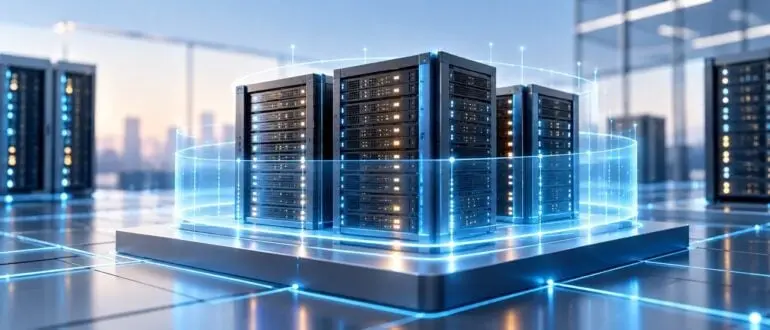
Neither cutting-edge software supply chain integrity nor sophisticated AI vulnerability detection addresses the brutal, inescapable operational reality inside the modern enterprise datacenter: organizations continue to run mission-critical operating systems containing thousands of known, unpatched vulnerabilities simply because they cannot upgrade them.
That is where the real, enduring security challenge lies. As enterprises look toward a hyper-automated future, they are doing so atop a ticking time bomb of legacy infrastructure that defies the simple industry mantra of "just patch it."
Detailed Chronology of the Enterprise Security Evolution
To understand how enterprise architecture arrived at this precarious crossroads, it is necessary to examine the evolutionary path of modern cybersecurity priorities over the past ten years.
[2015-2019] Perimeter & Endpoint Era  -->  [2020-2023] Supply Chain Crisis  -->  [2024-Present] AI & Autonomous Frontier
(Firewalls, EDR, IAM)                     (SolarWinds, Log4Shell, SBOMs)          (LLMs, Agents, Prompt Injection)
Phase 1: The Perimeter and Endpoint Era (Mid-2010s)
Security was long viewed through the lens of fortification. Firewalls, intrusion detection systems (IDS), and Endpoint Detection and Response (EDR) agents dominated enterprise budgets. The prevailing assumption was that if the perimeter could be held and endpoints locked down, internal assets were safe. However, as cloud adoption accelerated and microservices proliferated, the traditional network perimeter dissolved, rendering static perimeter defenses obsolete.
Phase 2: The Supply Chain Reckoning (2020–2023)
As direct attacks on enterprise perimeters grew harder, threat actors shifted left, targeting upstream dependencies. The SolarWinds supply chain compromise demonstrated that trusted software updates could be weaponized on a global scale. Shortly after, the Log4Shell vulnerability exposed the fragility of open-source ecosystems, proving that a single unvetted logging library could threaten millions of servers worldwide. This era forced a massive industry pivot toward provenance, reproducible builds, and SBOM generation, attempting to secure the upstream lineage of every line of code running in production.
Phase 3: The AI and Autonomous Frontier (2024–Present)
Most recently, the democratization of generative AI and autonomous workflows has ushered in a brand-new threat vector. Organizations are hastily integrating LLMs and autonomous agents into core business functions without fully understanding the security implications. Threat actors are already exploiting prompt injection vulnerabilities, poisoning training datasets, and manipulating insecure MCP servers. Vendors have rushed to fill the gap with AI security platforms focused on monitoring prompts and validating agent behaviors.
Yet, through every single one of these evolutionary phases, the foundational layer—the underlying operating systems powering the global economy—has remained plagued by structural vulnerability backlogs that no amount of supply chain scanning or AI monitoring can magically fix.
Supporting Context & Metrics: The "Finding vs. Fixing" Paradox
The core dysfunction of modern vulnerability management can be summarized in a simple paradox: security teams have become exceptionally good at finding vulnerabilities, but they remain structurally constrained in fixing them.
Modern vulnerability scanners are marvels of engineering. They can enumerate every installed RPM or DEB package across thousands of instances, compare running versions against sprawling Common Vulnerabilities and Exposures (CVE) databases, prioritize findings using Exploit Prediction Scoring System (EPSS) metrics, calculate real-world exploitability, and even estimate financial risk.
Finding vulnerabilities is no longer a technical bottleneck. Remediation is.
Consider the anatomy of a typical enterprise Linux server. A single production instance often hosts several hundred interdependent packages, intricately bound to application stacks that have evolved over years—or decades. Upgrading a foundational package is rarely an isolated action. Library upgrades frequently introduce breaking changes:
- New dependencies that conflict with existing software.
- Deprecated APIs that are summarily removed.
- Subtle runtime behavior alterations that destabilize applications.
- Underlying kernel requirements that necessitate sweeping reboots.
While package managers like DNF, YUM, APT, and Zypper make the mechanical execution of an upgrade trivial, ensuring that production applications remain operational afterward is an entirely different magnitude of challenge.
The Cost of Downtime and Regulatory Compliance
Industry guidance often leans on the simplistic advice: "Just patch it immediately." In practice, enterprise infrastructure operates under harsh regulatory, financial, and operational constraints:
- Strict Certification Windows: Financial institutions, healthcare providers, manufacturers, telecommunications giants, and government agencies must certify complete software stacks rather than individual packages. Upgrading OpenSSL, glibc, Python, Java runtimes, or PostgreSQL can instantly invalidate regulatory compliance or industry certifications, halting business operations.
- Astronomical Downtime Costs: In industrial environments, manufacturing lines, and global e-commerce platforms, downtime is measured in millions of dollars per hour. Every upgrade introduces operational risk; every postponed upgrade introduces security risk.
- The Uptime Mandate: Historically, uptime belonged to operations, while vulnerability management belonged to security. Today, these disciplines are deeply intertwined. Continuous 24/7 global operations mean that even rolling updates across Kubernetes clusters and bare-metal environments require intense orchestration, multi-stage testing, rollback planning, and extensive regression validation.
As a result, application owners routinely postpone upgrades until designated maintenance windows—sometimes quarterly, sometimes annually.
Official Industry Perspectives and Expert Insights
To gain a clearer picture of this operational dilemma, industry analysts and enterprise infrastructure leaders have increasingly voiced concerns over the widening gap between vulnerability discovery and operational reality.
"We have built an entire security industry around the premise that if you find a vulnerability, you must eliminate it immediately. But for the systems that power critical national infrastructure, healthcare networks, and global banking, ‘immediately’ is a luxury that does not exist. Security architecture must evolve to protect systems that cannot be patched today, tomorrow, or even next year."
— Dr. Aris Thorne, Principal Systems Resiliency Architect
Furthermore, DevOps and DevSecOps practitioners emphasize that backward compatibility is the silent killer of enterprise agility. Enterprise software frequently relies on undocumented behaviors that have nevertheless remained stable for years. A minor version bump in a core system library can break legacy applications entirely, turning a routine security patch into a massive software engineering project.
"Security is no longer just an IT hygiene task; it has become a software refactoring bottleneck," notes a recent enterprise infrastructure report. "Many organizations simply do not possess the engineering bandwidth required to continuously rewrite decades of legacy code merely to keep pace with upstream operating system releases."
Even the introduction of artificial intelligence into vulnerability management workflows—while transformative for triage and patch generation—hits a hard operational wall. Generative AI can explain a CVE in seconds, prioritize remediation queues, and even write candidate patches. However, AI cannot override the business reality that a mission-critical system cannot be taken offline for a kernel update during peak operating hours. The bottleneck remains operational, not informational.
Future Outlook: The Shift Toward Runtime Protection
Recognizing that immediate patching is an unattainable ideal for a vast majority of enterprise workloads, the next major evolution in enterprise Linux security is poised to move away from purely reactive patch management toward proactive runtime protection.
Rather than assuming vulnerabilities can always be removed instantly, organizations must adopt mechanisms that systematically reduce exploitability while vulnerable software continues to operate unabated in production.
+-----------------------------------------------------------------+
|                    UNIFIED SECURITY ARCHITECTURE                |
|                                                                 |
|  +--------------------------+    +---------------------------+  |
|  | Software Supply Chain    |    | AI-Powered Vulnerability  |  |
|  | Integrity (SBOMs,        |    | Intelligence (Triage,     |  |
|  | Provenance, Scanning)    |    | Prioritization, Patches)  |  |
|  +--------------------------+    +---------------------------+  |
|                                               /                |
|                v                              v                 |
|  +----------------------------------------------------------+   |
|  |             CONTINUOUS RUNTIME PROTECTION                |   |
|  |   (eBPF Telemetry, System Call Enforcement, App Allow-   |   |
|  |    listing, Memory Protection, Immutable Infrastructure) |   |
|  +----------------------------------------------------------+   |
|                               |                                 |
|                               v                                 |
|       [ SECURE, RESILIENT BUSINESS OPERATIONS ]                 |
+-----------------------------------------------------------------+
Key pillars of this emerging architectural shift include:
- eBPF-Based Telemetry & Observability: Leveraging extended Berkeley Packet Filter technology to monitor kernel-level activity, network connections, and system calls with minimal performance overhead, allowing security teams to detect anomalous behavior instantly.
- System Call Enforcement & Privilege Minimization: Restricting what system calls an application can make, effectively neutralizing entire classes of privilege-escalation exploits even if underlying libraries contain unpatched CVEs.
- Application Allow-Listing & Memory Protection: Ensuring that only verified binaries execute in memory, preventing unauthorized code execution and zero-day exploitation vectors.
- Immutable Infrastructure and Ephemeral Workloads: Designing systems where state is decoupled from compute, making it easier to replace entire instances rather than patching in place, where applicable.
Conclusion: Bridging Diagnosis and Treatment
The cybersecurity industry has continuously reinvented its focal points—pivoting from perimeter defenses to endpoint detection, from endpoint detection to software supply chains, and now toward AI security. Each of these paradigm shifts has solved critical challenges, yet none has eliminated the harsh operational realities faced by enterprise infrastructure teams.
Linux servers running critical workloads cannot always be patched tomorrow. Some support life-saving hospital equipment; others control power grids or process billions of dollars in daily financial transactions. For these environments, security cannot rely exclusively on the illusion of a perfectly patched state.
The organizations that will manage cyber risk most successfully over the coming decade will be those that abandon an all-or-nothing patching mindset. By combining software supply chain integrity, AI-assisted vulnerability intelligence, and robust continuous runtime protection into a unified security architecture, enterprises can achieve true resilience.
The ultimate goal of cybersecurity has never been simply to identify vulnerabilities—it is to enable organizations to operate safely and securely in spite of them.