








Executive Overview
The global conversation surrounding artificial intelligence infrastructure has become remarkably predictable. Almost every strategic boardroom discussion, financial analyst briefing, and venture capital pitch centers relentlessly on GPUs, specialized tensor processing silicon, power grid availability, and the high-stakes race to build ever-larger, energy-hungry AI compute clusters. While these multi-billion-dollar investments are undeniably foundational to the generative AI revolution, they suffer from a dangerous myopia. They overlook a parallel, equally critical question: How efficiently can an enterprise move oceans of data precisely where intelligence is required?
In the emerging landscape of enterprise intelligence, a fundamental axiom is taking shape: Compute creates intelligence, but networks deliver it.
Over the past year, enterprise IT leaders across industries have worked through the sobering operational realities of moving AI from experimental sandboxes to core production environments. Typically, a chief information officer’s initial pitch meeting focuses almost exclusively on models, compute capacity, and cloud optimization strategies. Yet, by the third architectural review, the conversation inevitably pivots to networking.
This shift is far from accidental. The first wave of enterprise AI handsomely rewarded organizations that secured early access to scarce compute resources. However, the next, more mature wave will reward companies capable of moving data efficiently, securely, and predictably across increasingly distributed environments. Solving this equation requires a fundamentally different approach to infrastructure design—one where networking transforms from a background utility into a core strategic driver.
Detailed Chronology: The Evolution of Enterprise AI Infrastructure
To understand why network infrastructure has suddenly emerged as the defining hurdle for modern IT strategies, it is necessary to examine how the enterprise technology stack has evolved over successive generational shifts.
Phase One: Client-Server and Centralized Computing
Decades ago, enterprise networks were designed for a relatively simple purpose: connecting people to centralized applications hosted within a corporate data center or localized server room. Traffic patterns were remarkably predictable. Users logged in from branch offices or desktop terminals, generating steady, manageable streams of data that flowed along well-defined hub-and-spoke pathways. Reliability meant ensuring that the physical links between the office and the corporate headquarters stayed green.
Phase Two: Virtualization and the First Cloud Migration
As virtualization swept through enterprise datacenters, followed rapidly by the mass migration to public and hybrid cloud environments, the nature of enterprise traffic began to fracture. Workloads were no longer tied to physical hardware sitting under a desk or in a local closet. Instead, applications sprawled across AWS, Azure, and private cloud silos. Networks had to adapt to dynamic IP routing, virtual private clouds, and software-defined WAN (SD-WAN) technologies to maintain visibility and control. Even so, human users remained the primary endpoints initiating these transactions.
Phase Three: The Generative AI Paradigm Shift
Artificial intelligence shatters the historical design paradigms of both client-server computing and standard cloud architectures. AI does not change just one isolated layer of the enterprise stack; it upends every layer simultaneously.
Unlike traditional applications where a user clicks a button and pulls a static file from a database, a single modern AI query triggers a complex, cascading sequence of programmatic events. A user prompt may instantly pull historical records from an enterprise data lake, query vector databases for semantic context, invoke a large language model (LLM) running in an entirely separate hyperscale environment, route the payload through automated governance and security filters, and synthesize a coherent, contextual response—all within a matter of milliseconds.
None of these discrete computational steps happen in isolation. Crucially, none of them happen without a high-performance network stitching the architecture together.

Supporting Context & Metrics: The Scale of the AI Infrastructure Boom
The sheer velocity of global capital deployment underscores the urgency of this infrastructural transformation. According to market forecasts published by Gartner, worldwide IT spending on artificial intelligence is projected to skyrocket, reaching an astounding $2.59 trillion. Within this massive financial outlay, infrastructure investments will account for nearly half of the total capital expenditure, as enterprises frantically expand the underlying systems required to support large-scale AI models.
Yet, market analysts issue a constant warning: throwing capital at compute infrastructure alone does not guarantee business value or operational success.
The Rise of Edge Inference
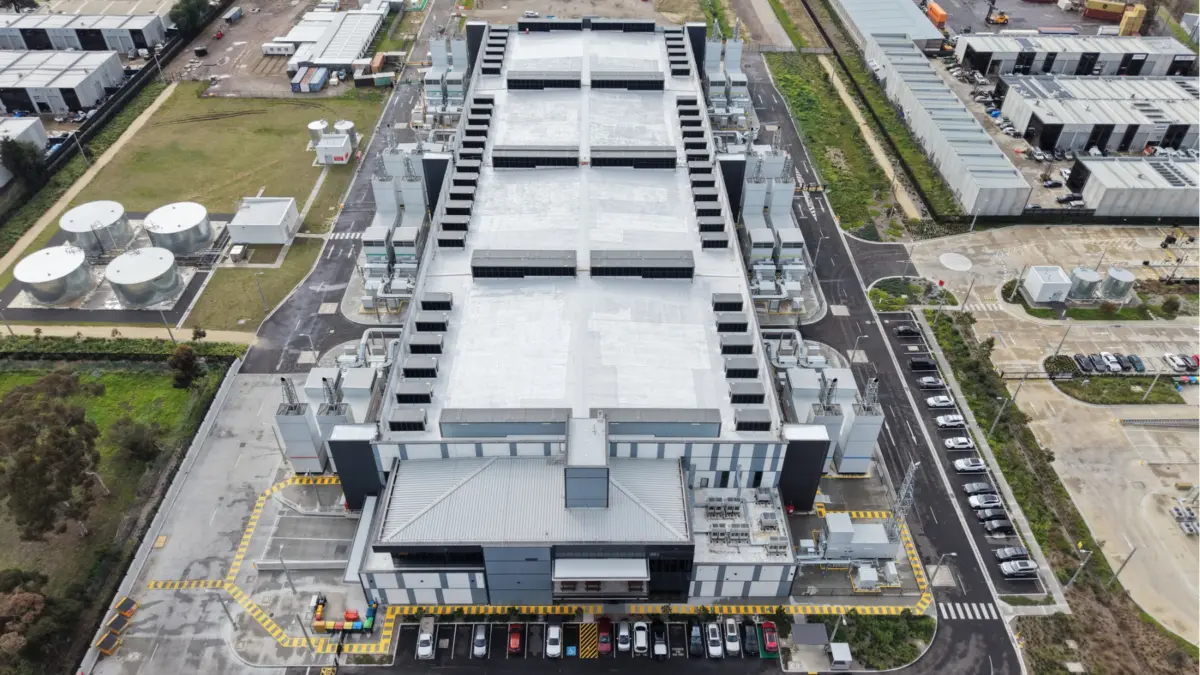
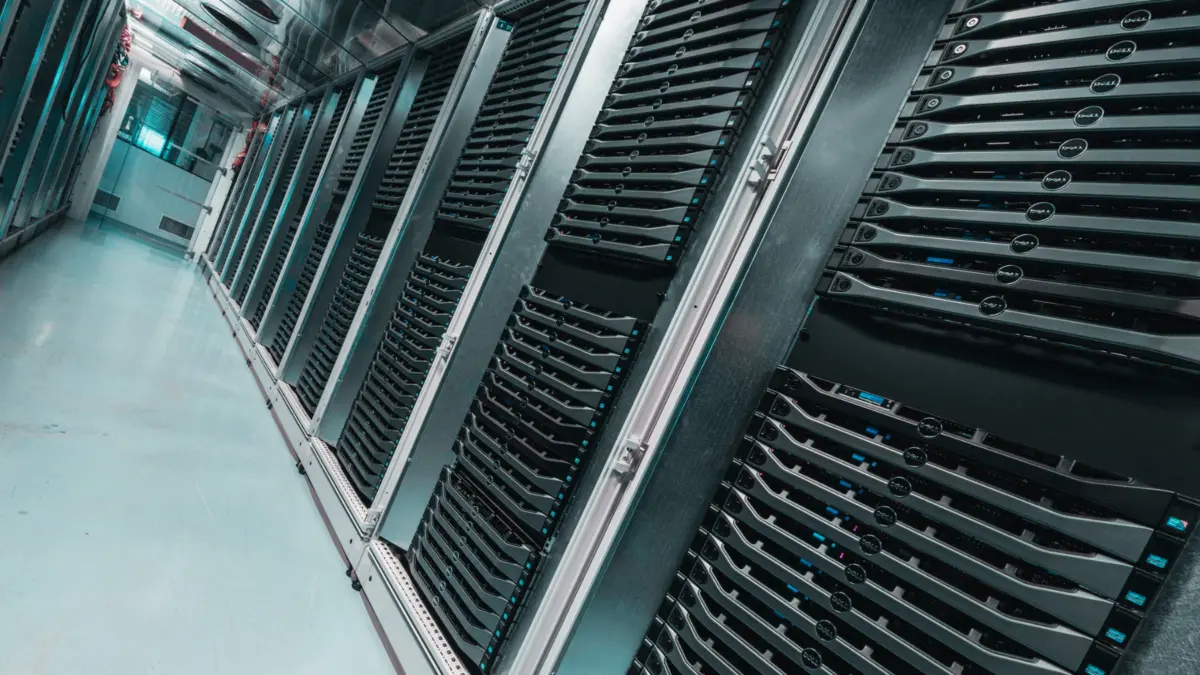
Compounding the infrastructure challenge is the physical relocation of AI workloads. While massive model training remains heavily concentrated inside hyperscale data centers powered by tens of thousands of specialized GPUs, inference—the actual execution of trained models to generate real-world answers—is rapidly decentralizing.
According to projections from IDC, nearly half of all global enterprises will deploy AI inference workloads directly at the "edge" over the next few years. This operational shift dramatically reduces corporate dependence on centralized processing hubs while exponentially increasing the performance demands placed on distributed edge infrastructure. Inference is migrating to the places where work actually happens:
- Hospitals and healthcare facilities analyzing real-time patient vitals and medical imaging.
- Manufacturing plants and assembly lines utilizing computer vision for predictive maintenance and quality assurance.
- Retail environments running automated inventory tracking and personalized customer engagement engines.
- Financial institutions executing high-frequency fraud detection and real-time risk assessment.
- Corporate campuses and branch offices relying on local AI copilots for everyday operational workflows.
In each of these scenarios, data movement is no longer a back-office operational detail; it is the critical path to business continuity.
Official Perspectives: Rethinking the Architecture
Industry leaders are increasingly vocal about the need to rebalance enterprise infrastructure budgets to account for this networking imperative.
Chris Alberding, Chief Product Officer at BCN and a veteran of the communications and IT services industry with over 25 years of leadership experience, notes that the nature of corporate connectivity has fundamentally transformed over the course of his career.
"For decades, networking connected people to applications," Alberding observes. "Today, it is increasingly connecting data to intelligence. Organizations that recognize this shift early won’t necessarily boast the biggest raw AI compute footprints, but they will be vastly better positioned to scale their deployments, adapt to rapid technological evolution, and realize measurable business value from their investments."
According to Alberding, the corporate conversation must pivot away from merely provisioning raw bandwidth and toward engineering networks that retain absolute determinism and predictability under volatile conditions. When AI systems are embedded directly into customer service pipelines, automated cybersecurity response protocols, and financial decision-making engines, a network micro-outage ceases to be a minor connectivity glitch. It becomes an immediate disruption to core business processes.
Latency as a Business Metric
Traditionally, infrastructure teams evaluate network health through technical lenses: packet loss, jitter, round-trip time, and link utilization. However, end users never directly interact with these metrics.

Instead, human operators and digital consumers experience latency through behavioral cues: How instantly does an AI assistant generate a response? Do automated UI recommendations populate seamlessly? Does an enterprise workflow feel instantaneous or sluggish?
For modern AI-driven applications, latency has officially transitioned from a purely technical networking metric into a primary business performance indicator. If an enterprise AI tool takes five seconds to return a recommendation, user adoption plummets, and operational efficiency gains evaporate.
Future Outlook: Designing for Predictability, Security, and Scale
As enterprises look toward the horizon of the AI-driven decade, successful infrastructure strategies will be defined by three core pillars: architectural predictability, distributed security, and holistic design.
1. Designing for Predictability Over Raw Capacity
Adding bigger fat-pipe connections is no longer a silver bullet. Modern AI traffic is bursty, highly asymmetrical, and demanding of ultra-low latency. Enterprise architects must design networks equipped with advanced traffic management, intelligent path selection, resilient routing, and real-time visibility. When workloads shift dynamically between private data centers, public clouds, and edge nodes, the underlying network must dynamically preserve performance baselines without manual intervention.
2. Weaving Security Hand-in-Hand with Data Movement
Because AI models constantly ingest, process, and generate sensitive corporate intellectual property distributed across multi-cloud topologies, security can no longer be bolted on as an afterthought. Networking and cybersecurity must operate as a unified fabric. Zero Trust Network Architecture (ZTNA), strict data segmentation, identity-aware access controls, and continuous telemetry must accompany data every time it traverses the network pipe to feed an inference engine.
3. Shifting Networking to Day-One Conversations
Historically, network engineering was often looped into IT deployment cycles late in the game—tasked simply with connecting servers after the compute and storage decisions had already been finalized. In the era of enterprise AI, that sequence is fatal to project timelines and ROI.
Organizations that achieve enduring success with artificial intelligence are those that invite network architects into the design room on day one. By treating data movement as a strategic asset rather than an operational utility, enterprises can build resilient, friction-free ecosystems where data, applications, users, and intelligence converge seamlessly.
The companies that master this holistic infrastructure challenge will not just survive the AI boom—they will set the standard for what intelligent enterprises can achieve.