









Executive Overview
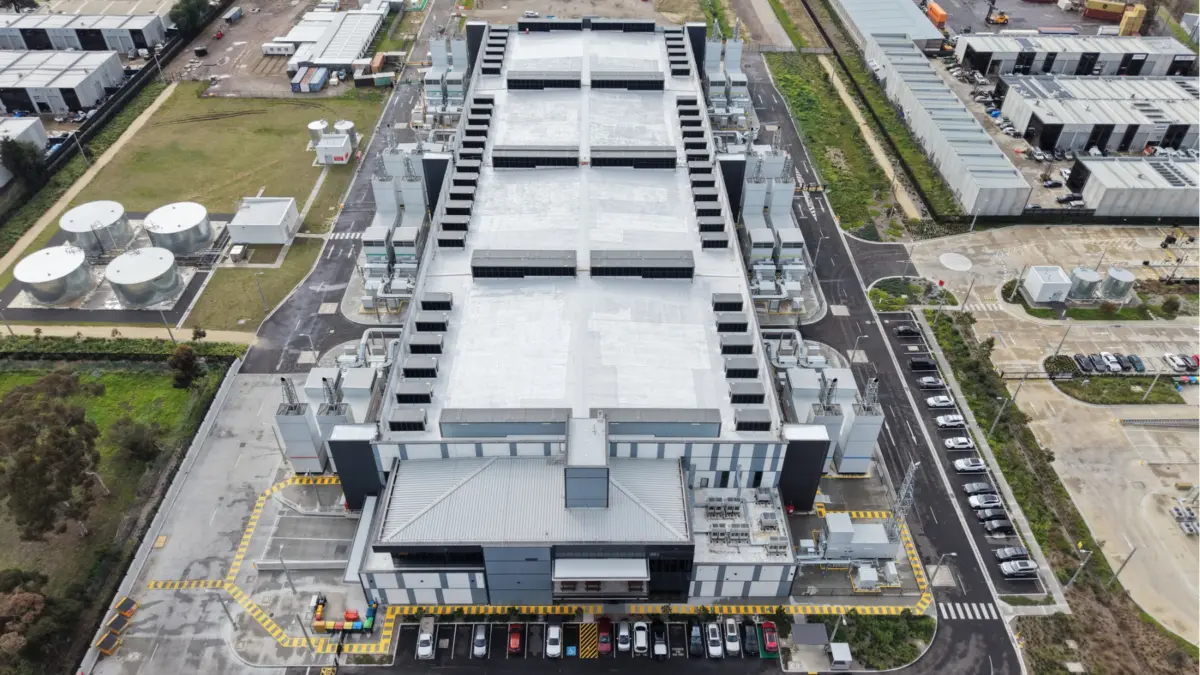
While the modern data center landscape is frequently dominated by images of sprawling, campus-style facilities situated in rural or semi-rural greenfields—massive 100+ megawatt hyperscale complexes designed to feed the insatiable training appetite of Large Language Models (LLMs)—a quieter, equally vital transformation is unfolding in the heart of the world’s most densely populated metropolises.
The urban data center, long considered a niche or legacy footprint constrained by exorbitant real estate costs and rigid physical limits, is experiencing a profound renaissance. Driven by the demands of ultra-low latency applications, high-frequency financial trading, real-time edge processing, and, increasingly, AI inference workloads, organizations are aggressively pulling their IT infrastructure back from the periphery and placing it directly into the urban core.
Unlike their rural counterparts, which trade proximity for boundless scale, urban data centers prioritize speed, density, and rich carrier ecosystems. Situated within multi-story retrofitted office towers, downtown carrier hotels, and specialized metropolitan hubs—such as 60 Hudson Street in Manhattan, 350 East Cermak in Chicago, and Telehouse Docklands in London—these facilities serve as the vital digital crossroads of global commerce.
However, navigating the urban data center ecosystem requires balancing severe trade-offs. Facility operators and enterprise tenants alike must contend with staggering real estate square-foot costs, complex power distribution constraints, intricate building retrofits, and rigorous municipal zoning laws. This article explores the strategic evolution of the urban data center, analyzing why proximity is once again triumphing over raw scale, and examining how businesses can strategically evaluate whether a city-center facility is the right home for their critical workloads.
Detailed Chronology: The Evolution of Metropolitan Digital Real Estate
To understand how urban data centers reclaimed their strategic importance, it is necessary to examine the historical pendulum swing between centralized hyperscale expansion and localized edge computing over the past three decades.
The Dot-Com Era and the Rise of the Carrier Hotel (Late 1990s – Early 2000s)
At the dawn of the commercial internet, digital infrastructure was inherently urban. Telecommunications carriers and early internet service providers (ISPs) congregated in major metropolitan centers to minimize the physical distance data had to travel across copper and fiber networks. Buildings like One Wilshire in Los Angeles or 60 Hudson Street in New York evolved organically into "carrier hotels"—neutral meeting points where disparate networks could physically interconnect. These early facilities laid the structural groundwork for modern colocation, establishing the urban core as the epicenter of global network traffic exchange.
The Hyperscale Migration and the Rural Exodus (2010s – Early 2020s)
As cloud computing matured and Big Tech giants—such as Amazon Web Services, Microsoft Azure, and Google Cloud—scaled to meet global enterprise demand, the economics of data center construction shifted dramatically. Land in downtown metropolitan cores became too expensive and spatially restricted to support the sprawling footprints required by hyper-dense server farms.
Consequently, the industry experienced a massive rural and suburban exodus. Operators began building mega-campuses in secondary markets and rural counties across Northern Virginia (Loudoun County), the Pacific Northwest, and central Europe. These locations offered cheap, abundant land, direct access to high-voltage electrical grids, and tax incentives. Urban facilities were temporarily sidelined by many enterprise strategists, viewed as legacy environments burdened by high power costs and physical retrofitting headaches.
The AI Inference and Real-Time Edge Rebound (Mid-2020s – Present)
By the mid-2020s, the paradigm shifted yet again. While the training of massive artificial intelligence models still heavily relies on rural, mega-scale GPU farms, the deployment and inference phases demand a radically different architectural approach. AI inference requires immediate responses—whether powering autonomous vehicles, real-time financial fraud detection, or interactive customer service agents. Routing these requests to a rural data center hundreds of miles away introduces unacceptable network latency.
Simultaneously, enterprises across finance, healthcare, media, and retail realized that remote cloud reliance created latency bottlenecks and data sovereignty hurdles. This realization sparked a strategic counter-migration: pushing mission-critical workloads, edge nodes, and AI inference engines back into the urban core, directly adjacent to end-users and dense carrier interconnection points.
Supporting Context & Metrics: The Anatomy of an Urban Facility
Urban data centers operate under a fundamentally different economic, physical, and operational model than their rural counterparts. A deep dive into their structural characteristics reveals the distinct profile of metropolitan digital infrastructure.
Defining Characteristics and Key Locations
An urban data center is typically situated within the metropolitan core of a city boasting a population in the hundreds of thousands or millions. Because vacant downtown real estate is rare and prohibitively expensive, these facilities are frequently housed within retrofitted multi-story office towers, converted industrial warehouses, or specialized downtown carrier hotels.

Prominent global examples include:
- North America: DataBank at 60 Hudson Street (Manhattan); Digital Realty at 365 Main Street (San Francisco); the Westin Building Exchange (Seattle); the massive carrier hotel at 350 East Cermak (Chicago); CoreSite LA1 at One Wilshire (Los Angeles); and Equinix MI1 (Network Access Point of the Americas) in downtown Miami.
- Europe: Telehouse Docklands (London); and Digital Realty’s (Interxion) extensive metropolitan campuses in Frankfurt, Amsterdam, and Paris.
The Scale vs. Proximity Trade-Off
The operational metrics of urban versus rural data centers highlight a stark contrast in capacity and design philosophy:
| Metric / Feature | Urban (City-Center) Data Center | Rural / Suburban Hyperscale Campus |
|---|---|---|
| Typical Capacity | 1 MW to 10 MW (often constrained) | 100 MW to 500+ MW |
| Footprint Size | Multi-story, vertical, space-efficient | Sprawling single- or multi-building campus |
| Real Estate Cost | Extremely high per square foot | Low to moderate per square foot |
| Network Latency | Ultra-low (measured in single-digit milliseconds) | Moderate to high (dependent on long-haul fiber) |
| Interconnection | Dense, rich carrier-neutral ecosystems | Point-to-point, limited local ecosystem |
| Power Sourcing | Complex urban grid feeds, strict generator limits | Dedicated sub-stations, high-capacity feeds |
Why Organizations Choose the Urban Core
Despite the financial hurdles, city-center facilities offer irreplaceable advantages:
- Ultra-Low Latency: For financial high-frequency trading (HFT) platforms, online gaming networks, and real-time streaming services, shaving milliseconds off round-trip data transit times is a direct revenue driver. Proximity to dense user populations ensures optimal performance.
- Rich Interconnection Ecosystems: Urban facilities are natural concentration points for telecommunications carriers, cloud on-ramps, and Internet Exchanges (IXPs). Tenants can execute rapid, low-cost cross-connects to hundreds of network service providers within the same building.
- Data Sovereignty and Local Compliance: Certain jurisdictions mandate that specific types of data (such as municipal records or localized financial transactions) remain within city limits or adhere to tight regional boundaries.
Official Industry Perspectives and Expert Insights
Industry analysts, infrastructure architects, and colocation operators increasingly view the urban data center not as a relic of the past, but as an indispensable anchor of the hybrid IT architecture.
"Urban data centers solve the fundamental physics of data delivery. While hyperscale campuses win on raw capacity and cost-per-gigawatt, they cannot overcome the speed of light. When milliseconds dictate business viability, the urban core becomes non-negotiable."
— Leading Enterprise Infrastructure Analyst
Technology analysts specializing in edge computing and application development emphasize that the surge in artificial intelligence adoption has fundamentally rewritten site-selection playbooks. As Christopher Tozzi, a prominent technology analyst, notes in recent evaluations of edge infrastructure: "AI inference pulls infrastructure back into metro data centers. You cannot run real-time, interactive AI models efficiently from a rural warehouse hundreds of miles away without introducing crippling latency penalties."
Furthermore, colocation operators report a steady uptick in demand for high-density power configurations within urban envelopes. Enterprises are actively seeking out metropolitan facilities capable of supporting high-density liquid cooling retrofits, allowing them to pack massive compute power into constrained downtown footprints.
Urban Trade-Offs: Cost, Space, Power, and Retrofits
While urban data centers solve critical performance and latency challenges, deploying infrastructure in the metropolitan core introduces severe engineering, financial, and regulatory hurdles. Organizations evaluating these facilities must carefully weigh the following trade-offs:
1. Financial Overhead
Real estate acquisition, leasing, and operational costs in downtown metropolitan districts are exponentially higher than in rural sectors. Enterprises pay a severe premium for every square foot of white space, which directly impacts the total cost of ownership (TCO) for long-term deployments.
2. Power Density and Grid Constraints
Downtown electrical grids are heavily taxed and designed to support commercial office buildings, retail, and residential consumers—not multi-megawatt IT loads. Securing a reliable, high-capacity power feed from local municipal utilities can take years. Moreover, urban facilities often face stringent limits on backup generator fuel storage, noise pollution ordinances, and carbon emission caps.
3. Structural and Retrofit Limitations
Because many urban data centers occupy older commercial towers or mixed-use structures, operators face severe physical constraints. Floor-loading capacities may be insufficient for heavy enterprise server racks, ceiling heights can restrict advanced cooling ductwork, and vertical freight elevator bottlenecks can complicate equipment staging and deployment logistics.
Future Outlook: The Hybrid Convergence of Edge and Core
Looking toward the future, the data center ecosystem is moving away from an "either/or" mentality regarding urban versus rural sites. Instead, the industry is embracing a sophisticated, multi-tiered infrastructure model where urban and rural facilities exist in symbiotic harmony.
- The Tiered Architecture: Organizations are increasingly adopting hybrid strategies where massive rural hyperscale campuses handle heavy batch processing, deep learning training, and cold data archiving, while agile urban micro- and metro-data centers manage real-time AI inference, low-latency API gateways, and localized content delivery.
- Innovations in Urban Efficiency: To overcome space and power limitations, urban data center operators are pioneering advanced engineering solutions. These include high-density modular liquid cooling systems, vertical heat-reclamation frameworks (which feed downtown district heating systems), and direct microgrid integrations with renewable urban sources.
- The Strategic Imperative: As data generation accelerates and edge applications become ubiquitous, the value proposition of proximity will only intensify. Organizations that successfully map their workloads to the correct architectural tier—leveraging the urban core for speed and interconnection while utilizing regional campuses for scale—will secure a decisive competitive advantage in the digital economy.