







Executive Overview
For all the billions of venture capital dollars poured into the artificial intelligence and robotics sectors over the past half-decade, the industry remains deeply divided on a singular, defining question: When will robotics experience its "ChatGPT moment"?
In the world of generative text and image creation, that inflection point was marked by the sudden, seamless emergence of general-purpose models capable of interpreting intent and adapting to wildly different creative contexts on the fly. In robotics, however, the equivalent milestone—a general-purpose machine that can seamlessly navigate, comprehend, and physically adapt to any unscripted human environment—remains elusive. Opinions across Silicon Valley and global engineering hubs diverge wildly. Some robotics founders and investors believe the breakthrough is mere months away, driven by rapid leaps in multimodal foundation models, while others argue it is a decade-long engineering slog.
Enter Feather Robotics, a nimble, early-stage humanoid startup founded in 2025. Rather than gambling its entire existence on predicting when the generalized artificial intelligence "brain" will be fully realized, Feather has designed a modular hardware and software ecosystem built to thrive under either timeline.
While high-profile heavyweights like Elon Musk’s Tesla and Brett Adcock’s Figure take on the daunting, capital-intensive mission of simultaneously inventing both the proprietary mechanical body and the foundational intelligence engine from scratch, Feather is taking a decidedly different path. It is supplying the foundational platform—the hardware and software toolkits—that developers and enterprises need to deploy functional, real-world robotic tasks today.
Backed by a $7.6 million pre-seed funding round led by Gradient Ventures, Feather has already surpassed $1 million in revenue by selling customizable, modular robotic systems to early adopters. By mirroring the playbook of hardware legends like NVIDIA and Apple—starting with deployable, working products and layering on complexity over time—and undercutting foreign competitors on price, Feather is aggressively positioning itself to become the ubiquitous "Android of robotics."
Detailed Chronology: From Exit to Ecosystem
The seeds of Feather Robotics were sown deep within the trenches of the modern humanoid robotics boom. Co-founder Hoa Mai spent years refining his expertise in the sector, eventually leading a previous humanoid robotics venture to a successful acquisition by 1X, a well-known robotics company backed by OpenAI.
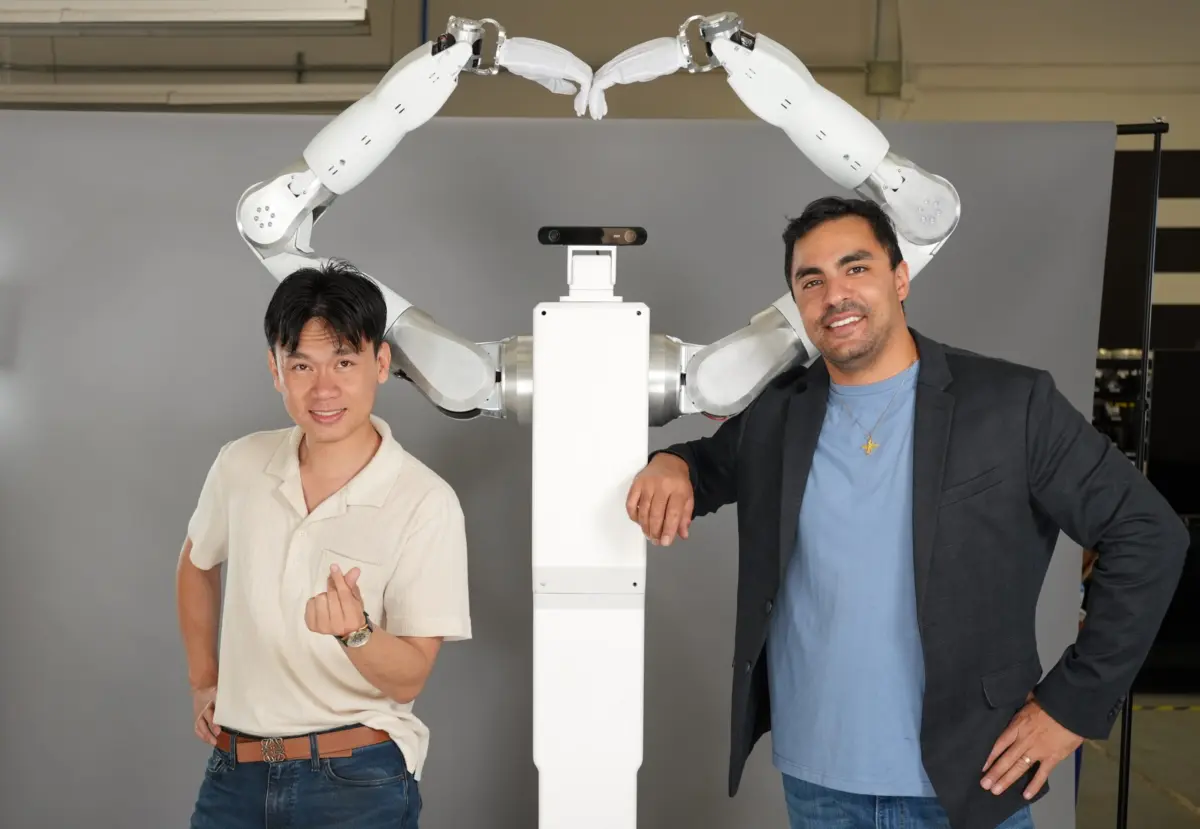
Following the acquisition, Mai teamed up with Parsa Bakhtiari, a seasoned former Tesla Model 3 engineer who previously reported directly to Elon Musk. Together, the duo established Feather Robotics last year with a crystal-clear thesis: the race to build a general-purpose robot shouldn’t require companies to reinvent every wheel simultaneously.
Recognizing the immense market appetite for physical AI infrastructure, Gradient Ventures stepped in at the startup’s inception, leading its $7.6 million pre-seed round. This early influx of capital allowed Feather to bypass years of purely theoretical research and dive straight into agile prototyping and field testing.
Unlike many of its peers who keep their prototypes locked inside pristine laboratory environments, Feather took its hardware straight to the front lines. Over the past year, the startup deployed small quantities of its modular robots into demanding commercial environments. During this intensive field-testing phase, the engineering team iterated rapidly, systematically identifying and resolving mechanical and software bugs.
"We’ve been selling small quantities of these robots, and now that we resolved like almost all the issues over the last year of field testing, we’re getting ready for a big product launch," Hoa Mai explained in an interview with TechCrunch.
Today, Feather’s modular robotic system allows developers to effortlessly customize hardware configurations—such as adjusting arm lengths and end-effectors—to suit vastly different operational use cases. Crucially, on the software side, Feather’s hardware is model-agnostic. It is engineered to run cutting-edge AI models from any leading robotics AI provider, including NVIDIA, Skild AI, and Physical Intelligence, giving developers ultimate flexibility rather than locking them into a closed proprietary ecosystem.
Supporting Context & Metrics: Navigating the Competitive Landscape
To understand Feather’s unique market positioning, one must examine the broader structural dynamics of the U.S. and international robotics landscapes. According to Darian Shirazi, general partner at Gradient Ventures, Feather occupies a distinct, unoccupied vacuum in the American market.
Shirazi divides the current hardware robotics ecosystem into three distinct categories:
- Domestic Niche Players: Startups like Sunday, which are hyper-focused on building specific home-use and domestic household robots.
- General-Purpose Heavyweights: Well-funded giants like Tesla and Figure, which are aiming for the Holy Grail of fully autonomous, general-purpose humanoid machines operating on proprietary cognitive stacks.
- The Modular Platform Providers: Represented solely, in Shirazi’s view, by Feather Robotics, which is pioneering a customizable, developer-first humanoid platform in the United States.
The Hardware Legacy Playbook
Hoa Mai is remarkably candid about where Feather drew its initial strategic inspiration. The startup took a page from the playbook of Chinese robotics pioneers like Unitree, which quickly captured early market share through aggressive pricing and rapid iteration cycles. However, shifting geopolitical landscapes and regulatory constraints—particularly restrictions barring new foreign-made models from entering the U.S. market—have created a massive vacuum. Feather is now uniquely positioned as a homegrown, compliant alternative of its kind.
Furthermore, Feather enjoys a staggering price advantage. The startup’s flagship humanoid platform is priced at $30,000, roughly half the cost of competing models like Unitree’s H2 Edu.
Unit Economics of Physical AI
When evaluating the $30,000 price point, investors point to a compelling macro-economic argument. Darian Shirazi breaks down the traditional labor equation:
- Hiring an entry-level human laborer typically costs an enterprise between $50,000 and $60,000 annually in base wages alone.
- Beyond salary, businesses must account for intensive onboarding, continuous training, human resources overhead, benefits, and workplace safety compliance.
- In contrast, deploying a $30,000 Feather robot drastically lowers the barrier to automation, providing a predictable, scalable asset that can be reprogrammed instantaneously via software updates.
Despite scaling its operations, building revenue past the $1 million milestone, and preparing for an imminent major product launch, Feather has maintained extraordinary capital efficiency. According to Shirazi, the company has spent only a fraction of its initial $7.6 million pre-seed funding, proving that lean hardware development is not only possible but sustainable in an industry historically notorious for burning through capital.
Official Statements & Industry Perspectives
The strategic philosophy driving Feather Robotics represents a fundamental pushback against the "walled garden" approach favored by larger automotive and robotics conglomerates.
"You can’t buy a Tesla robot today and develop on top of it," Hoa Mai pointed out to TechCrunch, highlighting the closed-loop nature of existing tech giant ecosystems. "We realized that this is not how most companies became successful. Hardware players like NVIDIA or Apple started with a product that worked and was deployable, and then they added complexity over time."
While Feather keeps the specific identities of its enterprise clients confidential, the company has offered a glimpse into where its robots are already earning their keep. Feather machines are currently deployed in demanding, dynamic real-world roles—acting as kitchen assistants preparing meals in commercial restaurants and performing meticulous clean-up duties in high-tech science laboratories. These real-world deployments validate the robustness of the hardware long before the arrival of a universal artificial general intelligence (AGI) brain.
Darian Shirazi echoed this sentiment regarding the massive addressable market unlocked by Feather’s cost structure and developer-friendly architecture. By letting the broader AI ecosystem handle the cognitive software, Feather is free to perfect the mechanical vessel.
"If we think about the market size today for physical AI companies, it’s very small," Mai reflected. "But if you think about how many physical AI application companies will probably exist in five years, we expect it to be in the thousands."
Future Outlook: Powering the Next Generation of Physical AI
The ultimate gamble underpinning Feather Robotics is simple yet profound: the true, long-term economic value in the robotics revolution will not be captured solely by the companies building the physical machines, but by the thriving software and application ecosystem built around that hardware.
By functioning as an open, modular, and cost-effective hardware canvas, Feather is betting that thousands of vertical-specific physical AI startups will emerge over the next half-decade. Whether these future software applications require bipedal navigation for retail stores, precise manipulation for pharmaceutical labs, or heavy-duty endurance for restaurant kitchens, Feather wants its platform to be the underlying operating system and hardware standard powering them all.
As Feather Robotics prepares for its upcoming major product launch, the company stands at a fascinating crossroads. By bridging the gap between today’s practical automation needs and tomorrow’s speculative AGI breakthroughs, Feather is not just building robots—it is laying down the foundational tracks for the entire physical AI economy. If they succeed in becoming the "Android of robotics," the ripple effects will be felt across every industry that relies on human labor.