The software development lifecycle (SDLC) is experiencing a foundational paradigm shift. Over the past few years, the widespread adoption of generative artificial intelligence (GenAI) and automated coding tools has radically transformed how developers write software. Today, writing code is no longer the primary bottleneck in software engineering; rather, it is the validation, integration, and sustainable deployment of that code at scale.
While AI assistants have exponentially increased the volume of code produced globally, they have inadvertently unleashed a parallel surge in technical debt, codebase bloat, architectural drift, and production incidents. Organizations now find themselves drowning in an ocean of unverified, fragmented code that looks pristine on the surface but frequently collapses under real-world production conditions.
Recognizing this critical market gap, Talentica Software has officially launched DevX AI Pods, a pioneering managed software delivery service designed to bridge the chasm between rapid AI code generation and reliable, production-ready software deployment. By harmonizing specialized autonomous AI agents with a rigorous human-in-the-loop engineering framework, DevX AI Pods seeks to help DevOps and product engineering teams harness the true potential of agentic AI without sacrificing software integrity, security, or long-term maintainability.
Detailed Chronology: The Evolution Toward Managed Agentic Delivery
The genesis of DevX AI Pods stems from a multi-year industry observation: while developers readily embraced AI code assistants for speed, enterprise engineering leadership began noticing a concerning disconnect between the sheer velocity of code generation and the actual frequency of successful, bug-free application deployments.
The Rise of Generative Coding and Its Immediate Side Effects
As generative AI coding tools matured from simple text-completion engines to sophisticated multi-file editing agents, productivity metrics spiked. Developers could scaffold entire modules, write boilerplate code, and translate pseudo-code into functional scripts in seconds. However, this hyper-acceleration exposed structural vulnerabilities across enterprise development pipelines:
The Siloed Generation Problem: Individual AI coding tools typically operate within the micro-context of a single file or a localized function. They lack holistic awareness of broader system architectures, cross-service dependencies, and historical product requirement documents (PRDs).
Codebase Bloat and Duplication: Because AI models generate solutions based on statistical likelihoods rather than unified design systems, they frequently reinvent the wheel, producing redundant code blocks and subtle architectural inconsistencies.
The Maintenance Burden: Technical debt began to compound at an unprecedented rate. Teams spent more time debugging, refactoring, and reverse-engineering AI-generated scripts than they would have spent writing the code manually from scratch.
The Conceptualization of DevX AI Pods
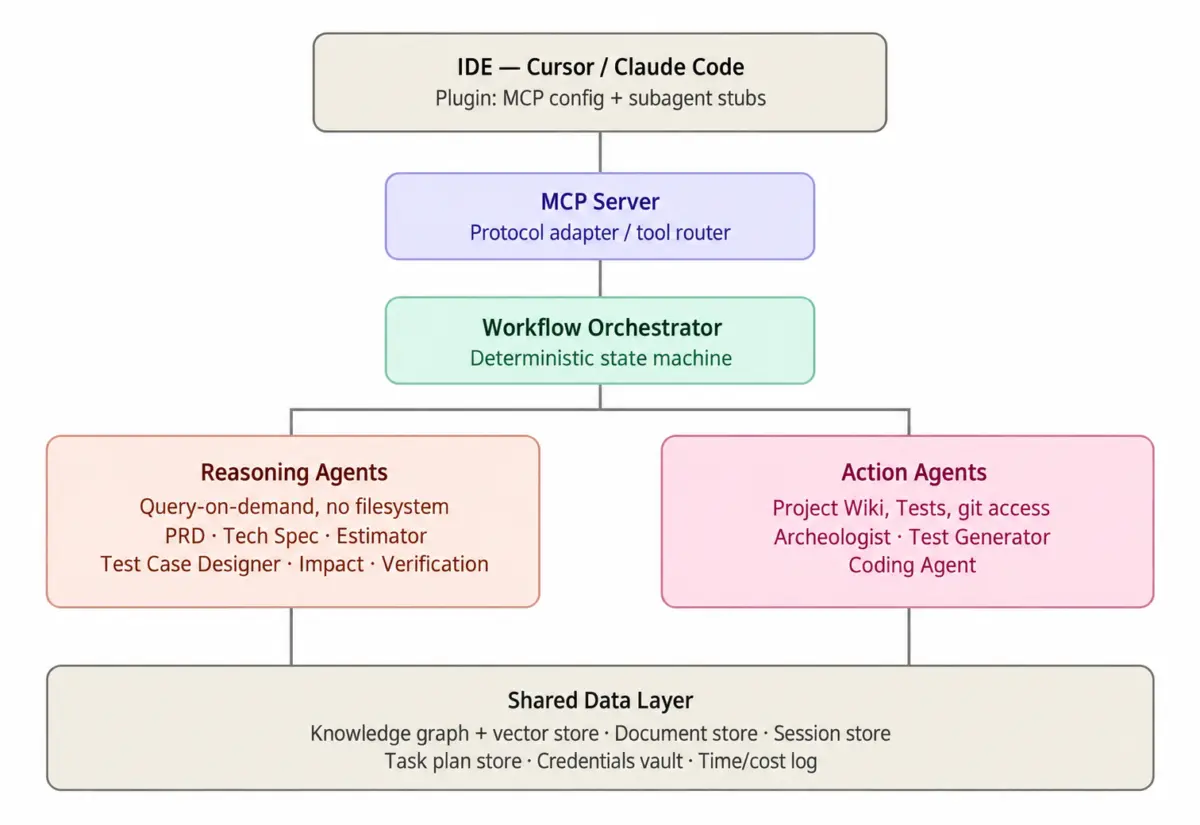
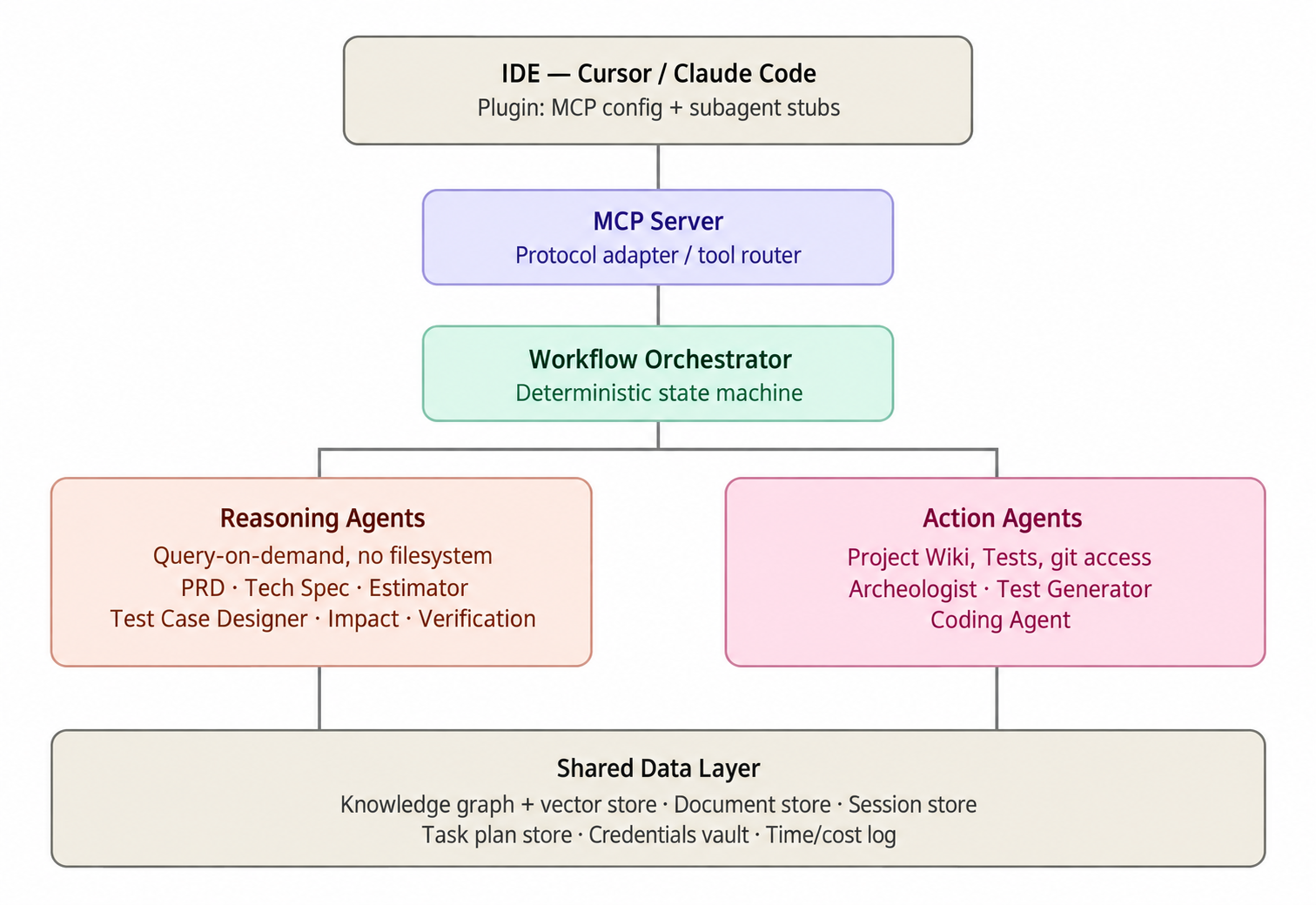
To counter these systemic issues, Talentica Software conceptualized a managed delivery model that moves beyond simple code-generation assistants. Rather than treating AI as a standalone developer toy, Talentica engineered an ecosystem of context-aware AI agents designed to operate cohesively across the entire software delivery lifecycle.
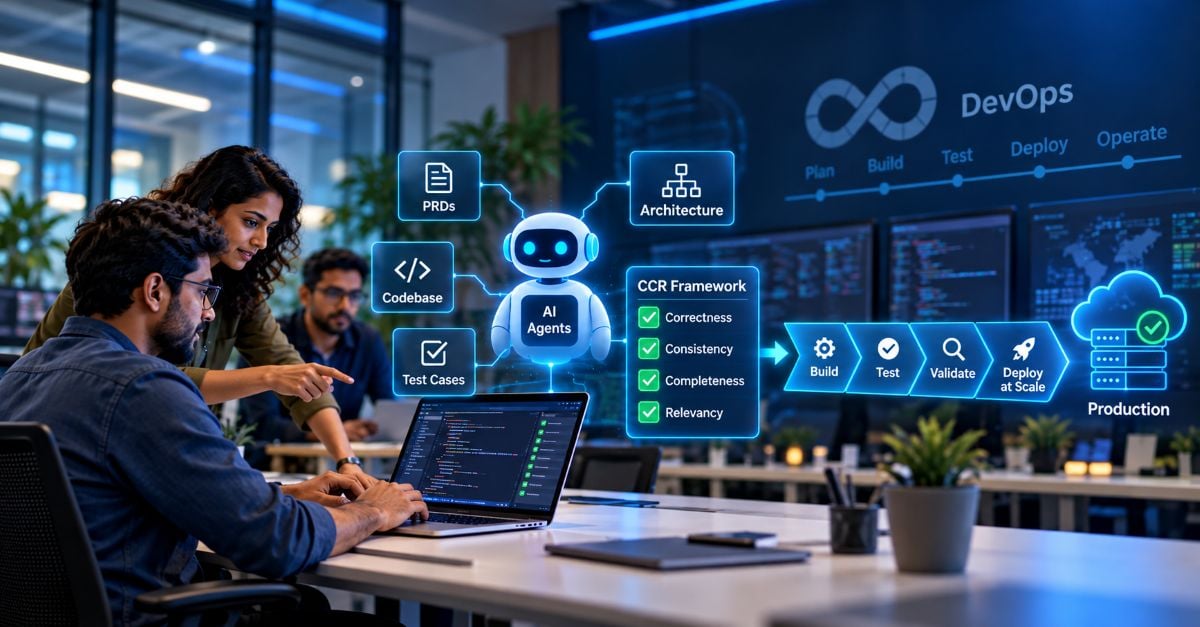
The rollout of DevX AI Pods introduces a structured methodology where autonomous agents do not just write code—they reason about it. By analyzing existing enterprise artifacts—including PRDs, existing codebases, automated test suites, and core software architecture models—these AI agents ensure that every line of generated code is contextually relevant and built to survive production environments.
Human-in-the-Loop Validation: The 600+ Engineer Safety Net
Understanding that fully autonomous AI execution remains prone to hallucinations and edge-case failures, Talentica deliberately designed DevX AI Pods as a hybrid managed service. The raw outputs generated by the platform’s AI agents are systematically funneled through a rigorous validation layer managed by a team of over 600 specialized Talentica software engineers.
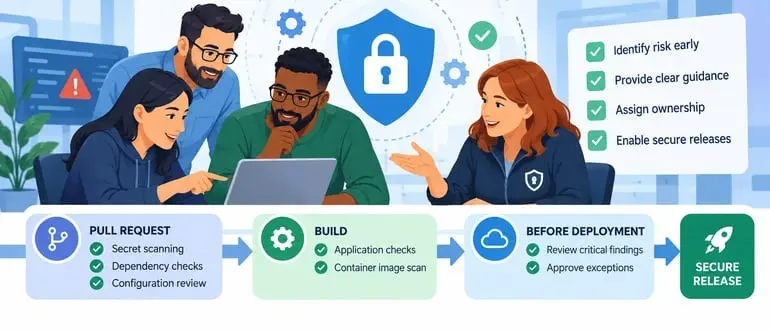
This human-in-the-loop (HITL) architecture ensures that every automated proposal is meticulously scrutinized against original project specifications, security baselines, and performance benchmarks before ever touching a production pipeline.
Supporting Context & Metrics: The Paradox of AI-Driven Development
To understand why services like DevX AI Pods are urgently required, one must examine current industry metrics regarding artificial intelligence adoption within software engineering.
Industry Insights from The Futurum Group
Recent market research from The Futurum Group highlights a striking paradox within modern software engineering organizations:
Pervasive Adoption: More than half (54%) of surveyed professionals currently work for organizations that utilize artificial intelligence across more than half of their entire software development lifecycle (SDLC).
The Code Dominance Shift: A staggering 40% of respondents reported that AI is already responsible for generating the majority of production code merged into their repositories over the preceding 90 days.
Aggressive Future Projections: Looking ahead, 58% of organizations expect AI to independently build 80% or more of their total software assets within the next three years.
The Dark Side: Production Vulnerabilities and Incidents
Despite this massive influx of AI-generated code, organizations are paying a heavy toll in system stability and reliability:
Production Incidents: Three-quarters (75%) of survey respondents have encountered at least one major production issue that they have definitively traced back to AI-generated code.
Recurring Failures: Among those impacted, 42% have experienced multiple independent production incidents stemming from AI software flaws.
These statistics underscore a sobering reality: while the software industry has successfully solved the problem of code generation volume, it has inadvertently exacerbated the crisis of code quality and verification. Without systemic frameworks to evaluate correctness, consistency, completeness, and relevance, the promise of generative AI risks becoming a liability of astronomical proportions.
Official Statements and Methodological Architecture
At the heart of Talentica’s new offering lies a sophisticated framework and a clear vision articulated by company leadership.
The Vision Behind the Service
Manjusha Madabushi, Chief Technology Officer at Talentica Software, emphasized that the ultimate objective of enterprise AI integration should never be mere speed for the sake of speed.
"The overall goal should not be to simply generate code quicker, but rather to enable DevOps teams to reliably deploy higher-quality applications at a much faster rate,"noted Madabushi.
Highlighting the disconnect plaguing modern engineering floors, Madabushi pointed out that traditional AI coding tools often create a false sense of security:
"The issue that far too many DevOps teams are encountering is that while AI coding tools make it possible to generate more code than ever, they are not actually increasing the rate at which applications are deployed. Additionally, AI tools tend to create a lot of duplicate code that eventually creates a level of bloat that impacts application performance. In effect, AI coding tools are actually increasing the amount of technical debt that DevOps teams need to eventually retire."
The CCCR Framework: A Rigorous Evaluation Standard
To combat code bloat and architectural drift, DevX AI Pods relies heavily on Talentica’s proprietary Correctness, Consistency, Completeness, and Relevance (CCCR) framework. This structured evaluation model systematically interrogates every piece of AI-generated output:
Correctness: Verifying that the code logically executes its intended function without syntax errors, runtime failures, or logic gaps.
Consistency: Ensuring that the newly created code aligns with established design patterns, naming conventions, and architectural standards already present in the repository.
Completeness: Confirming that all edge cases, error-handling routines, and auxiliary requirements specified in the PRD have been fully addressed.
Relevance: Guaranteeing that the code serves a necessary purpose within the current system architecture, actively preventing unnecessary additions or redundant functionality.
Holistic Reasoning vs. Isolated Generation
By applying the CCCR framework through specialized AI agents, Talentica enables a style of software engineering that mimics human architectural reasoning. Rather than making myopic adjustments to isolated functions, the DevX AI Pods agents map intricate system dependencies, actively reuse existing enterprise functions, and perform rigorous root-cause analysis when automated test cases fail.
Future Outlook: The Next Frontier of Managed Software Delivery
As we look toward the horizon of software engineering, the introduction of managed agentic services like Talentica’s DevX AI Pods signals a maturation phase in the enterprise AI journey. The initial "Wild West" era of generative coding—characterized by unbridled code generation, sparse validation, and soaring technical debt—is giving way to disciplined, governance-first engineering models.
Navigating the Code Volume Era
Every enterprise DevOps team is currently grappling with how to effectively govern the sheer volume of code pouring into their repositories. As projections indicate that the majority of enterprise codebases will soon be authored or co-authored by non-human agents, the traditional gatekeeping mechanisms of code reviews and manual pull requests will simply be overwhelmed.
Solving this challenge will inevitably require fighting fire with fire: deploying sophisticated, context-aware AI frameworks to monitor, test, validate, and refactor code produced by other AI models. However, as Talentica’s hybrid managed model demonstrates, technology alone is not enough. The integration of specialized human engineering expertise remains an indispensable anchor for quality assurance.
Conclusion
Talentica Software’s DevX AI Pods represent a vital evolution in how organizations approach software delivery. By bridging autonomous agentic capabilities with structured frameworks like CCCR and deep human oversight, the service points the way toward a sustainable future. In this future, the promise of generative AI can finally be realized safely, efficiently, and at true enterprise scale.
Frequently Asked Questions (FAQ)
What are Talentica DevX AI Pods?
DevX AI Pods is a managed software delivery service designed by Talentica Software. It combines specialized, context-aware AI agents with human engineering expertise to help organizations build, validate, and deploy applications developed using AI coding tools at scale.
How does Talentica validate AI-generated code?
Talentica utilizes its proprietary CCCR (Correctness, Consistency, Completeness, and Relevance) framework to evaluate all generated code against product requirements, existing codebases, and test suites. Following automated evaluation, a team of over 600 software engineers validates the output to ensure it strictly meets original project specifications.
Why are AI coding tools creating challenges for DevOps teams?
While AI coding tools dramatically accelerate the speed at which code is generated, they frequently introduce duplicate code, architectural inconsistencies, and hidden technical debt. Because these tools often operate without systemic awareness of broader enterprise architectures, they can inadvertently contribute to system bloat and lead to frequent production incidents if left unmanaged.