








Executive Overview
Following an intensive, nearly seven-year development cycle, Remedy Entertainment has officially unleashed its highly anticipated sequel to the 2019 supernatural hit, Control. Titled Control Resonant, the game launched today across PC via Steam and the Epic Games Store, alongside current-generation consoles on the PlayStation 5, Xbox Series X, and Xbox Series S.
The arrival of Control Resonant marks a watershed moment for the Finnish developer, best known for intertwining cinematic storytelling with mind-bending mechanics (as seen in Alan Wake and the original Control). Rather than simply iterating on the formula that made its predecessor a critical darling, Remedy has boldly flipped the script. The sequel steps away from the labyrinthine corridors of The Oldest House—at least as the primary setting—and thrusts players into a reality-warped, preternaturally besieged Manhattan.
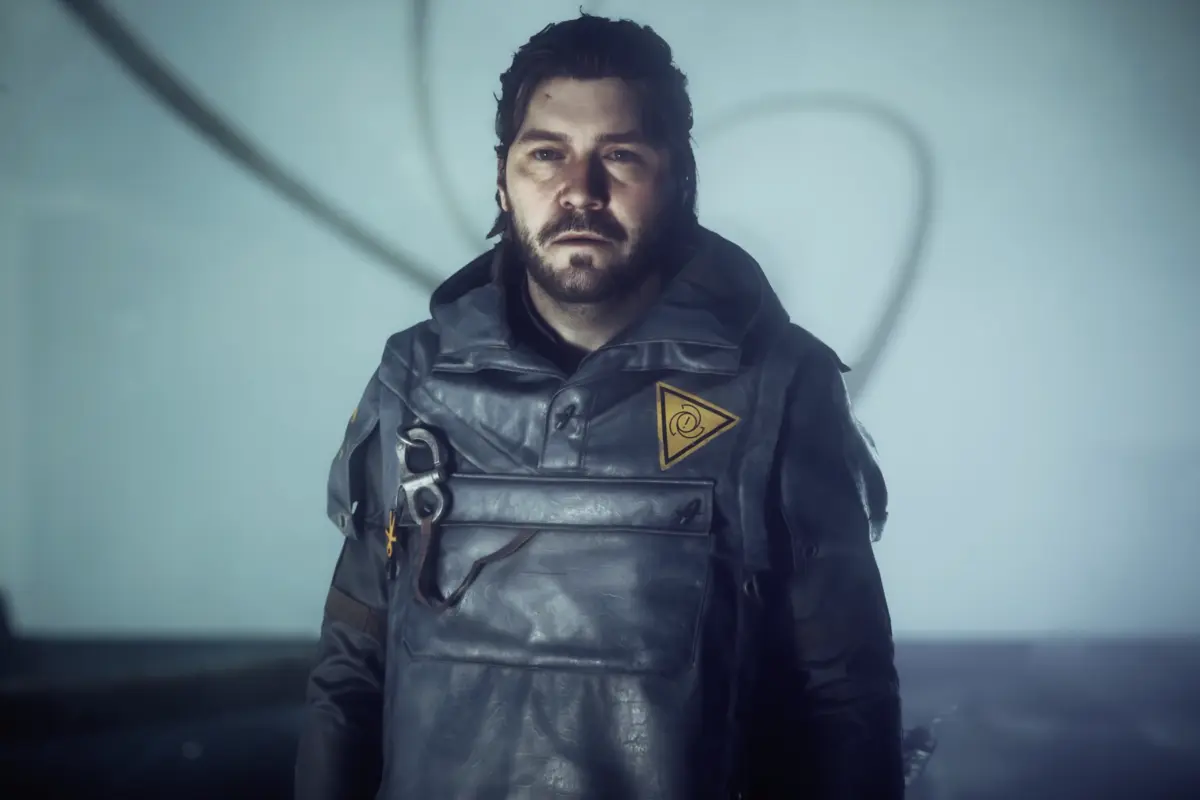
Even more disruptive to the established franchise DNA is the shift in perspective. Jesse Faden, the enigmatic director of the Federal Bureau of Control who anchored the first game, has gone missing. Stepping into the protagonist’s shoes is her younger brother, Dylan Faden, brought back to life through the returning performance of actor Sean Durrie. Dylan’s journey is one of atonement, psychological excavation, and survival, fighting through shifting gravitational anomalies and brutal melee combat to piece together his sister’s fate.
With a heavy narrative emphasis on reverse symmetry, deep-seated guilt, and a brand-new mechanical sandbox featuring close-quarters combat and dynamic traversal, Control Resonant represents Remedy’s most ambitious narrative experiment to date. This report examines the seven-year pipeline behind the game, unpacks exclusive insights from franchise creators and cast members, and evaluates what this release means for the expanding Remedy Connected Universe (RCU).
Detailed Chronology: From The Oldest House to a Warped Manhattan
To fully appreciate the scope of Control Resonant, one must trace the timeline of the franchise’s conceptualization and narrative evolution.
The Genesis of the Faden Siblings (2019–2021)
When Remedy released the original Control in August 2019, players were introduced to Jesse Faden as she crossed the threshold of The Oldest House—the brutalist, extradimensional headquarters of the Federal Bureau of Control (FBC). Jesse’s primary objective throughout that narrative was straightforward yet deeply emotional: she was searching for her younger brother, Dylan, who had been abducted by the Bureau years prior following an Altered World Event (AWE) in their hometown of Ordinary.
By the time players reached the climax of the first game, Dylan’s fate was left in a state of suspended ambiguity. Having been infected and subsequently consumed by the parasitic, reality-corrupting entity known as The Hiss, Dylan fell into a catatonic coma. Meanwhile, Jesse accepted her destiny, embracing the mantle of Bureau Director and finding a strange, comforting sense of belonging within the shifting walls of The Oldest House.
The Seven-Year Development Marathon (2019–2026)
Behind the scenes, Remedy’s leadership immediately began conceptualizing where the universe could expand. Franchise creative director and Remedy co-creative director Mikael Kasurinen and his team recognized that a direct continuation could not simply repeat Jesse’s hero’s journey.
"There’s this interesting kind of reverse symmetry when you look at both games," Kasurinen explains. In the first game, Jesse enters the unknown searching for Dylan, only to inadvertently find herself, her power, and her institutional home. For the sequel, Remedy inverted this structural paradigm entirely.
Development on Control Resonant spanned nearly seven years—a testament to Remedy’s meticulous world-building, technological transitions to their proprietary Northlight engine, and the complexities of designing an entirely reimagined combat and traversal sandbox set against the sprawling, surreal backdrop of a fractured Manhattan.
Awakening in the Wake of Crisis (2026)
Control Resonant begins in the immediate aftermath of an unspecified catastrophe that concluded the events at The Oldest House. Jesse Faden has vanished without a trace. Dylan wakes up from his long coma to a world utterly transformed—and actively tearing apart at the seams.
Rather than waking up to confinement, Dylan finds himself thrust into the chaotic center of a reality-warped New York City. His immediate goal mirrors Jesse’s original quest: find his missing sibling. However, his motivations are entirely distinct. Burdened by memories of his time as a vessel for The Hiss, Dylan is driven by a desperate need for atonement, a reclamation of his stolen humanity, and the forging of emotional connections in a world that views him as a monster.
Supporting Context & Metrics: Mechanics, Combat, and Accessibility
While the narrative DNA of Control Resonant mirrors the thematic beats of its predecessor, the gameplay framework has undergone a thorough transformation. Remedy has deliberately shifted away from pure gunplay to craft a more kinetic, visceral, and spatial experience.
The "Aberrant" and Melee-Centric Combat
In the original Control, players wielded Jesse’s shape-shifting Service Weapon—a supernatural handgun capable of morphing into various configurations from a standard pistol to a rocket launcher. For Control Resonant, Remedy has retired the firearm for the protagonist.
Instead, Dylan wields the Aberrant, a shape-shifting melee weapon. According to Kasurinen, this change was designed to fundamentally alter how players interact with the environment:
"Instead of a gun, Dylan uses a melee weapon. And we wanted to go a lot further into how you can feel like you jump into this interesting, colorful sandbox and making sure that the environments are as versatile as they can be."
This melee-focused approach is complemented by entirely overhauled traversal mechanics. Dylan is capable of manipulating gravity anomalies through a new "shift" mechanic, allowing him to attach himself to walls, ceilings, and floating debris. This verticality turns a reality-warped Manhattan into a three-dimensional playground where combat and evasion happen across multiple spatial planes simultaneously.
Enemy Composition and Combat Philosophy
True to the design philosophy of the first game, Control Resonant avoids the trap of repetitive, single-target combat encounters. Instead, Remedy relies on sophisticated enemy compositions. Players must constantly analyze groups of adversaries, each possessing unique preternatural traits, and adapt their melee combos and gravitational shifts on the fly.
Bridging the Gap for Newcomers
One of the greatest challenges for sequels to lore-heavy games is onboarding new players. Fans walking into Control Resonant without prior knowledge of The Hiss, The Board, or the FBC might easily feel overwhelmed. To mitigate this, Remedy introduced a brand-new narrative anchor: Zoe.
Actor Sean Durrie notes that Zoe’s role in the narrative is pivotal for both veterans and newcomers alike:
"Zoe’s character will be helpful if this is the first venture you’ve had into Control. She’s kind of asking the questions that you may be asking. But if you are well-versed in the lore of Control, you’ll jump right in."
Kasurinen reinforces this sentiment, describing Zoe as the quintessential player avatar for the bewildered civilian caught in a cosmic storm:
"Zoe is, of course, a big new character. Crucial for Dylan, crucial for the storytelling… It’s very much the player perspective into the situation. Like, what the hell is The Hiss? And who’s Jesse? Who are you?"
Official Statements & Cast Insights
Bringing Dylan Faden back to the forefront required actor Sean Durrie to entirely re-evaluate his approach to the character. Speaking on the evolution of his role, Durrie revealed that Remedy’s writers had planted the seeds for Dylan’s sequel arc years before the first game even shipped.
Sean Durrie on Dylan’s Psychological Reconstruction
When Durrie was initially cast for the 2019 game, the creative team gave him a stark preview of where his character’s story arc was heading.
"When they told me about the project and were pitching it to me, we got to the very end and they’re like, ‘And he’s not dead. He’s in a coma,’" Durrie recalls with a laugh. "And so while they didn’t get into the details of where we are today, I knew that they had things up their sleeve right at the beginning."
However, playing Dylan in Resonant required shedding the performance style he used in the original game. In Control, Dylan was actively serving as a conduit and victim of The Hiss—cold, detached, and menacing. In Resonant, the actor had to build an entirely new internal landscape rooted in guilt and recovery.
"I took, in particular, the events of the first game of why he was victimized, letting the Hiss in, his guilt from that, his need for atonement and then now his need to want to rediscover his humanity," Durrie explains.
"So I took his backstory of living in this house since he was 10, and then at one point in time, getting thrown into a cell and forgotten about and so that’s where we really started to find the bits that really made it through to the second game. Performance-wise, he’s infected by The Hiss in the original Control, so he doesn’t act like that anymore, but his memory of it is, his guilt, quite frankly, of it and what he did… and now telling the story of him rediscovering himself."
Mikael Kasurinen on the Symmetrical Narrative Design
For Kasurinen, the decision to swap protagonists was an artistic necessity to keep the franchise fresh while honoring its thematic pillars. By switching from Jesse’s institutional rise within the FBC to Dylan’s desperate, ground-level search across a broken New York City, Remedy has crafted a narrative duology that mirrors itself like a warped looking glass.
"In a way, she found a place to be and she was happy inside The Oldest House," Kasurinen says of Jesse’s arc in the first game. With Resonant, "we turn it the other way around… As he searches for Jesse, we unlock more and more what she’s doing, what she’s dealing with and so on. And we start to understand her choices as well that she took early on in the story. Going further than that would be spoiling it, but both stories revolve around both siblings, and we just basically switch sides in a way."
Future Outlook: The Remedy Connected Universe Expansion
The launch of Control Resonant is more than just the release of a single-player action-adventure game; it is a foundational milestone for the ongoing expansion of the Remedy Connected Universe (RCU).
Following the successful integration of Alan Wake 2 and its subsequent expansions, Remedy has systematically proven that its intellectual properties exist within a shared, highly coordinated metaphysical ecosystem. The Federal Bureau of Control acts as the narrative glue holding these disparate stories together, monitoring altered world events and supernatural phenomena that bleed from one reality into another.
By taking the Control franchise out of the brutalist, hermetically sealed confines of The Oldest House and exposing it to the open, public expanse of a reality-warped Manhattan, Remedy has radically widened the blast radius of the RCU. The metaphysical crisis affecting New York in Resonant is unlikely to remain isolated. It signals that the anomalous threats facing the world are escalating beyond containment procedures, moving from bureaucratic containment zones directly into the public sphere.
As players log onto Steam, the Epic Games Store, PlayStation 5, and Xbox Series X/S to guide Dylan Faden through his harrowing journey of atonement, the gaming community will undoubtedly comb through every audio log, environmental clue, and Easter egg for hints regarding Jesse Faden’s whereabouts—and how this reality-bending crisis ties back to the broader, interconnected cosmic horrors of the Remedy universe.
With seven years of meticulous development behind it, Control Resonant stands as a bold, beautifully asymmetric evolution of Remedy’s craft—proving that sometimes, to understand where a story is going, you have to look backward through the eyes of the person left behind.