







By Drew Robb, Infrastructure and Enterprise Technology Correspondent
Executive Overview
The global artificial intelligence revolution is running at an unprecedented velocity, creating a massive infrastructural shockwave across the energy sector. As hyperscalers race to build out the computational foundation for generative models, large language models, and deep-learning workloads, the demand for power has skyrocketed. Google alone now processes more than 3 quadrillion AI tokens per month—a staggering sevenfold increase in compute demand between May 2025 and May 2026.
This astronomical surge has created a monumental engineering and operational hurdle: matching the lightning-fast deployment cycles of AI silicon with the notoriously sluggish, multiyear timelines required for utility capacity expansion and grid infrastructure upgrades.
To bridge this widening gap, Google is overhauling its entire technical and operational stack. Speaking at the Data Center World Power 2026 conference in Houston, Tom Garvens, Vice President of Advanced Technology Innovation at Google, laid out the company’s ambitious, full-stack strategy. Rather than viewing data centers as isolated, passive consumers of electricity, Google is redefining them as active, grid-stabilizing partners. By combining vertical hardware integration—spanning proprietary chips, custom servers, advanced rack layouts, and purpose-built facilities—with cutting-edge energy management techniques, Google aims to keep pace with relentless silicon roadmaps without destabilizing local power grids.
Detailed Chronology: The Evolution of AI-Scale Power Infrastructure
The transformation of Google’s data center strategy did not happen overnight; it is the result of a multi-year engineering pivot driven by the explosive scaling laws of modern AI infrastructure.
The Early Expansion Phase (Pre-2024)
In the early days of the generative AI boom, data centers scaled linearly using traditional paradigms. Hyperscalers relied on centralized Uninterruptible Power Supply (UPS) systems, standard air cooling, and conventional grid interconnections. However, as cluster sizes expanded from thousands to tens of thousands of interconnected GPUs, these legacy architectures began to show severe signs of strain. Centralized power conversion led to compounding efficiency losses, and diesel backup generators—while reliable—faced acute scaling limitations when campuses pushed toward gigawatt capacities.
The Shift Toward Grid Integration and Micro-Efficiency (2024–2025)
Recognizing that traditional utility expansion could not keep pace with model training demands, Google began shifting its focus toward decentralized power architectures. The company phased out legacy centralized UPS designs in favor of rack-level battery backup systems operating at 54 volts direct current (VDC). By bringing power conversion to the top of the rack and eliminating redundant AC-DC-AC conversion steps, engineers unlocked an immediate 1.5% efficiency gain.
Concurrently, Google began forging deeper partnerships with energy providers, recognizing that gigawatt-class campuses require sophisticated demand-response agreements. Instead of simply pulling power from the grid, Google’s facilities began utilizing Battery Energy Storage Systems (BESS) to smooth out voltage fluctuations, absorb peak loads, and provide instant standby power without immediately firing up diesel generators.
The Modern Frontier: Gigawatt Campuses and Full-Stack Innovation (2026 and Beyond)
Today, Google’s infrastructure strategy has evolved into a comprehensive, full-stack ecosystem. At Data Center World Power 2026, the company outlined its current deployment of gigawatt-class campuses, where hundreds of thousands of specialized chips operate as a single, unified supercomputer.
To manage these massive loads, Google is actively collaborating with industry titans—including Meta, Microsoft, and Nvidia—to establish unified interface specifications that govern how hyperscalers and utility providers interact. Furthermore, the company is preparing for the next generation of high-density infrastructure by pioneering 800 VDC power distribution roadmaps and closed-loop liquid cooling systems, ensuring that every watt of electricity is utilized with maximum efficiency.
Supporting Context & Metrics: Overcoming the Gigawatt Challenge
Powering modern AI infrastructure requires navigating a complex web of physical, thermodynamic, and logistical constraints. As rack densities soar and chip roadmaps accelerate, Google and the broader tech industry are deploying radical new metrics and technologies to maintain operational efficiency.
Quantifying the Compute Explosion
- 3 Quadrillion+ Tokens: The volume of AI tokens processed monthly by Google, representing a 7x leap in compute demand between May 2025 and May 2026.
- Gigawatt-Class Campuses: Modern AI data center clusters now scale to 1 GW and beyond, housing hundreds of thousands of interconnected accelerators running a continuous, heavy workload.
- 1.5% Efficiency Gain: The measurable boost achieved by eliminating centralized UPS systems and implementing rack-level 54 VDC power distribution.
- Toward 1.0 PUE: While absolute perfection remains thermodynamically impossible, Google continues to push its Power Usage Effectiveness (PUE) closer to the ideal baseline of 1.0.
Inside the Rack: 54 VDC Today, 800 VDC Tomorrow
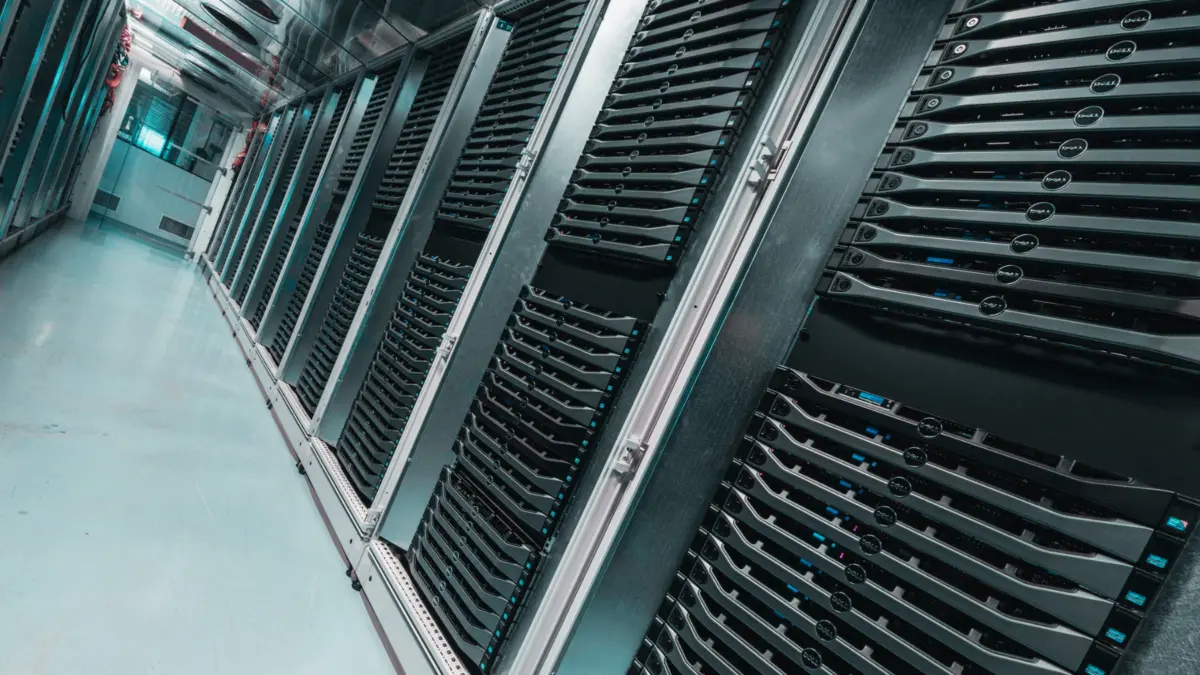
Rack density remains one of the most critical bottlenecks in modern data center design. Industry roadmaps indicate that individual server racks will soon approach 1 megawatt (MW) of power consumption. Delivering massive current at lower voltages through traditional copper cabling would require unmanageable amounts of heavy bus bars and copper—a major supply chain vulnerability.
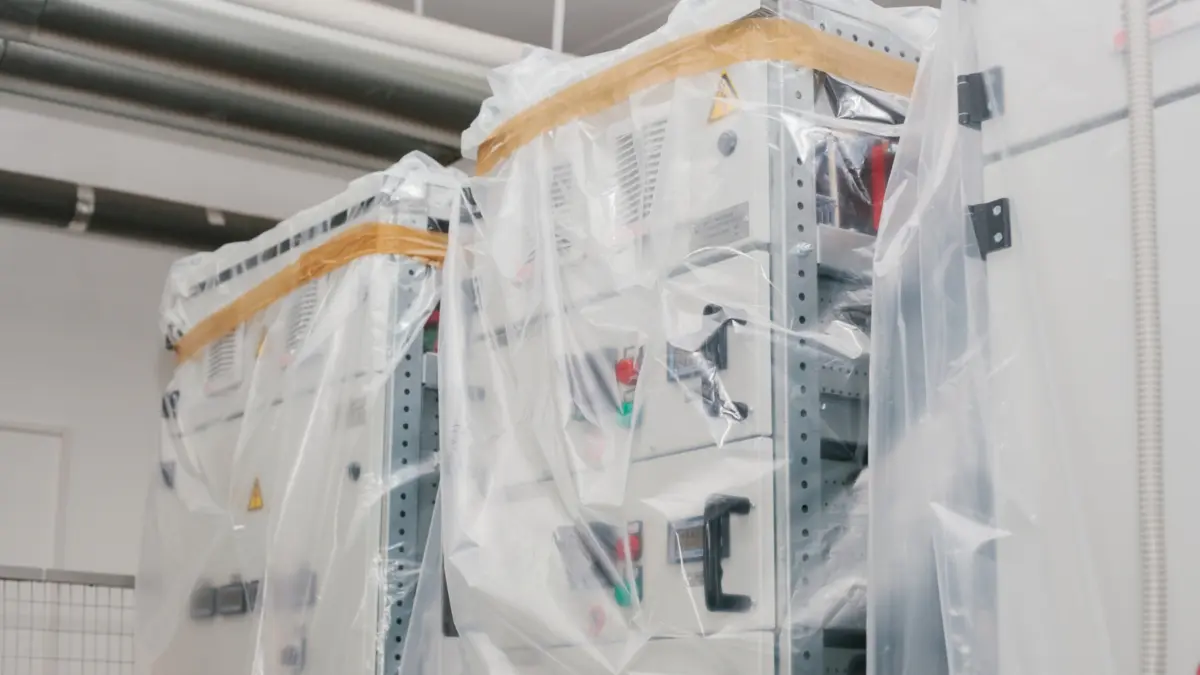
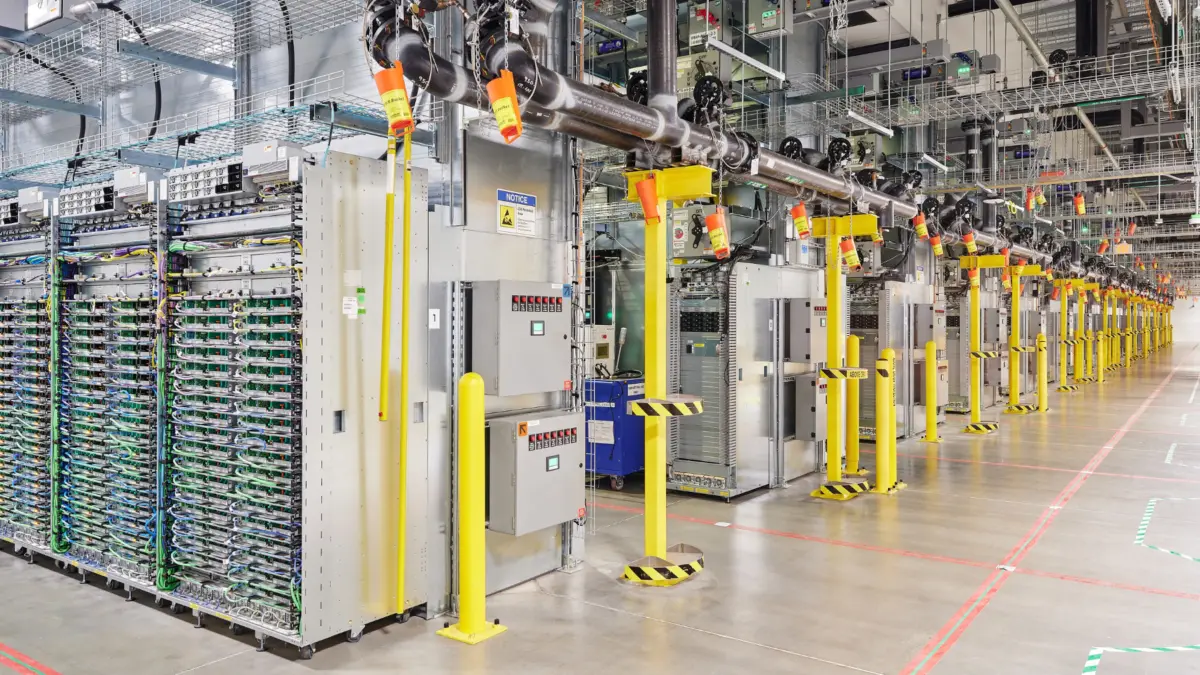
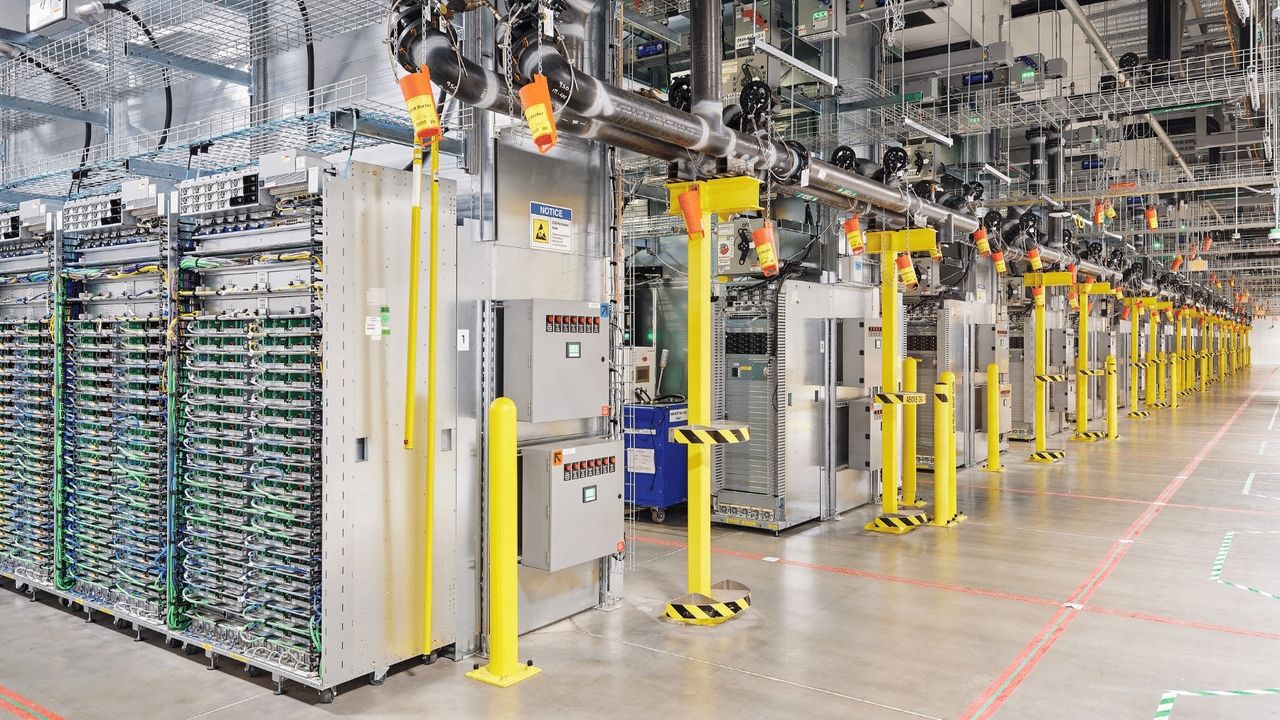
To circumvent this, Google utilizes temporary "sidecars"—adjacent power-distribution enclosures that house cabling and power gear, keeping the primary server racks dedicated entirely to high-density compute hardware. Looking ahead, Google is spearheading the migration toward an 800 VDC power distribution architecture. Once this standard matures over the next couple of years, these sidecars can be stripped of their interim power gear and converted into additional AI server racks.
Additionally, Google is working alongside industry groups to mature solid-state transformers (SSTs), which promise to revolutionize voltage step-down efficiency and grid interfacing for next-generation facilities.
Official Statements and Industry Insights
The complexity of scaling AI infrastructure has fostered a spirit of unprecedented collaboration between hyperscalers, silicon designers, and utility companies.
Highlighting the importance of vertical integration, Tom Garvens, Vice President of Advanced Technology Innovation at Google, emphasized during his Houston keynote:
"Google has tightly coupled vertical integration in AI along with close partnerships with energy providers. We develop and design our own data centers, chips, servers, and rack designs. By having control of our entire hardware and software stack, we can optimize these things together for sustainability and energy efficiency."
Garvens also underscored the necessity of standardized communication protocols between massive tech operations and regional utilities:
"Utilities are setting different requirements that we must demonstrate that we can meet. Google, Meta, Microsoft, and Nvidia have come together to define an interface spec on how utilities and hyperscalers can interface with each other."
Addressing the delicate balance between grid stability and continuous model training, Garvens explained how Google utilizes its sprawling geographic footprint to absorb local power stresses:
"If there’s a heat wave in Ohio and we were running a big workload, we’ve got agreements in place whereby with the right amount of foresight we can shut certain workloads down or move them elsewhere if they’re critical. We have a portfolio where we can shift things around."
On the fundamental economics of modern compute, Garvens offered a guiding philosophy for the entire engineering team:
"The most precious thing we have is a watt: you don’t want to ever strand a watt. So, making our data center and our designs as crisp as we can for as far out as we can see in these roadmaps, it’s why our partnerships with our silicon and GPU design teams are so critical."
Future Outlook: The Road Ahead for AI Infrastructure
As the artificial intelligence landscape matures, the convergence of energy management, hardware engineering, and software orchestration will dictate which organizations successfully scale and which hit a physical wall. Google’s multi-pronged strategy provides a blueprint for the future of hyperscale computing.
1. Decentralized Power and Grid Partnership
Rather than placing an unmanageable burden on saturated urban power grids, Google is increasingly eyeing remote geographic locations and small towns with ample land and available power capacity. In these regions, the data center often serves as a primary economic engine while simultaneously functioning as an active participant in local grid stability through demand-response agreements and advanced BESS deployment.
2. The Evolution of Liquid Cooling and Water Resilience
Water scarcity and thermal management will continue to dictate facility design. Google’s transition toward closed-loop cooling systems—where sealed liquid circuits minimize makeup water consumption—highlights a vital pivot away from water-intensive evaporative cooling towers. By tailoring cooling architectures to local environmental conditions (such as altitude, humidity, and drought risk), Google is engineering resilient facilities capable of withstanding regional climate pressures.
3. Open Standards and Industry Interoperability
No single company can solve the energy crisis of the AI era in isolation. Through active contributions to communities like the Open Compute Project (OCP), Google is helping to standardize power delivery, server architecture, and cooling specifications. By sharing these specifications openly, the company aims to foster an interoperable ecosystem where suppliers, utilities, and tech giants can collectively build a more sustainable and efficient digital future.