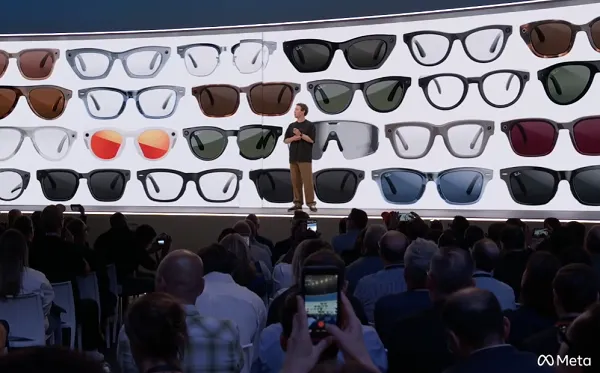
At the annual Meta Connect conference held in Menlo Park this week, Meta Platforms Inc. officially codified its strategic pivot from the long-hyped "metaverse" toward pervasive artificial intelligence. Chief Executive Officer Mark Zuckerberg delivered a landmark keynote addressing thousands of developers, industry analysts, and media personnel, detailing how rapid, unexpected advancements in machine intelligence forced a fundamental restructuring of the tech giant’s roadmap.
While hardware remains an indispensable medium for Meta, the core philosophy driving the company’s product ecosystem has fundamentally shifted. AI is no longer a secondary feature supplementing immersive virtual spaces; rather, ambient and agentic artificial intelligence now serves as the foundational operating system underpinning Meta’s entire hardware and software portfolio.
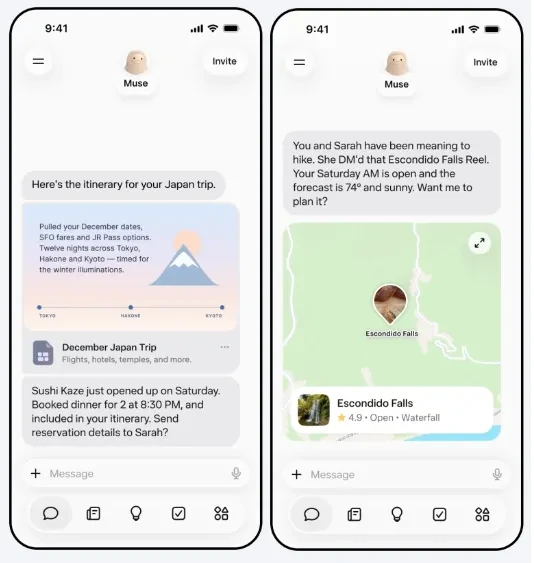
The crown jewel of this year’s announcements is Meta Muse, a sophisticated personal AI agent designed to act as an omnipresent digital concierge for users across platforms. Alongside Muse, Meta unveiled a heavily fortified security infrastructure—anchored by Meta Secure VM—to address mounting consumer and regulatory anxiety regarding data privacy. Furthermore, the company showcased a stunning hardware refresh that included the next-generation Ray-Ban Meta Gen 3 smart glasses, audio-only AI wearables, high-profile celebrity collaborations featuring K-pop superstar Lisa, and an ultra-lightweight, tethered virtual reality headset that slashes the physical weight of previous iterations by a factor of five.
As Meta positions itself to compete aggressively against rival tech conglomerates in the consumer AI and spatial computing arenas, the announcements made at Connect 2026 mark a watershed moment. This report provides an exhaustive, multi-faceted breakdown of the disclosures, technological breakthroughs, security architectures, and future market implications stemming from Meta’s flagship event.
Detailed Chronology & Key Announcements
1. The Strategic Pivot: From Metaverse Vision to AI Supremacy
The overarching narrative of Meta Connect 2026 was the formal acknowledgment of Meta’s strategic recalibration. During the opening moments of his keynote, Zuckerberg reflected on the genesis of the company’s hardware division. When Meta first began engineering smart glasses and immersive headsets, leadership operated under the theoretical assumption that the metaverse would mature first, paving the way for artificial superintelligence down the line.
However, the explosive, exponential velocity of generative and agentic AI development disrupted this hypothesis. Recognizing that contextual intelligence would dictate consumer adoption, Meta inverted its priorities. The metaverse—while remaining a critical component of the company’s long-term vision—is now treated as the spatial container for AI agents rather than the primary destination itself.
2. Meta Muse: The Flagship Personal AI Agent
At the center of this new ecosystem is Meta Muse, a personal AI agent engineered to manage complex, multi-step workflows across digital environments. Chief AI Officer Alexandr Wang joined Zuckerberg on stage to outline the functional evolution of Muse and preview the upcoming capabilities designed to make the agent deeply integrated into daily human workflows.
Dedicated Email Integration: To expand its utility as a true agentic assistant, Meta is rolling out dedicated email addresses for Muse agents, enabling them to autonomously process correspondence, schedule meetings, and communicate on behalf of the user.
Ecosystem Partnerships: Muse is breaking out of closed loops through major commercial integrations. Meta announced strategic partnerships with retail and service giants including Walmart, BestBuy, Gap, Sephora, Expedia, Instacart, and Wayfair. These collaborations allow Muse to execute transactions, compare products, and manage logistics seamlessly across third-party platforms.
Regional Expansion and Customization: Zuckerberg announced that Muse is officially launching in Canada, expanding its geographic footprint beyond the United States. Additionally, users will soon be granted deep voice customization options to tailor the conversational tone and pitch of their Muse agent.
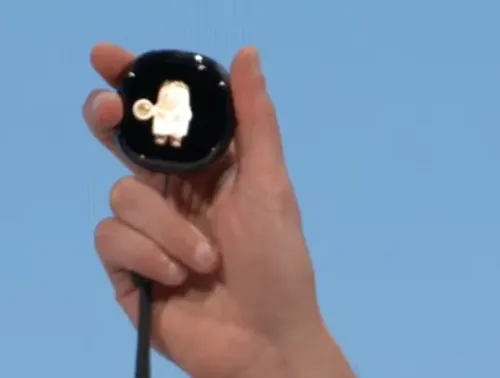
Muse Charm Preview: Looking toward the future of ambient computing, Zuckerberg offered a first look at Muse Charm—an experimental, Tamagotchi-inspired pocket device. The Charm provides a screen-agnostic, persistent physical touchpoint for users to interact with their Muse agent without wearing glasses.
3. Hardware Reinvention: Ray-Ban Meta Gen 3 and Audio-Only Wearables
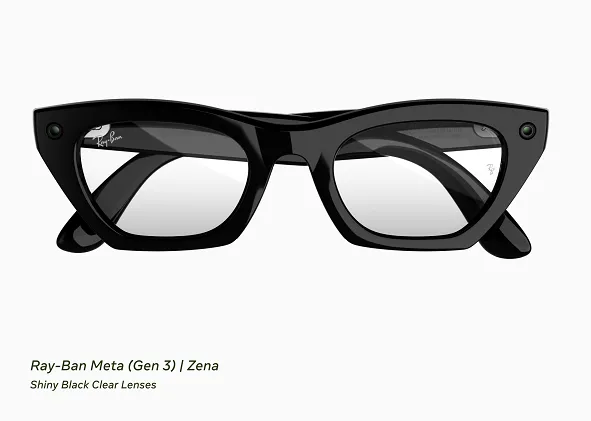
Building upon the commercial success of previous generations, Meta introduced the Ray-Ban Meta Gen 3, featuring a significantly slimmed-down frame profile, enhanced power efficiency, and extended battery longevity.
Advanced Audio and Spatial Capture: The Gen 3 device introduces state-of-the-art capture modes, headlined by Dolby Atmos spatial audio capture. This technology accurately maps and re-creates 3D acoustic environments, ensuring video clips captured through the glasses mirror the dynamic soundscapes experienced by the user in real time.
Expanded Style Lineup: Meta previewed multiple new aesthetic variations, including the sophisticated Aviator and Zena styles, alongside an updated Adventurer model priced competitively at $249.
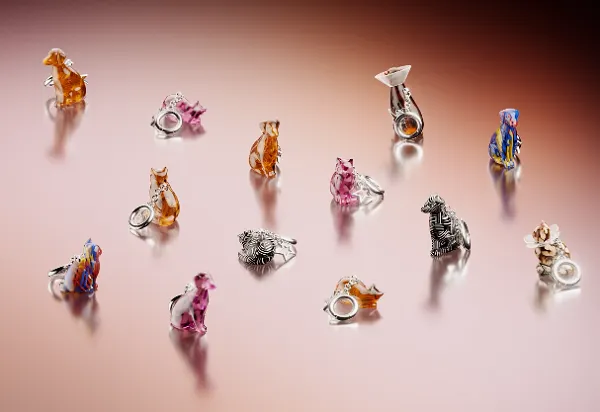
The Lisa Collaboration: Mirroring previous limited-edition drops with cultural icons like Kylie Jenner, Meta announced an exclusive collaboration with K-pop sensation Lisa. The custom frames will feature unique design flourishes and come packaged with collectible charms inspired by her personal pets.
Audio-Only AI Glasses: Addressing feedback from consumers who desire hands-free connectivity to Meta AI without the social friction, regulatory scrutiny, or privacy concerns associated with outward-facing cameras, Meta announced a new line of dedicated audio-only glasses. Furthermore, Zuckerberg highlighted updated acoustic features specifically calibrated to assist hearing-impaired users.
4. Breakthrough VR: The Ultra-Lightweight Tethered Headset
Perhaps the most stunning engineering feat revealed at Connect 2026 was Meta’s next-generation virtual reality hardware, developed collaboratively by Zuckerberg and Reality Labs Chief Andrew Bosworth.
Weight Reduction through Architectural Shift: Traditional VR headsets have long struggled with ergonomic fatigue due to the heavy computing components and lithium-ion batteries housed within the facial visor. Meta bypassed this limitation by switching to a tethered architectural model.
The "Puck" System: As detailed in official company documentation, the new VR glasses handle internal sensors and visual displays locally, while a separate computational unit—affectionately dubbed the "puck"—houses the primary processors, battery cells, and storage drive. Connected via a high-bandwidth optical tether, the puck conveniently clips onto a user’s pocket or bag.
Immersive Integration: This engineering pivot results in a device that is five times lighter than the current Meta Quest 3 headset, bringing the physical weight of the glasses down to a mere 100 grams. The device deeply integrates the Muse AI agent, enabling hands-free navigation of virtual workspaces, spatial entertainment, and gaming.
Pricing and Availability: Meta’s next-gen VR glasses will retail for $1299 and are scheduled to ship globally starting in the spring.
Supporting Context & Metrics
The 2026 conference metrics reflect a company aggressively realigning its capital allocation to capture market share in generative infrastructure and wearable tech.
Metric / Feature
Specification / Detail
New VR Headset Weight
~100 grams (5x lighter than Meta Quest 3)
VR Headset Architecture
Tethered design with pocket-clipped "puck" (compute/battery)
Throughout the keynote, data privacy emerged as a recurring, defensive theme. Following mounting public scrutiny regarding LED indicator tampering on earlier smart glasses models—coupled with consumer anxiety over whether human reviewers could access captured visual data—Meta took proactive measures.
Zuckerberg dedicated substantial airtime to explaining Meta Secure VM, a cryptographic isolation environment that processes personal data locally and securely within isolated virtual machines. Meta emphasized that this architecture ensures user information remains strictly confidential, with absolute technical barriers preventing even Meta staff from accessing private streams generated by Muse or Meta Glasses.
Official Statements
Addressing the shift in company vision, CEO Mark Zuckerberg noted during his opening keynote:
"When we first started building glasses, our thesis was that the metaverse would come first, and that artificial superintelligence would follow much later. That foundational assumption is why our early R&D was heavily weighted toward immersive virtual spaces. But the staggering velocity of AI advancement fundamentally altered that timeline. We had to adapt, and we had to put AI functionality front and center across everything we build."
Highlighting the engineering breakthrough behind the new spatial computing hardware, Meta’s official product release notes stated:
"The VR Glasses handle the sensors and display, while the puck, connected by an optical tether, handles compute, battery, and storage, and conveniently clips to your pocket or bag."
Discussing the platform expansion of Meta Muse, Chief AI Officer Alexandr Wang remarked:
"Muse is not just an interactive chatbot; it is an agentic framework designed to act on your behalf. By equipping Muse with dedicated email endpoints and deep partnerships with foundational commerce platforms like Walmart, Sephora, and Expedia, we are transitioning AI from a passive assistant into an active participant in your daily digital life."
Future Outlook & Industry Implications
Meta Connect 2026 signals a definitive maturation of the consumer AI and wearable tech markets. By systematically solving major friction points—such as the ergonomic weight of VR headsets, the social anxiety surrounding camera-equipped smart glasses, and the severe lack of enterprise integration in personal assistants—Meta has laid out a compelling blueprint for the future of ambient computing.
1. Competitive Pressures in Agentic AI
By opening Muse up to major third-party retailers and service providers, Meta is attempting to establish a dominant ecosystem moat. If consumers can seamlessly book travel via Expedia, re-stock groceries via Instacart, and manage wardrobe styling through Gap all via conversational prompts inside their Ray-Ban glasses or Muse Charm, Meta effectively bypasses traditional app store gatekeepers. This strategy places direct pressure on competitors like Apple, Google, and OpenAI to accelerate their own agentic hardware integration.
2. The Normalization of Spatial Computing
While the $1,299 price tag of the ultra-lightweight VR glasses positions them as a premium, enthusiast-grade device for early adopters, the migration to a tethered, pocket-puck design solves the primary ergonomic hurdle that has hindered mass-market adoption of mixed-reality headsets. By reducing facial load down to 100 grams, Meta has successfully transitioned virtual reality from a bulky, isolating indoor gaming accessory into a sleek, functional personal cinema and virtual workstation.
3. Restoring Public Trust
The aggressive rollout of Meta Secure VM and audio-only AI glasses demonstrates an acute awareness of the reputational risks facing pervasive recording hardware. As regulatory bodies globally tighten compliance frameworks surrounding biometric data collection and ambient surveillance, Meta’s strict zero-access privacy guarantees will be rigorously tested by privacy advocates and security researchers alike.
Ultimately, Meta Connect 2026 proved that the company is no longer waiting for the distant, fully realized metaverse to justify its hardware investments. By anchoring its entire hardware lineup to the intelligent, secure, and highly agentic capabilities of Meta Muse, Meta has charted a pragmatic, aggressive course toward the next generation of human-computer interaction.