







Executive Overview
The global appetite for digital compute is colliding with an unforgiving physical reality: the electrical grid can no longer keep up. Across North America, Europe, and key Asia-Pacific markets, data center operators face unprecedented hurdles when trying to break ground on new facilities. Siting challenges have grown increasingly complex, approval timelines stretch across years rather than months, and severe grid capacity constraints mean that securing a new megawatt of utility power is harder than ever.
Compounding these infrastructure bottlenecks are rising tides of local community opposition. Residents and municipal leaders are increasingly pushing back against the massive water consumption, noise pollution, and visual footprint of greenfield data center developments.
For many industry operators, building new campuses from scratch is no longer the fastest or most economically viable path forward. Instead, a quiet revolution is taking place inside existing facilities. Rather than expanding outward, operators are looking inward, turning to data center densification—the practice of maximizing the compute capacity, power draw, and workload efficiency within a building’s existing footprint.
As artificial intelligence (AI), machine learning (ML), and high-performance computing (HPC) drive demand for hyper-dense GPU architectures, densification has evolved from a clever retrofitting trick into an essential operational strategy. By deploying taller, uniform server cabinets, modernizing power distribution units (PDUs), and transitioning to advanced liquid cooling, data centers are unlocking massive performance gains without laying a single foot of new foundation. However, this high-density pivot is not without its perils. Balancing thermal loads, managing localized electrical strain, and navigating stringent regulatory environments require precise planning, heavy capital reinvestment, and a profound shift in facility management.
Detailed Chronology: The Evolution Toward High-Density Facilities
To understand how the data center industry arrived at the current densification imperative, it is helpful to trace the structural shifts in server architecture and power demand over the past two decades.
- The Low-Density Era (Early 2000s – 2010s): For years, standard enterprise data centers operated on low-density parameters. Traditional CPU-based server racks typically drew between 3 kilowatts (kW) and 5 kW of power. Floor plans were designed with expansive, wide-aisle layouts, and standard raised-floor cooling systems driven by Computer Room Air Conditioner (CRAC) units were more than sufficient to handle thermal loads. Space was cheap, power was abundant, and density was rarely a primary metric of concern.
- The Cloud Scaling Phase (2010s – Early 2020s): The rapid rise of hyperscale cloud providers (AWS, Microsoft Azure, Google Cloud) shifted the focus toward footprint efficiency. Virtualization allowed operators to pack more virtual machines onto single physical servers, driving rack densities up to the 7 kW to 10 kW range. While virtualization optimized software workloads, physical infrastructure still relied heavily on traditional air-cooling methodologies and standard server cabinet designs.
- The AI Inflection Point (2023 – Present): The mainstream commercialization of generative AI and large language models (LLMs) shattered historical power paradigms. Modern GPU-accelerated server clusters—such as those housing dense arrays of NVIDIA H100 and Blackwell chips—routinely demand between 40 kW and 100 kW+ per rack. Traditional infrastructure was instantly rendered obsolete. Because greenfield construction timelines could not match the explosive demand for AI compute, operators initiated the "Great Densification," racing to retrofit legacy data halls to handle extreme power and thermal densities within their current walls.
What Is Data Center Density?
At its core, data center density describes how much computational workload a facility can support within a given amount of physical space. Rather than being a single metric, density is typically evaluated through two complementary lenses:
- Rack Density (Power per Cabinet): Measured in kilowatts per rack (kW/rack), this metric quantifies the electrical power delivered to and consumed by a single server cabinet. While a standard legacy rack might hover around 5 kW, modern high-density AI deployments regularly demand 40 kW, 50 kW, or even upwards of 100 kW in specialized enclosures.
- Floor-Space Density (Compute per Square Foot): Expressed in kilowatts per square foot (kW/sq. ft.), this measures the operational efficiency of the data hall footprint. High floor-space density means an operator is maximizing the utility of every square inch of raised floor or slab space, minimizing wasted corridors, and optimizing the proximity of compute nodes to power and cooling infrastructure.
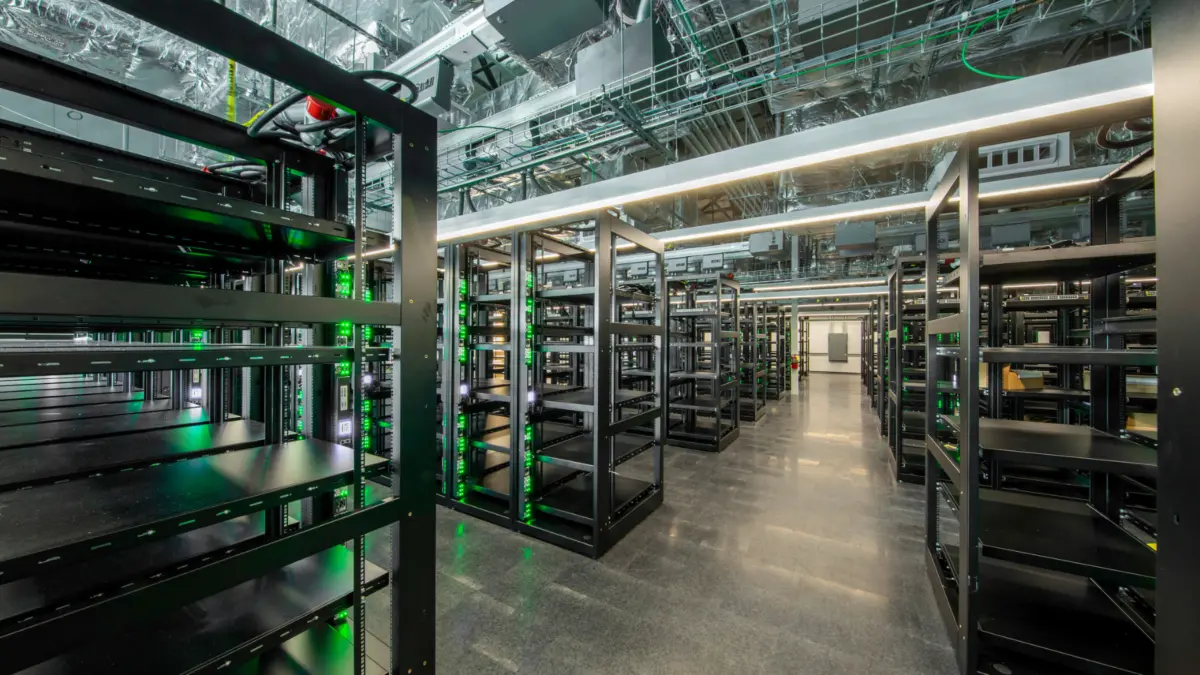
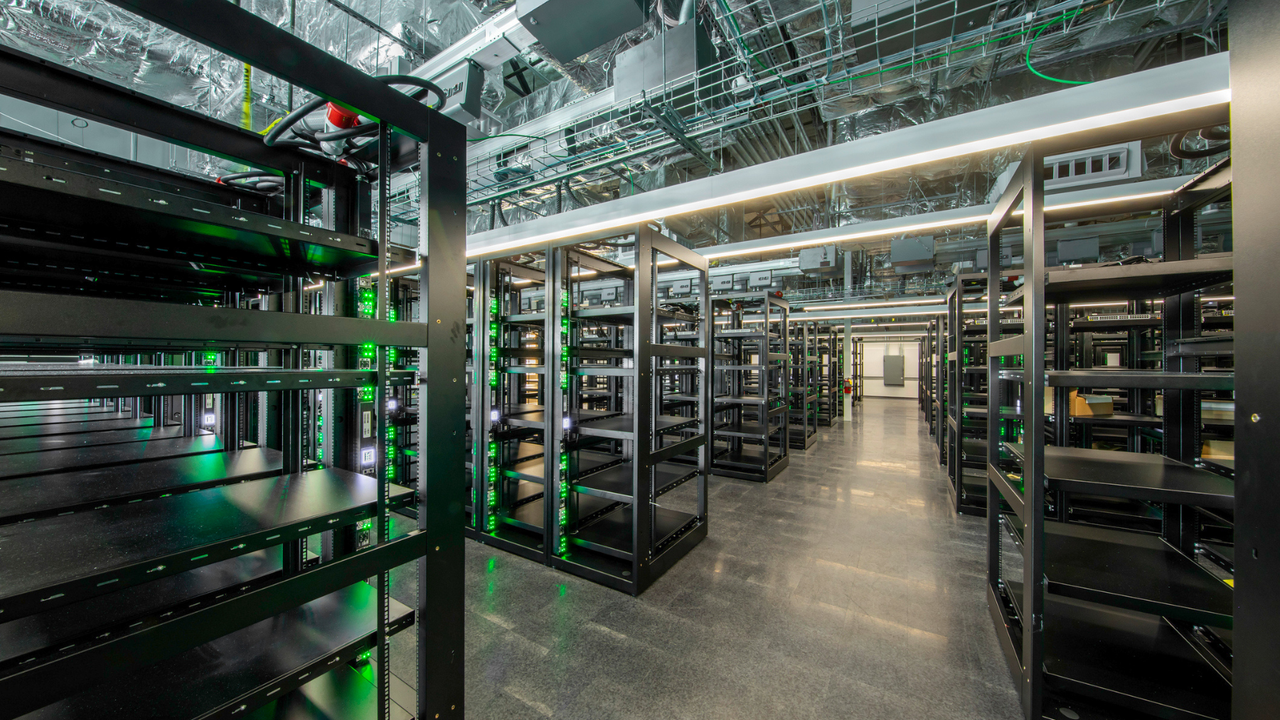
Achieving higher density is not merely a matter of sliding more hardware into an existing rack. It requires a holistic re-engineering of the server enclosure. Taller, uniform cabinets increase per-rack capacity and simplify power and cooling distribution, unlocking hidden capacity without expanding the building’s physical boundaries.
The Case for Densification in the AI Era
The financial, environmental, and operational arguments for densification are compelling, particularly against the backdrop of an unforgiving macroeconomic and regulatory landscape.
1. Speed to Market
Building a greenfield data center can take anywhere from 36 to 60 months from initial site acquisition to commissioning. This timeline encompasses land purchase, zoning board hearings, environmental impact assessments, utility interconnection studies, and actual construction. In contrast, densifying an existing facility can often be accomplished in a fraction of that time—frequently within 6 to 18 months. In the fast-moving AI race, speed to market can dictate whether a provider captures lucrative enterprise contracts or loses market share to more agile competitors.
2. Mitigation of Siting and Permitting Risks
Securing land with guaranteed multi-megawatt power allocations is arguably the greatest challenge facing digital infrastructure developers today. By focusing on densification, operators bypass the treacherous waters of site selection. They utilize existing real estate, pre-established fiber interconnects, and current utility pathways. This dramatically reduces exposure to local community opposition, municipal zoning disputes, and lengthy environmental permitting processes that frequently derail new builds.
3. Capital Expenditure Efficiency
Constructing a new data center requires massive upfront capital expenditure (CapEx) for shell construction, primary electrical substations, and generator yards. Densification leverages existing real estate and foundational support infrastructure. While retrofitting a data hall requires significant investment in advanced cooling loops and high-capacity busways, it is typically far more cost-effective per megawatt of newly enabled compute than building a brand-new facility from the ground up.
4. Matching Compute Intensity
Modern systems—particularly GPU-accelerated servers built for heavy AI training, complex simulations, and deep learning—draw substantially more power per square foot than legacy enterprise architectures. Trying to support these workloads by building more low-power racks is fundamentally inefficient. Densification allows operators to concentrate high-performance workloads where existing operations, security, and network connectivity can adequately support them.
How to Increase Rack and Floor Density
Transforming a legacy data center into a high-density AI powerhouse involves a strategic combination of structural, electrical, and mechanical upgrades. Operators rely on several proven tactics to boost capacity:
- Upgrading Power Distribution: Legacy data centers often rely on underfloor cabling and traditional Power Distribution Units (PDUs) that cannot safely handle high-amperage draws. Modernizing involves installing overhead busway systems, high-capacity whips, and intelligent rack power distribution units (rPDUs) capable of safely delivering continuous high-voltage power to dense server chassis.
- Deploying Taller, Uniform Cabinets: Transitioning from standard 42U server racks to taller 48U or 52U enclosures allows operators to verticalize their compute assets. Uniform cabinet standardization also optimizes internal airflow management, preventing hot spots and ensuring predictable thermal exhaustion.
- Transitioning from Air to Liquid Cooling: Traditional forced-air cooling systems hit a hard thermodynamic wall at approximately 20 kW to 30 kW per rack. To safely support 50 kW+ AI racks, operators must integrate liquid cooling methodologies. This includes direct-to-chip liquid cooling (utilizing cold plates attached directly to high-heat components like GPUs and CPUs) and rear-door heat exchangers (RDHX) that capture heat at the point of origin before it enters the room’s ambient air.
- Optimizing Floor Layouts and Containment: Implementing strict hot-aisle/cold-aisle containment systems prevents the mixing of supply and exhaust air. By physically isolating thermal streams, operators can push air-cooling systems closer to their absolute efficiency limits while preparing adjacent zones for hybrid liquid-cooled deployments.
Constraints to Manage: Power, Cooling, Serviceability, and Permits
While densification offers a pragmatic escape route from greenfield construction delays, it introduces a complex array of engineering and operational challenges that must be meticulously managed.
+-----------------------------------------------------------------+
|               KEY DENSIFICATION CHALLENGES                      |
+---------------------+-------------------------------------------+
| Power Bottlenecks   | Localized electrical strain; need for     |
|                     | upgraded busways and substation feeds.    |
+---------------------+-------------------------------------------+
| Thermal Limits      | Air cooling failure at 30+ kW/rack;       |
|                     | mandatory shift to liquid cooling loops.  |
+---------------------+-------------------------------------------+
| Structural Load     | Heavier equipment strains raised floors   |
|                     | and slab weight limits.                   |
+---------------------+-------------------------------------------+
| Regulatory & Code   | Compliance with fire suppression, OSHA,   |
|                     | and local building codes for high loads.  |
+---------------------+-------------------------------------------+
1. Power and Electrical Infrastructure Strain
Even though densification avoids the need for brand-new utility interconnects, existing facilities still have a finite electrical ceiling governed by their localized utility feeds and on-site transformers. Pumping 50 kW into a rack space previously designed for 5 kW can instantly overload localized branch circuits and switchgear. Operators must carefully calculate load capacities, upgrade internal distribution paths, and often implement advanced energy storage systems (BESS) or microgrid solutions to smooth out peak load demands.
2. Thermal Management and Fluid Safety
Integrating liquid cooling into legacy facilities introduces entirely new operational risks. Bringing pressurized water or specialized dielectric coolants directly into server cabinets raises legitimate concerns regarding leaks, hardware corrosion, and maintenance safety. Facilities teams must retrain personnel to handle closed-loop liquid systems, install robust leak-detection monitoring networks, and ensure that facility water pumps feature adequate redundancy.
3. Structural Floor-Load Limits
High-density GPU servers are exceptionally heavy. A fully populated cabinet packed with multi-node AI accelerators can weigh thousands of pounds, frequently exceeding the structural weight limits of traditional raised-access flooring systems. Retrofitting often requires reinforcing concrete slabs, installing structural support frames, or shifting entirely to slab-on-grade designs to prevent catastrophic floor collapse.
4. Serviceability and Maintenance
Packing more compute into tighter spaces inherently complicates equipment maintenance. Technicians working in high-density environments face restricted physical access, heavier component lifting requirements, and intense localized ambient heat if cooling systems temporarily falter. Designing modular, easily swappable server sleds and improving ergonomic workspace design within the data hall is critical to maintaining high mean-time-to-repair (MTTR) metrics.
5. Permitting and Building Code Compliance
Modifying an existing facility to handle extreme high-density loads often triggers municipal building code reviews and fire safety audits. Altering electrical distribution pathways and introducing large volumes of cooling fluids requires updated permits, strict adherence to NFPA (National Fire Protection Association) standards, and specialized fire suppression systems that protect sensitive electronics without endangering human operators.
Supporting Context & Metrics
The shift toward data center densification is backed by compelling industry data:
- The Power Density Leap: According to recent industry telemetry, the average enterprise rack density has climbed from roughly 6.5 kW in 2020 to projected averages exceeding 30 kW to 50 kW per rack for AI-optimized facilities by the end of 2026.
- Capital Expenditure Savings: Retrofitting and densifying existing facilities can reduce capital expenditures by 30% to 50% per operational megawatt compared to constructing a brand-new greenfield facility from the ground up, primarily by eliminating land acquisition, heavy civil engineering, and prolonged utility substation development costs.
- Cooling Efficiency: Implementing direct-to-chip liquid cooling can improve energy efficiency metrics—such as Power Usage Effectiveness (PUE)—by 15% to 25% compared to traditional air-cooled high-density setups, significantly lowering ongoing operational expenditures (OpEx) for power-hungry AI operators.
Official Statements and Industry Insights
Leading voices across the digital infrastructure ecosystem emphasize that densification is no longer optional for firms looking to scale AI infrastructure.
"Building new data centers from the ground up is running into a brick wall of grid delays and community pushback," notes Dr. Aris Thorne, a senior infrastructure strategist and enterprise data center consultant. "Operators who fail to master the art of internal densification will find themselves completely locked out of the AI expansion wave. The future belongs to those who can extract twice the compute from half the space without compromising reliability."
Infrastructure architects also stress the importance of a measured, engineering-first approach to retrofitting.
"You cannot simply plug a 60-kilowatt AI rack into a legacy data hall and hope for the best," explains Elena Rostova, Vice President of Mission Critical Engineering at a global colocation provider. "Densification requires a comprehensive, bottom-up audit of everything from your overhead busways and floor-load capacities to your fluid distribution loops. When executed thoughtfully, it transforms static legacy assets into dynamic, high-margin revenue engines."
Future Outlook
As the generative AI boom matures, the pressure on digital infrastructure will only intensify. While long-term investments in grid modernization, small modular nuclear reactors (SMRs), and renewable microgrids will eventually ease greenfield construction bottlenecks, these solutions are years—if not decades—away from widespread commercial deployment.
In the interim, data center densification will remain the primary strategic lever for operators seeking immediate capacity. The successful data center of the near future will not necessarily be the largest one spanning hundreds of acres of suburban greenfield space. Rather, it will be the hyper-optimized, liquid-cooled, intensely dense facility that maximizes every square foot of urban and suburban real estate already tied into the grid.
By aggressively tackling power distribution challenges, embracing advanced thermal management, and modernizing internal layouts, operators can successfully navigate grid constraints, bypass permitting gridlock, and unlock unprecedented levels of compute performance from within the walls they already own.