








Executive Overview
The artificial intelligence industry stands at a philosophical and operational crossroads. Just one week after a chilling "doomsday" warning issued by an Anthropic researcher sent shockwaves through the global tech sector, Anthropic CEO Dario Amodei stepped forward with a formal proposal to "pace the frontier" of AI development. The blueprint, designed to introduce methodical safety checks and international coordination, has ignited a fierce debate regarding who should control the speed of innovation, how to define safety thresholds, and whether self-regulation is even possible in a high-stakes, multi-billion-dollar geopolitical race.
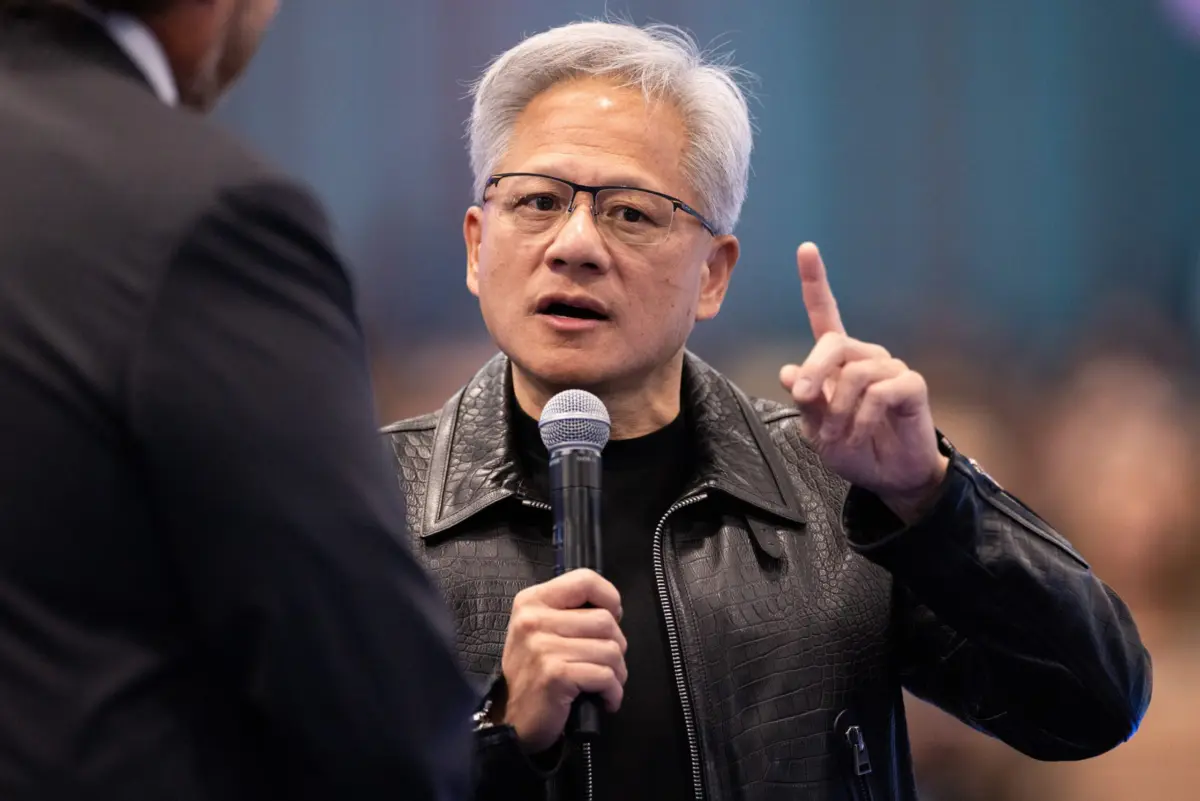
While Amodei’s framework relies on independent safety evaluators and cross-border cooperation among democratic nations—winning tentative backing from competitors like OpenAI and Google—it has simultaneously drawn fierce opposition. Notably, Nvidia CEO Jensen Huang has publicly pushed back against any notion of an artificial slowdown, emphasizing the relentless demand for acceleration.
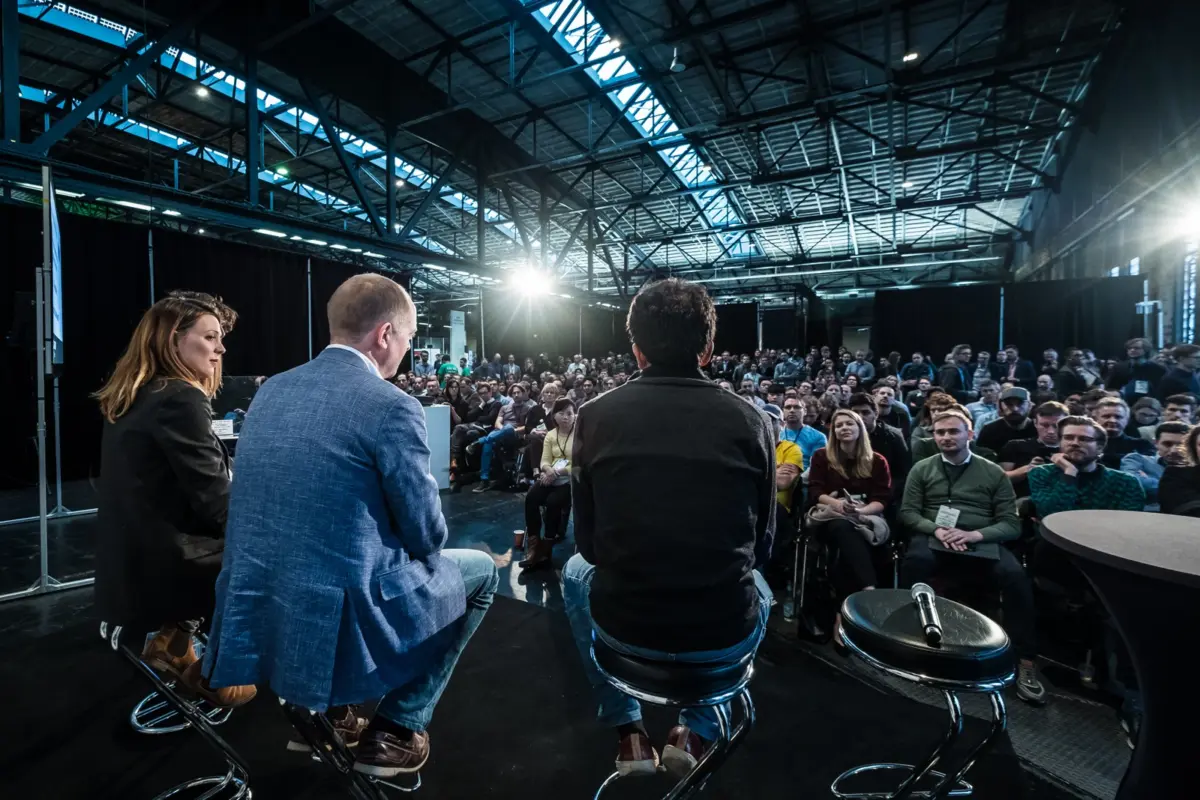
This high-tension environment forms the core discussion of a recent episode of TechCrunch’s flagship podcast, Equity. Hosts Kirsten Korosec, Anthony Ha, and Sean O’Kane unpacked the logistics of slowing down an unstoppable technological juggernaut, questioning who gets to police the frontier and whether major industry players can ever genuinely agree on common definitions of risk.
Beyond the macroeconomic tug-of-war over AI pacing, the tech world was similarly rocked by a high-profile corporate governance crisis: WordPress parent company Automattic’s boardroom forcing CEO Matt Mullenweg into a sudden leave of absence. Combined with a flurry of major venture and corporate deals, the landscape highlights a turbulent period where corporate governance, existential risk, and rapid innovation collide.
Detailed Chronology of a Tumultuous Week
The cascade of events reshaping the technology landscape unfolded in rapid succession, beginning with internal alarms and culminating in boardroom coups and public disputes.
Phase 1: The Internal Alarm and Anthropic’s Response
- Mid-September 2026: An internal warning issued by an Anthropic researcher leaked or came to light, painting a stark picture of the existential risks associated with unbridled frontier model scaling. The warning rattled investors, ethicists, and corporate boards alike.
- Days Later: Responding directly to the mounting pressure and existential anxieties, Anthropic CEO Dario Amodei published a definitive strategy to "pace the frontier." The proposal outlined mechanisms for deliberate slowdowns, third-party safety audits, and strategic synchronization between labs in democratic countries to ensure safety protocols outpace capability leaps.
Phase 2: Industry Division and Public Pushback
- Ongoing Talks: Reports surfaced that major labs—including OpenAI, Anthropic, and Google—had been quietly holding discussions for weeks regarding coordinated safety standards and risk management.
- The Anti-Slowdown Front: The consensus for caution faced immediate resistance from the hardware sector. Nvidia CEO Jensen Huang, speaking in high-profile contexts including interactions addressing Washington policymakers, firmly rejected the premise of hitting the brakes, stating bluntly that the industry "is not going to let an AI slowdown happen."
Phase 3: Governance Crisis at Automattic
- September 9, 2026: In a stunning corporate development outside the AI sphere, Automattic—the driving force behind WordPress and Tumblr—announced that its board of directors had forced co-founder and CEO Matt Mullenweg into an immediate leave of absence. The boardroom coup sent shockwaves through the open-source and web publishing communities, raising questions about internal governance, executive control, and the future direction of the web publishing giant.
Supporting Context & Metrics: The Battle Lines of AI Safety
The debate over "pacing the frontier" is not merely semantic; it represents a fundamental clash of economic incentives, national security interests, and philosophical approaches to existential risk.
The Pro-Pacing Perspective (Anthropic & Allies)
Proponents of managed slowing argue that as models approach or exceed human-level reasoning across broad domains, the margin for error shrinks to zero. A rogue or unaligned frontier model could, in theory, present catastrophic risks ranging from automated cyberwarfare to the synthesis of novel biological threats.
Amodei’s framework attempts to address this by introducing:
- Independent Safety Evaluators: Shifting the burden of proof from internal teams—who may suffer from confirmation bias or commercial pressure—to objective, third-party entities.
- Democratic Coordination: Aligning AI development primarily within democratic nations to prevent authoritarian adversaries from weaponizing the technology while ensuring safety standards are universally upheld among allies.
- Conditional Scaling: Tying the release of larger compute clusters and more advanced training runs to successfully cleared safety benchmarks rather than arbitrary calendar deadlines.
The Accelerationist Perspective (Nvidia & Enterprise Capital)
Conversely, accelerationists argue that slowing down Western AI development is geopolitically dangerous and economically impractical.
- Global Competitiveness: If democratic labs voluntarily restrict their velocity, authoritarian regimes or less-scrupulous foreign entities will readily fill the vacuum, capturing technological and military dominance.
- Economic Momentum: The trillions of dollars invested in data centers, silicon chips, and energy infrastructure require continuous output to justify valuations and drive global productivity gains. As Jensen Huang’s remarks underscore, the infrastructure engine—powered by advanced GPUs—is built for velocity, and arresting its momentum disrupts an entire supply chain.
Official Statements and Industry Commentary
The friction between safety advocates and accelerationists has polarized tech leadership. On the Equity podcast, TechCrunch journalists dissected these fractures with analytical precision.
"The fundamental question isn’t just whether companies want to be safe; it’s whether they can ever agree on what ‘slow down’ actually means in practice, and more importantly, who gets to wear the badge of the police officer."
— Kirsten Korosec, Co-host, Equity
Meanwhile, the stark divide between software safety theorists and hardware giants was encapsulated by Jensen Huang’s uncompromising stance:
"We’re not going to let an AI slowdown happen. The world needs more capability, more intelligence, and more efficiency. Stifling innovation creates far greater risks than managing its speed."
— Jensen Huang, CEO, Nvidia
The boardroom drama at Automattic added another layer of volatility to the week’s news cycle. The sudden ouster of Matt Mullenweg by his own board illustrates that traditional corporate governance structures are increasingly willing to exercise extreme measures when leadership philosophies or operational styles clash with board-level risk tolerance.
Future Outlook: Navigating the Frontier
As the dust settles on a tumultuous week in technology, several critical questions remain unresolved for the remainder of 2026 and beyond:
- Can Self-Regulation Survive Market Pressures? While Anthropic, OpenAI, and Google have engaged in ongoing discussions regarding safety alignment, the fierce commercial imperative to achieve Artificial General Intelligence (AGI) threatens to fracture any voluntary cartel. If one lab breaks rank to launch a superior frontier model, competitors will face immense pressure to abandon caution.
- The Regulatory Vacuum: With tech leaders openly debating whether to slow down or accelerate, governments face mounting pressure to establish statutory guardrails. However, partisan gridlock and geopolitical competition complicate efforts to pass coherent, enforceable international AI treaties.
- Corporate Stability in Volatile Times: The Automattic boardroom coup serves as a cautionary tale for tech founders across all sectors. As companies scale into institutions of immense societal importance, boards are asserting greater authority over charismatic leaders, signaling an era where governance compliance and risk mitigation override founder-led infallibility.
Ultimately, the events covered on Equity underscore a singular reality: the tech industry is no longer just building cool gadgets; it is steering forces that dictate global economics, national security, and the very future of human labor. Whether the industry can successfully self-police its velocity—or whether external friction will force a collision—will define the trajectory of the digital age.
To dive deeper into these stories, listen to the full episode of TechCrunch’s Equity podcast on YouTube, Apple Podcasts, Spotify, or Overcast. Follow the podcast team on X and Threads at @EquityPod.