








Executive Overview
For modern software founders, machine learning engineers, and enterprise leaders, building an artificial intelligence product is rarely as simple as drafting code and deploying to the cloud. Instead, the process begins with a high-stakes foundational choice that dictates almost every subsequent variable: cost structures, infrastructure demands, operating margins, product differentiation, market speed, and data sovereignty.
Do you bypass infrastructure headaches by plugging into a proprietary frontier model and racing to market? Or do you anchor your architecture in an open-weight model to secure granular control over your stack, optimize inference costs, and customize the underlying weights? What happens when your fine-tuned model requires a complete overhaul six months down the line because the macroeconomic and technical landscapes have shifted yet again?
There is no singular, universally correct answer. However, for early-stage founders and enterprise technologists alike, choosing poorly can inadvertently compromise the long-term viability of an entire product roadmap.
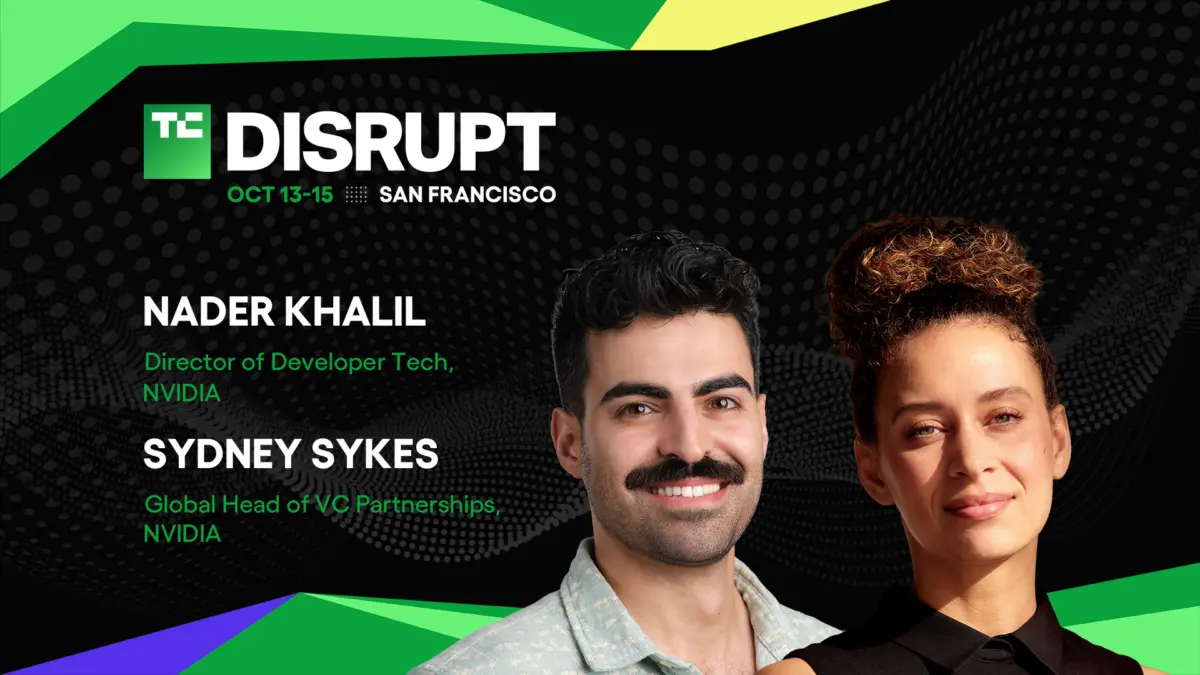
This tension sits squarely at the heart of an upcoming high-profile industry showdown: "The Open vs. Closed AI Debate Is Just Getting Started." Hosted on the Builders Stage at TechCrunch Disrupt 2026—taking place October 13–15 in San Francisco—the session features two prominent figures from Nvidia: Nader Khalil, Director of Developer Tech, and Sydney Sykes, Global Head of VC Partnerships. Together, they will deconstruct the compounding trade-offs of open versus proprietary architectures, addressing whether either paradigm can genuinely deliver a sustainable, long-term competitive advantage.
Rather than rehashing abstract, philosophical debates about open-source purity versus commercial protectionism, this session targets the harsh realities of modern product building. This is a critical operational crossroads for tech leaders navigating a rapidly maturing generative AI landscape.
Detailed Chronology: The Evolution of the AI Infrastructure Dilemma
To understand why the debate between open and closed models has reached such a fever pitch, it is vital to trace how the foundational choices facing startups have evolved over recent years.
Phase 1: The Proprietary Hegemony (2022–2023)
In the immediate wake of the generative AI boom catalyzed by large language models, the path forward for builders seemed relatively clear-cut. Frontier labs—most notably OpenAI, Anthropic, and Google—held an undisputed monopoly on state-of-the-art intelligence. Startups operated primarily as wrapper applications or thin workflow layers sitting atop expensive, proprietary APIs.
During this era, speed was the ultimate currency. Founders prioritized rapid prototyping over infrastructure ownership, accepting API latency, variable pricing structures, and vendor lock-in as the necessary tax for accessing world-class capabilities.
Phase 2: The Open-Source Awakening (2024–2025)
As the AI ecosystem matured, the performance gap between closed-source frontier models and open-weight alternatives began to narrow dramatically. Meta’s Llama series, Mistral AI’s efficient releases, and Nvidia’s aggressively expanded open model initiatives signaled a seismic shift. Developers realized they no longer had to sacrifice capability for control.
This period was also defined by strategic consolidation and infrastructure maturation. A prime example occurred in July 2024, when Nvidia acquired Brev.dev, an AI infrastructure platform co-founded by Nader Khalil. Brev.dev had built its reputation on simplifying developer access to GPU infrastructure across fragmented environments—enabling teams to seamlessly transition AI workloads between public clouds, private datacenters, and on-premises clusters. Khalil’s transition to Nvidia underscored a broader industry pivot: hardware giants recognized that the future of computing relied heavily on democratizing deployment flexibility.

Phase 3: The Hybrid Reality and Agentic Workloads (2026–Present)
Today, the binary divide between open and closed AI has largely dissolved into a sophisticated, hybrid reality. Enterprises and startups alike routinely combine proprietary reasoning models for complex cognitive tasks with fine-tuned open models for high-volume, low-latency, domain-specific execution.
The technical requirements have shifted toward autonomous agentic workflows. For instance, Nvidia’s rollout of models like the Nemotron 3 Super—an open, 120-billion-parameter model designed specifically to handle complex agentic workloads—illustrates how open models are moving past simple text generation into proactive, multi-step problem-solving. Yet, as capabilities proliferate, the strategic complexity for founders has only intensified.
Supporting Context & Metrics: Closing the Capability Gap
The argument that proprietary models hold an insurmountable lead over open-source alternatives is increasingly difficult to defend empirically. The velocity of open-weights research has created an expansive academic and enterprise footprint.
In July 2026, Nvidia highlighted a striking metric regarding the academic validation of its ecosystem: 145 research papers accepted at the prestigious International Conference on Machine Learning (ICML) 2026 cited Nvidia’s Nemotron open models and accompanying datasets. This research spanned high-complexity domains far beyond standard natural language processing, including robotics, autonomous vehicle navigation, and advanced biomedical research.
The Economics of Control vs. Convenience
When open-weight models achieve parity—or near-parity—with proprietary alternatives in specific enterprise use cases, financial equations take center stage. Consider the core economic variables facing a technical founder:
- Inference Costs at Scale: Relying entirely on a third-party proprietary API can devastate gross margins as user volume scales linearly. Conversely, self-hosting an open model requires upfront capital expenditure and ongoing operational overhead to manage GPU utilization.
- Data Sovereignty and Security: Highly regulated industries—such as healthcare, finance, and legal tech—often cannot legally transmit proprietary data to external proprietary endpoints. Open models deployed within private virtual clouds (PVCs) or on-premises servers offer a clear compliance pathway.
- The Maintenance Burden: Owning more of the technology stack guarantees operational independence, but it also saddles engineering teams with the responsibility of maintenance, fine-tuning, security patches, and hardware scaling.
As Nvidia CEO Jensen Huang noted during his keynote at GTC earlier this year, the future of artificial intelligence is not a zero-sum war between proprietary and open paradigms; rather, it is a symbiotic ecosystem where organizations utilize both approaches depending on their operational needs.
Official Statements & Leadership Perspectives
The upcoming session at TechCrunch Disrupt 2026 derives its authority from the distinct professional backgrounds of its speakers, who approach the open-versus-closed debate from two critical, complementary angles.
Nader Khalil: The Builder and Infrastructure Lens
As Nvidia’s Director of Developer Tech, Nader Khalil oversees initiatives centered on open-source ecosystems and local AI deployment. His perspective is deeply rooted in the practical realities of software engineering. Prior to his tenure at Nvidia, Khalil co-founded Brev.dev, a platform designed to eliminate the friction of provisioning GPU infrastructure across disparate cloud environments.
Khalil’s career has been defined by a singular mission: ensuring that developers maintain the freedom to deploy AI software wherever it makes the most sense—whether that means a hyper-scaler cloud, a private enterprise data center, or a local machine—without falling into vendor lock-in traps. His insights at Disrupt will focus on the technical mechanics of managing open models, optimizing inference, and building resilient architectures that can adapt to rapid technological shifts.
Sydney Sykes: The Venture Capital Ecosystem Lens
Balancing the technical perspective, Sydney Sykes serves as Nvidia’s Global Head of VC Partnerships. Sykes evaluates the AI landscape through the rigorous lens of venture capital, scalable business models, and market defensibility.

From an investor’s standpoint, the foundational model choice directly impacts a startup’s valuation and long-term viability. Sykes will address critical questions facing early-stage investors:
- What constitutes a genuine "moat" in an era where foundational intelligence is increasingly commoditized?
- How can a startup defend its market share if competitors have access to the exact same frontier API?
- At what point does heavy infrastructure reliance transition from a strategic advantage to a financial liability?
By pairing Khalil’s technical infrastructure expertise with Sykes’ venture capital acumen, the Disrupt session offers a 360-degree examination of how technical architecture dictates business success.
Future Outlook: Where Does the Defensibility Lie?
As the AI industry looks toward the horizon, the ultimate question facing builders is deceptively simple: Where does your competitive moat actually live?
In the early days of generative AI, simply integrating a powerful LLM into a software interface was enough to capture market attention and secure early venture funding. Today, that thin wrapper layer is no longer defensible. If any competitor can replicate your core product functionality by calling the same frontier API, your product lacks a structural barrier to entry.
However, opting for an open-source model does not automatically generate a defensible moat either. While it grants structural flexibility and data control, it transfers the heavy lifting of infrastructure management, optimization, and security onto your internal engineering team.
The successful companies of tomorrow will likely master a nuanced, hybrid playbook. They will leverage proprietary frontier models for high-level reasoning and complex cognitive planning, while deploying fine-tuned, domain-specific open models locally or via private cloud infrastructure to handle high-frequency, cost-sensitive operations. True differentiation will not stem from the underlying model weights alone, but rather from proprietary data flywheels, deeply embedded customer workflows, superior user experiences, and specialized domain integration.
Secure Your Place at TechCrunch Disrupt 2026
Abstract debates regarding the philosophical purity of open-source software are no longer relevant to modern tech leaders. Founders need actionable frameworks, real-world data, and strategic foresight to navigate an unpredictable technological landscape.
To join Nader Khalil, Sydney Sykes, and thousands of other forward-thinking founders, investors, and engineers, ensure you secure your pass for TechCrunch Disrupt 2026, running October 13–15 in San Francisco.
Take advantage of early registration pricing: save up to $200 on your ticket by registering before September 25 at 11:59 p.m. PT. Whether you are optimizing margins, designing a fundraising narrative, or scaling enterprise infrastructure, this is one debate you cannot afford to miss.