









Executive Overview
The character of modern military conflict is undergoing a radical, technology-driven evolution. As peer-to-peer conflicts and asymmetric engagements increasingly rely on uncrewed systems, electronic warfare, and rapid data processing, conventional centralized cloud architectures are proving dangerously inadequate. Traditional defense systems that depend on continuous, high-bandwidth communication with distant servers risk complete operational failure when confronted with battlefield jamming, severed data links, or targeted strikes against physical data infrastructure.
Enter Scaleout Systems, a Swedish defense-tech startup originally spun out from Uppsala University in 2018. Initially designed to deploy machine learning models directly onto commercial hardware such as transport trucks and heavy vehicles, the company dramatically shifted its strategic focus following Russia’s full-scale invasion of Ukraine in 2022. Today, Scaleout is at the bleeding edge of tactical autonomy, supported by NATO’s Defence Innovation Accelerator for the North Atlantic (DIANA) initiative.
By pioneering decentralized federated learning and localized edge AI, Scaleout allows small military drones, pilot tablets, and forward-deployed command posts to detect, identify, and engage targets autonomously. This is achieved without transmitting sensitive raw data across vulnerable networks or relying on continuous connections to central command structures. This comprehensive report explores the technological mechanics, strategic milestones, live-fire military demonstrations, and broader geopolitical implications of Scaleout Systems’ mission to bring federated intelligence to the tactical edge.
Detailed Chronology of a Defense Pivot
2018–2021: Commercial Roots and Edge Computing Foundations
Long before geopolitical flashpoints forced a rapid reevaluation of military software supply chains, Scaleout Systems was established by a team of machine learning researchers from Uppsala University. Their initial thesis centered on the challenges of training and executing AI models locally on distributed, resource-constrained hardware. Rather than funneling vast data streams into monolithic cloud servers, Scaleout built software platforms designed to execute localized inference and secure model aggregation across commercial fleets, such as logistics vehicles and public transit systems. This foundational expertise in decentralized computing nodes and edge-device optimization would inadvertently lay the groundwork for modern tactical military operations.
2022: The Geopolitical Catalyst
The geopolitical landscape shifted dramatically in February 2022 with Russia’s full-scale invasion of Ukraine. The conflict immediately highlighted the vital importance of software adaptability, low-cost uncrewed aerial vehicles (UAVs), and resilient computing architectures in high-threat environments. Recognizing that traditional commercial AI deployment models were poorly suited for contested battlefields, co-founder and CEO Andreas Hellander and his team pivoted Scaleout toward defense applications.
As Hellander noted in interviews with industry analysts, the operational realities of the Ukraine war made it clear that modern armed forces required immediate, localized capabilities to process sensor data at the edge. To maintain a strategic advantage, NATO allies needed software capable of running on varied military hardware while remaining immune to electronic interference.
2025: Integration into NATO DIANA
Scaleout’s trajectory accelerated significantly when the company was selected to join the prestigious NATO DIANA Challenge Program for its 2025 cohort. Through DIANA, Scaleout began directly collaborating with defense stakeholders on the Federated Aerial Intelligence for Recon (FAIR) project. This initiative tasked the startup with adapting its federated machine learning models to the varied edge hardware utilized by frontline troops, including tactical drones, ruggedized operator tablets, and mobile field command posts.
2026: Live-Fire Demonstrations and Strategic Validations
The year 2026 marked a transition from theoretical frameworks and lab environments to rigorous field testing.
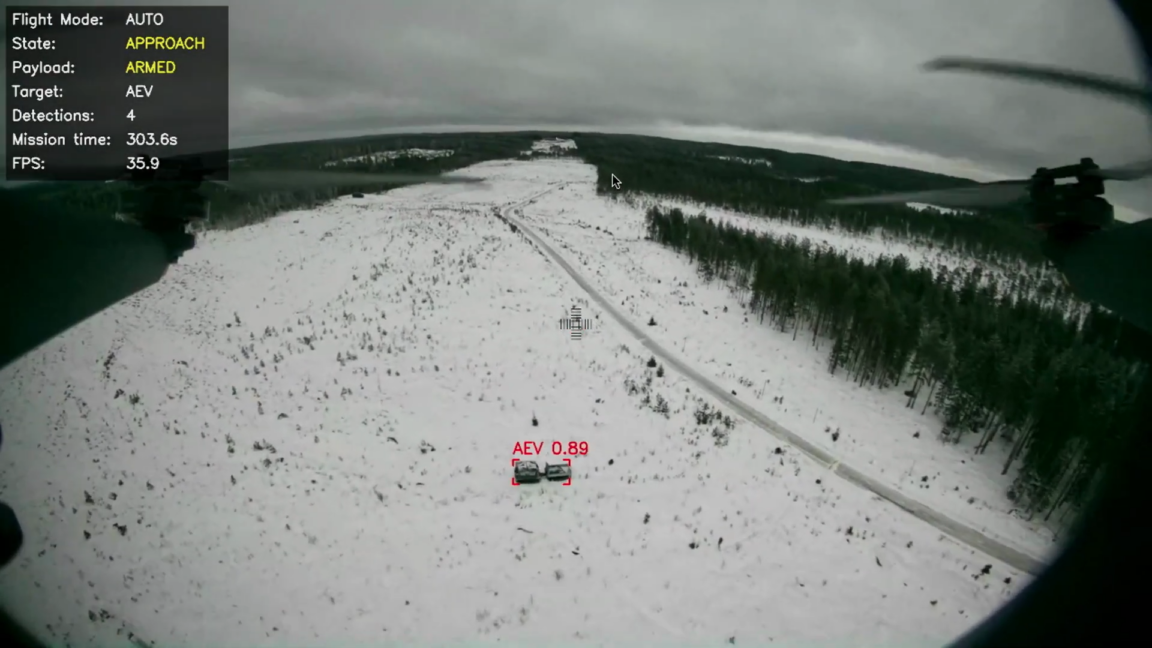
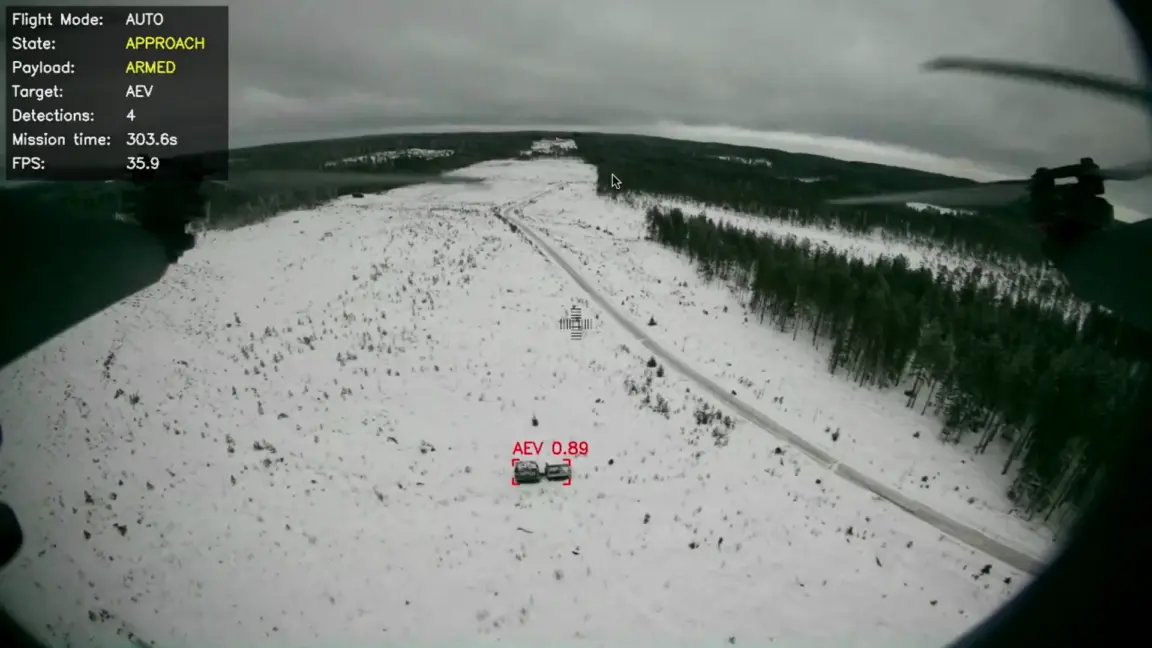
- January 2026 (Winter Demo, Sweden): Scaleout participated in public demonstrations for the Affordable Loitering Modular Ammunition (ALMA) project, led by BAE Systems Bofors. This event showcased an autonomous kamikaze drone capable of real-time target recognition, identification, and geolocation via onboard AI without external processing.
- June 2026 (Swedish Air Force Base, Uppsala): Scaleout successfully tested its resilient edge AI framework at a Swedish military facility. The demonstration proved that forward-deployed nodes could execute active-learning processes locally even when severed from central laboratory servers, seamlessly syncing updates once network connections were restored.
Supporting Context & Metrics: The Shift Away from Centralized Infrastructure
The Vulnerability of Centralized Data Centers
For years, the technology sector treated centralized cloud computing as an unassailable gold standard. Massive data centers operated by hyper-scale providers concentrated computational power, enabling the training of massive frontier models developed by entities like OpenAI and Anthropic. However, modern geopolitical conflicts have exposed the fatal single points of failure inherent in this paradigm.
The physical vulnerability of centralized data infrastructure was starkly illustrated during regional conflicts, such as the direct military exchanges between the United States and Iran, where targeted strikes on regional server facilities resulted in the permanent loss of critical customer data. In a peer-to-peer military conflict involving advanced electronic warfare capabilities, relying on a distant, centralized data center to guide tactical drones is a calculated risk that modern militaries can no longer afford.
Electronic Warfare and Battlefield Jammability
Modern battlefields are saturated with electromagnetic interference. Russian and Ukrainian forces alike have weaponized electronic warfare (EW) on an unprecedented scale, deploying sophisticated GPS spoofing and radio-frequency (RF) jamming to disrupt command-and-control links between drone operators and their uncrewed platforms.
When communication links are jammed, traditional remotely piloted drones are blinded or neutralized. By contrast, embedding localized AI models directly onto the hardware of cheap, expendable kamikaze drones—as seen in Ukraine’s ongoing tactical adaptations—ensures that uncrewed systems can autonomously navigate, identify high-value targets, and execute strikes even in total communications blackouts.
The Scaleout Federated Learning Architecture
Scaleout Systems addresses these challenges by decentralizing the machine learning lifecycle through federated learning:
- Local Inference: Drones and edge devices collect visual and sensor data, utilizing lightweight, optimized computer vision models to identify potential threats locally.
- Selective Updates: Instead of streaming gigabytes of raw, bandwidth-heavy video feeds back to base, the edge devices compress and transmit only incremental model weight updates.
- Aggregated Retraining: Local platoon or company headquarters aggregate these updates from multiple frontline nodes, retraining the core AI model to account for new environmental variables (such as transitioning from desert training simulations to urban combat zones).
- Edge Deployment: The refined, highly specialized model variants are pushed back out to edge devices, creating an adaptive loop of continuous improvement.
Official Statements and Perspectives
The strategic philosophy driving Scaleout Systems is rooted in operational necessity and agility. Addressing the limitations of static AI models deployed in dynamic conflict zones, Andreas Hellander emphasized the necessity of continuous, localized learning:
"Models might have been trained in a desert environment, and if we try to deploy them in an urban environment, they’re not going to perform well. If we can release several new versions of this model that—during the course of a single day or certainly an operation—keep learning and keep improving from this massive amount of sensor data that is generated at a practical edge, that is the sustainable advantage."
Detailing the broader collaborative potential across allied nations, Hellander added:

"With the war in Ukraine and a shifting world, we realized that this technology can be very important to operationalize edge data and sensor data for machine learning to make sure that NATO allies have found that strategic advantage… In principle, you can unlock collaboration between NATO member states."
Highlighting the autonomy demonstrated during the ALMA project trials with BAE Systems Bofors, official technical documentation and presentations underscored the complete self-sufficiency of the platform:
"All data is handled by dedicated onboard computing, allowing the system to perform in real-time without any external processing."
During these demonstrations, the autonomous loitering munition successfully scanned its operational sector, prioritized a high-value armored engineering vehicle from a suite of potential targets based strictly on pre-programmed mission parameters, and executed a precision strike independently—retaining human oversight while eliminating the need for constant, vulnerable remote-control inputs.
Future Outlook
As military organizations across Europe and the broader NATO alliance internalize the lessons of the war in Ukraine, the demand for resilient, decentralised tactical software will only intensify. The era of relying on brittle, cloud-dependent military systems is rapidly drawing to a close, replaced by an operational doctrine that prizes resilience, modularity, and tactical autonomy.
Scaleout Systems stands at the vanguard of this paradigm shift. By successfully bridging the gap between cutting-edge machine learning and the harsh, resource-constrained realities of frontline military hardware, the company is redefining how uncrewed systems perceive and interact with the battlefield.
Looking forward, the roadmap for federated battlefield AI points toward multi-domain integration—scaling decentralized learning architectures across entire geographic theaters, harmonizing data streams between land, air, and naval assets, and cementing interoperability across sovereign NATO member states. In an increasingly contested and unpredictable global security environment, the armies that can learn, adapt, and execute at the edge will hold the ultimate strategic advantage.