








Executive Overview
The rapid integration of generative artificial intelligence and machine learning into enterprise workflows has sparked a pervasive, often anxiety-driven narrative across the technology sector: automation is coming for the knowledge worker. Within the specialized ecosystem of Digital Asset Management (DAM), this anxiety manifests as a persistent fear that AI-driven tagging, automated image recognition, and natural language metadata generation will render human DAM librarians, taxonomists, and managers obsolete.
However, a compelling counter-narrative is taking root among industry practitioners—one that reframes the conversation entirely. In a recent insights piece published on Digital Asset Management News, Shaun Bedford, Team Lead of Customer Success at Asset Bank, forcefully pushes back against the notion that AI is poised to replace human oversight. Bedford argues that the visible, mechanical aspects of a DAM librarian’s job—such as tagging, keywording, and correcting metadata—were never the true sum total of the profession.
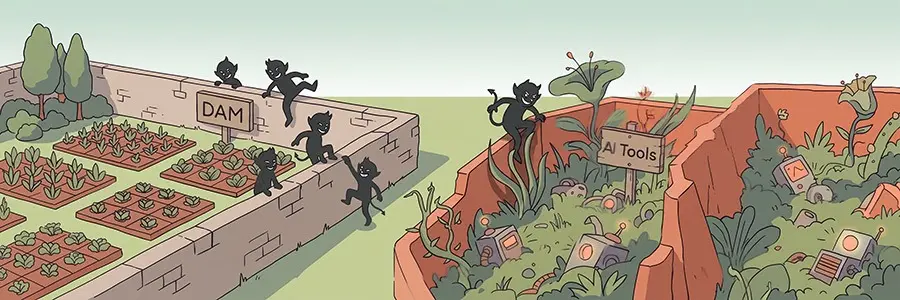
Instead, Bedford’s analysis draws a crucial, legally and operationally vital distinction between identification and authorization. While advanced artificial intelligence models are increasingly adept at discerning what or who is depicted within a digital file, they remain fundamentally incapable of determining whether that asset may be used, who holds the rights to it, and under what precise conditions deployment is legally and ethically permissible.
This comprehensive report examines Bedford’s arguments, exploring the intersection of AI automation and human governance, the risks of high-speed propagation errors, the evolution of entry-level career pathways, and why the future of enterprise content operations depends on treating DAM professionals not as searchable database clerks, but as indispensable custodians of institutional memory, context, and accountability.
Detailed Chronology: The Evolution of DAM and the Rise of Automated Content Operations
To understand the current friction between automated systems and human DAM professionals, it is necessary to trace the technological trajectory that brought the industry to this juncture.
Phase 1: The Analog and Early Digital Eras (Late 20th Century – Early 2010s)
In the nascent stages of digital asset management, libraries were largely physical or tethered to rigid, localized server architectures. Content volume was manageable, and metadata generation was an intensely manual, labor-intensive human endeavor. DAM managers spent hours handwriting descriptions, organizing folder hierarchies manually, and embedding basic EXIF and IPTC data. The bottleneck was sheer physical time: getting files uploaded, organized, and searchable required dedicated personnel who understood the nuances of the organization’s lexicon.
Phase 2: The Proliferation of Enterprise Cloud DAMs (Mid 2010s – 2020)
As organizations shifted en masse to cloud-based storage, the volume of digital assets—photos, videos, vector graphics, design templates, and marketing collateral—exploded exponentially. Companies recognized that siloed storage was a liability; cross-functional teams needed centralized access to global media repositories. During this era, DAM systems evolved into sophisticated enterprise applications. Metadata schemas became more complex, involving multi-tiered taxonomies, rights-management modules, and version-control frameworks. Human DAM librarians were still the architects and maintainers of these systems, but the sheer volume of assets began to outpace human manual entry capabilities.
Phase 3: The Early Automation Wave (2020 – 2022)
Recognizing the metadata bottleneck, software vendors began integrating early forms of computer vision and basic machine learning into DAM platforms. These tools could automatically detect faces, identify generic objects (e.g., "car," "beach," "laptop"), and suggest basic keywords. While helpful for broad categorization, these early iterations were notoriously brittle. They frequently failed on domain-specific terminology, misidentified corporate branding, and lacked any contextual awareness of organizational goals. Human oversight remained the absolute standard for enterprise-grade repositories.
Phase 4: The Generative AI Era and the Current Debate (2023 – Present)
The explosive emergence of large language models (LLMs) and advanced multimodal generative AI in 2023 radically accelerated expectations. Suddenly, AI could not only tag an image with a keyword but write descriptive alt-text, summarize video transcripts, and even generate entire contextual narratives about a digital file. This leap in capability prompted a wave of industry speculation: If AI can look at an image, understand its contents, and write metadata instantly, what is the purpose of the human DAM manager?
It is directly against this historical backdrop of escalating automation that industry voices like Shaun Bedford have stepped forward to redefine the boundaries of human value within modern digital asset ecosystems.
Supporting Context & Metrics: The Mechanics of the "Invisible Context" Gap
To appreciate why automation falls short in enterprise DAM environments, one must examine the operational divide between what an AI system perceives and what an enterprise actually requires to remain legally compliant, brand-safe, and strategically aligned.
Identification vs. Authorization: A Case Study in Risk
At the heart of Bedford’s thesis is the profound gap between identifying an entity and possessing the legal authorization to utilize it. Consider a common enterprise scenario: a multinational university system captures hundreds of photographs during a campus event and ingests them into its central DAM repository.
An AI-powered DAM tool can rapidly scan the imagery, identify that students are present, and perhaps even tag the specific campus building in the background. However, as Bedford highlights:
"A system might identify a group of students on a campus, but it cannot derive every relevant condition from the image. It may not know their names, whether the correct consent records exist, whether that consent covers a particular campaign or platform, or whether the photographer’s licence permits the proposed use. It might incorrectly associate them with one campus over another."
This failure of authorization exposes organizations to catastrophic liabilities. Utilizing an image of a minor or a student who has not signed a media release form—or using an image outside the geographical or platform parameters specified in a photographer’s licensing agreement—can result in severe legal penalties, copyright infringement lawsuits, and reputational damage. An AI algorithm sees pixels; it does not see legal contracts, data privacy regulations (such as GDPR or FERPA), or signed release waivers stored in a disparate HR or legal database.
The Danger of High-Speed Error Propagation
Proponents of unmonitored automation often assume that even if AI makes occasional mistakes, the sheer speed and volume of processing outweigh the collateral damage. Bedford offers a chilling counterpoint to this techno-optimistic view:
"The risk is not simply that automation can be wrong — it’s that it can be consistently wrong at extraordinary speed."
In a traditional manual workflow, if a cataloguer makes a mistake, it affects a handful of files before being caught during quality assurance reviews. Conversely, if an AI ingestion script is fed a flawed prompt, a corrupted taxonomy, or a misconfigured machine-learning model, it can instantaneously propagate a systemic error across tens of thousands of digital assets.
Imagine an automated workflow that misidentifies a proprietary medical device or mislabels a sensitive piece of intellectual property across an entire corporate archive. The fallout requires complex, costly forensic remediation to clean the database, untangle polluted search indices, and rectify outbound marketing campaigns built upon corrupted metadata foundations.
Beyond Cataloging: Governance, Retention, and Institutional Memory
Metadata entry is only the tip of the iceberg in enterprise DAM operations. The true value of a seasoned DAM professional lies deep beneath the surface, encompassing three critical pillars:
- Governance and Compliance: Ensuring that assets adhere to regional data privacy laws, brand guidelines, and usage expiration dates. Human judgment is required to interpret ambiguous licensing clauses and determine when an asset must be locked or deprecated.
- Lifecycle Management and Retention: Automated retention policies are typically built on crude, rigid metrics—such as deleting or archiving files after a fixed number of years. However, institutional memory requires nuanced human discernment. As Bedford notes, a purely age-based retention rule "would miss the judgement behind decisions on what to archive, restrict or remove." A photograph of a company’s founders taken decades ago may be ancient by retention metrics, but its historical and cultural value to the institution makes it priceless. Conversely, an image from last year featuring a former executive embroiled in a public scandal must be actively suppressed—a contextual nuance an automated script cannot instinctively weigh.
- Taxonomy Architecture: AI can populate existing fields, but it cannot design the semantic architecture of an organization. Developing a robust, scalable taxonomy that reflects the unique workflow, vocabulary, and strategic goals of a global enterprise requires a deep, empathetic understanding of human communication and business operations.
Official Perspectives and Expert Commentary
Industry leaders, digital asset managers, and enterprise technologists are increasingly rallying around the perspective that AI is a powerful assistant rather than an organizational replacement.
Shaun Bedford (Asset Bank)
In his foundational commentary, Bedford distills the evolution of the profession into a definitive mantra:
"AI can process the collection. DAM professionals make it useful, trustworthy and accountable."
Bedford’s stance is refreshingly pragmatic. Rather than adopting a defensive or luddite posture that rejects technological advancement, he embraces what AI does best—heavy computational processing, rapid pattern recognition, and bulk asset ingestion—while fiercely protecting the irreplaceable domain of human responsibility.
The Entry-Level Pipeline Dilemma
One of the most profound observations in Bedford’s analysis—and one echoed widely by senior information professionals—is the threat that aggressive automation poses to career development pipelines.
If entry-level DAM roles traditionally centered around hands-on cataloging, manual tagging, and foundational metadata entry are entirely swallowed by automated systems, a critical question emerges: Where will future taxonomists, metadata architects, and DAM directors learn their craft?
Mastery of enterprise taxonomy is rarely learned in a vacuum; it is forged through the tactile, day-to-day experience of wrestling with messy files, resolving ambiguous tagging dilemmas, and understanding how end-users actually search for and consume digital content. Industry leaders are now warning that organizations must intentionally cultivate alternative mentorship and training pathways to ensure that the next generation of digital asset management leadership is not hollowed out by short-sighted automation cost-cutting.
Future Outlook: The Symbiotic Enterprise
As we look toward the horizon of digital asset management, the dichotomous framing of "Humans vs. AI" is rapidly giving way to a more sophisticated reality: the symbiotic enterprise.
1. The Rise of the Strategic DAM Professional
The role of the DAM manager is actively migrating upward on the corporate value chain. Relieved of the crushing burden of manual, repetitive tagging by competent AI assistants, human professionals are stepping into strategic advisory roles. They are focusing on cross-departmental taxonomy harmonization, ethical AI auditing, rights management governance, and ensuring that digital asset repositories directly align with overarching corporate growth and compliance strategies.
2. AI as a Co-Pilot, Not an Autopilot
Future DAM architectures will treat artificial intelligence as an advanced co-pilot operating under strict human supervision and policy guardrails. AI will draft metadata, suggest keywords, and accelerate the initial ingestion phase, but these outputs will be routed through automated compliance checks and human-governed approval workflows before assets are cleared for live enterprise deployment.
3. The Institutional Memory Imperative
As deepfakes, synthetic media, and hyper-accelerated content generation flood the digital landscape, the authenticity, provenance, and contextual integrity of enterprise assets will become paramount. Organizations will rely more heavily than ever on human DAM custodians to anchor their digital footprints in reality, ensuring that every asset tells a true, authorized, and legally sound story.
Conclusion
The discourse ignited by Shaun Bedford’s analysis serves as a vital course correction for an industry intoxicated by the promises of generative automation. While AI will undeniably alter the operational mechanics of digital asset management, it fundamentally lacks the capacity for contextual judgment, legal interpretation, ethical discernment, and institutional memory that defines the human professional.
DAM managers are not, and never were, mere metadata machines. They are the vigilant guardians of enterprise trust, brand integrity, and corporate accountability. In an era where automation can generate errors at the speed of light, human judgment is not merely surviving—it is becoming the most valuable asset in the room.