







Executive Overview
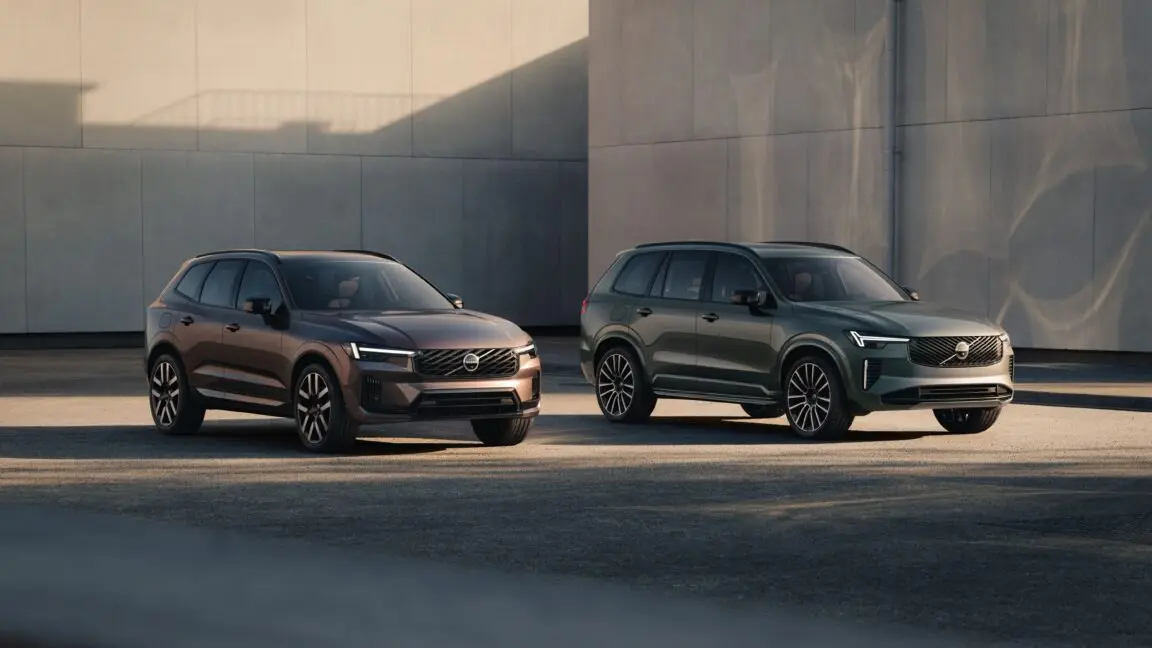
In a decisive strategic maneuver that bridges the gap between internal combustion heritage and a fully electrified horizon, Volvo Cars has announced a comprehensive upgrade to its best-selling plug-in hybrid (PHEV) lineup. Anchored by significant technical enhancements to the acclaimed XC60 and its larger sibling, the XC90, this latest product refresh underscores the Swedish automaker’s nuanced approach to the global transition toward sustainable mobility. Rather than abandoning liquid fuels overnight, Volvo is aggressively doubling down on high-capacity plug-in hybrid architecture. By introducing a massive new battery pack, the company is dramatically expanding the electric-only operational window for its flagship utility vehicles, attempting to prove that the PHEV format remains a compelling, practical bridge for modern consumers.
At the heart of this update is a substantial engineering overhaul of the T8 powertrain. Equipped with a new, high-density 37.9 kWh net (41.2 kWh gross) battery pack, both the XC60 and XC90 plug-in hybrids achieve unprecedented all-electric driving ranges for their class. For the XC60 T8, this translates to an impressive 78 miles (125 km) of emissions-free driving under the Environmental Protection Agency (EPA) test cycle. Beyond raw metrics, this hardware shift signals a broader evolution in how drivers can interact with luxury mid-size and full-size SUVs: for the vast majority of commuters, gasoline will become an occasional backup rather than a daily necessity.
Simultaneously, Volvo is restructuring its global manufacturing footprint to mitigate geopolitical and economic pressures. For the first time, the critically important XC60 will enter production at the company’s state-of-the-art facility in Ridgeville, South Carolina, supplementing existing assembly lines in Sweden. This localized manufacturing push not only positions Volvo to better serve its massive North American consumer base but also provides a strategic buffer against complex, shifting international tariff regimes.
Rounding out the updates are critical software integrations, including the rollout of Google’s advanced Gemini-enabled infotainment systems across the updated 11.2-inch touchscreen interfaces. As Volvo Cars President and CEO Håkan Samuelsson notes, these enhancements are designed to fortify the brand’s legacy models while smoothing the runway for upcoming all-electric offerings like the EX60. This article provides an exhaustive, authoritative examination of Volvo’s latest announcements, analyzing the engineering breakthroughs, economic justifications, software modernizations, and future market implications of these pivotal automotive updates.
Detailed Chronology of the Volvo Upgrades
The rollout of these sweeping updates represents the culmination of years of iterative research and development aimed at addressing consumer anxiety regarding EV charging infrastructure, range limitations, and vehicle pricing. To understand how Volvo arrived at this juncture, it is helpful to trace the technical and operational timeline that led to the deployment of the high-capacity T8 battery architecture and the localization of American manufacturing.
[Phase 1: Initial PHEV Rollout] ──> [Phase 2: Data-Driven Range Targets] ──> [Phase 3: US Production Shift] ──> [Phase 4: Software & Infotainment Integration]Phase 1: Refining the T8 Architecture
Historically, plug-in hybrid vehicles occupied an awkward middle ground in the automotive ecosystem—offering modest electric ranges typically hovering between 15 and 30 miles, which forced frequent engine interventions during daily commutes. Volvo recognized early on that for PHEVs to serve as genuine gateway vehicles to full electrification, their battery capacity needed to scale dramatically. The preliminary engineering work began years prior, focusing on thermal management, cell chemistry optimization, and packaging constraints. Integrating a battery pack exceeding 40 kWh gross capacity into platforms originally engineered primarily for internal combustion engines required ingenious underfloor packaging without sacrificing passenger volume or cargo utility.
Phase 2: Aligning with Real-World Commuting Data
Rather than building for abstract benchmarks, Volvo’s product planning team cross-referenced internal telemetry and national transportation datasets to establish precise engineering targets. According to Volvo’s proprietary data, the median round-trip commute for a US Volvo driver stands at a modest 22 miles (35 km). By engineering a battery pack capable of delivering an EPA-estimated 78 miles of range in the XC60 T8—and 73 miles in the larger XC90 T8—Volvo effectively eliminated range anxiety for standard daily driving loops. The vehicle could comfortably handle three days of typical suburban commuting on a single charge before ever demanding a drop of gasoline or a recharge cycle.
Phase 3: The Strategic Pivot to South Carolina
The logistical and geopolitical landscape of the global automotive market shifted radically in the early 2020s, heavily penalizing vehicle imports through mounting tariffs and supply chain vulnerabilities. Recognizing that the United States remains one of its single largest and most lucrative markets for luxury SUVs, Volvo made the pivotal decision to expand production of the XC60 beyond its historic home base in Torslanda, Sweden. By establishing local assembly lines at the company’s Ridgeville, South Carolina manufacturing plant, Volvo streamlined its supply chain, reduced transit-related carbon emissions, optimized regional logistics, and positioned itself to navigate complex international trade policies with agility.
Phase 4: Software-Defined Modernization
Hardware improvements alone are insufficient in the modern luxury segment; software and user experience dictate brand loyalty. Recognizing this, Volvo synchronized its powertrain and manufacturing updates with a comprehensive cabin technology refresh. Following recent design refreshes across its stable, Volvo integrated a responsive, Google Gemini-powered infotainment suite running on a crisp, vertically oriented 11.2-inch central display. This ensured that even established nameplates like the XC60 and XC90 remained at the absolute cutting edge of digital connectivity, voice recognition, and over-the-air update capabilities, keeping pace with digitally native electric-only competitors.
Supporting Context & Metrics: Engineering the New Benchmark
To fully grasp the significance of Volvo’s announcements, one must dive deep into the quantitative metrics and technical specifications that define the updated XC60 and XC90 T8 models. The figures released by Volvo and validated through testing cycles reveal a paradigm shift in what consumers can expect from a hybrid powertrain.
Battery Capacity and Range Dynamics
The technical centerpiece of this update is the migration to a net 37.9 kWh (41.2 kWh gross) battery pack. To put this in perspective, this capacity rivals the total battery size found in early-generation, fully electric vehicles such as the original Nissan Leaf or the first-generation Hyundai Ioniq Electric. Fitting such a substantial energy reservoir into a hybrid vehicle represents a major packaging achievement.
| Model | Battery Capacity (Net / Gross) | EPA All-Electric Range | Combined Range (Full Battery + Full Tank) | Median US Commute Coverage |
|---|---|---|---|---|
| XC60 T8 | 37.9 kWh / 41.2 kWh | 78 miles (125 km) | 590 miles (949 km) | ~3.5 Days (22 mi/day) |
| XC90 T8 | 37.9 kWh / 41.2 kWh | 73 miles (117 km) | Not Officially Disclosed | ~3.3 Days (22 mi/day) |
As detailed in the metrics above, the XC60 T8 achieves an EPA-certified all-electric range of 78 miles. When combining a fully charged battery with a completely filled gasoline tank, the XC60 T8 unlocks a staggering theoretical total driving range of 590 miles (949 km). This obliterates traditional range anxiety, offering cross-country touring capabilities without the need to meticulously plan charging station stops, while simultaneously permitting zero-emission local operation during the workweek.
Similarly, the larger three-row XC90 T8—despite carrying a heavier chassis and greater aerodynamic drag—benefits from the exact same high-density energy storage module, yielding an impressive 73 miles (117 km) of pure electric range. For large families accustomed to frequent suburban chauffeuring, school runs, and grocery trips, the XC90 can now operate almost exclusively as an electric vehicle without ever waking its internal combustion engine.
Manufacturing Logistics and Economic Realities
The decision to bring XC60 production to South Carolina is deeply rooted in contemporary economic realities. Volvo’s Ridgeville facility, which has previously handled production for models like the S60 sedan and the larger EX90 electric SUV, represents a multi-hundred-million-dollar investment in American industrial capacity.
Manufacturing the XC60 domestically serves three vital corporate objectives:
- Tariff Mitigation: By producing vehicles within the North American trade zone, Volvo shields itself from punishing import tariffs that can rapidly erode profit margins or force unwelcome retail price hikes.
- Supply Chain Resiliency: Localized sourcing reduces ocean-freight transit times, insulating the brand from maritime logistically bottlenecks and geopolitical shipping route disruptions.
- Consumer Alignment: American buyers increasingly favor locally manufactured goods, and building the brand’s best-selling global vehicle on US soil enhances its appeal within a fiercely competitive domestic luxury market.
Official Statements and Leadership Vision
The strategic philosophy driving these announcements was articulated clearly by Volvo executive leadership during the global press briefing. The updates are not merely viewed as mechanical refreshes, but as foundational pillars supporting the brand’s aggressive, long-term electrification roadmap.
Håkan Samuelsson, President and CEO at Volvo Cars, emphasized the historical weight and future direction of these models:
"The XC60 is our bestselling model of all time, while the XC90 marked the beginning of our premium journey. Now, as long-range plug-in hybrids, they build on those legacies and, together with the all-electric EX60, give us our strongest-ever electrified offering in the mid-size SUV segment. This means a path to full electrification for every customer."
Samuelsson’s commentary highlights a nuanced corporate philosophy: Volvo acknowledges that consumer readiness, charging infrastructure maturity, and regional energy grids vary wildly across the globe. While the ultimate corporate destination is full, battery-electric independence, the company refuses to alienate consumers who live in regions with nascent charging infrastructure or who frequently undertake long-distance journeys across remote terrain. By offering class-leading plug-in hybrids alongside dedicated battery-electric vehicles (BEVs), Volvo is constructing a broad tent that accommodates every stage of consumer comfort with electrification.
Furthermore, engineering leads at Volvo pointed out that the software integration of Google’s Gemini system represents a philosophical shift toward a "software-defined vehicle" architecture. By leveraging advanced natural language processing and deeply integrated cloud services via the 11.2-inch central display, Volvo is ensuring that its hybrid vehicles do not feel technologically inferior to pure-play EV startups. Drivers can seamlessly interact with vehicle climate controls, navigation, media, and third-party applications using conversational AI, elevating the cabin experience to match the sophisticated engineering beneath the sheet metal.
Future Outlook: The Bridge to Full Electrification
As the global automotive industry navigates a volatile transition period characterized by fluctuating EV adoption rates, tightening environmental regulations, and shifting consumer preferences, Volvo’s strategy offers an instructive case study in operational flexibility.
The Role of Long-Range PHEVs in the Mid-Term Market
For years, critics dismissed plug-in hybrids as an inefficient compromise—heavy vehicles carrying two complex powertrains that rarely achieved their claimed efficiency figures if owners neglected to plug them in. However, the advent of massive 40 kWh-class battery packs fundamentally alters this calculus. When a vehicle offers nearly 80 miles of electric range, daily charging habits transform the ownership experience. Drivers with home Level 2 chargers will rarely, if ever, burn gasoline during routine weekly driving. Yet, when weekend road trips or unexpected long-distance travel calls, the internal combustion engine stands ready, eliminating the charging queue anxiety that continues to plague pure EV adoption in certain demographic segments.
Paving the Way for the EX60 and Beyond
Volvo’s explicit framing of these upgraded hybrids as companions to upcoming pure-electric models—such as the anticipated EX60—reveals a sophisticated marketing and developmental funnel. By familiarizing traditional luxury buyers with high-capacity electric driving via the safety blanket of a gasoline engine, Volvo is gently conditioning its customer base for the eventual, inevitable leap to zero-emission platforms. Owners who spend 90% of their driving time in pure electric mode on the T8 architecture will logically find the transition to a dedicated BEV like the EX60 far less intimidating when the time comes to replace their vehicles.
Conclusion
Volvo’s comprehensive enhancement of the XC60 and XC90 T8 plug-in hybrids is much more than a routine mid-cycle product refresh. By injecting massive battery capacity into its most popular utility vehicles, localizing American manufacturing to outmaneuver macroeconomic pressures, and upgrading cabin technology with state-of-the-art Google integration, Volvo has fortified its market position. These vehicles serve as a masterclass in pragmatic engineering—acknowledging the realities of global infrastructure limitations while relentlessly pushing the boundaries of what a hybrid vehicle can achieve. As Volvo marches steadily toward its ultimate goal of complete electrification, these long-range PHEVs ensure that the journey is as profitable, practical, and progressive as the destination itself.