





Executive Overview
For centuries, the boundary between biological permanence and finality was absolute: extinction meant forever. Once a species crossed the threshold of oblivion, its genetic blueprint was consigned to the fossil record, accessible only through the speculative interpretations of paleontologists. Today, that once-impenetrable wall is dissolving. Propelled by converging breakthroughs in artificial intelligence, high-throughput gene editing, and computational biology, the realm of de-extinction has transitioned from speculative science fiction into the rigorous, heavily funded domain of deep-tech enterprise.
At the vanguard of this paradigm shift is Colossal Biosciences, a billion-dollar biotechnology startup whose mission is nothing short of resurrecting functionally extinct species, such as the woolly mammoth and the Tasmanian tiger. Yet, the implications of this work extend far beyond the laboratory bench or the confines of Silicon Valley venture portfolios. As algorithms begin to decode and design living systems, the scientific community, policymakers, and environmentalists are forced to confront a profound philosophical and practical dilemma: If technology possesses the capacity to engineer nature’s comeback, should it? And more importantly, what role should artificial intelligence play in shaping the future of global biodiversity?
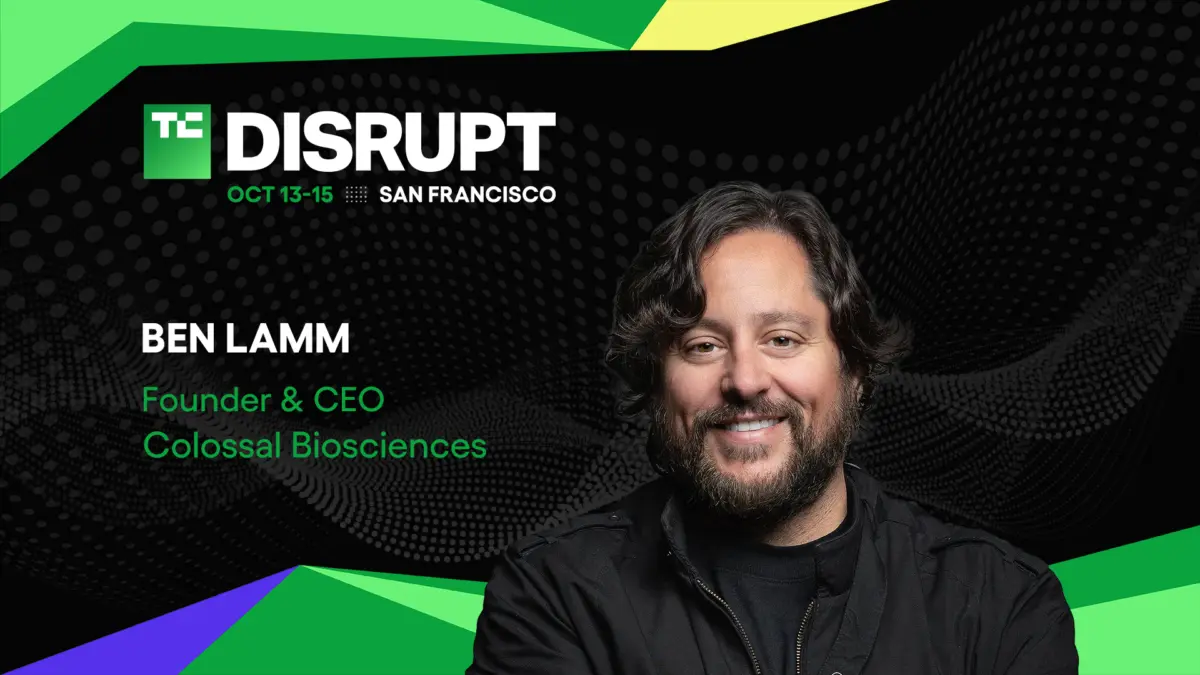
These pivotal questions form the core of an upcoming fireside chat titled “Can We Engineer Nature’s Comeback?” on the Real World AI Stage at TechCrunch Disrupt 2026. Featuring Ben Lamm, co-founder and CEO of Colossal Biosciences, the session promises to unpack the complex mechanics of synthetic biology, the integration of AI into modern life sciences, and the simmering ethical debates surrounding engineered ecosystems. As TechCrunch Disrupt returns to San Francisco’s Moscone West this October 13–15, bringing together more than 10,000 founders, investors, and industry operators, this provocative conversation serves as a bellwether for the broader collision between advanced technology and planetary stewardship.
Detailed Chronology: From Speculative Fiction to Synthetic Reality
To understand the weight of the discourse slated for TechCrunch Disrupt 2026, one must examine the rapid trajectory that has brought synthetic biology to the edge of de-extinction. The timeline of this technological evolution highlights a dramatic acceleration over the past two decades.
- The Genome Era (Early 2000s): The completion of the Human Genome Project in 2003 marked a foundational turning point, establishing that biological data could be digitized, sequenced, and analyzed at scale. However, computational power at the time was insufficient to model complex, multi-gene interactions or handle the vast noise of ancient, degraded DNA samples.
- The CRISPR Revolution (2012): The discovery and adaptation of CRISPR-Cas9 gene-editing technology provided scientists with unprecedented molecular precision. For the first time, researchers could cut, paste, and modify specific DNA sequences within living organisms, laying the technical groundwork for targeted genetic rescue.
- The Rise of Computational Biology (Mid-2010s to 2020): Breakthroughs in machine learning—exemplified by AI systems capable of predicting protein folding and analyzing massive genomic datasets—transformed biology from an observational science into an informational one. Algorithms began to decipher patterns in code that human researchers could not parse manually.
- The Founding of Colossal Biosciences (2021): Serial entrepreneur Ben Lamm partnered with renowned Harvard geneticist George Church to launch Colossal Biosciences. Backed by heavy-hitting venture capital, the company boldly announced its objective to use CRISPR and multiplex gene editing to create a cold-resistant elephant-mammoth hybrid capable of rewilding the Arctic tundra.
- Expansion into Biodiversity Conservation (2023–2025): Beyond high-profile mammalian revivals, Colossal and allied research groups expanded their focus to avian and marsupial de-extinction, applying cellular engineering to preserve critically endangered species on the brink of vanishing entirely.
- TechCrunch Disrupt 2026 (October 2026): As synthetic biology matures into a cornerstone of deep tech, the industry gathers at Moscone West to debate the broader implications of engineering living systems, marking a critical juncture where computational power meets planetary-scale biology.
Supporting Context & Metrics: The Intersection of AI, Capital, and Conservation
The convergence of artificial intelligence and life sciences is no longer an isolated academic pursuit; it is a massive economic and technological engine. Venture capital investment in synthetic biology and AI-driven healthcare has surged over the past five years, with institutional investors increasingly viewing the bio-economy as the next major wealth-generation frontier after enterprise software and generative AI.
The Metrics of Modern Bio-Engineering
- Genomic Data Explosion: The cost of sequencing DNA has plummeted exponentially over the past two decades—outpacing Moore’s Law—allowing startups to process petabytes of biological data in real time.
- AI Model Complexity: Modern biological foundation models trained on millions of protein structures and genomic sequences can simulate evolutionary adaptations, forecast mutations, and design synthetic proteins from scratch.
- Venture Influx: Billion-dollar valuations in the synthetic biology sector reflect a growing consensus that biological systems can be programmed with the same reliability as silicon chips. Companies like Colossal have raised hundreds of millions of dollars from top-tier institutional funds, sovereign wealth investors, and high-profile tech figures.
Ben Lamm: A Blueprint of Unconventional Innovation
The architect behind Colossal’s public-facing ambitions is Ben Lamm, a serial entrepreneur whose career defies traditional Silicon Valley pigeonholing. Over the past two decades, Lamm has built and successfully exited multiple enterprises spanning enterprise artificial intelligence, critical infrastructure, conversational interfaces, and mobile architecture:
- Chaotic Moon: A pioneering mobile technology and software design studio acquired by Accenture.
- Conversable: An enterprise conversational intelligence platform acquired by LivePerson.
- Hypergiant: An AI-driven defense, space, and critical infrastructure company acquired by Trive Capital.
Lamm’s transition from enterprise software, national security tech, and space systems to synthetic biology illustrates a broader trend: serial entrepreneurs are increasingly treating the natural world as the ultimate complex systems engineering problem. By applying computational rigor, agile product development, and venture-scale capital allocation to evolutionary biology, leaders like Lamm are fundamentally altering how scientific breakthroughs are commercialized.
Official Statements and Perspectives
The march toward de-extinction is accompanied by intense academic, ethical, and public debate. Proponents and critics offer starkly contrasting viewpoints on the utility and morality of engineering nature’s comeback.

"We are not just playing God; we are engaging in ecological triage. When natural evolutionary pressures are outpaced by anthropogenic destruction, technology must step in to restore the functional mechanics of degraded ecosystems."
— Advocate Perspective (Synthetic Biology Researcher)
Proponents argue that the technologies developed for de-extinction—such as advanced somatic cell nuclear transfer, multiplex gene editing, and assisted reproductive technologies—have immediate, life-saving applications for extant endangered species facing climate change and habitat loss. Furthermore, advocates point out that the reintroduction of keystone species, such as the woolly mammoth in Arctic regions, could help stabilize permafrost, sequester carbon, and combat global warming.
"De-extinction is a high-tech distraction from the unglamorous, urgent work of protecting the habitats and species we still have. Pouring billions into resurrecting icons of the past risks validating the loss of living biodiversity today under the false promise that science can simply recreate nature tomorrow."
— Critical Perspective (Conservation Biologist)
Critics, meanwhile, raise profound ethical and ecological concerns. Opponents question whether synthetic organisms can successfully integrate into modern ecosystems that have evolved significantly since these species last roamed. There are also deep concerns regarding animal welfare, the diversion of finite conservation funds toward high-risk technological gambles, and the moral hazard of treating extinction as a reversible inconvenience.
Future Outlook: Who Decides the Fate of Living Systems?
As TechCrunch Disrupt 2026 approaches, the dialogue surrounding AI and synthetic biology transcends mere technical feasibility. The fundamental question is no longer can we engineer living systems, but how should society govern the power to do so?
Over the next decade, the convergence of AI and biotechnology will force regulatory bodies, international coalitions, and tech leaders to establish robust frameworks for bio-ethics, biosecurity, and ecological deployment. Issues of intellectual property in living matter, the governance of gene-edited releases into the wild, and the democratization of synthetic biology tools will move from academic symposia to the forefront of global policy debates.
For founders, investors, and technologists attending Disrupt 2026, the session featuring Ben Lamm offers a rare window into the future of deep tech. It challenges the boundaries of traditional software and hardware innovation, urging the tech community to consider its responsibility as it crosses the threshold from digital simulation into physical creation.
To join this provocative conversation and secure your pass to TechCrunch Disrupt 2026 at Moscone West in San Francisco (October 13–15), visit the official event page to access exclusive registration savings.