







Executive Overview
The artificial intelligence boom has officially transitioned from a software and chip-design phenomenon into a monumental physical engineering challenge. Nvidia’s latest financial results—highlighted by a staggering 117% year-over-year surge in data center revenue to $89 billion—underscore a technological tsunami that is rapidly outstripping the world’s capacity to generate, transmit, and manage electricity.
As hyperscale cloud providers and enterprise juggernauts rush to secure compute hardware, a stark reality is setting in: the limiting factor for the next era of artificial intelligence is no longer access to advanced silicon, but rather access to executable electrical infrastructure. From Amazon Web Services (AWS) planning to deploy millions of next-generation GPUs to Nvidia taking unprecedented steps to finance massive energy and real estate campuses, the entire digital economy is confronting a hard physical ceiling.
This article explores the cascading effects of Nvidia’s record-shattering earnings, the widening chasm between compute demand and grid capacity, the evolution of specialized server architecture like Nvidia’s Vera CPU, and the broader shift toward distributed and alternative power sourcing for the data center industry.
Detailed Chronology & Market Milestones
The current trajectory of the AI infrastructure buildout is marked by unprecedented corporate commitments, staggering financial metrics, and a fundamental realignment of how technology giants and energy providers interact.
Q2 Financial Performance: Breaking All Precedents
Nvidia reported a total revenue of $96.2 billion for the quarter ended July 26, representing a 106% increase from the same period a year earlier and an 18% sequential jump from the previous quarter. The company’s data center division served as the primary engine of this growth, pulling in $89 billion. Looking ahead, Nvidia has forecasted total revenue of $108 billion for the current quarter, completely excluding any contributions from data center compute revenue in China.
Industry analysts have struggled to quantify the pace of this expansion. “I’m running out of hyperbole and adjectives,” remarked Steven Dickens, CEO and principal analyst at HyperFrame Research. Meanwhile, Nvidia CEO Jensen Huang noted that customer demand continues to run “ahead of every forecast,” validating a market environment that feels less like a traditional technology cycle and more like a wartime mobilization.
AWS Expands Its Bet on Blackwell Ultra and Rubin
The sheer scale of this demand is crystallized in the hyperscale adoption curve. Following customer requests that far exceeded initial expectations, Amazon Web Services announced plans to deploy an additional 2 million Nvidia GPUs across its global infrastructure throughout 2027 and 2028. These systems will incorporate Blackwell Ultra, Rubin, and Rubin Ultra GPUs.
This multi-million unit rollout builds upon AWS’s earlier commitment to deploy over 1 million Nvidia GPUs starting in 2026. The hardware will power advanced workloads encompassing agentic AI, scientific computing, enterprise automation, and “physical AI.”
Moving Beyond Chips: Nvidia’s Strategic Infrastructure Plays
Recognizing that chip shipments are worthless without powered walls to house them, Nvidia has begun directly backing real estate and energy projects. In a historic move, the chipmaker agreed to provide credit support for land, power, and shell construction at SB Energy’s planned PORTS-Pike Technology Campus in Ohio, alongside a $1.5 billion equity investment in SB Energy.
Designed to provide up to 8 IT gigawatts (GW) of capacity for OpenAI under a 20-year lease agreement, the project represents an initial 4.25 IT GW secured by Nvidia with an option for the remaining 3.75 IT GW. This initiative marks a definitive pivot for Nvidia: it is no longer merely a semiconductor vendor, but an active architect of the physical infrastructure required to keep its chips running.
Supporting Context & Metrics: The Anatomy of the Power Crisis
While the financial and hardware metrics are soaring, the physical metrics governing electrical grids tell a more precarious story. Analysts and energy experts emphasize that a simple 1:1 correlation cannot be drawn between announced GPU counts and megawatt electrical loads.
The Triad of Demand: Represented vs. Executable vs. Durable
Neil Osnato, founder of Persistence Analytics Group, stresses that utilities and grid planners must fundamentally alter how they assess incoming AI projects. According to Osnato, planners must distinguish between three distinct categories:
- Announced Compute Capacity: The raw number of chips ordered or announced by hyperscalers and enterprises.
- Executable Data Center Capacity: Facilities that have cleared zoning, land acquisition, permitting, and supply chain hurdles for construction.
- Dependable Electrical Load: Actual megawatts that can be energized, delivered via substations and transmission lines, and sustained continuously for the lifecycle of the hardware.
“They are related, but they are not the same thing,” Osnato explained. “The physical buildout now has to keep pace with a technology deployment curve that can move much faster than generation, transmission, and interconnection infrastructure.”
The Shifting Bottleneck
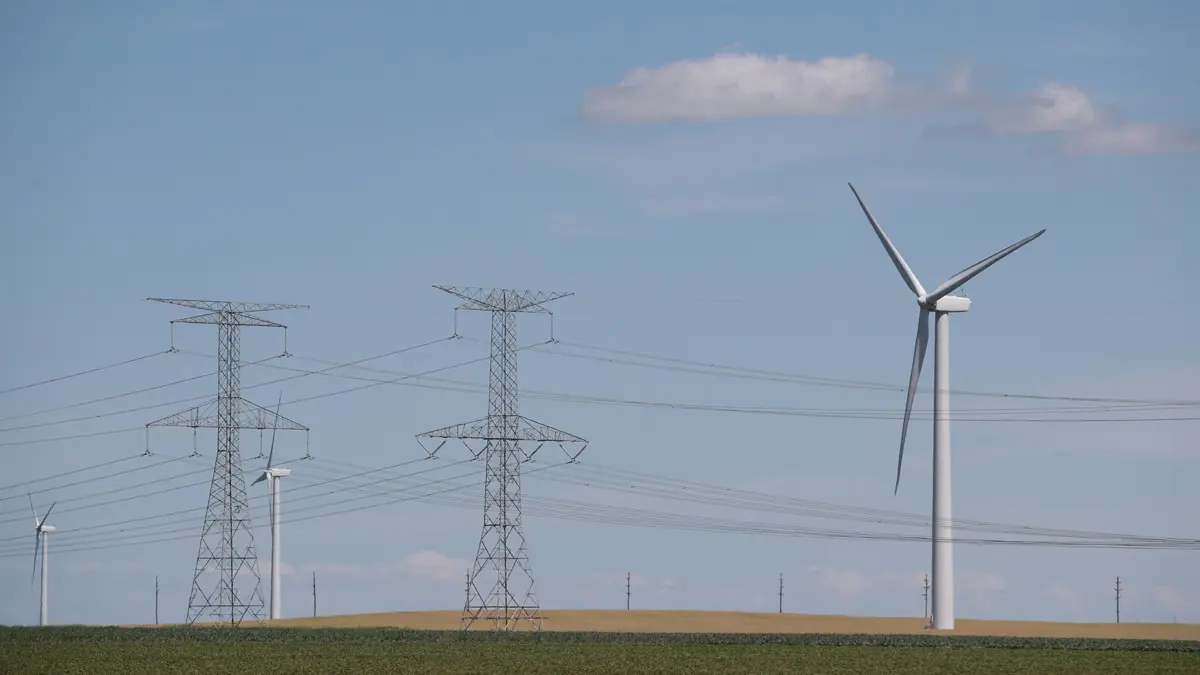
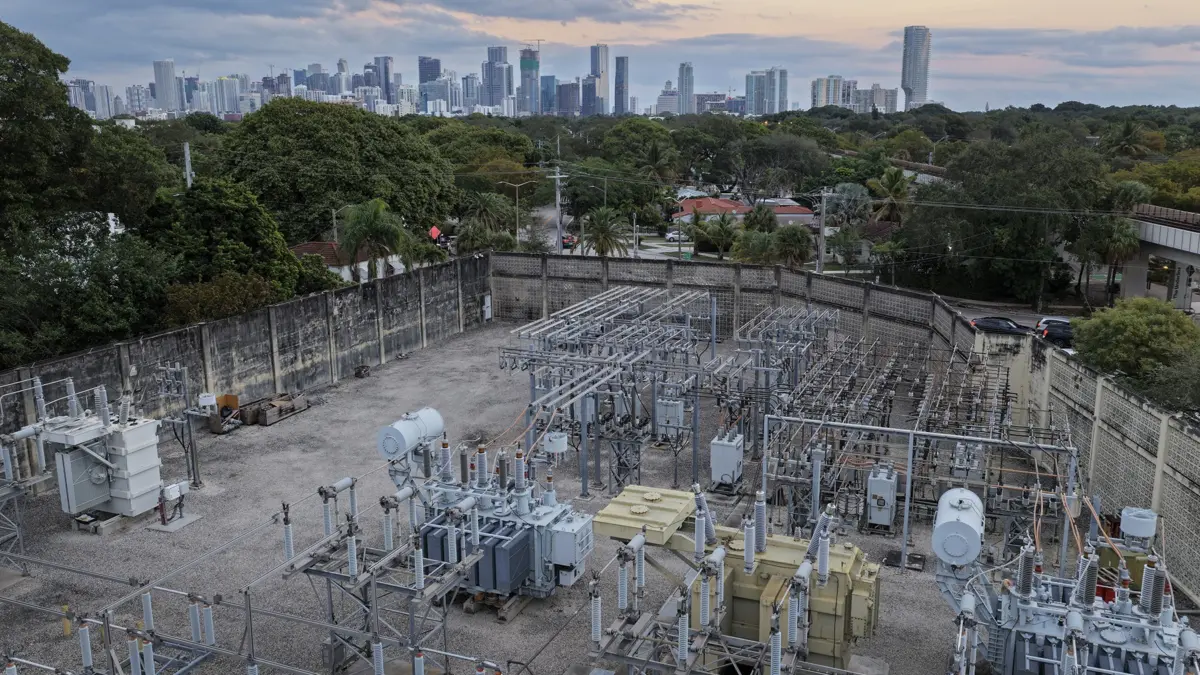
Power has rapidly evolved into a binding constraint in virtually every major technology market. Data center developers can procure and reserve high-performance GPUs far faster than regional electric utilities can construct new substations, upgrade high-voltage transmission corridors, validate large-load service agreements, or interconnect new generation assets (whether natural gas, nuclear, or renewables).

As a result, the limiting factor in the AI revolution is shifting from the fab lines of TSMC to the local interconnection queues of utility monopolies and regional transmission organizations (RTOs). This creates a dangerous friction point: financial markets price in Nvidia’s revenue projections as immediate economic reality, while local power grids struggle to deliver the electrons necessary to bring those servers online.
Official Statements and Industry Perspectives
The friction between software ambition and hardware execution has drawn sharp commentary from industry leaders, analysts, and engineering experts.
- Steven Dickens (CEO and Principal Analyst, HyperFrame Research): Commenting on the breadth of the current expansion, Dickens observed, “We’re in a rampant buildout phase from enterprise, small regional cloud provider, neocloud providers, big-name cloud, hyperscale. I’m running out of hyperbole and adjectives.” He noted that Nvidia’s customer base has expanded far beyond the traditional “Big Five” hyperscalers, pulling in regional providers, sovereign states, and Fortune 500 enterprises.
- Neil Osnato (Founder, Persistence Analytics Group): Addressing the complexities of grid planning, Osnato warned against linear assumptions regarding power consumption. “Strong chip demand is evidence of strong compute demand. It is not, by itself, proof that every megawatt being planned around that demand will arrive on schedule or persist for the life of the infrastructure built to serve it.” He added that the decentralized nature of enterprise and sovereign AI deployments means utilities “may not just be dealing with a handful of enormous 1 GW campuses; it may also be dealing with hundreds or thousands of smaller AI loads competing for capacity at different points in the system.”
- Jensen Huang (CEO, Nvidia): Speaking on the unprecedented velocity of global adoption, Huang reiterated that market demand continues to outpace every formal and informal forecast generated by both internal teams and external macroeconomic analysts.
Technological Evolution: Enter the Vera CPU and System-Level Integration
To maximize efficiency within constrained power and thermal envelopes, Nvidia is expanding its architectural footprint beyond GPUs into advanced central processing units (CPUs) designed specifically for orchestration and agentic workflows.
Nvidia Vera: Engineered for Agentic AI
In a major milestone for its system-level strategy, Nvidia announced that AWS has received its first Vera CPU server and Vera Rubin GPU configurations. Vera is Nvidia’s first custom-designed CPU built explicitly to handle agentic AI workloads—scenarios where artificial intelligence agents independently make tool calls, orchestrate data movement, execute analytics, and manage complex multi-step reasoning tasks alongside GPU acceleration.
Featuring 88 custom cores and an astonishing 1.2 terabytes per second (TB/s) of memory bandwidth, the Vera CPU delivers up to a 1.8x increase in per-core performance on agentic AI tasks compared to previous-generation hosting solutions.
Hyperscale Adoption Across OCI and AWS
Oracle Cloud Infrastructure (OCI) has also committed to deploying hundreds of thousands of Vera CPUs beginning in 2026, making OCI the first cloud provider to deploy the architecture at true hyperscale. Furthermore, Vera serves as the foundational host processor in Nvidia’s flagship Vera Rubin NVL72 rack systems, linking directly to Rubin GPUs via ultra-high-speed NVLink-C2C interconnects.
By integrating custom high-bandwidth CPUs directly with next-gen accelerators, Nvidia is attempting to squeeze maximum computational output out of every single megawatt delivered to a data center rack, mitigating—to some degree—the harsh limitations imposed by the power crisis.
Future Outlook: Broadening Markets and Grid Realities
As the industry looks toward fiscal 2028—a period for which Nvidia is already forecasting roughly 70% revenue growth constrained entirely by supply limitations—the structural dynamics of digital infrastructure are undergoing a permanent transformation.
Beyond the Hyperscalers: The Rise of ACIE
Nvidia’s financial disclosures reveal that market demand is diversifying rapidly. While hyperscalers accounted for $48.7 billion in second-quarter data center revenue (up 102% year-over-year), the company’s AI Clouds, Industrial & Enterprise (ACIE) segment surged to $40.3 billion—a staggering 138% annual increase.
This explosion in non-hyperscale demand reflects a profound democratization of high-performance computing. Sovereign nations establishing independent AI capabilities, major industrial enterprises automating complex supply chains, and specialized neocloud providers are all carving out allocations of advanced silicon.
However, this decentralization introduces severe headaches for electrical grid planners. Unlike traditional hyperscale footprints—which concentrate multi-gigawatt loads into massive, predictable campuses—enterprise and sovereign deployments create a scattered, unpredictable demand profile. Utilities must now plan for an amorphous array of medium-to-large loads popping up across disparate service territories, complicating generation forecasting and transmission investment cycles.
The Road Ahead
The narrative surrounding artificial intelligence has matured past simple benchmarks of floating-point operations. The defining battleground of the late 2020s is physical execution. Whether it is Nvidia committing billions of dollars in credit support for energy-heavy campuses in Ohio, or cloud giants renegotiating power purchase agreements with nuclear and renewable energy developers, the bridge between silicon ambition and electrical reality must be built.
Ultimately, the data center industry faces an inescapable reckoning. As Jensen Huang and his peers continue to shatter revenue records and deploy millions of advanced GPUs, the ultimate arbiter of the AI revolution will not be software algorithms, but the sheer physics of the electrical grid.