









Executive Overview
In a landmark legal decision that threatens to upend federal energy intervention strategies, a federal court has decisively ruled against the U.S. Department of Energy (DOE), voiding an emergency order that forced a Michigan coal-fired power plant to remain operational against state-level closure plans. The ruling serves as a sweeping rebuke of executive authority, drawing a sharp constitutional and statutory line between federal oversight of interstate energy transmission and state-level authority over power generation.
The litigation centers on the delicate, highly regulated balance of the United States electric grid—a system historically characterized by localized control over generation capacities coupled with federal oversight of bulk interstate transmission. For decades, the statutory framework established by the Federal Power Act (FPA) has maintained this bifurcated structure. However, recent years have witnessed a dramatic escalation in federal interventions, particularly under emergency designations utilized to prevent the retirement of aging fossil-fuel infrastructure.
By striking down the DOE’s emergency declaration, the court has not only cleared the path for Michigan to execute its carefully calibrated energy transition, but it has also established a precedent that carries profound implications nationwide. With the DOE having issued more than 55 emergency orders in 2026 alone—a staggering figure that more than doubles the cumulative total issued between 2000 and 2025—this judicial intervention could trigger a cascading wave of legal challenges. If upheld on appeal, the ruling threatens to dismantle dozens of federal directives designed to artificially extend the operational lifespans of coal plants across the country, fundamentally reshaping the trajectory of American energy policy and grid decarbonization.
Detailed Chronology of the Dispute
The Anatomy of a Planned Closure
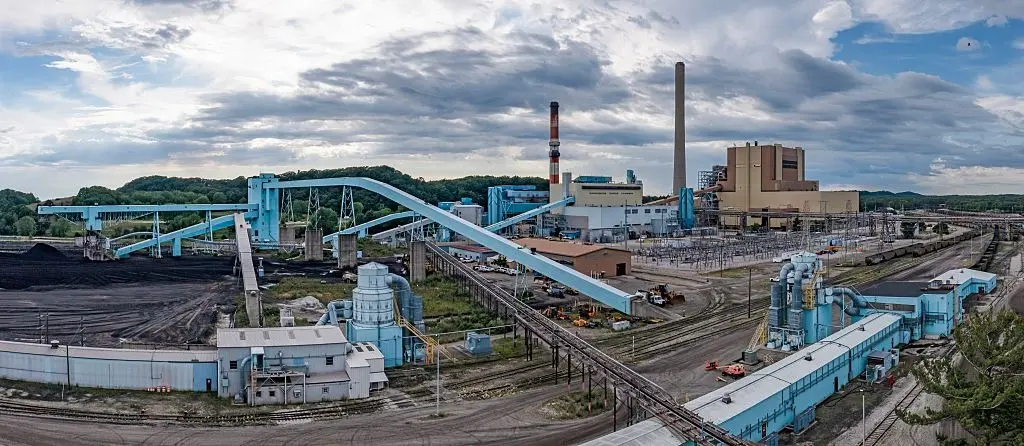
The controversy traces its roots to standard, long-term resource adequacy planning in the Midwest. State regulators, utility companies, and regional grid operators routinely engage in multi-year assessments to forecast energy demand, plan infrastructure upgrades, and manage the orderly retirement of aging facilities. Within this framework, a major Michigan utility, in coordination with state energy offices, formulated a comprehensive closure schedule for an aging coal-fired power plant.
Crucially, this retirement plan was not conducted in a vacuum. To ensure grid reliability and prevent capacity shortfalls, the closure strategy explicitly incorporated a newer, cleaner generating facility designed to step in and absorb the load. This phased transition represented a textbook execution of resource adequacy planning—a process wherein projected losses of generation capacity are met well in advance through market mechanisms, bilateral contracts, or new construction.
The Federal Intervention
Despite the meticulous local planning and the integration of replacement capacity, the Department of Energy stepped in, invoking emergency statutory powers to halt the shutdown. Citing speculative risks of summer electricity shortfalls, the DOE issued an emergency order compelling the plant’s operators to keep the facility running and maintain it in a state of operational readiness.
This directive immediately imposed severe financial burdens on local ratepayers. Maintaining an aging coal plant requires continuous capital expenditure, ongoing maintenance, and the retention of specialized fuel and labor reserves—costs that were directly passed down to consumers. For months, local stakeholders argued that the federal intervention was unnecessary, economically punitive, and legally baseless, setting the stage for a high-stakes courtroom showdown over the boundaries of administrative power.
The Judicial Verdict
In its comprehensive opinion, the court systematically dismantled the legal justifications offered by the DOE. The judiciary closely examined the statutory architecture of the Federal Power Act, noting that Congress deliberately carved out generation facilities from direct federal oversight. The court observed that the statute "expressly denies FERC [the Federal Energy Regulatory Commission] authority to regulate generation facilities directly," a limitation that reflects a broader legislative intent to keep the federal government out of localized power plant management.
Addressing the DOE’s reliance on "emergency" provisions, the court ruled that vague, indeterminate warnings of potential seasonal electricity shortfalls do not meet the statutory threshold required to trigger emergency federal powers. The judges emphasized that permitting the DOE to override standard resource planning whenever a generalized shortfall is claimed would render the statutory constraints imposed by Congress entirely meaningless. Consequently, the court voided the emergency declaration, delivering a decisive victory to state regulators and local ratepayers.
Supporting Context & Metrics: The Explosion of Emergency Orders
To fully grasp the national significance of the court’s ruling, one must examine the unprecedented acceleration of federal emergency declarations in recent years. Historically, the invocation of emergency powers under Section 202(c) of the Federal Power Act was treated as an extraordinary measure of last resort—reserved for catastrophic events such as major hurricanes, polar vortexes, or sudden, unpredicted grid failures that threatened immediate blackouts.
Data compiled from federal energy reports reveal a striking historical trend:
- The Baseline Era (2000–2025): Over this 25-year span, the DOE utilized its emergency authority sparingly. The total number of emergency orders issued across a quarter-century remained relatively low, reflecting a bipartisan consensus that federal intervention in generation markets should be exceptionally rare.
- The 2026 Surge: In stark contrast to historical norms, the DOE issued over 55 emergency orders in 2026 alone. This figure represents more than double the total number of orders issued during the entire preceding 25-year period.
This exponential increase reflects a deliberate executive strategy to artificially prop up uneconomic and aging coal-fired power plants under the guise of grid reliability. As market forces, cheap natural gas, and the rapid deployment of renewable energy drove coal plants toward retirement, federal authorities increasingly turned to emergency decrees to prevent fossil-fuel phaseouts. The court’s decision directly targets this administrative strategy, exposing the routine use of emergency declarations as an overreach that circumvents statutory limits.
Official Statements and Legal Perspectives
Legal scholars, energy policy experts, and state officials have weighed in heavily on the ruling, recognizing its potential to reshape federal-state dynamics in the utility sector.
Legal analysts point out that the court’s strict interpretation of the Federal Power Act restores the traditional division of labor in American energy regulation. "Congress drew a bright line between interstate transmission, which requires federal coordination, and generation, which belongs in the hands of states and regional markets," noted one regulatory attorney. "The DOE attempted to blur that line by weaponizing the definition of an emergency, and the court simply drew the line back in place."
State officials in Michigan celebrated the ruling as a victory for consumer protection and environmental planning. By invalidating the emergency order, the decision relieves local ratepayers from millions of dollars in unnecessary maintenance costs. Furthermore, it validates the authority of state utility commissions to manage their own energy futures without federal interference dictated by shifting political agendas.
Conversely, proponents of federal intervention have expressed concern over grid reliability, arguing that rapid coal retirements could leave regions vulnerable to extreme weather events and surging electricity demand driven by data centers and electrification. However, the court’s opinion directly answers this concern, emphasizing that existing statutory mechanisms—such as formal requests under Section 202(b) and established resource adequacy planning frameworks—provide the proper, lawful channels for addressing genuine reliability crises without granting the executive branch unchecked power to halt plant retirements indefinitely.
Future Outlook: National Implications and the Road Ahead
The immediate effect of the Michigan ruling is clear: the state can finally move forward with its planned shutdown process, sparing local ratepayers from the exorbitant costs of maintaining a redundant, high-emission coal facility. Yet, the broader ripples of this judicial decision are poised to affect the entire American energy landscape.
The Domino Effect on Nationwide Coal Plants
Because the legal reasoning rests on a fundamental statutory interpretation of the Federal Power Act and the limits of executive emergency authority, the logic applies universally to similar DOE directives across the country. The Trump administration and the DOE have utilized emergency orders to keep numerous coal plants operating past their scheduled retirement dates.
As long as affected states, utilities, or consumer advocacy groups are willing to challenge these directives in court—and provided this ruling withstands appellate review—the legal foundation supporting dozens of active emergency orders is severely compromised. Legal experts anticipate a flood of follow-on lawsuits in federal circuits nationwide, as stakeholders seek to invalidate federal mandates that keep uneconomic fossil-fuel plants on life support.
Navigating Grid Reliability and the Energy Transition
The clash between federal intervention and state-led planning highlights a central tension in the ongoing U.S. energy transition. As the grid absorbs increasing amounts of variable renewable energy alongside surging electricity demand from artificial intelligence data centers, manufacturing reshoring, and electric vehicles, maintaining grid reliability remains a paramount challenge.
However, the court’s ruling draws a firm boundary: perceived future challenges do not justify lawless administrative shortcuts. If the federal government believes additional generation capacity is vital for national security or grid stability, it must work within the statutory boundaries established by Congress—or seek legislative reform—rather than stretching emergency powers beyond recognition.
Ultimately, this judicial check on executive authority reinforces the rule of law within the energy sector. It ensures that the multi-billion-dollar transition of the U.S. power grid remains anchored in transparent, accountable, and legally authorized planning processes, rather than arbitrary federal decrees. As the case moves toward potential appellate review, it stands as a watershed moment for the future of American energy federalism.