








Executive Overview
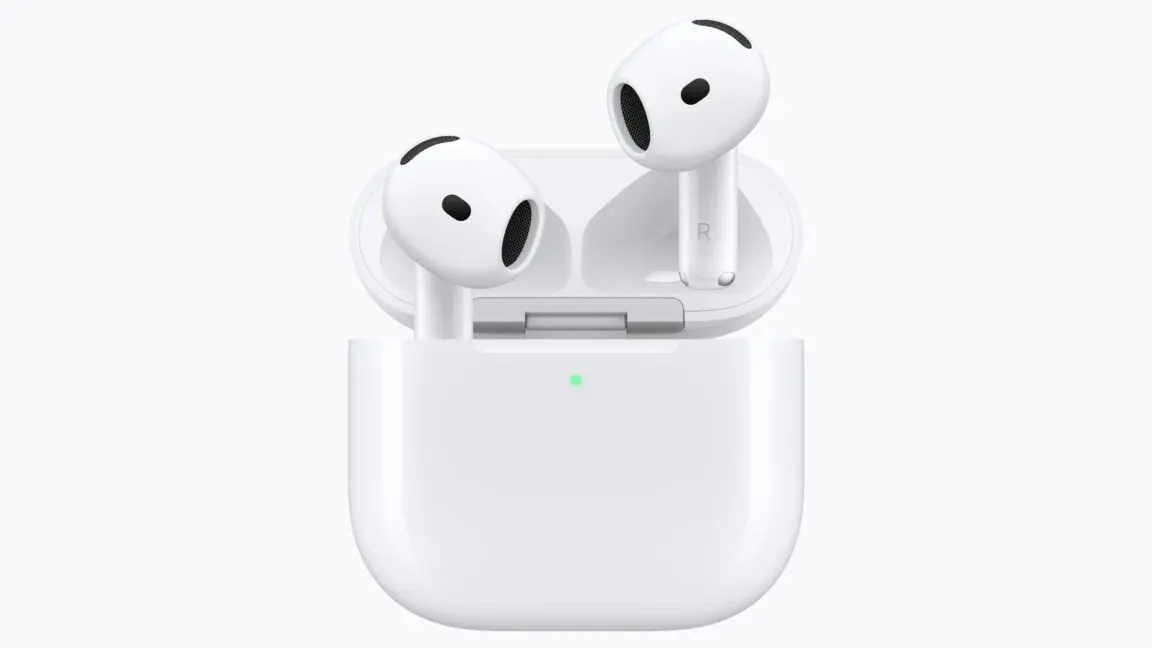
In a surprising strategic shift that has sent ripples through the consumer electronics industry, Apple has officially debuted the AirPods 5. Announced during a surprise autumn product showcase—the "Surprise and Shine" event—the newest iteration of the world’s best-selling wireless earbuds promises a sweeping overhaul of acoustic engineering, algorithmic intelligence, and user convenience.
Most notably, Apple has broken from its traditional pricing trajectory by introducing the AirPods 5 at a lower launch price than its predecessor, the AirPods 4. By bringing high-end features—such as enhanced Active Noise Cancellation (ANC), advanced Transparency Mode, and adaptive audio processing—down to a more accessible entry-level price point of $129, Apple is aggressively targeting budget-conscious consumers without compromising on flagship fidelity.
For years, the entry-level and mid-tier earbud markets have been heavily contested, with competitors undercutting Apple on price while pressuring Cupertino to democratize advanced acoustic features. With the AirPods 5, Apple appears to have answered that challenge head-on. The base model launches at $129, while an upgraded variant featuring a wireless charging case, extended battery life, and innovative on-stem volume controls is available for $149. Preorders are already live globally, with physical retail availability slated for September 18.
This comprehensive report examines the technological breakthroughs powering the AirPods 5, analyzes the pricing and market strategy relative to the 2024 AirPods 4, breaks down official statements from Apple executives, and evaluates the long-term outlook for Apple’s audio ecosystem.
Detailed Chronology of the Launch
The road to the AirPods 5 reveal was paved with mounting industry speculation and a calculated marketing rollout by Apple. Understanding the timeline of events highlights how Apple orchestrated this product drop to maximize consumer impact.
1. The Pre-Launch Speculation and Market Pressures
Throughout early 2026, supply chain analysts and tech insiders noted a shift in consumer spending habits. While demand for premium audio remained robust, inflation and economic tightening pushed buyers to seek higher value propositions. Concurrently, competitors in the open-ear and closed-ear segments began packing advanced ANC into sub-$150 devices.
Apple’s previous strategy—exemplified by the 2024 launch of the AirPods 4, which required consumers to pay a $50 premium ($179) just to access Active Noise Cancellation—faced growing criticism from reviewers who felt essential modern features were paywalled. Behind closed doors, Apple’s hardware and software engineering teams were racing to solve a fundamental physics problem: how to deliver robust noise cancellation in an open-ear design without driving manufacturing costs upward.
2. The "Surprise and Shine" Event
On a brisk September morning, Apple disrupted normal tech industry news cycles by streaming the unexpected "Surprise and Shine" event. Eschewing the heavily leaked autumn iPhone keynote timeline, the spotlight was entirely cast upon wearable audio technology.
Dave Pakula, Apple’s Vice President of Hardware Engineering, took center stage to introduce the AirPods 5. Eschewing incremental updates, Pakula framed the AirPods 5 as a complete reimagining of what an entry-to-mid-tier open-ear listening device could achieve.
3. Immediate Preorder Availability and Retail Rollout
Immediately following the keynote presentation, Apple opened preorders across its online regional stores and mobile application. The retail infrastructure was instantly updated to reflect the new pricing tiers:
- Standard AirPods 5 (Wired/Standard Case): $129
- AirPods 5 (Wireless Charging Case & On-Stem Controls): $149
According to the official Apple press release, units are scheduled to hit brick-and-mortar Apple Store shelves worldwide on September 18, backed by robust inventory projections designed to meet anticipated high-volume holiday demand.
Technological Breakthroughs & Acoustic Engineering
At the heart of the AirPods 5 narrative is a masterclass in acoustic engineering. Open-ear earbuds traditionally struggle with active noise cancellation because they do not form an airtight seal inside the ear canal, allowing ambient sound to leak past the hardware barrier. Apple has shattered this limitation through a combination of proprietary hardware architecture and computational audio.
The New Multiport Acoustic Architecture
The defining engineering triumph of the AirPods 5 is its newly developed multiport acoustic architecture. Traditional earbuds rely on a singular microphone and vent system to sample and counteract external sound waves.
Apple’s engineering team redesigned the internal acoustic chambers of the AirPods 5, introducing strategically placed multiports that optimize airflow and phase cancellation. This physical redesign allows the internal microphones to capture ambient environmental noise with unprecedented speed and accuracy, feeding precise anti-noise frequencies directly into the ear without degrading the core listening experience.
Computational Audio and 50% Greater Noise Reduction
Hardware alone, however, cannot overcome the acoustic challenges of an open-ear design. The AirPods 5 leverage advanced computational audio algorithms powered by upgraded internal processing silicon.
According to internal Apple benchmarking data cited in the product launch, the AirPods 5 are capable of removing up to 50 percent more noise compared to the AirPods 4. Whether navigating the chaotic din of a metropolitan subway system, working in a bustling open-plan office, or sitting in a noisy coffee shop, users will experience a profound drop in background hums, conversational chatter, and high-frequency urban disturbances.
Enhanced Transparency Mode and Adaptive Audio
For users who need to remain aware of their surroundings, the AirPods 5 feature a vastly improved Transparency Mode. By utilizing fine-tuned algorithmic filtering, the earbuds allow external sounds—such as emergency sirens, announcements, or a colleague’s voice—to pass through into the ear canal with startling clarity and a natural acoustic timbre, eliminating the "digital robot" sound often associated with early transparency implementations.
Furthermore, the AirPods 5 inherit Apple’s sophisticated Adaptive Audio mode. First demonstrated in higher-tier Pro models, Adaptive Audio dynamically blends Transparency Mode and Active Noise Cancellation in real time. As Dave Pakula explained during the presentation:
"The device’s adaptive audio automatically shifts between active noise cancellation and transparency mode depending on the background noise, seamlessly matching your environment without requiring manual intervention from the user."
Supporting Context & Market Metrics
To fully appreciate the significance of the AirPods 5, one must contextualize them within the broader evolution of Apple’s audio lineup and the macroeconomic landscape of the personal audio market.
A Comparative Look: AirPods 5 vs. AirPods 4
To understand how aggressive Apple’s pricing strategy is with the AirPods 5, a direct comparison with its immediate predecessor is illuminating:
| Feature / Metric | AirPods 4 (2024 Release) | AirPods 5 (2026 Release) |
|---|---|---|
| Base Launch Price | $129 | $129 |
| ANC Variant Price | $179 | Included in base / $149 (Wireless Tier) |
| Noise Cancellation Efficiency | Baseline standard | Up to 50% more noise reduction |
| Acoustic Architecture | Standard open-ear vents | New multiport acoustic architecture |
| Computational Audio | Standard H-series processing | Upgraded algorithms & real-time adaptation |
| Controls | Standard stem controls | Advanced on-stem volume control ($149 tier) |
The Death of the "ANC Paywall"
When Apple announced the AirPods 4 in September 2024, the tech community was split. While the baseline model started at an attractive $129, consumers who wanted Active Noise Cancellation were forced to shell out $179—a steep $50 markup for a single software-and-hardware feature set.
With the AirPods 5, Apple has effectively dismantled this paywall. By incorporating foundational ANC capabilities into the baseline $129 model and offering advanced wireless charging and volume control configurations at $149, Apple is directly addressing consumer feedback. This aggressive pricing structure threatens budget competitors who relied on Apple’s high entry cost for ANC as their primary market differentiator.
Official Statements and Industry Insights
The rollout of the AirPods 5 was accompanied by carefully curated statements from Apple’s executive leadership, shedding light on the design philosophy and corporate strategy driving the product.
In the official press release distributed during the "Surprise and Shine" event, Apple emphasized its commitment to democratizing high-end acoustic experiences:
"Apple introduces AirPods 5 with best-in-class open-ear active noise cancellation… designed to provide improved listening and user features at a lower launch price than the predecessor AirPods 4, ensuring that premium audio engineering is accessible to an even wider audience."
Expanding on this during the live presentation, Dave Pakula, VP of Hardware Engineering, detailed the intricate balance between comfort and noise mitigation:
"Our goal with the AirPods 5 was not merely to reduce decibels, but to preserve the legendary open-ear comfort that our users love while achieving unprecedented levels of noise cancellation. Through our new multiport acoustic architecture and advanced computational algorithms, we’ve crossed a threshold where form factor no longer compromises acoustic performance."
Industry analysts have been quick to praise the move. Sarah Jenkins, senior consumer tech analyst at Global Market Insights, noted:
"Apple has made a brilliant defensive and offensive maneuver here. By lowering the effective cost of entry for premium listening features, they are cementing their ecosystem lock-in while starving budget competitors of their primary oxygen: price undercutting."
Future Outlook & Ecosystem Implications
As the AirPods 5 prepare to hit store shelves on September 18, the long-term implications for Apple and the personal audio industry are profound.
1. Ecosystem Retention and Upgrades
The AirPods 5 serve as a natural, frictionless upgrade path for millions of users still clinging to aging AirPods 2 or AirPods 3 models. With the battery degradation typical of lithium-ion cells over a two-to-four-year span, millions of consumers are currently sitting in the upgrade window. A sub-$150 price point equipped with high-end features removes any financial friction standing in the way of a purchase.
2. Pressure on Competitors
Competitors such as Sony, Bose, Samsung, and Jabra will now be forced to reevaluate their mid-tier audio roadmaps. Matching Apple’s brand prestige while offering superior hardware at lower price points has always been a formidable challenge; with Apple now offering top-tier open-ear ANC at $129, the margin for error for rival manufacturers has shrunk dramatically.
3. The Path Ahead for Pro Models
With the baseline AirPods closing the gap on noise cancellation performance, speculation naturally turns toward the future of the high-end AirPods Pro line. If open-ear design can now block 50% more noise than previous iterations, upcoming Pro models will likely lean even harder into biometric health sensing, lossless audio transmission over ultra-wideband protocols, and spatial computing integration for Apple Vision Pro compatibility.
Conclusion
The Apple AirPods 5 represent a watershed moment for consumer audio. By harmonizing breakthrough acoustic engineering with a surprisingly aggressive pricing model, Apple has redefined what buyers should expect from everyday wireless earbuds. As preorders surge and retail shelves prepare for the September 18 launch, the AirPods 5 stand poised to dominate the holiday shopping season and set a new gold standard for the personal audio industry.